
Today
▾ Hover for summary ▾ Tap for summary
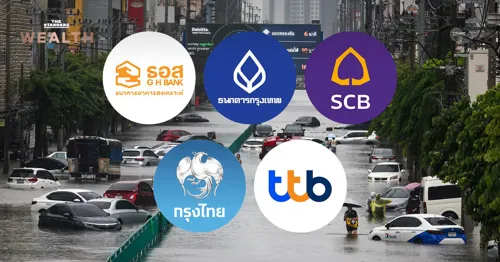
Thai banks (Thai Krung Thai and Bangkok Bank leading) have announced coordinated flood-relief packages including 3–6 month principal payment holidays, partial debt write-downs, 75% installment cuts on retail loans, and emergency SME lending of up to ฿10–20 million at preferential rates. Programs run from late September through end of 2026 and cover both individuals and businesses across Bangkok and nationwide flood zones. This signals major liquidity and operational relief for SME recovery, but relies on banks absorbing losses—monitor credit quality and profitability impact in Q4 reporting.
▾ Hover for summary ▾ Tap for summary
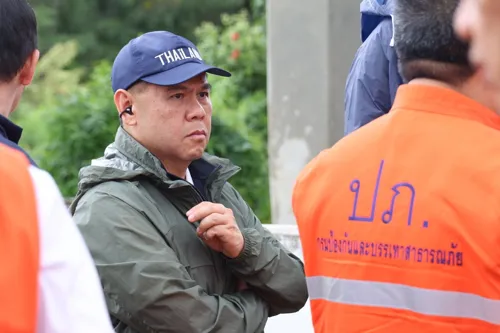
Thailand's Industry Minister Vorawuth Silpaarcha has ordered SME D Bank to immediately deploy relief measures for flood-affected SMEs across the country. The package includes: (1) Debt suspension for up to 12 months on principal and interest for affected borrowers; (2) Emergency capital injection of 10% of existing credit limit (30,000–200,000 THB) at MLR rate, principal-free for 12 months; and (3) Additional liquidity products at 3% fixed rate for post-flood recovery and upgrades. Applications are open now via branches, LINE, and www.smebank.co.th. This directly addresses short-term cash-flow crisis and business continuity for a large segment of flood-impacted SMEs.
▾ Hover for summary ▾ Tap for summary
Major Thai commercial banks (Bangkok, Krung Thai, TTB, Thai Commercial) have launched comprehensive relief measures for flood-affected customers and SMEs. Relief includes payment deferrals (up to 12 months), monthly installment reductions (up to 40-75%), reduced interest rates, and new lending products for home repairs and business recovery. Bangkok Bank offers SME loans starting at 3.5% fixed for 2 years; Krung Thai reduced installments to 75% with 0% interest for 3 months. Applications accepted through December 30, 2026.
▾ Hover for summary ▾ Tap for summary
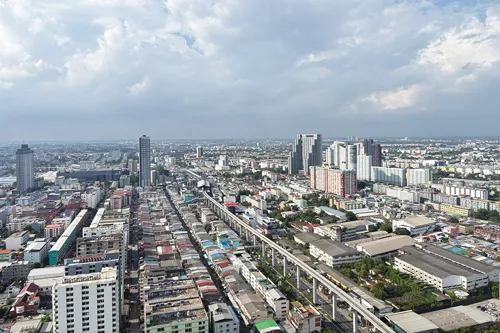
Thailand's Department of Treasury will enforce new land valuations nationwide effective January 1, 2027, with a ~10% increase across the country and over 1 million baht/sq.m. in Bangkok CBD. This will raise property tax burdens for landlords and developers, driving land sales and pushing residential buyers toward outer suburbs and condos. SMEs in real estate and construction face higher input costs, while demand shifts to affordable locations like satellite cities (Bangna, Rangsit, Srinakarin) and smaller condo units (22-26 sq.m.).

 Empower businesses to thrive in the digital age.

▾ Hover for summary ▾ Tap for summary
Six state-owned financial institutions (GSB, BAAC, KBANK, BBL, TMB, UOB) have launched emergency relief measures for flood-affected customers across Thailand. Measures include 3-6 month payment suspensions at 0% interest, emergency loans up to 20,000-300,000 baht for living expenses and business recovery, and special SME lending up to 5 million baht with government guarantee backing. Customers in disaster-declared areas are automatically notified and can opt-in or remain on original terms. This addresses immediate cash-flow distress for affected households and small businesses during the recovery phase.

▾ Hover for summary ▾ Tap for summary
Late September floods across 48 Thai provinces dealt 25.3 billion baht in economic damage in a 4-day period, depressing Q3 GDP growth by 0.55 percentage points in the central scenario. Bangkok suffered the heaviest loss (10.6 billion baht), followed by the Eastern and Central regions. Manufacturing and agriculture are the most exposed sectors, making this a material drag on an already-slowing economy—GDP growth had already decelerated from 2.8% YoY in Q1 to 1.9% in Q2.

▾ Hover for summary ▾ Tap for summary
Thailand's SEC and BOI have launched the "BOI to IPO" initiative to streamline the IPO process and attract high-potential New Economy businesses to the capital market. Key changes include a Special Track with relaxed Market Cap minimums (3 billion baht for SET, 1 billion for mai) for BOI-backed companies, and a shift toward a disclosure-based approval model targeting 70–100 day review timelines (down from 147 days average). This mechanism aims to strengthen Thailand's long-term economic competitiveness by connecting investment, business growth, and capital market development.

▾ Hover for summary ▾ Tap for summary
VOYAH, a premium electric vehicle brand under Dongfeng Motor Group, is preparing an official market entry into Thailand in Q4 2026 via sole distributor AAS Group. The company operates two production facilities in Wuhan, China (VOYAH Huangjin and VOYAH Yunfeng) with combined annual capacity of 450,000 units, employing smart factory technologies (5G, Big Data, AI) to produce one vehicle every 40 seconds. The brand has expanded to 40+ countries with 240+ service centers. Three models targeting the Thai market include VOYAH DREAM 9, VOYAH PASSION S, and VOYAH TAISHAN X8, with the flagship VOYAH DREAM 9 securing 30,000+ orders globally within 48 hours of launch.
 Your real translator for LINE and Discord.
▾ Hover for summary ▾ Tap for summary
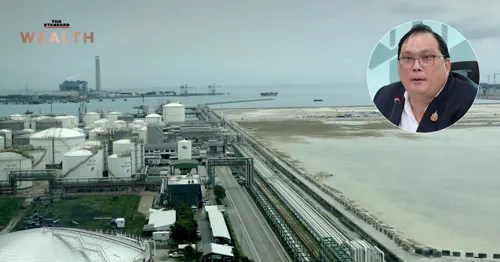
Thailand's Industrial Estate Authority (IEAT) reported land sales and bookings across 48 industrial estates reached 6,000 rai in the first nine months of 2026, on track to hit 7,000 rai by year-end. Data centers are the standout segment, with nearly 3,000 rai in planned/booked land and 60–70 projects awaiting regulatory approval; IEAT expects 90% will commit once electricity and infrastructure standards are finalized. Top investor nationalities are Singapore, Thailand, Hong Kong, Switzerland, Netherlands, and China. IEAT is expanding land inventory to 30,000–40,000 rai to support demand from advanced manufacturers, logistics, agriculture, and EV industries, and is upgrading flood-resilience measures in at-risk zones.

▾ Hover for summary ▾ Tap for summary
VOYAH, a premium EV brand under Chinese automaker Dongfeng Motor, is entering Thailand through a partnership with AAS Group, marking its first international expansion outside China. The brand showcased advanced Industry 4.0 manufacturing capabilities at its Wuhan facility (450,000 annual production capacity) and is launching the flagship DREAM 9 MPV with Level 3 autonomous driving, premium suspension systems, and pricing from 419,900–529,900 yuan. This expansion signals growing Chinese EV competition in the Southeast Asian market and presents distribution/partnership opportunities for Thai automotive and tech service providers.

▾ Hover for summary ▾ Tap for summary
Floods across 10 Thai provinces have affected 715,370 livestock and 2,313 farmers since early September. The Department of Livestock is providing emergency support including feed distribution, animal evacuation (381,000+ animals relocated), and medical care. Compensation opened under 2569 Emergency Agriculture Relief scheme: cattle up to 35,000 baht/head, buffalo to 39,000 baht/head, swine/goats/sheep 1,500–3,000 baht/head, poultry at varying rates, pasture 3,180 baht/rai (max 30 rai). Farmers can apply via provincial livestock offices or DLD 4.0 app.
▾ Hover for summary ▾ Tap for summary
Thailand's SME Credit Guarantee Corporation (บสย.) has announced a 6-month suspension of guarantee fees and installment payments for SME customers and debtors affected by recent flooding in Bangkok and surrounding provinces. The relief applies to customers with payment deadlines between September 26 and October 31, 2026, and covers two measures: fee deferral for SME credit guarantee customers and installment suspension for existing debtors in debt restructuring plans. Registration is available through LINE OA @tcgfirst or regional offices, with queries via Call Center 02-890-9999.

 Want to buy or sell a business?
▾ Hover for summary ▾ Tap for summary
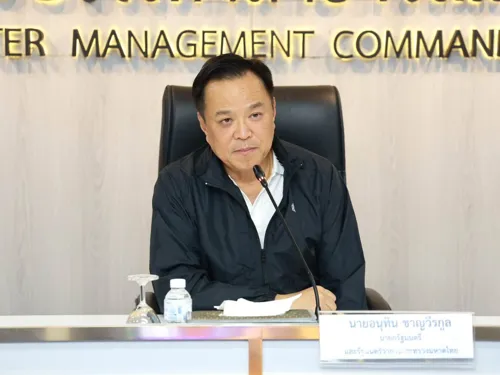
PM Anutin held an inter-agency meeting with governors from all 76 provinces to coordinate flood disaster response. Key directives include: ground-level surveys to prevent aid gaps (referencing past failures in Hat Yai), quality provision of shelter, food, medicine and supplies, activation of 50-million-baht advance spending per province with authority to request increases, and coordination on the new national disaster insurance scheme launching October 1. PM emphasized preparation and pre-disaster planning across all provinces.
▾ Hover for summary ▾ Tap for summary
Thailand's Insurance Commission (OIC) has coordinated with insurers to fast-track assistance for flood-affected policyholders. The OIC published a 4-step claims process: (1) verify coverage under your policy (note: auto Type 1 covers floods; Types 2+ and 3+ may need add-ons; home fire policies must specifically include natural disaster coverage), (2) document all damage comprehensively with photos/video, (3) contact your insurer immediately with policy number and incident details, and (4) prepare required documents (ID, photos, vehicle/land registration). The OIC also established damage-level standards for vehicles (A–E, with repair costs ranging ~8,000–30,000+ baht depending on water level). A meeting with all non-life insurers is scheduled for 28 September to coordinate towing services, set claim payout timelines, and discuss premium payment relief for affected policyholders.
▾ Hover for summary ▾ Tap for summary
Thailand's Insurance Commission (OIC) released practical guidance for flood-affected policyholders seeking claims on damaged homes and vehicles. The four-step process covers policy verification, damage documentation, prompt insurer notification, and document preparation. Vehicle flood damage is categorized into five levels (A–E) with repair cost estimates from 8,000–30,000+ baht. The OIC is convening insurers on September 28 to coordinate emergency support and assess nationwide impact through the Insurance Bureau System.

▾ Hover for summary ▾ Tap for summary
Between September 16–26, social media discussions about Bangkok flooding reached 40 million engagements across 167,607 posts, with Facebook dominating (70.5% of posts, 20M engagements) and TikTok proving highly efficient (4.5% of posts, 14M engagements). Key themes included real-time reporting of flooded areas, weather forecasts vs. government credibility, emergency helplines, and citizen self-organization—reflecting how Thais bypass official channels during crisis response.
 Together GoWeGo! Ferry tickets in Thailand.
▾ Hover for summary ▾ Tap for summary
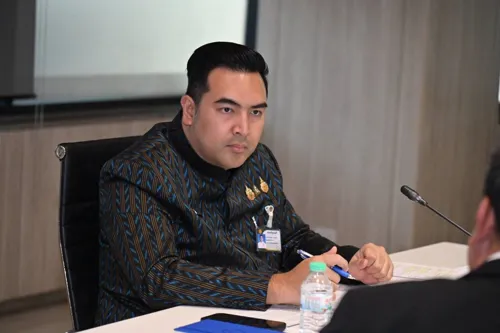
Thailand's Deputy Minister of Agriculture has activated a 24-hour emergency response team to manage flooding across multiple provinces (September 25–27, 2026). The Fisheries Department is deploying 120 personnel, 30 vehicles, and 30 inspection boats across Bangkok, surrounding areas, and eastern regions. Supporting measures include opening Agricultural Market Organization (อ.ต.ก.) facilities in Chatuchak to help farmers dispose of flood-affected produce, directing the Land Reform Office to monitor crop damage closely, and establishing relief donation points. This mobilization aims to minimize losses for farmers and maintain supply chain continuity during the flooding crisis.
▾ Hover for summary ▾ Tap for summary
Thailand's strong market position amid global supply chain shifts and capital reallocation is only valuable if translated into actual performance. The article, drawing on Techsauce Global Summit 2026 insights, argues SMEs and corporates must shift from financing operations to financing transformation—using technology not just for efficiency but to enable entirely new capabilities. Boards should challenge management on three fronts: whether tech drives productivity or new products, whether investments finance business-as-usual or real transformation, and crucially, whether execution speed matches the pace of global change. Position without execution is merely positioning.

▾ Hover for summary ▾ Tap for summary
Thailand's Customs Bureau chief acknowledges missing revenue targets (116.3 billion baht) in fiscal 2026 due to rising FTA usage (+13%), BOI tax incentives (+40%), and structural tariff decline—a global trend as nations shift toward excise taxes. The bureau pivots toward protecting SMEs via import duties on goods worth 1+ baht, investigating export rights fraud, and implementing AI controls. However, the agency faces the competing mandate to achieve "Zero Corruption" as Thailand pursues OECD membership, while also regulating problematic imports (gold, crude oil) and modernizing trade compliance metrics.

▾ Hover for summary ▾ Tap for summary
Thailand's credit outlook upgraded to "Stable" by Fitch; ADB raises 2026 GDP forecast to 2% driven by exports and private investment. However, structural concerns persist: high household and public debt (~150% of GDP), anemic growth (1.8–2.8% over 10 years vs. ASEAN average 3.7%), and near-term risks from US interest rates, geopolitical tensions, and El Niño impacts. SMEs face uneven recovery in a "K-shaped" economy where support measures are critical for weaker segments.

 Stop running your company on Excel.

▾ Hover for summary ▾ Tap for summary
GO Wholesale, a Central Group food wholesale distributor, has confirmed adequate inventory of essential goods and food ingredients across all categories to support restaurants, hotels, and foodservice businesses during Bangkok's expanding flood crisis (now covering all 50 districts as of 25 September). The company is maintaining normal supply chain operations with contingency plans for alternative transport routes and real-time inventory monitoring to minimize business disruption. All branches remain open as of 26 September, with heightened surveillance on Ramkhamhaeng and Rangsit locations; operations are flexible and scalable based on daily water levels and safety protocols.
▾ Hover for summary ▾ Tap for summary
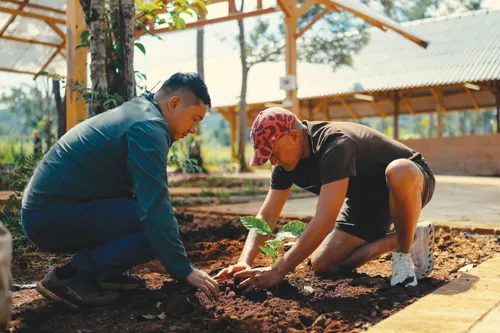
Sansiri has launched Laan Learn, a 21-rai integrated specialty coffee learning centre in Kalyyaniwattana district, Chiang Mai, in partnership with Borirak Abhikauntikul's "Coffee Comrades" network. The initiative bridges upstream coffee farmers (elevated at Sai Sansiri farm) with downstream skill-building for younger generations (at Siri Campus), promoting shade-grown coffee that restores forests while improving farmer livelihoods. A secondary school dropout turned aerospace engineer, Borirak shifted to coffee in 2014 to build positive social enterprise, replacing Fair Trade with "Friend Trade" (knowledge exchange with farmers without monetary transaction), and positioning quality coffee (graded lots reaching 20,000+ baht/kg vs 300 baht/kg commercial grade) as both conservation and community economic growth.
▾ Hover for summary ▾ Tap for summary
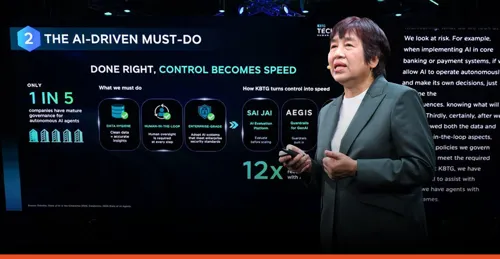
KBTG Executive Chairman Voranuch outlines AI's shift from assistant tools to autonomous agents (Digital Workforce) capable of planning, design, and reasoning. Key takeaways for SMEs: AI Agents will be in 40% of applications by end-2026; governance and human oversight must be built in from the start (only 20% of AI-using companies have proper controls); final decisions require human judgment. KBTG's Athena platform enables 90% of staff to use AI, targeting 15% cost reduction in AI SDLC by 2028.
▾ Hover for summary ▾ Tap for summary
Thai Military Bank (TTB) has launched a "Tangle Luk" (Stand Firm) relief programme for flood-affected customers. Personal loan holders and credit card users get 3-month payment holidays; home and auto loan customers get 3-month suspensions; business and SME customers receive 6-month principal payment deferrals or up to 70% reduction in lease-purchase instalments. The initiative aims to provide liquidity relief and support recovery for affected individuals and businesses through end-December 2026.
Empower businesses to thrive in the digital age.
▾ Hover for summary ▾ Tap for summary
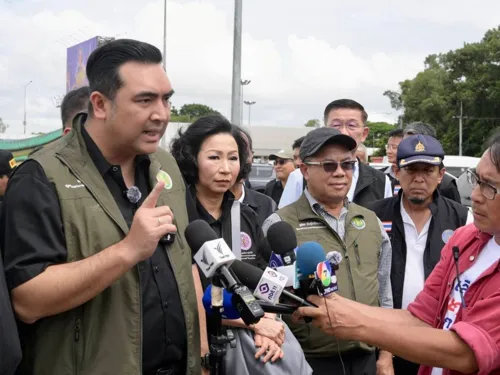
Deputy Minister Watchrapol has ordered urgent measures to contain an invasive black chin tilapia outbreak at Lam Pao Dam (Kalasin province), where 132 fish have been found across 3 districts since late August. Though not yet critical, the species threatens shrimp and tilapia farming worth ~1.9 billion baht annually. The response includes public awareness campaigns using QR codes for reporting sightings, eDNA environmental tracking technology, and emergency exemptions allowing provinces to use normally-prohibited fishing methods to improve eradication efficiency.
▾ Hover for summary ▾ Tap for summary
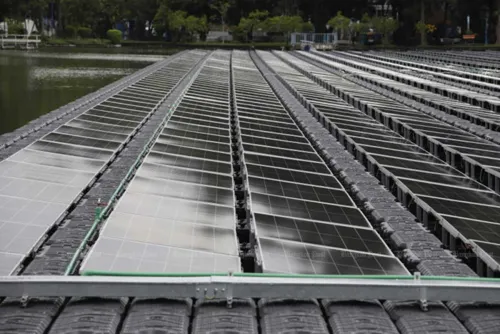
Thailand's government defended the domestic solar industry after data revealed China supplied 99.3% of solar-panel imports in the first seven months of 2026. A deputy spokesman clarified this figure refers only to imported panel sources, not all panels used domestically. Thailand currently operates 32 investment-promoted projects covering the solar manufacturing chain (22 companies) with combined production capacity exceeding 49,000 MW-peak annually and 26.68 billion baht in annual local raw materials and components. The government frames the residential solar program not merely as increasing installations but as an opportunity to expand domestic manufacturing while ensuring safe, cost-effective clean energy for consumers.
▾ Hover for summary ▾ Tap for summary
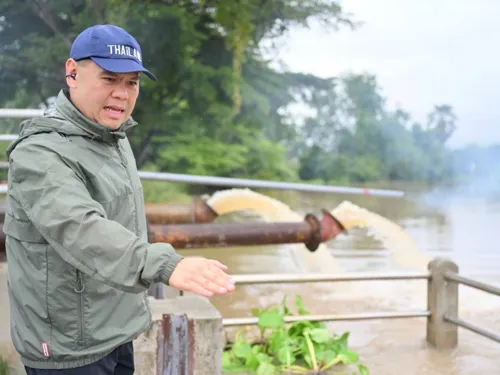
Minister of Industry Weerawut Shilpaarch proposed to the Prime Minister relaxing the 2-million-cubic-metre water source threshold to allow local authorities to develop "monkey cheek" (emergency spillway) projects following the late Buddhist Era 9 royal conservation model. The proposal aims to better manage massive water inflows expected from storm surge flowing into the Tha Chin river system and reduce flooding impact on communities. Unlocking this regulatory condition would enable larger-scale water management interventions by local governments, which currently lack capacity to maintain sources above 2 million cubic metres.

▾ Hover for summary ▾ Tap for summary
Bill Gates has shifted from AI optimism to advocate for strict U.S. federal regulation, warning that AI is powerful enough to cause billion-person casualty events if misused by bad actors. His call comes amid recent AI security incidents (OpenAI breaching Australian health systems, Anthropic reporting terrorist/state attempts to weaponize Claude), and follows other tech leaders' appeals for AI safeguards—though President Trump continues to resist regulation as "hype."
Your real translator for LINE and Discord.
▾ Hover for summary ▾ Tap for summary
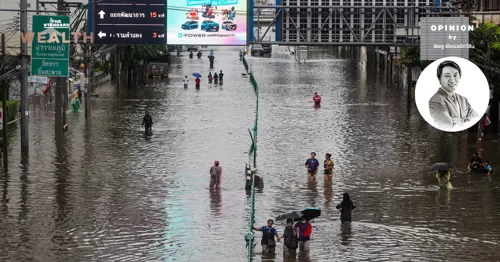
An explainer on applying actuarial thinking to flood preparedness: interpreting weather forecasts correctly, balancing preparation costs against potential damage, and timing response measures based on risk-weighted economics. The piece argues that flood management shouldn't wait for certainty but rather use probability data to optimize resource allocation across businesses, infrastructure, and city planning—with appropriate weight given to life safety and critical services.

▾ Hover for summary ▾ Tap for summary
Thailand's government plans to restructure regional administration via a "One Province, One Office" model to eliminate the ~80% functional redundancy in provincial agencies. By consolidating overlapping units under provincial governors' direct control, consolidating staff through early retirement and not replacing retirees, and deploying digital/AI tools, the administration aims to reduce personnel costs and improve coordination. The Commerce Ministry has piloted this, reducing 10 separate departments to a single 2–3-person provincial commerce office with multi-skilled staff.

▾ Hover for summary ▾ Tap for summary
Google launched Googlebook OS, a new operating system merging ChromeOS and Android (formerly codenamed Aluminium). Key features include quarterly feature updates, 10-year minimum support, Pixel-like UI, seamless Android app integration via Continue On and Cast My Apps, on-device Gemini Nano AI, and adaptive app development guidelines. Some Chromebooks will upgrade; older models get 10-year support, and ChromeOS Flex for legacy PCs continues. Relevant for SMEs considering modern laptop OS alternatives and app developers targeting the new platform.
▾ Hover for summary ▾ Tap for summary
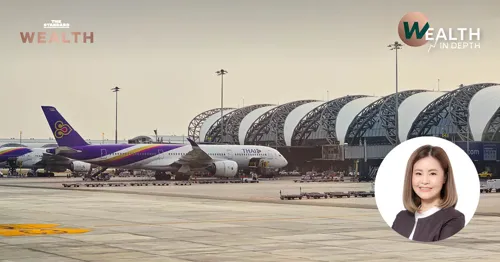
AOT activated its full Business Continuity Plan (BCP) to manage heavy flooding affecting Bangkok and surrounding areas. The company confirmed both Suvarnabhumi and Don Mueang airports remain operational with no flight cancellations, normal parking, and unaffected commercial operations. AOT escalated water-pumping capacity from 2 to 6 operational units and continuously manages retention basin levels; pumping systems still have reserve capacity. The company also coordinated with airlines to allow passengers affected by flooding to reschedule tickets and partnered with Grab to incentivize drivers reaching the airport amid urban traffic congestion.
Want to buy or sell a business?
▾ Hover for summary ▾ Tap for summary
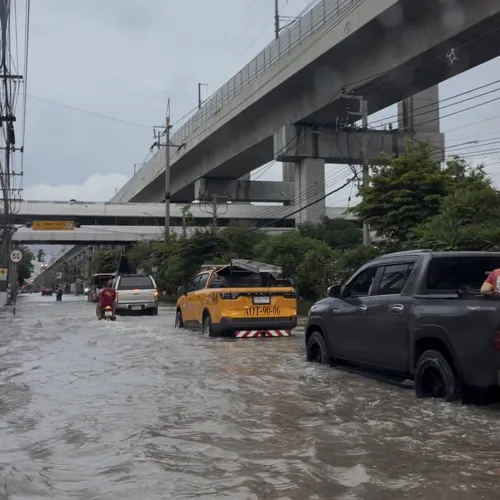
Major automotive brands—Toyota, Honda, Isuzu, Suzuki, Mercedes-Benz, BYD, and others—launched relief campaigns through end-of-year offering 30–50% discounts on parts and labor for customers whose vehicles were damaged by recent flooding across Thailand. Promotions run until December 31, 2026, at authorized service centers nationwide, helping SME fleet operators and individuals recover from flood damage with reduced maintenance costs.
▾ Hover for summary ▾ Tap for summary
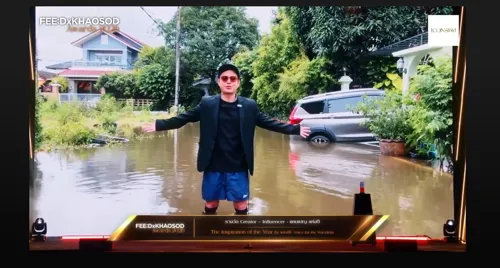
KongGreenGreen, an environmental communicator with a large following, won the "Inspiration of the Year – Voice for the Voiceless" award at the FEED × KHAOSOD AWARDS 2026. At an ethics conference, he advocated for systemic solutions to Thailand's environmental challenges—including PM2.5, agricultural burning, and packaging waste—arguing that individual blame is insufficient without producer responsibility (EPR), economic incentives, and strong enforcement. He framed environmental stewardship as investment in future livelihoods, not cost, noting growing Thai awareness as climate impacts (floods, crop losses) intensify.

▾ Hover for summary ▾ Tap for summary
Thailand's Securities and Exchange Commission (SEC) confirmed that stock market and digital asset trading systems will operate normally on Monday, September 28, 2026, following coordination with the Stock Exchange of Thailand and market participants. The SEC emphasized flexible management to ensure investor protection and staff safety amid ongoing flood conditions. This reassures market continuity despite external disruptions.

▾ Hover for summary ▾ Tap for summary
Thailand's Deputy Agriculture Minister has escalated efforts to control an invasive black-chin tilapia outbreak at Lam Pao Dam reservoir in Kalasin Province, where over 100 specimens have been detected. A rapid-response mobile unit ("Find-Report-Catch") will be deployed to capture fish immediately upon public reports via QR code, supported by e-DNA testing at water junctions and enforcement of the 2024 aquatic animal possession ban. The government aims to contain spread within a 5–10 km radius and suspects illegal smuggling is the primary cause rather than natural spread, emphasizing strict prosecution and public assistance in elimination efforts.
Together GoWeGo! Ferry tickets in Thailand.

▾ Hover for summary ▾ Tap for summary
McDonald's faces a pricing crisis in the US: Big Mac prices have risen 23% since 2019, pushing price-conscious consumers to competitors like Burger King and Taco Bell. The company is responding with an $8.5 billion, 10-year "McDonald's Next" turnaround plan emphasizing technology, store renovations, and menu expansion into chicken and beverages. However, nearly 1 in 3 franchisees are resisting corporate pricing guidance, and stock has fallen 31% from February highs amid investor concerns that the capex requirements will cannibalize profits. The core challenge: McDonald's is no longer perceived as affordable fast food.
▾ Hover for summary ▾ Tap for summary
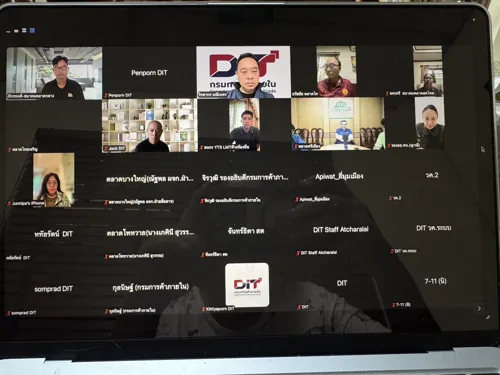
Thailand's Ministry of Commerce convened major retailers (Modern Trade, 7-Eleven, BigC, Makro, Lotus, etc.) and fresh markets to coordinate supply chain response to recent flooding. Most retail channels remain operational with normal stock replenishment, though some convenience stores in Bang Kapi, Min Buri, and Rangsit face transport disruptions. Leafy greens (coriander, dill, Chinese chives) are seeing price increases; the ministry will monitor inventories and prevent price gouging through on-site inspections and a hotline (1569). The government aims to ensure adequate essential goods reach affected areas and manage vegetable supply ahead of the Vegetarian Festival (10–18 Oct 2026).
▾ Hover for summary ▾ Tap for summary
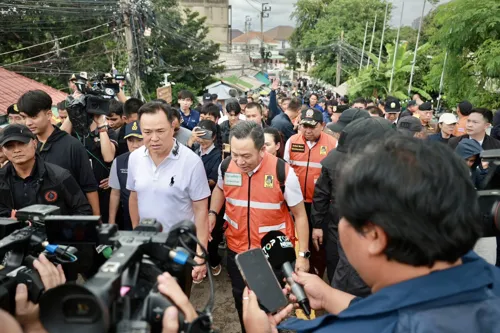
Prime Minister Anutin visited flood-affected communities in Bangkok on September 27, where residents vocally expressed financial hardship ("can't afford to survive"). He responded by ordering a mobile kitchen facility, personally funding local food vendors (3,000–10,000 THB), and arranging mobile toilets. A special Cabinet meeting was called to determine and announce a public holiday related to the crisis. The government is also reviewing clearer public alert protocols, as current technical terminology proved difficult for residents to understand. This reflects immediate government response to a major urban crisis but also highlights communication gaps and resource strain.

▾ Hover for summary ▾ Tap for summary
Thailand's Commerce Ministry has established a Single Command center to coordinate supply chain management during nationwide flooding. The center will monitor consumer goods inventory and prices, coordinate with producers and retailers to maintain stock and adjust distribution routes, and enforce price controls to prevent shortages and price gouging. A 24-hour hotline (1569) is open for public complaints about hoarding and unfair pricing.
Stop running your company on Excel.
▾ Hover for summary ▾ Tap for summary
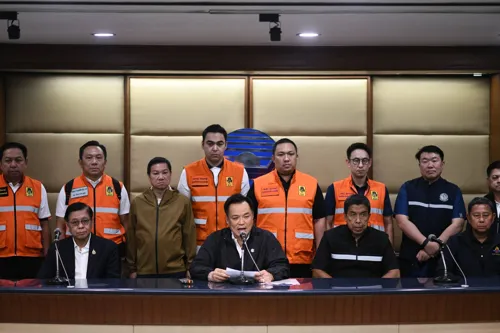
Prime Minister Anutin returned from a Sep 20–27 overseas trip (Japan, US, UK) and immediately cut it short to manage severe flooding affecting Bangkok and surrounding provinces. He ordered Cabinet members not to travel abroad, tasked Ministry of Interior and related agencies to accelerate relief and damage assessments, and plans to introduce a long-term drainage project (Chainat–Phaya Sak–Gulf of Thailand line) to Cabinet on Tuesday. This represents high-level crisis response but limited direct impact for most SMEs unless they operate in flood-affected logistics, insurance, or construction sectors.

▾ Hover for summary ▾ Tap for summary
Honda, ZEEKR, and Toyota have announced flood relief discounts on repair labor and parts (30–50%) for customers affected by recent flooding in Thailand. Honda offers 30% on parts (Bangkok area only), ZEEKR nationwide at 40% labor + parts until 31 October, and Toyota up to 50% on specific parts/service categories until 31 December. These are time-sensitive promotions requiring advance contact with participating service centers to verify eligibility and conditions.
▾ Hover for summary ▾ Tap for summary
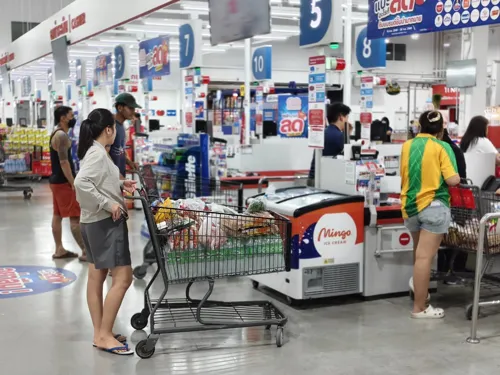
GO Wholesale (Central Retail subsidiary) has activated 24/7 flood monitoring and stocked food ingredients and supplies to support F&B, hospitality, and foodservice operators across Bangkok as flooding spread to all 50 districts on 25 September. The wholesaler is maintaining normal operations across all branches with backup logistics routes and inventory management to ensure continuous supply to affected business segments and minimize operational disruption.

▾ Hover for summary ▾ Tap for summary
Tops, part of Central Retail, confirmed adequate stock of essential goods including drinking water, dried food, ready-to-eat meals, and daily necessities during the Bangkok flood. The company established a 24-hour War Room to manage supply chain across affected areas, increased delivery frequency to stores, and temporarily closed 10 branches (1 Tops, 6 Tops Deli, 3 Tops Care) as of 26 September. This demonstrates critical supply-chain resilience for Thailand's major retail network during crisis, though delivery delays remain possible in high-water areas to prioritize worker safety.
Empower businesses to thrive in the digital age.
▾ Hover for summary ▾ Tap for summary
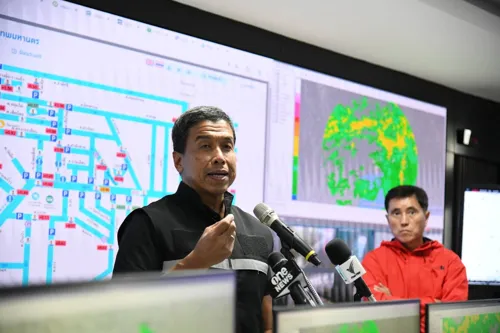
Bangkok's governor reports that after 2–3 days of heavy rainfall (320 mm), the low-pressure system has shifted toward Myanmar, with rain reducing to 10–20 mm/day. Main roads are expected to return to normal in 2 days, though affected communities will need 2 weeks to fully dry. Evacuation centers have been set up in affected areas like Kehakrom Community (30,000+ residents), with over 10,000 people evacuated; authorities are prioritizing care for bedridden patients and food provisions. Thonburi's drainage is expected to handle incoming rain quickly. The PM has ordered all agencies to coordinate response efforts.

▾ Hover for summary ▾ Tap for summary
TikTok has settled a child safety lawsuit in Alabama for at least $100 million. While this is a significant financial penalty reflecting ongoing regulatory and legal pressure on major social platforms regarding child protection, the impact on Thai SMEs is indirect—mainly relevant as a signal of tightening global platform compliance standards that may eventually affect content policies and data handling practices locally.

▾ Hover for summary ▾ Tap for summary
FEED X KHAOSOD AWARDS 2026 reached its 5th edition, evolving from a Boy Love series-focused award into a broader Thai entertainment and social media recognition platform. This year's voting attracted 220,173 users across 189 countries with 3.1 million views, with 41% from Thailand, 17% from China, and 5% from the Philippines. The awards now span 4 categories including Lifetime Achievement, annual awards, creator-influencer recognition, and popular choice, demonstrating significant international reach and the growing global appeal of Thai entertainment content.
▾ Hover for summary ▾ Tap for summary
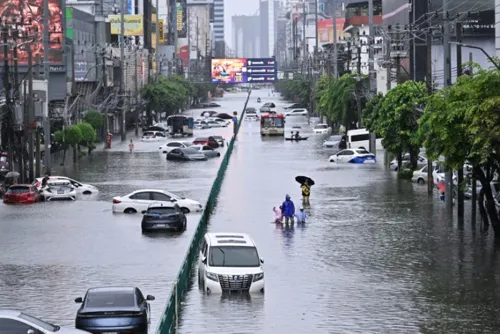
Severe flooding in Bangkok following days of heavy rain (330+ mm) has affected 52,000 households and evacuated nearly 4,900 people to shelters as of late September. Residents report water levels exceeding the 2011 disaster event, with widespread disruption to infrastructure, schools closure on Monday, and ongoing drainage efforts. While a major humanitarian crisis, this is a natural disaster story with limited direct SME/tech business angle unless covering supply chain disruption or disaster-response solutions.
Your real translator for LINE and Discord.
▾ Hover for summary ▾ Tap for summary
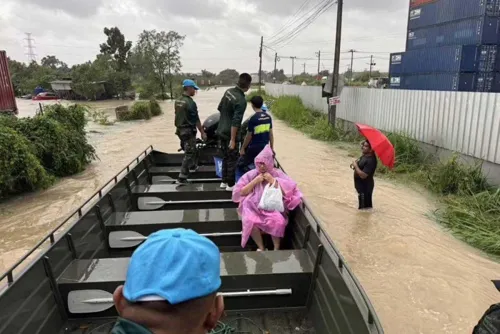
Thailand's Ministry of Defence deployed over 10,000 troops and 1,000 vehicles nationwide to assist flood-affected areas. Military units are operating 24/7 to supply transport and equipment, inspect conditions, and assist stranded residents. The government plans coordinated recovery operations once water recedes, with water diversion to spare communities and support for farmers whose crops are affected.
▾ Hover for summary ▾ Tap for summary
Bangkok Bank has temporarily closed 16 branches across Bangkok and nearby areas following severe flooding on September 26, 2026. Customers are advised to use nearby branches or alternative banking channels. The closures are temporary operational responses to the natural disaster, with a full list available on the bank's website.