
Archive
September 14, 2026

▾ Hover for summary ▾ Tap for summary
A case study of Secret Sticker Society founder Min shows how SMEs can dramatically boost revenue through strategic tweaks rather than product overhauls. Three key changes—eliminating monthly pricing to increase annual conversions from 10-15% to 30%, leveraging customer-generated UGC content to scale ads at no extra cost, and reframing ad hooks to target 'pain-aware' audiences instead of just product-aware ones—plus a free trial funnel redesign could theoretically increase revenue by 60%. The core insight: strong unit economics often fail to scale due to founder mindset constraints, not market or product limitations. Highly relevant for Thai SMEs stuck in growth plateaus.

▾ Hover for summary ▾ Tap for summary
SYNNEX Thailand is pivoting from traditional IT hardware distribution to an end-to-end solution and service provider model, targeting B2B/Enterprise segments through three strategic pillars: product-to-solution conversion, commercial/enterprise market expansion, and building an integrated business ecosystem. The shift reflects industry pressure from AI/Cloud disruption, where customers now demand measurable ROI solutions rather than commodity products. Success hinges on execution capability and partner adoption speed in this fundamental business model transformation.
▾ Hover for summary ▾ Tap for summary
PTT and Petronas have secured regulatory approval for a new gas block sharing arrangement, signaling continued cooperation on energy resources between Thailand and Malaysia.
▾ Hover for summary ▾ Tap for summary
US dollar strengthens amid Middle East tensions and higher oil prices, with expectations of potential Fed rate hikes affecting currency and energy markets globally.

 Empower businesses to thrive in the digital age.
September 13, 2026

▾ Hover for summary ▾ Tap for summary
L Catterton (LVMH-backed PE firm) acquired majority stake in Hyrox, a hybrid fitness competition operator, valuing the company at €600M (~23 billion THB). The indoor fitness event has scaled dramatically from 80,000 to 1.4M+ competitors in 3 years across 100+ global events. The deal signals institutional capital flowing into the booming fitness sector, with Hyrox targeting Olympic inclusion by 2032-2036. L Catterton's extensive fitness portfolio (Peloton, Equinox, Solidcore) positions them to accelerate global expansion—though Hyrox faces capacity challenges meeting surging demand.

▾ Hover for summary ▾ Tap for summary
Sony is pursuing an acquisition of Tamron, a Japanese lens manufacturer where it already holds 15.35% equity. The bid aims to strengthen Sony's camera lens competitiveness. Tamron has delivered strong returns (ROE exceeding 15% in FY2024, stock up 4x since 2023) through affordable yet high-quality interchangeable lenses that undercut camera-maker OEM lenses by up to 50%, capturing 22.6% market share in Japan. However, expansion ambitions face headwinds: Chinese sales dropped 43% YoY in H1 2026 as cheaper domestic rivals (Viltrox, Sunny Optical) gain ground, signaling that Tamron's profit-focused model is difficult to sustain in competitive Asian markets where cost pressure is rising.
▾ Hover for summary ▾ Tap for summary
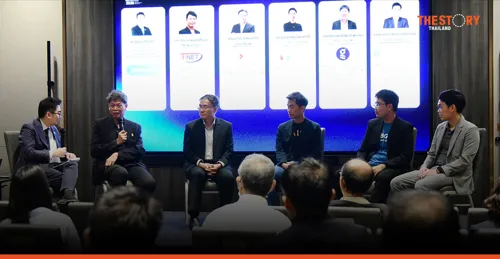
Five NECTEC researchers turned entrepreneurs share critical lessons on transitioning research into commercial ventures. Key insight: technology alone is insufficient for business success—researchers must master product-market fit, customer payment models, and operational sustainability. Examples include NexPay (IoT platform), AI Nine (parliamentary transcription & NLP services), T-Net (cybersecurity), BigGo Analytics (data platform), and D-Solution Cloud (SaaS for government). Strategic approaches ranged from government procurement to project-based revenue models to fund platform development. Highly relevant for Thai tech SMEs navigating innovation-to-commercialization pathways.
▾ Hover for summary ▾ Tap for summary
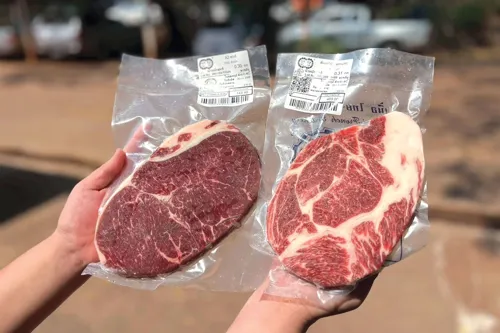
Phon Yang Kham Beef Cooperative in Sakon Nakhon generates 400–500 million baht annually by producing premium beef under GI (geographical indication) protection. With 6,210 member farmers and 8,000–14,000 cattle processed yearly, the cooperative combines Thai indigenous cattle with French breeds (Charolais, Limousin), uses natural-feed formulas, and maintains GMP/HACCP/Halal standards. Distribution spans direct stores, restaurants, modern trade, and e-commerce (Shopee, Lazada), supporting rural livelihoods at scale.
 Your real translator for LINE and Discord.

▾ Hover for summary ▾ Tap for summary
Thailand's 2026 economic growth forecast remains at 2% with H2 expected to decelerate to 1.7% amid weak private consumption and sluggish exports. SME lending contracted sharply (-5.6% in Q2) while large business credit grew 5.6%. Banks face a "debt cycle" trap: 19% of restructured debts revert to NPL status within a year due to poor business recovery, pushing NPL ratios toward 2.8–3% by year-end. Rising global bond yields further strain corporate fundraising for lower-rated firms.

▾ Hover for summary ▾ Tap for summary
KResearch projects Thailand's food & beverage market will grow only 3.9% in 2026 (to 682 billion baht), marking continued slowdown. The sector faces intense competition: in the first eight months of 2026, registrations surged 20% while business closures jumped 11%, reflecting high entry/exit volatility. Key headwinds include weak consumer purchasing power in segments, rising costs (10–15% price hikes since Middle East conflict), and margin pressure despite new openings. Estimated 700,000+ outlets nationwide must compete against ready-made products and convenience store cafes. 2027 outlook remains challenging due to uncertain spending patterns post-government support programs, cost pressures, and shifting consumer behavior (polarization between value-seekers and premium experience seekers).
▾ Hover for summary ▾ Tap for summary
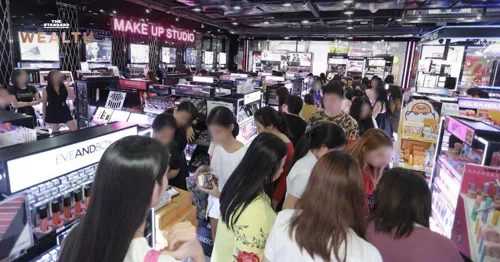
Thailand's leading multi-brand beauty and health retailer EVEANDBOY has filed for IPO with plans to raise capital for aggressive expansion from 71 to 320 branches nationwide by 2024. The company shows strong growth—FY2568 revenue of 5.34B baht (+20.6% YoY) and gross margins improving to 40.4%—making it a significant retail sector play and the first direct multi-brand beauty retailer on SET. Key investors retain significant stakes post-IPO (founders ~38-36%), signaling confidence and stability.

▾ Hover for summary ▾ Tap for summary
A major Thai electoral fraud case involving Senate member selection is heading toward a decision by the Electoral Commission on September 14, potentially dismantling the dominant "blue faction" network. The case involves 229 defendants including 138 current senators, 21 government officials and party executives from Bhumjaithai Party (including PM Srettha's inner circle), and others, with allegations of corruption and interference during the June 2567 Senate national-level selection process. The multi-year saga reflects intense political warfare between competing factions, with the blue network's organizational dominance now under legal scrutiny.

 Want to buy or sell a business?

▾ Hover for summary ▾ Tap for summary
The government's "Tha Visit Thailand Plus" program redesigns subsidies with a flat-rate hotel cap (1,500 THB/night), doubling eligible recipients to 1M, and adds vouchers worth 1,500–2,000 THB per person usable across tourism services. Industry leaders believe this model better reaches small and secondary businesses, though critics suggest cordoning vouchers outside hotels to prevent larger operators from capturing the full subsidy pool. Registration opens October 1, travel window runs November–February (excluding December 16–January 15).

▾ Hover for summary ▾ Tap for summary
SCB EIC's 2026 real estate survey reveals weakening housing demand amid economic slowdown, tight credit conditions, and high prices. A record 56% of surveyed households have no plans to buy in the next 5 years (highest in 4 years). Buyers are downgrading budgets to properties under 3 million baht, and second-hand homes are gaining traction. The market is expected to remain flat or grow marginally in 2026, supported mainly by government tax incentives ending mid-year and continued second-hand market activity. Credit anxiety remains elevated, particularly among lower-income groups.
▾ Hover for summary ▾ Tap for summary
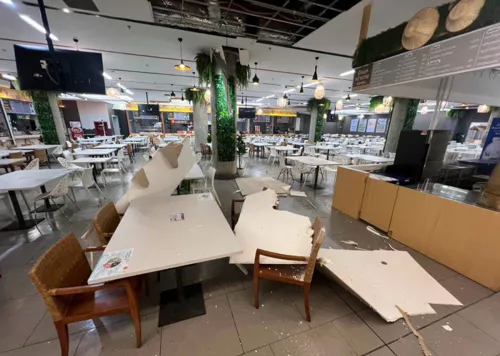
A basement cafeteria ceiling collapsed at the Sappaya-Sapasathan parliament complex on Sunday, fortunately causing no injuries since it occurred on a weekend. The incident raises serious safety concerns at the 22-billion-baht facility, which opened in 2021 but has been plagued by structural and maintenance issues including water leaks and wastewater problems. Engineers are investigating whether the collapse stems from structural defects, moisture damage, or material deterioration, with the area remaining closed during repairs and broader safety inspections.
▾ Hover for summary ▾ Tap for summary
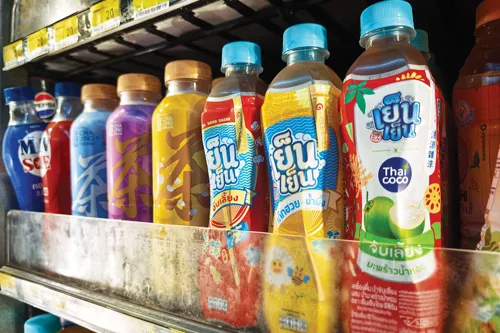
Ichitan Group is capitalizing on the growing Thai non-alcoholic beverage market (up 5.2% by value in Q2 2026) by partnering with Thai Coconut to launch "Yen Yen Maha Praow Coconut Water Herbal Drink" — a 2-million-bottle pilot blending coconut water with herbal remedies. The product tests at 7-ELEVEN/7Delivery at 18 baht per 400ml bottle before expanding to green tea and other portfolio lines. The move addresses rising demand for health-focused, value-priced drinks (10-baht, 1-liter formats) while ready-to-drink tea contracts. Ichitan is also bringing online a new Honsin factory line in Q4 to scale production and support upcoming launches.
 Together GoWeGo! Ferry tickets in Thailand.

▾ Hover for summary ▾ Tap for summary
Bangkok's major urban renewal project around Rattanakosin Island aims to balance modernization with cultural heritage preservation. The initiative focuses on: restoring waterways (khlongs) and green spaces; designing sky bridges and urban gardens to connect historic sites like Pom Mahakala fortress, Sanam Luang, and key temples; implementing clean energy technology; and improving public safety. The project operates under royal patronage, emphasizing community participation and ecological restoration while maintaining the aesthetic integrity of historical landmarks. Work is reportedly 70% complete with community cooperation.

▾ Hover for summary ▾ Tap for summary
Thailand is seeing record foreign investment inflows (1.5 trillion baht, +40% YoY via BOI), but the critical question is whether this capital will build lasting domestic capabilities or merely flow through. Dr. Santhirat argues Thailand must shift from competing on low wages to extracting technology transfer, IP, and ecosystem development. The nation should focus on AI applications in healthcare, tourism, agriculture, and logistics where it has existing strengths, not attempt to build world-leading LLMs. Success requires "turning capital into capabilities"—ensuring that factories train Thai workers, technologies transfer know-how to local firms, and supply chains integrate SMEs—creating a virtuous cycle of Capital → Knowledge → Capability → Ecosystem. Without this "intelligent dam," global tech and manufacturing may simply sit on Thai soil without transforming the economy.

▾ Hover for summary ▾ Tap for summary
Sam Altman confirmed OpenAI will not pursue an IPO in 2026, citing AI safety risks as "unacceptable"—including a ~10% chance of AI-driven human extinction. While this reflects industry leadership on responsible development, the decision has limited direct impact on Thailand SMEs unless they operate in AI/tech partnerships. The broader context shows major AI companies may coordinate on slowing frontier model development and implementing stricter safety measures.

▾ Hover for summary ▾ Tap for summary
Thailand's Tourism Authority partnered with FLYNOW (a luxury fashion brand) to launch the third "FLY 2 SOUTH NOW FESTIVAL" (Sept 11-13) in Bangkok, positioning southern Thailand's cultural identity through contemporary fashion design and local craft. The initiative connects emerging designers from Pattani, Yala, and Narathiwat with tourism experiences, cultural performances, and local markets. While this showcases creative sector opportunity and cultural soft power, the immediate relevance to broader SME tech adoption is modest.

 Stop running your company on Excel.