
Archive
September 16, 2026
▾ Hover for summary ▾ Tap for summary
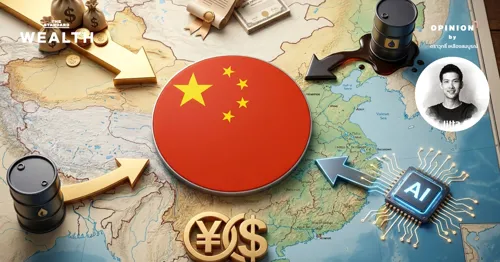
Global bond yields are rising sharply due to US inflation concerns and mounting public debt, forcing investors to reassess equity valuations and reallocate capital across markets. Higher borrowing costs for corporations and reduced returns from risky assets are creating headwinds for equity markets, particularly growth stocks. The article signals a major shift in global capital flows driven by interest rates, currency movements, and geopolitical risk—key factors Thai SMEs relying on foreign financing or export markets should monitor closely.
▾ Hover for summary ▾ Tap for summary
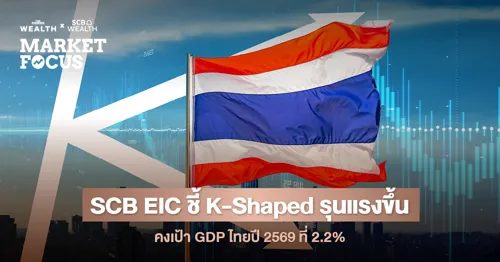
SCB EIC maintains Thailand's 2026 GDP growth forecast at 2.2% (and 2.1% for 2027) but warns of an intensifying K-shaped recovery: AI investment and electronics exports benefits concentrate among large corporates and major industries, while SMEs and low-income households struggle with high debt, limited credit access, and fragile incomes. Export-led growth relies heavily on imports with weak domestic linkages, limiting trickle-down effects. Risks include Middle East tensions, US trade barriers, and El Niño pressures on vulnerable segments.
September 15, 2026
▾ Hover for summary ▾ Tap for summary
Grab's $1.49 billion acquisition of a majority stake in Atome Financial signals major regional fintech consolidation and expands the Southeast Asian superapp's financial services portfolio.
▾ Hover for summary ▾ Tap for summary
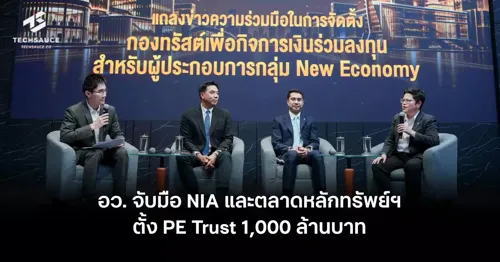
Thailand's government has established a 1 billion baht Private Equity Trust (PE Trust) through the Ministry of Higher Education, NIA, and the Stock Exchange to fund deep-tech and New Economy startups. The initiative pairs a University Holding Consortium (15 institutions) that incubates research-backed ventures with PE funding and a streamlined path to capital markets listing (LiVEx/mai/SET), addressing the critical gap in growth-stage financing for Thai tech entrepreneurs. The stock exchange is also proposing dual-class share structures to protect founder control post-listing.

 Empower businesses to thrive in the digital age.
▾ Hover for summary ▾ Tap for summary
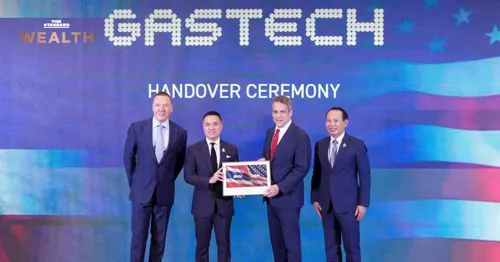
Thailand successfully hosted Gastech 2026 in Bangkok, closing $17 billion USD in energy business deals and positioning Asia as a global energy hub. The government formally handed the conference hosting duties to the US (Houston, 2027). Key developments include a USTDA-supported feasibility study for small modular reactors (SMRs) between Thailand's power generation authority (กฟผ.) and the US, highlighting Thailand's pivot toward nuclear as part of energy transition strategy. Natural gas remains positioned as a critical bridge fuel for near-term energy security.
▾ Hover for summary ▾ Tap for summary
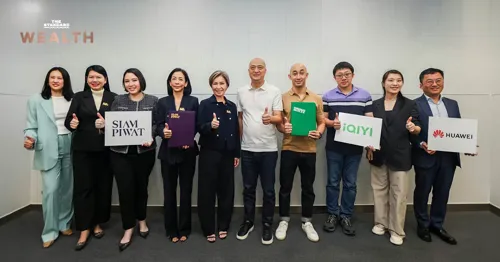
Siam Piwat announced a strategic partnership with major Chinese tech and fintech players (Huawei, UnionPay, Alipay+, WeChat, iQIYI) to build an integrated "Asian Digital Travel Ecosystem" targeting 1 billion users globally. The initiative aims to engage travelers from source markets through digital content and payment platforms, then convert them to Siam Piwat's retail and lifestyle destinations in Thailand. The ecosystem also opens opportunities for Thai brands and creators to access overseas markets via the Chinese partner network—a significant shift toward global B2B partnerships for the real estate and retail group.

▾ Hover for summary ▾ Tap for summary
Thailand's zombie firm problem is accelerating: 12.3% of SMEs now meet the definition (profitability below debt service costs for 2+ quarters), nearly triple the 5% rate for large firms. SCB EIC warns this capital and labour misallocation is suppressing productivity and GDP growth. Real estate, hospitality, food services, healthcare, and telecom sectors are most affected. Policy must distinguish between salvageable firms (upskilling) and uncompetitive ones (resource reallocation) to prevent long-term economic drag amid already-fragile K-shaped recovery.
▾ Hover for summary ▾ Tap for summary
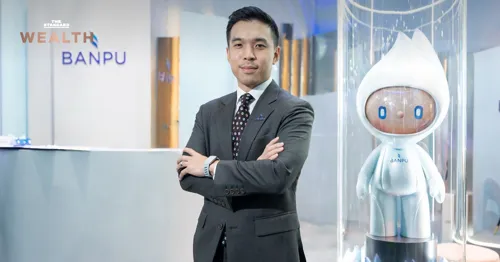
Banpu, Thailand's largest energy conglomerate, is pivoting away from coal (currently 50% of cash flow) toward gas and renewables (target 50%+). The company is leveraging its US operations to offer rapid modular gas engines for AI data centers (12–36 months vs. 5–7 years for traditional plants), partnering with Taiwan's NPI Cloud on GPU infrastructure, and entering cross-continent LNG trading. It also operates 2.3 GWh of battery storage (BESS) globally, guaranteeing 99.99% grid stability—directly targeting the energy constraints facing OpenAI and Anthropic. This positions Banpu as a critical infrastructure play in the AI energy race while supporting Thailand's PDP power plan.
 Your real translator for LINE and Discord.
▾ Hover for summary ▾ Tap for summary
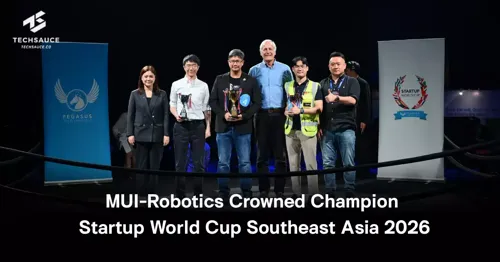
MUI-Robotics won the Startup World Cup Southeast Asia Finale 2026, earning a direct berth to the global grand finale in San Francisco in November 2026 and eligibility for a US$1 million investment prize. The competition, held at the Techsauce Global Summit in Bangkok, featured 11 regional startups pitching to a panel of investment leaders from Thailand and Southeast Asia, underscoring the region's growing venture ecosystem and access to global capital pathways.
▾ Hover for summary ▾ Tap for summary
GE Vernova and Thailand's B.Grimm Power have signed a deal for gas turbine supply, marking a significant infrastructure investment in Thailand's energy sector.
▾ Hover for summary ▾ Tap for summary
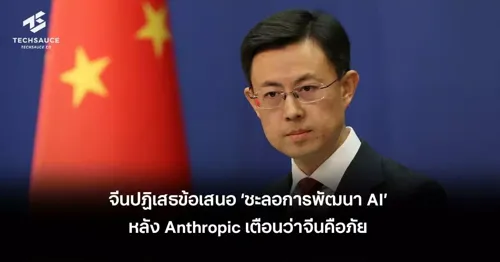
China's Foreign Ministry rejects Anthropic CEO's call for voluntary AI development slowdown, framing it as a geopolitical competition move rather than a safety measure. The article shows China views AI as critical to economic growth and technological leadership, with domestic firms (DeepSeek, Huawei, Moonshot AI) continuing to accelerate development. For Thai SMEs, this underscores the US-China AI arms race making it harder for neutral players to access cutting-edge models and infrastructure—businesses should diversify supply chains and monitor export controls affecting chip/data access.
▾ Hover for summary ▾ Tap for summary
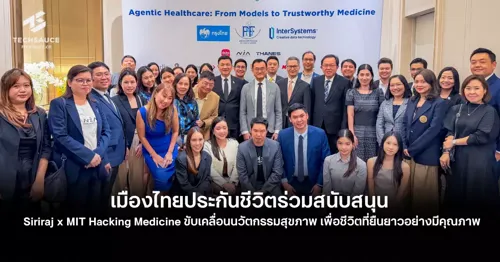
Muang Thai Life Insurance continues backing Siriraj x MIT Hacking Medicine 2026 (Oct 16–20) for a third year, attracting 1,100+ participants from 35 countries to develop AI-driven healthcare solutions for cardiovascular disease and cancer. The program emphasizes trustworthy AI in clinical settings, equity in health access, and bridges innovation from hackathon prototype to real-world deployment; prior teams can join BeyondHack Accelerator for 4 weeks at MIT and pitch at Boston finals in 2027. This signals Thailand's growing health-tech ecosystem and corporate commitment to longevity-focused innovation.

 Want to buy or sell a business?

▾ Hover for summary ▾ Tap for summary
Most organizational transformation initiatives fail due to "false consensus" at leadership level—where executives appear aligned but hold fundamentally different visions. Using Pandora CEO's case study, the article explains why true agreement (not just alignment) is critical, identifies psychological traps like False Consensus Effect that blind senior leaders to actual disagreement, and outlines 5 practical steps to build genuine commitment. Directly applicable to Thai SME leaders managing change.

▾ Hover for summary ▾ Tap for summary
YouTube's 2026 Culture & Trends Report reveals that "mainstream" hasn't disappeared—it has fundamentally shifted from top-down (traditional media gatekeepers) to bottom-up (communities, creators, and fans driving trends). Key metrics now include visibility across platforms, comprehension across diverse audiences, and active participation (comments, shares, remixes, purchases). The report highlights niche content becoming mass content through community engagement (e.g., "The Backrooms" meme lore attracting 90M+ YouTube views, then becoming an A24 film grossing $118M). For SME/tech audiences: community-driven content strategy is now essential; brand success depends on supporting creators authentically and earning community endorsement rather than buying reach alone.
September 14, 2026
▾ Hover for summary ▾ Tap for summary
Some companies are reconsidering supply chain relocations out of China as tariff strategies shift, signaling volatility in manufacturing decisions that affect SME sourcing and cost structures.

▾ Hover for summary ▾ Tap for summary
A case study of Secret Sticker Society founder Min shows how SMEs can dramatically boost revenue through strategic tweaks rather than product overhauls. Three key changes—eliminating monthly pricing to increase annual conversions from 10-15% to 30%, leveraging customer-generated UGC content to scale ads at no extra cost, and reframing ad hooks to target 'pain-aware' audiences instead of just product-aware ones—plus a free trial funnel redesign could theoretically increase revenue by 60%. The core insight: strong unit economics often fail to scale due to founder mindset constraints, not market or product limitations. Highly relevant for Thai SMEs stuck in growth plateaus.
 Together GoWeGo! Ferry tickets in Thailand.

▾ Hover for summary ▾ Tap for summary
SYNNEX Thailand is pivoting from traditional IT hardware distribution to an end-to-end solution and service provider model, targeting B2B/Enterprise segments through three strategic pillars: product-to-solution conversion, commercial/enterprise market expansion, and building an integrated business ecosystem. The shift reflects industry pressure from AI/Cloud disruption, where customers now demand measurable ROI solutions rather than commodity products. Success hinges on execution capability and partner adoption speed in this fundamental business model transformation.
▾ Hover for summary ▾ Tap for summary
PTT and Petronas have secured regulatory approval for a new gas block sharing arrangement, signaling continued cooperation on energy resources between Thailand and Malaysia.
▾ Hover for summary ▾ Tap for summary
US dollar strengthens amid Middle East tensions and higher oil prices, with expectations of potential Fed rate hikes affecting currency and energy markets globally.
September 13, 2026

▾ Hover for summary ▾ Tap for summary
L Catterton (LVMH-backed PE firm) acquired majority stake in Hyrox, a hybrid fitness competition operator, valuing the company at €600M (~23 billion THB). The indoor fitness event has scaled dramatically from 80,000 to 1.4M+ competitors in 3 years across 100+ global events. The deal signals institutional capital flowing into the booming fitness sector, with Hyrox targeting Olympic inclusion by 2032-2036. L Catterton's extensive fitness portfolio (Peloton, Equinox, Solidcore) positions them to accelerate global expansion—though Hyrox faces capacity challenges meeting surging demand.

 Stop running your company on Excel.