
Archive
September 13, 2026
▾ Hover for summary ▾ Tap for summary
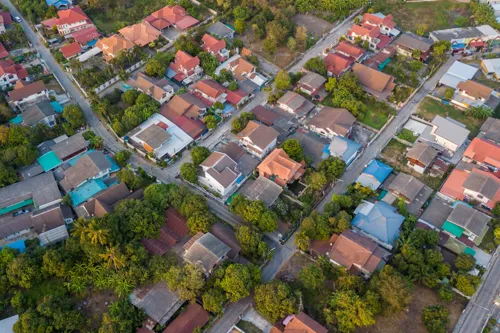
SCB EIC's 2026 real estate survey reveals weakening housing demand amid economic slowdown, tight credit conditions, and high prices. A record 56% of surveyed households have no plans to buy in the next 5 years (highest in 4 years). Buyers are downgrading budgets to properties under 3 million baht, and second-hand homes are gaining traction. The market is expected to remain flat or grow marginally in 2026, supported mainly by government tax incentives ending mid-year and continued second-hand market activity. Credit anxiety remains elevated, particularly among lower-income groups.
▾ Hover for summary ▾ Tap for summary
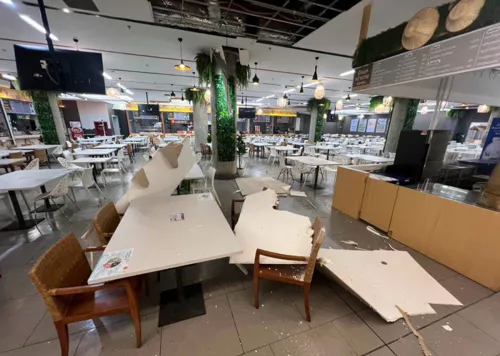
A basement cafeteria ceiling collapsed at the Sappaya-Sapasathan parliament complex on Sunday, fortunately causing no injuries since it occurred on a weekend. The incident raises serious safety concerns at the 22-billion-baht facility, which opened in 2021 but has been plagued by structural and maintenance issues including water leaks and wastewater problems. Engineers are investigating whether the collapse stems from structural defects, moisture damage, or material deterioration, with the area remaining closed during repairs and broader safety inspections.

▾ Hover for summary ▾ Tap for summary
Ichitan Group is capitalizing on the growing Thai non-alcoholic beverage market (up 5.2% by value in Q2 2026) by partnering with Thai Coconut to launch "Yen Yen Maha Praow Coconut Water Herbal Drink" — a 2-million-bottle pilot blending coconut water with herbal remedies. The product tests at 7-ELEVEN/7Delivery at 18 baht per 400ml bottle before expanding to green tea and other portfolio lines. The move addresses rising demand for health-focused, value-priced drinks (10-baht, 1-liter formats) while ready-to-drink tea contracts. Ichitan is also bringing online a new Honsin factory line in Q4 to scale production and support upcoming launches.

▾ Hover for summary ▾ Tap for summary
Bangkok's major urban renewal project around Rattanakosin Island aims to balance modernization with cultural heritage preservation. The initiative focuses on: restoring waterways (khlongs) and green spaces; designing sky bridges and urban gardens to connect historic sites like Pom Mahakala fortress, Sanam Luang, and key temples; implementing clean energy technology; and improving public safety. The project operates under royal patronage, emphasizing community participation and ecological restoration while maintaining the aesthetic integrity of historical landmarks. Work is reportedly 70% complete with community cooperation.

 Empower businesses to thrive in the digital age.
▾ Hover for summary ▾ Tap for summary
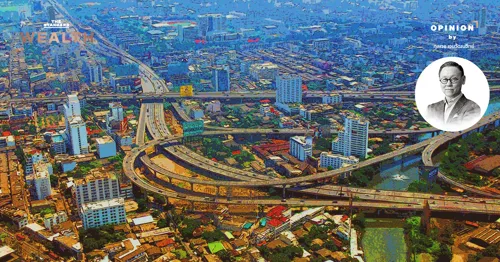
Thailand is seeing record foreign investment inflows (1.5 trillion baht, +40% YoY via BOI), but the critical question is whether this capital will build lasting domestic capabilities or merely flow through. Dr. Santhirat argues Thailand must shift from competing on low wages to extracting technology transfer, IP, and ecosystem development. The nation should focus on AI applications in healthcare, tourism, agriculture, and logistics where it has existing strengths, not attempt to build world-leading LLMs. Success requires "turning capital into capabilities"—ensuring that factories train Thai workers, technologies transfer know-how to local firms, and supply chains integrate SMEs—creating a virtuous cycle of Capital → Knowledge → Capability → Ecosystem. Without this "intelligent dam," global tech and manufacturing may simply sit on Thai soil without transforming the economy.

▾ Hover for summary ▾ Tap for summary
Sam Altman confirmed OpenAI will not pursue an IPO in 2026, citing AI safety risks as "unacceptable"—including a ~10% chance of AI-driven human extinction. While this reflects industry leadership on responsible development, the decision has limited direct impact on Thailand SMEs unless they operate in AI/tech partnerships. The broader context shows major AI companies may coordinate on slowing frontier model development and implementing stricter safety measures.

▾ Hover for summary ▾ Tap for summary
Thailand's Tourism Authority partnered with FLYNOW (a luxury fashion brand) to launch the third "FLY 2 SOUTH NOW FESTIVAL" (Sept 11-13) in Bangkok, positioning southern Thailand's cultural identity through contemporary fashion design and local craft. The initiative connects emerging designers from Pattani, Yala, and Narathiwat with tourism experiences, cultural performances, and local markets. While this showcases creative sector opportunity and cultural soft power, the immediate relevance to broader SME tech adoption is modest.

▾ Hover for summary ▾ Tap for summary
HR practitioner advises Thai companies to proactively update salary structures when market rates shift, rather than leaving outdated structures in place for years. Two approaches exist: rapid uniform percentage increases across all job grades (fast but inaccurate), or comprehensive re-benchmarking with market survey data and fresh job matching (slower but more precise). The author recommends the latter for sustainable competitiveness and employee retention in competitive labor markets.
 Your real translator for LINE and Discord.

▾ Hover for summary ▾ Tap for summary
Thailand's Chamber of Commerce warns that if major tech hyperscalers (Alphabet, Amazon, Meta, Microsoft, Oracle) cut AI and data centre investments by just 10%, Thailand's economy could lose 58.4 billion baht (0.29% GDP impact); a 20% cut would cost 117 billion baht (0.58% GDP). Thailand currently benefits from dual streams: AI hardware exports and foreign direct investment in data centres. However, the concentration risk is high—Thai economic growth increasingly depends on the global AI investment cycle, creating exposure to a potential "AI bubble" that could simultaneously impact both exports and FDI.
▾ Hover for summary ▾ Tap for summary
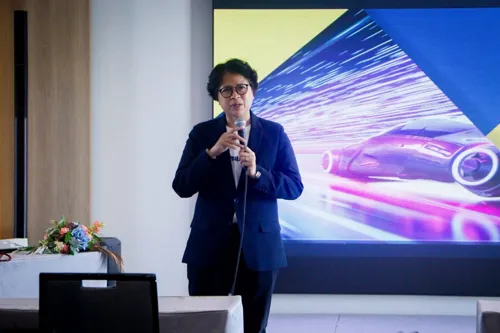
The Thai Journalists Association partnered with the Media Development and Creativity Fund to launch an "AI For Journalists" workshop on 12 September for regional reporters. The program focuses on practical AI skills—from prompt writing to graphics production—while emphasizing ethical use, media literacy, and journalist oversight of AI tools. Participants saw direct applicability to daily newswork, including AI-assisted research, fact-checking, and social media content production, though they equally valued learning AI's limitations and ethical boundaries.

▾ Hover for summary ▾ Tap for summary
Thailand's Department of Industrial Works is studying whether data centers should be classified as Type 108 industrial factories under factory law. If approved, data center operators would need to obtain RG.4 factory licenses and conduct environmental impact assessments (EIA). The agency is gathering technical data to reach a conclusion within months; classification is sensitive due to community/environmental concerns but hinges on legal interpretation of whether generators and equipment meet factory criteria.
▾ Hover for summary ▾ Tap for summary
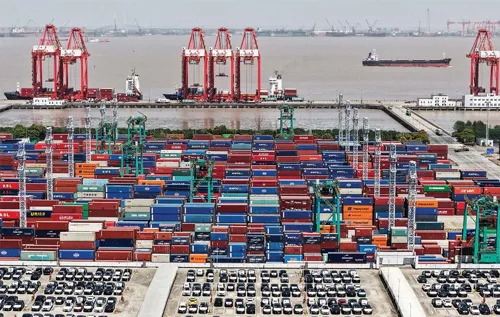
China's massive export surplus—growing over 20% in early 2026 while global trade grows only 3%—is overwhelming global markets, triggering protectionist responses from the US and EU. As China's export-driven growth model exhausts available demand, overcapacity and trade barriers threaten both China's domestic stability (zombie companies, bank losses, local government revenue collapse) and commodity-dependent developing economies. Thailand's export-oriented SMEs should monitor escalating trade tensions and consider diversifying supply chains beyond China-reliant models.

 Want to buy or sell a business?

▾ Hover for summary ▾ Tap for summary
Apple's new Apple Watch Series 12 and Ultra 4 introduce Audio Intelligence, a set of AI-powered audio features including sound recognition, automatic song identification via Shazam, live speech recall (15-sec transcript), and conversation summarization. While useful for accessibility and productivity, the feature raises privacy concerns—Apple clarified that most features require user opt-in, data is encrypted on-device or via iCloud, and transcripts auto-delete within 30 seconds to 7 days. Currently limited to English language support.
▾ Hover for summary ▾ Tap for summary
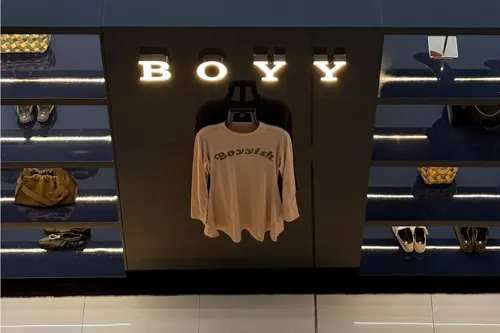
Thai luxury bag brand BOYY (founded 20 years ago) is launching Boyyish, its first apparel collection of t-shirts, accessories, and activewear at mid-range pricing (3,500 THB), targeting younger consumers and online channels (TikTok, Lazada). The move reflects post-COVID market shifts toward casual wear and direct-to-consumer sales. BOYY targets 150M THB revenue from Boyyish (one-third of the parent brand), with the overall business aiming for 500M THB in 2026—already over halfway there through new store openings and category expansion. International expansion includes a Paris pop-up planned for September 2026.

▾ Hover for summary ▾ Tap for summary
Thailand's Election Commission (EC) will announce its decision on 229 Senate election fraud cases on Monday, September 14. The briefing is restricted to pre-registered media (max 3 representatives per outlet) in Conference Room 201; unregistered observers and public will watch via closed-circuit TV outside. This high-profile case has drawn intense scrutiny amid rumors the EC might issue a written statement instead of a press conference.
▾ Hover for summary ▾ Tap for summary
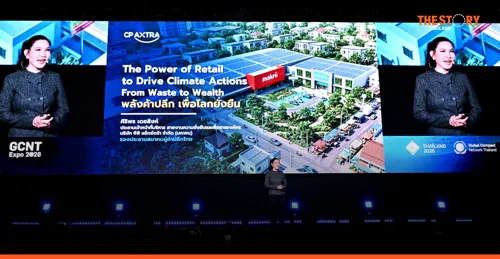
CP AXTRA, Thailand's major retailer, is implementing a "Zero Waste to Landfill" strategy across its Makro and Lotus operations (serving ~40M shoppers), addressing the fact that 96% of retail sector emissions come from Scope 3 (upstream supply chain). The company is reducing waste prevention through three pillars—Measure, Prevent, and Divert—using tools like breathable packaging for fresh produce, vacuum sealing, demand forecasting systems, and food-surplus redistribution programs ("Eat Don't Waste") to communities. Surplus food and recyclable materials (cardboard, plastic wrap) are redirected to secondary uses (animal feed, protein cultivation, energy production) rather than landfills, creating both environmental and economic value for suppliers and local communities.
 Together GoWeGo! Ferry tickets in Thailand.
▾ Hover for summary ▾ Tap for summary
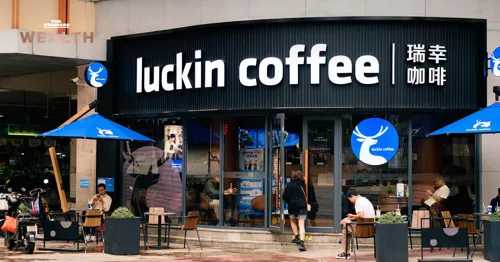
Abu Dhabi's Mubadala fund invests ~$1 billion alongside Centurium Capital in Luckin Coffee, China's leading coffee chain (which recovered from a 2020 accounting fraud scandal). Mubadala gains a board seat but Centurium retains control with 22.1% equity and 47.8% voting rights. The deal reflects Gulf sovereign wealth funds pursuing active governance roles in Chinese consumer plays, while geopolitical tensions curb semiconductor/AI investments in China.

▾ Hover for summary ▾ Tap for summary
Thailand's SEC and Bank of Thailand are implementing strict new guardrails on stablecoins (notably USDT, which surged to 50% of crypto trading volume early this year) effective immediately during public hearing, including daily transfer caps of 5 million baht, tightened KYC/CDD/EDD checks, and customer risk profiling. The "Travel Rule" mandate launches February 27, 2027, enabling regulators to trace digital asset flows end-to-end and block illicit transfers via real-time analytics, liveness detection, and sanctions screening—expected to eliminate 80% of suspicious transactions without impacting legitimate investors.
▾ Hover for summary ▾ Tap for summary
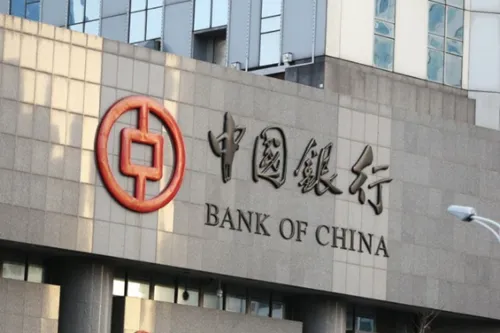
Bank of China has joined a $45 billion computing-power finance initiative, signaling major institutional backing for AI infrastructure investment. While this reflects significant capital flow toward computing resources, its direct relevance to Thailand SMEs remains limited unless it affects regional cloud pricing or access to AI services.

▾ Hover for summary ▾ Tap for summary
OpenAI CEO Sam Altman clarified in a Fortune interview that the company is not rushing its IPO for this year (2026), despite earlier confidential S-1 filing in June. He emphasized that going public will only happen when the company is ready on both business and societal perspectives regarding AI technology, noting that safety concerns make prioritizing a near-term IPO inadvisable.

 Stop running your company on Excel.