
Archive
September 13, 2026

▾ Hover for summary ▾ Tap for summary
OpenAI has postponed its IPO plans beyond 2026, with CEO Sam Altman stating the company is prioritizing AI safety work over near-term public market entry. This signals a shift in OpenAI's growth strategy and may influence investor expectations around major AI company valuations and timelines.
September 12, 2026
▾ Hover for summary ▾ Tap for summary
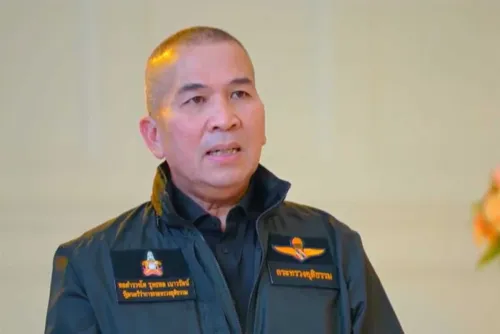
Thai authorities are preparing legal action against a suspected network of Israeli nationals involved in illegal land holdings in Pattaya as part of transnational crime investigations. The Justice Ministry reports evidence of a larger scheme linked to online scams, household debt, and narcotics. Assets including luxury vehicles have been seized, with a special investigation expected to launch this month.

▾ Hover for summary ▾ Tap for summary
Former PAD leader Sondhi Limthongkul is attempting to mobilize public pressure on "transnational grey capital" and alleged election manipulation, with upcoming court rulings on a Senate election case potentially serving as a catalyst for mass protests. The campaign remains fragmented and lacks full momentum, but key legal decisions on ballot barcode irregularities and prosecution of 292 accused individuals could shift political sentiment and fuel wider demonstrations depending on outcomes.

▾ Hover for summary ▾ Tap for summary
OpenAI has released ChatGPT for Financial Services, built on GPT-6 Astra and developed with Morgan Stanley and Evercore. The specialized tool enhances financial data reading, analysis, and reporting capabilities, supporting multiple data sources including Daloopa, LSEG News, PitchBook, Crunchbase, and Quartr. Enterprise customers can connect additional data sources to generate financial reports and identify trends. This represents a significant move to embed AI into institutional finance workflows.

 Empower businesses to thrive in the digital age.

▾ Hover for summary ▾ Tap for summary
Boston Consulting Group's 20-year study of ~2,000 global companies reveals that over 70% of firms undergoing transformation fail to match industry benchmarks within 1–5 years. The root cause: "False Alignment"—executives believe they agree on change goals, but lack true understanding. Unlike mere agreement, alignment requires deep, documented consensus. When leaders skip detailed alignment (the "why," "what," and "how"), teams operate at cross-purposes. The article cites a real energy company where 8 of 13 executives claimed alignment, yet their written descriptions of the new business differed dramatically—one emphasized structural continuity, another emphasized independence from parent company, a third envisioned entirely new assets and leadership. This cognitive bias (False Consensus Effect) undermines transformation success; organizations must enforce explicit, testable agreement before execution.

▾ Hover for summary ▾ Tap for summary
Automattic's board suspended founder and CEO Matt Mullenweg without public explanation, appointing CFO Mark Davies as interim CEO. Mullenweg learned of the decision only 50 minutes before the board meeting, indicating a coordinated move by other directors. This is significant as Automattic/WordPress powers a substantial portion of the web, making leadership instability potentially impactful for the broader tech ecosystem.

▾ Hover for summary ▾ Tap for summary
Microsoft has elevated Rust to first-class language status by developing rustc_codegen_utc, a new backend that integrates Rust with MSVC toolchain for full Windows compatibility. This enables native binary generation and access to Microsoft's existing binary analysis tools. Over 100 internal projects are already using it as of early 2026, signaling Microsoft's strategic commitment to Rust for systems-level development.
▾ Hover for summary ▾ Tap for summary
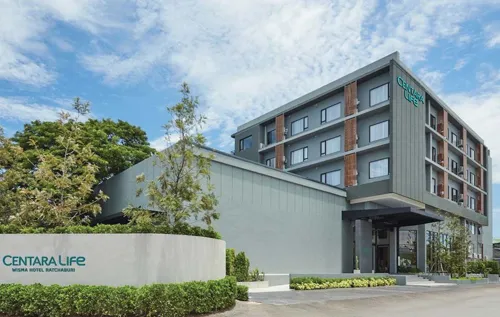
Centara Hotels has taken over management of Wisma Ratchaburi hotel and rebranded it as 'Centara Life Wisma Ratchaburi,' a 69-room 4-star property in Ratchaburi province. This marks the hotel chain's first managed property in the province. The hotel targets 90% annual occupancy with weekend rates at 100% and weekday rates around 70% (1,500–2,000 THB/night). Centara positions the hotel as a hub for travelers visiting Ratchaburi and nearby provinces, leveraging growing tourism recovery—visitor numbers rebounded to ~3 million in 2567–2568 from pandemic lows. The move reflects rising interest in secondary cities as tourism and hospitality destinations.
 Your real translator for LINE and Discord.

▾ Hover for summary ▾ Tap for summary
Bangchak Corporation (BCP) subsidiary BFPL inspected an oil pipeline on Fuel Street after reports of oil-contaminated stormwater. Using DCVG testing and pressure testing up to 28 barg, the company found no pipeline leaks or pressure abnormalities. Further verification using ultrasonic scanning and intelligent pig technology is underway before restarting operations. The incident highlighted supply chain resilience for Thailand's key energy distributor.

▾ Hover for summary ▾ Tap for summary
SCB EIC's 2026 real estate survey reveals structural stress in Thailand's mortgage market: lower-income groups (≤50K baht/month) remain in default or struggling; the critical concern is the middle-income group (50K–100K baht/month), where nearly half report growing anxiety about future payments despite currently servicing loans on time. NPL ratios remain elevated and banks maintain tight lending standards, signaling persistent economic headwinds affecting purchasing power and household debt stress across middle-income earners.

▾ Hover for summary ▾ Tap for summary
House of Wisdom launched a two-way HRM curriculum designed to bridge generational gaps in Thai organizations. The event featured Gen Z voters using Agree-Disagree polls on workplace priorities, revealing they value company culture (90% oppose salary being more important than culture), seek meaningful work over job security (50-50 split on job-hopping perception), prioritize authenticity in brands, and prefer human consultation over AI for complex problems. Key insight: Gen Z prioritizes experiences and community over transactional purchases, while TikTok Live Commerce and rapid social media trends demand brands stay agile and culturally current to engage this demographic effectively.
▾ Hover for summary ▾ Tap for summary
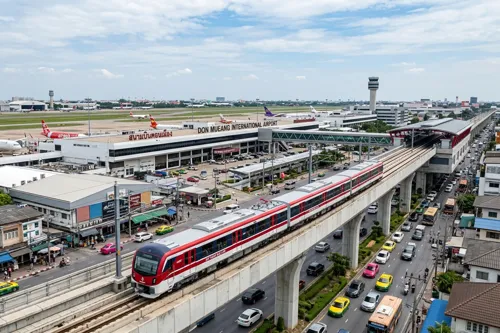
Donmuang is emerging as Bangkok's premium residential hub, driven by the new city master plan (launching 2025), major infrastructure projects (red line extension, Donmuang airport expansion, tollways), and high-performing micro-location factors. Land prices are rising ~11% annually; the area uniquely blends single-family homes with BTS proximity—a rare market phenomenon. Target buyers span wealthy local families, airline professionals, international school parents, and provincial business owners seeking legacy assets near transport and airport access. This positions Donmuang as a competitive alternative to traditional upscale zones.

 Want to buy or sell a business?
▾ Hover for summary ▾ Tap for summary
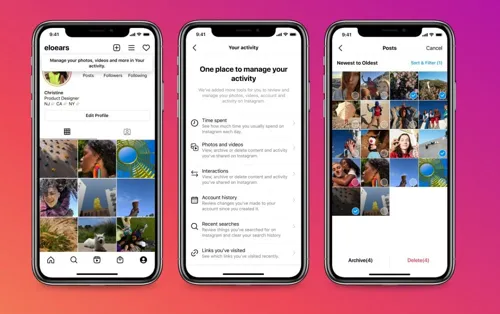
Instagram's head Adam Mosseri responded to Australian proposals requiring platforms to let users disable algorithmic content curation. He argued that removing algorithms would flood feeds with brand/business content at the expense of creators and personal connections, since high-volume commercial accounts would dominate. Mosseri acknowledged algorithm imperfections but defended the current approach while promising future AI improvements for content management.
▾ Hover for summary ▾ Tap for summary
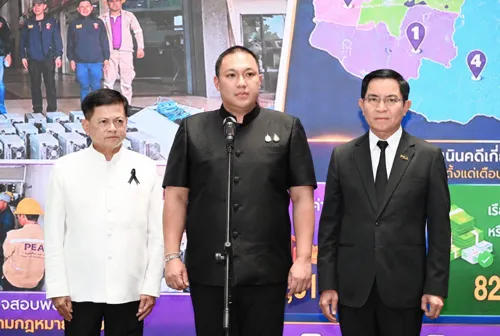
Thailand's Ministry of Interior has submitted a 750 billion baht budget proposal to install rooftop solar panels on 1.5 million households (increased from an initial 1 million target), with 50,000 baht subsidy per household. The project has cleared the initial screening committee and awaits Cabinet consideration. Officials deny vendor lock-in concerns, noting 2,300+ registered installation companies are available; the state-run utilities (MEA and PEA) will handle ~300,000–400,000 installations directly while contracting private firms for the remainder. Installation requires smart meters and two-way grid connections before subsidies are paid out.
▾ Hover for summary ▾ Tap for summary
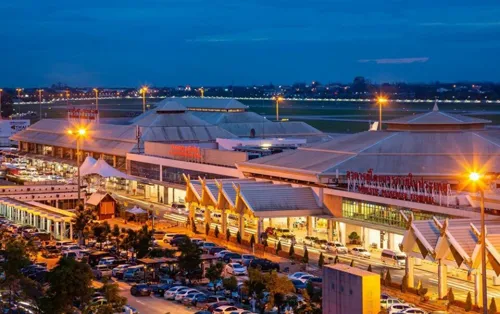
Chiang Mai Airport expects significant growth with five airlines adding six new routes during the winter schedule (late October 2025 onwards), including Etihad's Abu Dhabi connection and expanded service to Zhongdong, Shanghai, and Incheon. Full-year passenger projection of 9.97 million reflects strong recovery post-COVID and increasing connectivity, with Chinese and South Korean visitors comprising over 50% of international traffic. The airport has already deployed six new aircraft bridges and is accelerating infrastructure projects to handle capacity growth.

▾ Hover for summary ▾ Tap for summary
This article reframes Industry 5.0 adoption for Thai SMEs, emphasizing that successful digital transformation starts with identifying operational problems—especially data management and workforce readiness—rather than chasing new technology. Real-world case studies (Kenvue) demonstrate practical ROI: a data analytics tool enabled one planner to manage 30 production lines instead of 4, freeing staff to focus on complex decisions. Key takeaway: Thai manufacturers should assess organizational readiness using frameworks like Thailand Industry 4.0 Index and Three Plus Framework (with Data as foundation) before investing in AI or automation, ensuring projects compound rather than fragment.
 Together GoWeGo! Ferry tickets in Thailand.

▾ Hover for summary ▾ Tap for summary
Thailand's Tourism Authority (TAT) is launching the third annual "Amazing Green Fest 2026" on 11–13 September at Sanam Luang, Nakhon Pathom, with the theme "Travel Changes City, Green Changes World." The event aims to advance sustainable tourism through 8 interactive zones spanning storytelling, local entrepreneurship, organic products, sustainable dining, innovation, youth education, workshops, and knowledge exchange. TAT is positioning this as a flagship initiative to elevate Thailand's tourism brand under SDG principles, expand low-carbon hotel standards (CF Hotel), and channel tourism revenue to 55+ community tourism networks across secondary cities and the Wellness Valley initiative.

▾ Hover for summary ▾ Tap for summary
Deputy PM Yutthasak Sutin outlined a five-pillar education transformation strategy at Khon Kaen University's innovation fair: Hope to Discover (personalized education via AI), Hope to Learn (lifelong learning via credit banking), Hope to Work (industry-education linkages), Hope to Rise (merit-based valuation), and Hope to Dream (innovation/problem-solving). The vision reframes education as a "Human Development System" and critical infrastructure for sustainable national development, using AI to reduce inequality and shift from standardized to personalized learning.
▾ Hover for summary ▾ Tap for summary
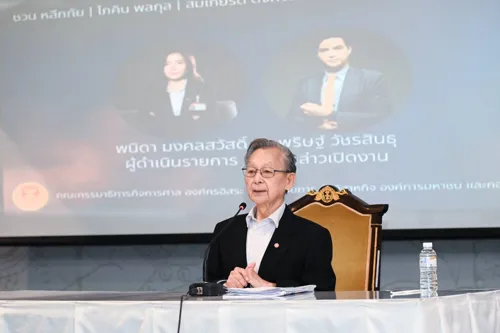
Former PM Chuan Leekpai warns that Thailand's independent agencies—designed as oversight mechanisms to strengthen democracy—are increasingly subject to political interference and compromised legitimacy. He cited historical examples of the Election Commission (ECT) being corrupted (bribery, falsifying records) and the executive branch overreaching into judicial authority. He argues that without strict adherence to integrity and good governance, these institutions risk failing their democratic mandate, and that current political pressure on budget allocation for agencies like the ECT exemplifies ongoing institutional capture.
▾ Hover for summary ▾ Tap for summary
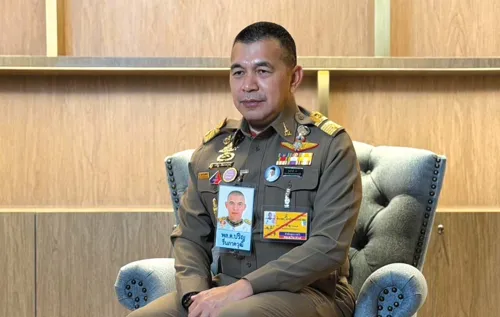
A royal initiative to revitalize Rattanakosin Island combines cultural heritage preservation, environmental restoration, and quality-of-life improvements for Bangkok residents. Key projects include waterway cleanup (connecting three major canals), green bridge networks linking historic temple areas, and a Fort Mahakam history museum—with ~70% community buy-in already achieved. Design priorities emphasize heritage enhancement over aesthetic makeover alone.

 Stop running your company on Excel.