
Archive
September 17, 2026

▾ Hover for summary ▾ Tap for summary
As China's Golden Week (Oct 1–7, 2026) approaches, Thai tourism officials forecast 250,000 Chinese visitors during the 13-day holiday period (Sep 25–Oct 7), up 24% YoY and generating 11.5 billion baht—a 37% increase. Six new air routes from Chinese cities to Bangkok, Chiang Mai, Phuket, and Udon Thani are launching, adding ~10,282 seats. Weak baht (4.93 per yuan, down 9.8% YoY) and Thailand's position as a top regional destination support demand recovery. TAT is running "Nihao Month 2026" to capitalize on the surge and build continuity toward Chinese New Year.

▾ Hover for summary ▾ Tap for summary
Thailand's Digital Economy Minister highlighted strong early adoption of the TH-AI Passport programme, with over 1 million registrations in the first week and 600,000+ daily concurrent users. The free AI learning platform targets 5 million subscribers and aims to democratize AI access, particularly for lower-income groups. Mobile operators (AIS, TrueCorps, National Telecom) are offering unlimited data packages at 29 baht/month to reduce internet cost barriers. Growth momentum varies by region, with uptake now accelerating in Buri Ram province following local promotion efforts.

▾ Hover for summary ▾ Tap for summary
Thailand Privilege Card Co is exploring expansion into the Thai market to diversify revenue beyond its core long-term foreign residency visa business (currently 95% of revenue). The company forecasts 30% revenue growth to over 4 billion baht for fiscal 2026, driven by geopolitical conflicts expanding foreign membership from Myanmar and Russia. The TPC committee has approved the diversification principle, though legal feasibility and impact on existing membership remain under assessment.
▾ Hover for summary ▾ Tap for summary
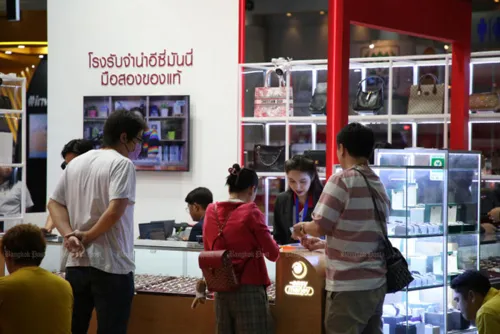
The Thai household debt-to-GDP ratio is expected to fall to 84% by end of 2026, according to UTCC research assuming 2.5% GDP growth. However, total household debt will still increase from 16.3 trillion baht (Q4 2025) to 16.5 trillion baht (Q4 2026), driven by households with insufficient income and limited credit access reluctantly borrowing despite repayment concerns. The declining ratio masks persistent debt stress among vulnerable segments.

 Empower businesses to thrive in the digital age.
▾ Hover for summary ▾ Tap for summary
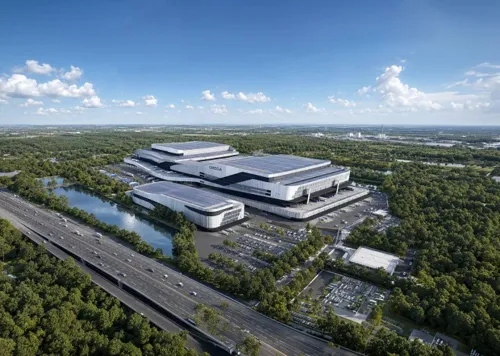
Taiwan's Ally Logistic Property (ALP) is investing 10 billion baht to build "Omega 1 Bangna," its largest Asian smart warehouse facility in Thailand. Spanning over 260,000 sq meters along the Eastern Economic Corridor, the facility will use high-racking automated storage and retrieval systems to allow businesses access to automation without upfront infrastructure costs. The warehouse, offering 35% greater operational efficiency than conventional facilities, begins operations October 1 with full deployment by Q3 2026. ALP's infrastructure-as-a-service model lets tenants pay usage fees rather than capital investments, addressing labor shortages and delivery pressures facing Thai logistics operators.
▾ Hover for summary ▾ Tap for summary
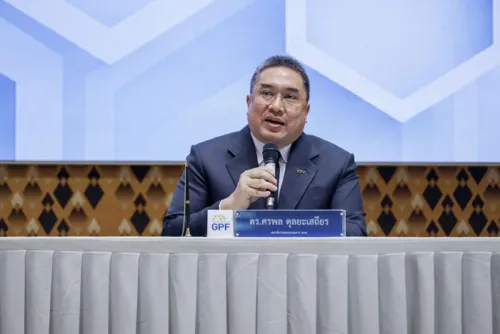
The Government Pension Fund (GPF) has partnered with WhatsCall, a leading caller identification and scam prevention app in Thailand, to protect 1.6 million retiring members from increasingly sophisticated online scams. The partnership extends anti-scam tools and premium features to GPF members to help them screen calls and identify potential threats before falling victim. While technology is critical, the initiative must be accompanied by broader digital literacy and public awareness efforts to be truly effective.
▾ Hover for summary ▾ Tap for summary
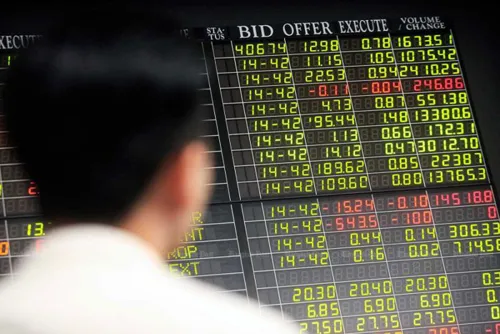
The Federal Reserve's rate decision has shifted market focus to 2027 expectations, with elevated US bond yields and borrowing costs pressuring Thai equities. Foreign investors have sold net 7.2 billion baht of Thai stocks as tightening financial conditions raise uncertainty, though a less hawkish Fed long-term outlook could ease emerging market concerns. The Thai stock market may see sideways movement with downside risk unless new negative factors emerge.
▾ Hover for summary ▾ Tap for summary
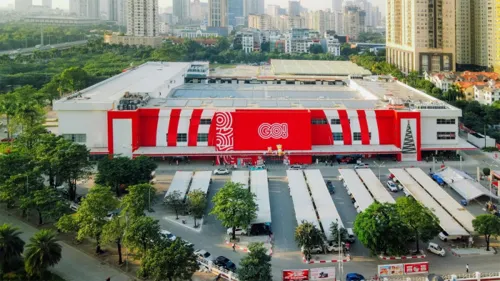
Central Retail is investing $3 billion in Vietnam over 10–15 years to expand retail store networks in major and secondary cities while developing mixed-use real-estate projects (malls, hotels, resorts). The investment spans food and non-food formats, lifestyle brands, and integrated retail experiences. Central is also collaborating with Vietnamese partners on "Vietnam Week at CentralWorld" (Sept 17–20) to help local businesses enter regional markets, showcasing how Thai retailers are pursuing regional expansion amid evolving consumer preferences.
 Your real translator for LINE and Discord.

▾ Hover for summary ▾ Tap for summary
PrimeStreet Group and Chulalongkorn University launched the "UC Financial Change Agent" programme to build financial literacy among Thai youth, targeting 100 university students as "learning leaders" who will then conduct real-world activities to reach 10,000+ young people across schools and communities. The initiative addresses elevated household debt and economic uncertainty by positioning financial understanding as a foundational life skill for adolescents, aiming to create a stronger financial resilience base for sustainable societal growth.
▾ Hover for summary ▾ Tap for summary
A major Russian oil refinery halted operations following a drone strike, with potential implications for global energy markets and commodity prices affecting Thailand's energy costs.

▾ Hover for summary ▾ Tap for summary
Location Intelligence is positioned as critical infrastructure for modern enterprises to unify fragmented data across systems. Esri's GeoAI approach demonstrates how geospatial context enhances AI analysis for better decision-making—exemplified by companies like Starbucks (site selection), UPS (logistics optimization), and Big C (consumer behavior analysis). Thai SMEs should consider Location Intelligence as a central platform to integrate IoT, business, and operational data for actionable insights in real-world contexts.

▾ Hover for summary ▾ Tap for summary
Huawei has launched a new AI computing system in response to US export restrictions. The development reflects China's push for technological self-sufficiency in semiconductor and AI infrastructure. For Thai SMEs, this signals shifting regional tech supply chains and potential opportunities in alternative platform partnerships, though direct impact depends on your current vendor ecosystem.

 Want to buy or sell a business?

▾ Hover for summary ▾ Tap for summary
Thai Airways announced winter schedule 2026–2027 (Oct 25–Mar 27) with 66 routes, including new Bangkok–Danang service (14 flights/week from Dec 1) and increased frequency to CLMV nations and Europe. The carrier is restructuring fleet to 4 models, upgrading in-flight products (seats, entertainment, meals), and launching "Junior Sky Explorers" program and destination experiences via Royal Orchid Holidays to build long-term passenger loyalty and competitive resilience.

▾ Hover for summary ▾ Tap for summary
Vietjet Thailand is executing a major fleet modernization strategy, replacing its Airbus A320/A321 aircraft with Boeing 737-8s to reduce operating costs and boost efficiency. The carrier plans to reach 50 aircraft by 2027, with aggressive expansion into regional international routes (Malaysia, Indonesia, Australia, China, Taiwan, India, Japan) and direct flights from provincial airports (Udon Thani, Nakhon Ratchasima, Surat Thani) bypassing Bangkok. In H1 2025, the airline carried 3.5M passengers (130% growth), generated 10 billion baht revenue, and targets 50% annual growth over the next two years while expanding membership from 750K to 1M and investing in an aircraft maintenance facility.
▾ Hover for summary ▾ Tap for summary
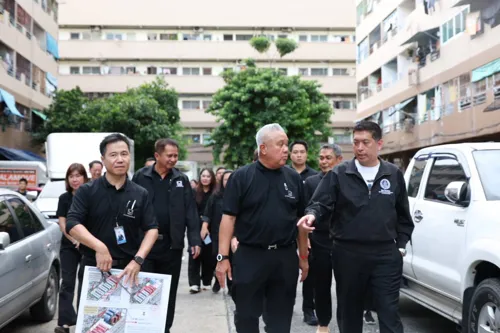
Thailand's National Housing Authority (NHA) is revitalizing the 47-year-old Thung Song Hong community housing project, originally built with 1,369 low-income units. The master plan—developed with Silpakorn University—proposes replacing deteriorated structures with 9 new residential buildings totaling ~3,800 units (accommodating existing residents plus ~2,400 new units) adjacent to the Red Line Skytrain, plus commercial and office space. Plans will be submitted to the NHA board and NESDC in 2027, with cabinet consideration in 2028. While this demonstrates long-term urban renewal thinking and BTS accessibility leverage, execution timelines remain uncertain and it affects primarily a specific demographic rather than broader SME/tech sectors.

▾ Hover for summary ▾ Tap for summary
Deputy Democratic Party leader Veerayuth calls for a comprehensive overhaul of Thailand's Local Content policy framework beyond tariffs alone. He proposes four key measures: (1) tighten Local Content measurement for EV manufacturers receiving state subsidies (currently 25 billion baht disbursed, 200,000 units pending compliance); (2) broaden Local Content definition to include R&D, battery tech, software, and hydrogen investments—not just parts; (3) significantly increase workforce training budgets for automotive workers; and (4) strengthen support for Tier 2-3 SME suppliers and environmental compliance. The critique points to South Korea and Singapore's success using direct industrial policy tools rather than relying on taxation as primary lever.
 Together GoWeGo! Ferry tickets in Thailand.

▾ Hover for summary ▾ Tap for summary
Thailand's Digital Economy Ministry and the Electronic Transactions Development Agency (ETDA) have brokered consensus between rider representatives and Lalamove on a framework for calculating minimum compensation for gig workers. The agreed formula covers work-time compensation, vehicle costs, and hazard premiums, with government entities acting as neutral mediators. While Lalamove has implemented three rider demands (reducing suspension periods, adding appeal channels, expanding job visibility radius), the contentious issue of a 10 baht/km minimum rate remains under study—balancing worker rights against platform business models.

▾ Hover for summary ▾ Tap for summary
The Thai baht weakened to a 1.5-month low of 33.43 baht/dollar following a hawkish Fed decision to raise rates to 3.75–4.00% and signal another rate hike before year-end. The baht partially recovered in afternoon trading as gold prices rose, though crude oil fell on reports of increased Saudi supply through Oman. Foreign investors bought net 1,651 million baht in Thai equities and 623 million baht in bonds, with the expected trading range for tomorrow at 33.20–33.50 baht/dollar.
▾ Hover for summary ▾ Tap for summary
Thailand's central bank maintains accommodative monetary policy with no change to growth forecasts, signaling continued stable financial conditions for SME borrowing and operations.

▾ Hover for summary ▾ Tap for summary
Thailand's Finance Ministry has extended the Thai Help Thai Plus 60/40 assistance programme for two additional months (October–November 2026) using existing budget allocation, without reallocating from the 200-billion-baht energy transition fund. The extension was approved for cabinet consideration on 22 September. This bridges a gap until the new State Welfare Card programme launches on 1 October, with eligible citizens automatically transitioning to the new scheme or remaining on the 60/40 subsidy if they don't qualify.

 Stop running your company on Excel.