
Archive
September 22, 2026
▾ Hover for summary ▾ Tap for summary
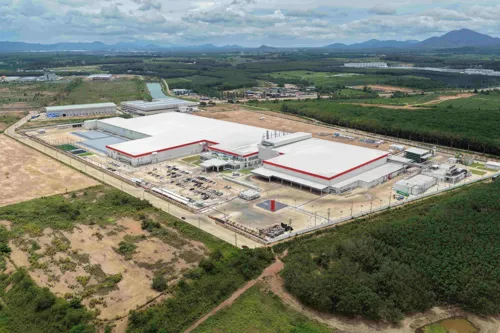
Mars is investing 7 billion baht to build Thailand's first Pringles factory in Chonburi (73,800 sqm), operational from late 2025. The facility will serve as a production and export hub for Asia-Pacific, Middle East, and Africa markets, with plans to add a third production line by late 2027. Mars commits to sourcing ~50% of inputs from Thai suppliers, supporting local SME development and supply chains.

▾ Hover for summary ▾ Tap for summary
Thailand's Oil Fund faces a critical liquidity crisis with cumulative losses reaching ~92 billion baht and projected to hit 100 billion baht by late September 2024. The fund is preparing a new loan round (potentially 100+ billion baht) from domestic banks, with government guarantee, to service debt and maintain fuel price subsidies at 30 baht/liter. This reflects structural exposure to global oil volatility and unresolved policy debate on subsidy exit strategies—a material issue for energy budgets and inflation management for Thai SMEs.
▾ Hover for summary ▾ Tap for summary
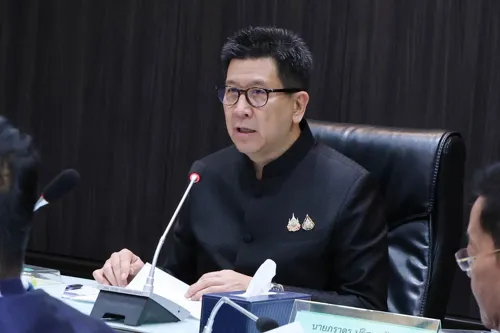
Deputy Prime Minister Ek Niyom chaired an emergency central-region flood management meeting after increasing water discharge from Chao Phraya Dam to 1,000–1,300 m³/s, expected to raise water levels 0.5–1.5 metres and impact six low-lying Ayutthaya districts. Key directives include coordinating dam operations across four major reservoirs, pre-emptively draining canals before heavy rainfall, balancing water release through irrigation systems on both riverbanks, preparing emergency equipment and staff for 24/7 operations, and rapidly communicating alerts to residents. This direct government action signals imminent flood risk to SMEs in lower central Thailand, especially agriculture and riverside logistics sectors.
▾ Hover for summary ▾ Tap for summary
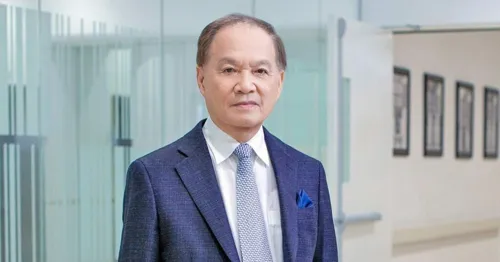
Thailand's Anti-Money Laundering Office (AMLO) has seized assets worth 3.5 billion baht across 77 cases involving fraud, online gambling, and Chinese-linked money laundering networks. In a recent committee meeting, AMLO ordered additional asset seizures of 1,799 million baht in the 'Dr. Boon' fraud case and is seeking court forfeiture of 1,082 million baht across 28 other cases. Notable targets include the MaxiTrader investment fraud (971 million baht) and the 'Chonnapat' online gambling ring (13+ million baht additional assets). This action underscores ongoing enforcement against organized crime, particularly international fraud and gambling operations targeting Thai citizens.

 Empower businesses to thrive in the digital age.

▾ Hover for summary ▾ Tap for summary
Connected AI agents are reshaping B2B sales by enabling smarter, data-driven decision-making. The article discusses how standard AI falls short without proper context and custom data, suggesting that integrated AI systems could significantly boost sales productivity and revenue. Thailand SMEs in B2B sectors should explore how AI agent integration could enhance their sales processes.

▾ Hover for summary ▾ Tap for summary
Melody of Life 17 is a free urban music festival (Oct 16–18, Central World) organized by ICYDISC, centralwOrld, and Chang, featuring 100+ artists across four stages with a "Music for Tomorrow" theme. The event emphasizes sustainability, carbon-neutral operations, waste management, and Zero Waste initiatives in partnership with 100+ brands including SCG. Organizers promote environmental awareness to younger generations through music, contests (film, photography, sculpture), and recycled-material stage design, marking the festival's 17th edition and furthering Thailand's music industry competitiveness.
▾ Hover for summary ▾ Tap for summary
KBTG's fourth annual Techtopia summit showcases Thailand's AI readiness through practical frameworks. Key speaker (Deputy PM Supachai Panitchpakdi) outlined Thailand's 5D adaptation strategy (de-dependence, diversification, decarbonization, demographics, digital), while KBTG Executive Chairman Tom Wornuth shared six pillars for the AI-era workforce: digital workforce collaboration with AI, early AI governance, risk management, reskilling (39% workforce by 2030), delegating repetitive tasks to AI while preserving human-centric work, and controlled AI deployment. KBTG's AthenaMind multi-agent platform shows practical progress—90% adoption among staff with 15% cost reduction by 2028. Actionable for Thai SMEs considering AI integration strategies.

▾ Hover for summary ▾ Tap for summary
SCB Wealth and Huasen Heng Gold Futures forecast global gold prices at $5,000/oz by year-end 2569, with Thai domestic gold expected at 75,000–75,700 baht/baht-weight. Key drivers include global central bank demand for gold diversification away from USD, Middle East tensions, Fed interest rate decisions, and technical signals. Gold has strengthened since July after March-June weakness linked to Iran conflict and inflation concerns. Investment strategy suggests accumulating at $4,200/oz for long-term investors.
 Your real translator for LINE and Discord.

▾ Hover for summary ▾ Tap for summary
Heineken is committing an additional $500 million over the next 5–10 years to expand operations in Vietnam, making it the Dutch brewer's flagship market and production hub in Asia-Pacific. The company will upgrade its Vung Tau brewery to become Heineken's largest in Asia, while diversifying into mainstream beer segments through regional brands like Larue and Bivina. This reflects the company's strategic pivot to prioritize Vietnam over other regional markets due to its market size, high growth potential, and favorable business environment.

▾ Hover for summary ▾ Tap for summary
Consumer sentiment, not purchasing power, is the earliest indicator of market shifts. The article presents the C.A.R.E Framework (Calm Tone, Assurance Value, Real Utility, Emotional Safety) for brands to adapt messaging during economic uncertainty. Key shift: move from aggressive promotional language ("strongest," "best," "can't miss") to trust-building, utility-focused communication that positions brands as advisors rather than pushers. Thai SMEs must pivot toward content marketing that reduces perceived risk and demonstrates genuine value rather than competing on discounts alone.
▾ Hover for summary ▾ Tap for summary
Tencent Cloud and AI Singapore have announced a hackathon initiative, likely aimed at spurring AI innovation and developer engagement in the Southeast Asian region. This signals continued investment by a major cloud provider in regional tech talent and ecosystem development.

▾ Hover for summary ▾ Tap for summary
Thailand's marketing landscape is fundamentally shifting as AI commoditizes "good enough" content creation, forcing brands to compete on distinctiveness and human judgment rather than production speed. Economic polarization (K-Shape economy), fluid consumer behavior (Liquid Life), and AI-driven commoditization of mediocrity mean SMEs must move beyond average positioning—choosing either premium differentiation (Trade Up) or accessible value (Trade Down)—while maintaining authentic human judgment to build lasting brand memory and trust.

 Want to buy or sell a business?

▾ Hover for summary ▾ Tap for summary
Thailand's cabinet approved a draft Cannabis Control Act that reinforces medical-use-only restrictions and introduces stricter penalties. Existing retailers must convert to licensed medical facilities with resident physicians by 2569–2571 when current permits expire. Government has registered 10,000+ cannabis operations (95% coverage) via a public app and plans enforcement sweeps in major and tourist cities. Non-compliance or unregistered operations are treated as illegal.
▾ Hover for summary ▾ Tap for summary
Qualcomm and Google are collaborating on a new Snapdragon-powered initiative called "Google Books," likely aimed at enhancing mobile computing or AI capabilities. The partnership signals both companies' push toward integrated hardware-software solutions for next-generation devices.
▾ Hover for summary ▾ Tap for summary
BBLAM (Bualuang Asset Management) launches B-WEALTH RMF Series—five retirement mutual funds designed for long-term retirement savings with tax deduction benefits. The funds offer global diversification across five risk levels (Conservative to Growth), addressing different investor profiles. Initial offering runs 23–30 September 2026, following strong uptake of the predecessor B-WEALTH Series (cumulative sales >24 billion baht since July 2026). Key appeal: one-stop portfolio management with expert rebalancing, eliminating need for investors to manually allocate across assets.

▾ Hover for summary ▾ Tap for summary
McDonald's Thailand launches the 'Asia Chicken' regional campaign with G-DRAGON as brand ambassador, employing an 'ICON x ICON' strategy that blends global QSR power with K-Culture influence. Beyond product innovation (K-Spicy menu items), the campaign extends into lifestyle through collectible photo cards and exclusive PEACEMINUSONE merchandise (pins, hats, tote bags starting at 390 THB). This strategic pivot from transaction to relationship-building demonstrates how modern QSR brands now compete on emotional engagement and consumer identity alignment rather than functional benefits alone.
 Together GoWeGo! Ferry tickets in Thailand.
▾ Hover for summary ▾ Tap for summary
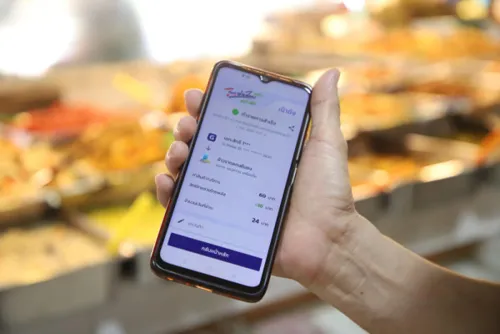
Thailand's cabinet extended a consumer subsidy scheme for 2 more months with 43 billion baht in funding, providing 1,000 baht per registered person through November. This fiscal stimulus targets rising oil prices and cost-of-living pressures but represents routine macroeconomic policy rather than structural business change. SMEs may see modest demand support, though broader impact depends on how consumer spending translates to their sales channels.

▾ Hover for summary ▾ Tap for summary
LINE MAN Wongnai launched Wongnai Genie, an AI assistant that helps small restaurant operators analyze sales, costs, profit margins, and customer behavior using their POS data. The tool aims to democratize AI access to 520,000+ Thai restaurants by providing actionable insights for business management, cost reduction, and menu optimization. The data collected can also feed into SME lending decisions, with 30,000 restaurants already accessing working capital over the past 12 months, and future integration with loan guarantee programs planned.
▾ Hover for summary ▾ Tap for summary
A startup has secured legal access to video data for physical AI applications. This addresses a critical bottleneck in developing embodied AI systems—obtaining quality training datasets while navigating IP/licensing constraints. Relevant for Thai tech ecosystem players exploring robotics, computer vision, or autonomous systems.

▾ Hover for summary ▾ Tap for summary
Organizations face a critical trust problem: employees are hiding their AI mastery (57% conceal usage per KPMG study) because demonstrating efficiency gains could eliminate their roles. The article argues that job security promises are both dishonest and defensive—what actually appreciates in the AI era is judgment (framing problems worth solving) and verification (evaluating AI output accuracy), not task execution. SMEs must shift conversations from job protection to capability development if they want to harness AI's productivity gains rather than face hidden resistance.

 Stop running your company on Excel.