
Archive
September 22, 2026

▾ Hover for summary ▾ Tap for summary
Muang Thai Insurance launches a new flexible pension product (Muang Thai Flexi Retire Series) allowing customers to customize premium payment schedules and retirement payout timing, addressing Thailand's aging population and insufficient retirement savings. The product is bundled with partnerships across senior living and nursing home facilities nationwide, marking a strategic shift toward a comprehensive longevity ecosystem spanning financial security, health, and elder care services rather than competing solely on investment returns.

▾ Hover for summary ▾ Tap for summary
LINE MAN, Thailand's leading food delivery platform, is increasing marketing budget to ~100M baht/month for Phase 2 (Oct-Nov 2569) of the 'Thai Help Thai Plus' government stimulus program. The platform has onboarded 59,000 merchants (rank #1), distributing 2,570M baht in state subsidies and processing 16M orders across 77 provinces. The program delivers measurable SME benefits: merchant sales 1.8x higher than previous campaign, 84-93% business survival rates with POS adoption, and access to capital—30,000+ merchants already obtained funding. Q4 food delivery market expected to grow 20%+ YoY, aided by seasonal spending and school holidays.

▾ Hover for summary ▾ Tap for summary
Krungsri Bank shares its 7-year digital transformation roadmap through executives and AI/Data experts, revealing a human-centric technology framework. Key themes include AI thinking for problem-solving, data governance as foundational to quality AI (quality data in, quality results out), real-world banking AI success cases, and culture-first talent development under the "Your Future is Our Success" philosophy. Highly relevant for SME leaders planning digital transformation, tech professionals in data/AI, and organizations reshaping culture for tech adoption.

▾ Hover for summary ▾ Tap for summary
CRG (Central Restaurants Group) launched I'M MATCHA, a new affordable matcha beverage brand targeting Thailand's growing matcha market (valued at ~400M baht, growing 14–18% annually). The brand positions ceremony-grade Japanese matcha at accessible pricing (from 95 baht) and will expand from its flagship Central Ladprao location into central malls in 2027. This move taps strong consumer demand while CRG simultaneously scales its Hanam BBQ Korean premium barbecue brand (targeting 10 outlets within 3–5 years, 300M+ baht brand value) and has recently discontinued the 16-year-old Chabuten Ramen chain to optimize portfolio returns.

 Empower businesses to thrive in the digital age.

▾ Hover for summary ▾ Tap for summary
Thailand's cabinet approved the "Thai Help Thai Plus (Additional)" subsidy program launching October 1–November 30, 2026. Two schemes: expanded state welfare card funds for eligible cardholders (increasing October allocation from 300 to 1,000 baht/month); and a 60/40 co-payment mechanism where government covers 60% of food, beverages, goods, and services purchases (capped at 200 baht/day or 1,000 baht total per participant). Registration via 'Pao Tang' app runs October 1–15. Eligibility: Thai nationals 18+, valid ID card, not previously suspended from similar programs. SMEs selling eligible goods through registered merchants and food delivery platforms gain direct consumer access.

▾ Hover for summary ▾ Tap for summary
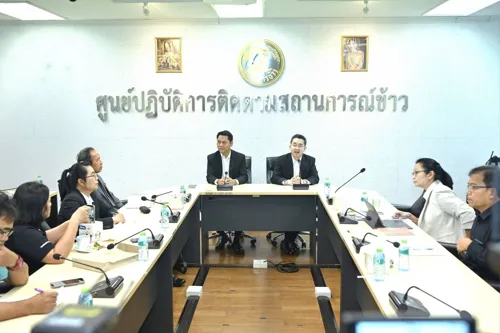
Thailand's Department of Cooperative Promotion is allocating 500 million baht in low-interest (1–3%) development funds for 2027 to upgrade 125 Cooperative Distribution Centers (CDC) into regional hubs. The initiative aims to accelerate product distribution, particularly seasonal produce, while reducing spoilage. CDC sales reached 3,130 million baht by September 2026; target is 5,000 million for year-end and 8,000–10,000 million for 2027. The department is partnering with the Thai Road Transport Association for special transport rates and coordinating with Commerce Ministry to export premium cooperative products.
▾ Hover for summary ▾ Tap for summary
The Thai Ministry of Agriculture clarified concerns about a revised Plant Variety Protection law, confirming that small-scale farmers retain the right to save seeds of staple crops (rice, corn, legumes) for replanting on their own land without legal violation. Traditional, heirloom, local, and standard commercial varieties can also be used, exchanged, and sold freely without permission. Thailand has not yet decided on UPOV 1991 accession. Public consultation remains open until mid-2570. The revision aims to promote domestic breeders, support R&D, and combat seed theft and counterfeiting while protecting farmer interests.
▾ Hover for summary ▾ Tap for summary
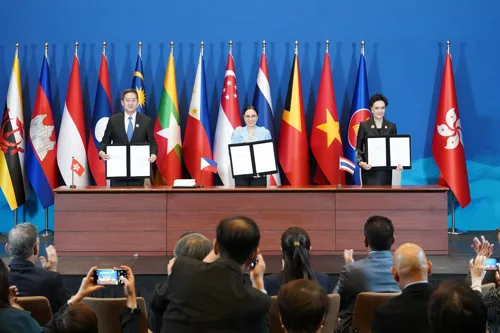
Thailand has successfully negotiated the first protocol amending the ASEAN-Hong Kong Investment Agreement (AHKIA), signed 20 September, opening investment markets in priority sectors—automotive, automotive components, and printed circuit boards. The deal enables Thai enterprises to tap regional supply chains and allows Thai investors to use Hong Kong as a gateway to China's Belt and Road Initiative. Key: new commitments do not require changes to domestic law or diminish state regulatory authority, making this a strategic win for SMEs seeking to upgrade manufacturing capabilities and international market access without regulatory friction.
 Your real translator for LINE and Discord.

▾ Hover for summary ▾ Tap for summary
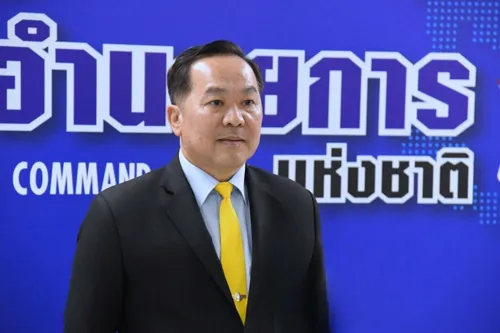
2C2P by Antom is a Southeast Asian payment services leader (founded 2003, now part of Ant International) that operates a payment gateway supporting 400+ channels including cards, mobile banking, QR codes, e-wallets, and OTC payments across 6 countries. The platform enables merchants to integrate once via a "Single Integration" approach and accept all payment methods seamlessly, reducing merchant friction while accommodating diverse consumer payment preferences—a critical competitive advantage for Thai SMEs and regional e-commerce players seeking to scale globally.
▾ Hover for summary ▾ Tap for summary
Thailand's Office of National Water Resources issued Alert No. 5/2569 for September 22–26, warning of heavy rainfall, flash floods, and flash runoff across multiple regions due to a deepening low-pressure system moving into Thailand along the monsoon trough. The Chao Phraya River is expected to discharge ~1,500 cubic meters per second, raising downstream water levels by 0.75–1.25 meters and threatening flood-prone areas in Chai Nat, Sing Buri, Ang Thong, Ayutthaya, and Pathum Thani. Authorities are urged to monitor rainfall, manage water releases from dams coordinated upstream to downstream, accelerate drainage, and warn residents in at-risk areas to evacuate in time.
▾ Hover for summary ▾ Tap for summary
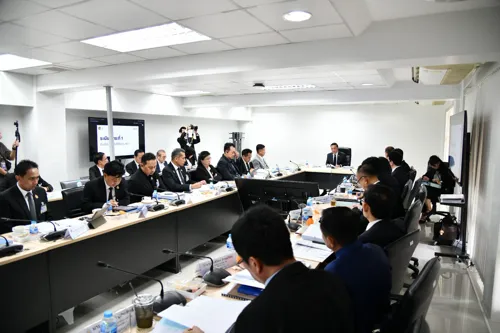
Thailand's National Water Resources Committee approved 509.7 million baht in emergency spending for 99 urgent projects addressing nationwide flooding, drought, and water quality. Critical alert: heavy rainfall expected Sept 23–27 across multiple regions; Chao Phraya downstream areas face potential 0.75–1.25 meter water level rise if discharge reaches 1,500 m³/sec, affecting flood-prone areas in Ayutthaya, Pathum Thani, Sing Buri, and Nakhon Nayok provinces. SMEs in agriculture, logistics, and manufacturing in these zones should prepare contingency plans.

▾ Hover for summary ▾ Tap for summary
Rangsit University launched the Thailand Household Cost of Living Index (CLI), revealing a sharp increase in living costs since Q2 2026 driven primarily by rising oil prices. National average household expenses rose 8,362.4 baht per quarter (2,787.5 baht monthly), with Bangkok and suburbs facing the heaviest burden at 10,170.3 baht per quarter (3,390.1 baht monthly). Transportation costs account for nearly half the increase. SMEs, farmers, and regular employees are most impacted, with significant regional disparities across Thailand.

 Want to buy or sell a business?
▾ Hover for summary ▾ Tap for summary
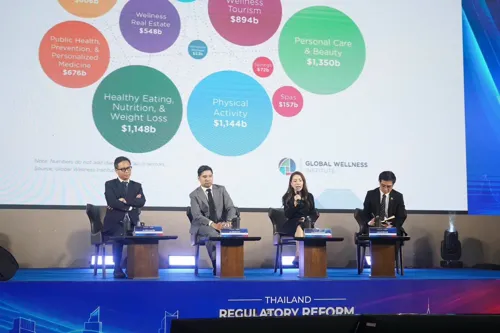
Thailand's Ministry of Higher Education, Science, Research and Innovation (MHESI) is positioning the wellness economy as a strategic response to ageing society challenges. The global wellness market is valued at $6.8 trillion (2024) and projected to reach $9.8 trillion by 2029 at 7.6% annual growth. MHESI outlined seven priority initiatives to shift from traditional to science-based wellness, leveraging Thai strengths in healthcare, traditional medicine, and personalized medicine through R&D, health tech platforms, and clinical trial infrastructure—aiming to transform Thailand from a wellness destination into an innovation hub that generates exportable health products and services.
▾ Hover for summary ▾ Tap for summary
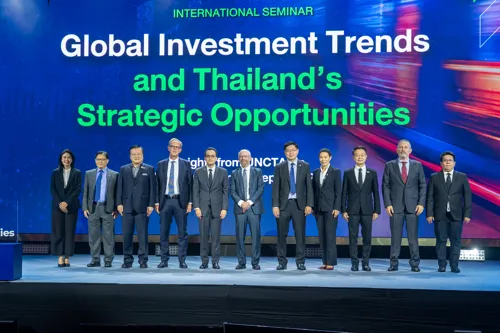
Global FDI flows are reshaping toward technology-intensive and strategic sectors (AI, semiconductors, data centers, critical minerals) now representing 44% of greenfield investment, up from 16% five years ago. UNCTAD and Thailand's ITD warn that competing on costs and incentives alone is insufficient; Thailand must instead attract high-value FDI that transfers technology, skills, and innovation. The challenge is not just bringing investment in, but ensuring it creates meaningful economic value—particularly by integrating Thai businesses into global value chains and building high-skill employment ecosystems in niche sectors where Thailand has genuine competitive advantage.

▾ Hover for summary ▾ Tap for summary
Muang Thai Life Insurance (MTL) launched "Flexi Retire Series," a flexible pension product allowing retirees to start withdrawals at ages 55, 60, 65, or 70 with no re-underwriting for plan adjustments. The product addresses Thailand's aging society and inadequate retirement savings (30% of Thais lack sufficient savings; 60% have less than 200,000 baht). MTL plans to expand this benefit framework to wealth-accumulation policies (portfolio value 40-50 billion baht) in Q1 2027, and has partnered with 44+ elder-care facilities nationwide to enable direct pension payments for healthcare and long-term care services.

▾ Hover for summary ▾ Tap for summary
Thailand's Small and Medium Enterprise Credit Guarantee Corporation (TCMC) has launched the 'NanoPlus' credit guarantee program with a 2 billion baht fund to support micro-SMEs lacking collateral. Phase 1 offers 500 million baht targeting 100,000 SMEs with loan guarantees of 5,000–50,000 baht per borrower, fee-free for 4 years, with TCMC covering up to 5% NPL. The program aims to provide affordable credit (average 28% p.a. through partner institutions) as an alternative to high-cost informal lending, addressing liquidity challenges for small merchants and self-employed workers.
 Together GoWeGo! Ferry tickets in Thailand.
▾ Hover for summary ▾ Tap for summary
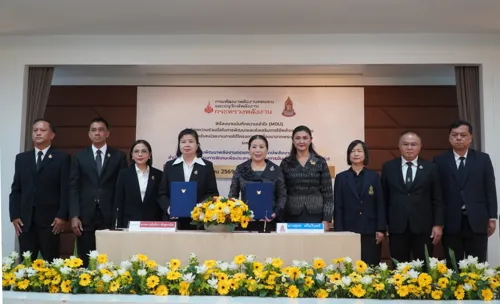
The Royal Project Support Office (ORSP) and Alternative Energy Development and Conservation Department (DEDE) signed an MOU to deploy solar cell systems (20–80 kW) across 19 remote locations over 3 years. The initiative aims to electrify underserved royal project facilities and highland communities lacking grid access, reducing electricity costs and improving quality of life in isolated areas. Initial focus targets forest areas, highland zones, and high-cost electricity zones with community-installable systems.
▾ Hover for summary ▾ Tap for summary
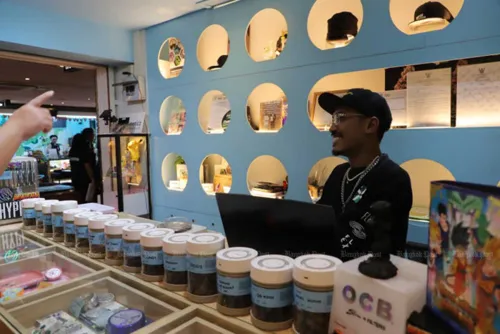
Thailand's cabinet approved a medical-use-only cannabis bill, the third attempt to regulate the sector since decriminalization in 2022. The law will require licensing for cultivation and sales (with exceptions for roots, stems, leaves, and seeds), ban sales to minors and in sensitive areas, and eliminate advertisements promoting recreational use. The government expects this to reduce ~11,000 current dispensaries to ~2,000 compliant clinics within three years, reshaping a sector initially opened for economic opportunity but now facing tighter controls.
▾ Hover for summary ▾ Tap for summary
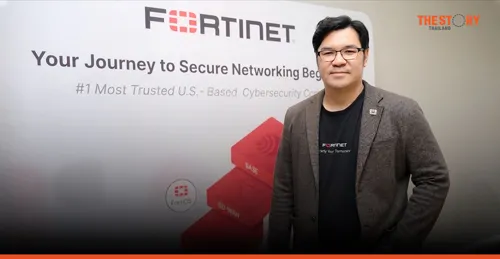
Fortinet's Thailand managing director warns organizations that quantum computing threats are already relevant today—data stolen now could be decrypted in future years when quantum capability matures. Rather than waiting for quantum maturity, enterprises should immediately map data locations, classify by sensitivity and retention needs, identify vulnerable encryption algorithms, and begin deploying post-quantum cryptography (PQC) selectively, starting with high-risk assets and network gateways.
▾ Hover for summary ▾ Tap for summary
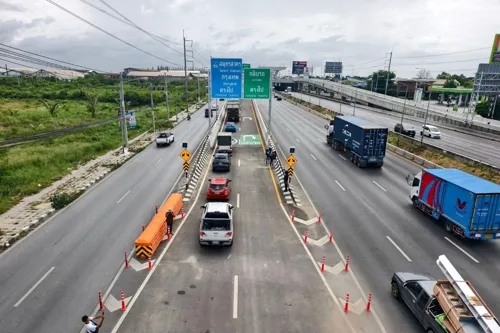
Thailand's M82 elevated highway (Ekachai-Ban Paew section, ~25 km) is successfully alleviating traffic congestion, averaging 29,689 vehicles daily and reducing Rama II road traffic by 21–23% depending on direction. Free toll passage and 24/7 access are driving adoption, supporting commerce and logistics linking Bangkok to southern and western regions—exemplifying the government's Quick Win infrastructure policy.

 Stop running your company on Excel.