
Archive
September 22, 2026

▾ Hover for summary ▾ Tap for summary
Thailand's cabinet approved a draft Cannabis Control Act that reinforces medical-use-only restrictions and introduces stricter penalties. Existing retailers must convert to licensed medical facilities with resident physicians by 2569–2571 when current permits expire. Government has registered 10,000+ cannabis operations (95% coverage) via a public app and plans enforcement sweeps in major and tourist cities. Non-compliance or unregistered operations are treated as illegal.
▾ Hover for summary ▾ Tap for summary
Qualcomm and Google are collaborating on a new Snapdragon-powered initiative called "Google Books," likely aimed at enhancing mobile computing or AI capabilities. The partnership signals both companies' push toward integrated hardware-software solutions for next-generation devices.

▾ Hover for summary ▾ Tap for summary
BBLAM (Bualuang Asset Management) launches B-WEALTH RMF Series—five retirement mutual funds designed for long-term retirement savings with tax deduction benefits. The funds offer global diversification across five risk levels (Conservative to Growth), addressing different investor profiles. Initial offering runs 23–30 September 2026, following strong uptake of the predecessor B-WEALTH Series (cumulative sales >24 billion baht since July 2026). Key appeal: one-stop portfolio management with expert rebalancing, eliminating need for investors to manually allocate across assets.

▾ Hover for summary ▾ Tap for summary
McDonald's Thailand launches the 'Asia Chicken' regional campaign with G-DRAGON as brand ambassador, employing an 'ICON x ICON' strategy that blends global QSR power with K-Culture influence. Beyond product innovation (K-Spicy menu items), the campaign extends into lifestyle through collectible photo cards and exclusive PEACEMINUSONE merchandise (pins, hats, tote bags starting at 390 THB). This strategic pivot from transaction to relationship-building demonstrates how modern QSR brands now compete on emotional engagement and consumer identity alignment rather than functional benefits alone.

 Empower businesses to thrive in the digital age.
▾ Hover for summary ▾ Tap for summary
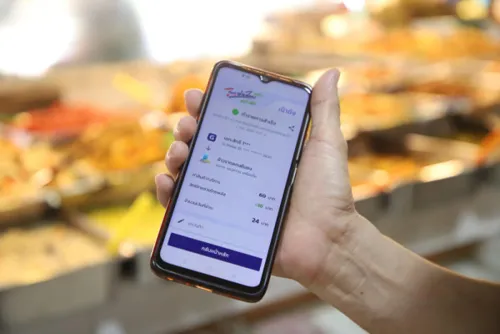
Thailand's cabinet extended a consumer subsidy scheme for 2 more months with 43 billion baht in funding, providing 1,000 baht per registered person through November. This fiscal stimulus targets rising oil prices and cost-of-living pressures but represents routine macroeconomic policy rather than structural business change. SMEs may see modest demand support, though broader impact depends on how consumer spending translates to their sales channels.

▾ Hover for summary ▾ Tap for summary
LINE MAN Wongnai launched Wongnai Genie, an AI assistant that helps small restaurant operators analyze sales, costs, profit margins, and customer behavior using their POS data. The tool aims to democratize AI access to 520,000+ Thai restaurants by providing actionable insights for business management, cost reduction, and menu optimization. The data collected can also feed into SME lending decisions, with 30,000 restaurants already accessing working capital over the past 12 months, and future integration with loan guarantee programs planned.
▾ Hover for summary ▾ Tap for summary
A startup has secured legal access to video data for physical AI applications. This addresses a critical bottleneck in developing embodied AI systems—obtaining quality training datasets while navigating IP/licensing constraints. Relevant for Thai tech ecosystem players exploring robotics, computer vision, or autonomous systems.

▾ Hover for summary ▾ Tap for summary
Organizations face a critical trust problem: employees are hiding their AI mastery (57% conceal usage per KPMG study) because demonstrating efficiency gains could eliminate their roles. The article argues that job security promises are both dishonest and defensive—what actually appreciates in the AI era is judgment (framing problems worth solving) and verification (evaluating AI output accuracy), not task execution. SMEs must shift conversations from job protection to capability development if they want to harness AI's productivity gains rather than face hidden resistance.
 Your real translator for LINE and Discord.

▾ Hover for summary ▾ Tap for summary
Thai content company OpenServe partners with The World Engine (KP Comic Group) to launch a high-budget fantasy webtoon "A Sorcerer of This Era Must Have an SSR Card"—adapting Thai occultism into a game-like card system. The project demonstrates how Thai SMEs can globalize cultural IP through professional production standards (20+ artist team, cinematic visuals) while maintaining local identity. Success relies on hybrid consumption: digital platforms (LINE WEBTOON launch Sept 19) drive active users, while physical collections appeal to younger readers seeking tangible value. This signals Thai creative industries' shift toward sustainable, world-competitive content monetization.

▾ Hover for summary ▾ Tap for summary
The Chommanard Book Prize, sponsored by Bangkok Bank and Prachanda Publishing, announces its 15th edition results on October 1, 2026. Beyond a competition platform, the prize has evolved into a space supporting Thai women writers and enabling them to share diverse perspectives and experiences through literature. The award demonstrates commitment to quality by occasionally withholding the top prize when submissions don't meet standards, and champions women's voices by publishing winners in both Thai and English to reach international audiences.

▾ Hover for summary ▾ Tap for summary
The Thai Cabinet approved a Phase 2 subsidy program running October–November providing 1,000 baht/month (700 baht additional) to welfare cardholders via the "Pao Tang" app and participating merchants. The measure aims to ease cost-of-living burden and support small businesses as energy prices remain volatile due to Middle East tensions. Program targets include current beneficiaries and new registrants, with spending capped at 200 baht/day and capped at 1,000 baht total per person.

▾ Hover for summary ▾ Tap for summary
Alibaba is advancing its AI capabilities by detailing a roadmap for large language models, with Qwen 4 now in training phase. This signals the company's continued investment in competitive AI infrastructure, relevant to Thai tech companies evaluating cloud and AI partnerships or considering similar LLM development paths.

 Want to buy or sell a business?

▾ Hover for summary ▾ Tap for summary
Samsung has committed up to $100 million in backing for Kairos, a company focused on advanced nuclear reactor technology partnered with Google. This signals major corporate investment in next-generation clean energy infrastructure, though direct relevance to Thai SMEs depends on future supply chain or tech licensing opportunities in the region.
▾ Hover for summary ▾ Tap for summary
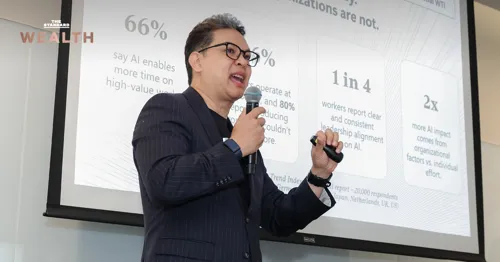
Thai workers lead globally in advanced AI adoption (32% vs. 16% global average) but face a critical organizational gap: only 2 in 10 teams systematize successful AI-driven workflows into institutional knowledge. The "Transformation Paradox" means AI gains remain siloed at individual level rather than scaling enterprise capability. Additionally, Thai workers undervalue quality control skills (53%) and analytical thinking (45%) compared to regional peers, and only 1 in 3 managers support experimental AI adoption. The key challenge is moving from individual tool use to "Owned Intelligence"—converting scattered employee knowledge into sustainable organizational assets.

▾ Hover for summary ▾ Tap for summary
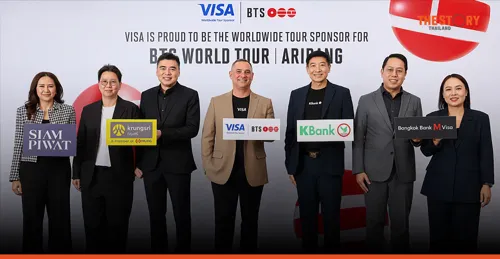
Visa has become Worldwide Tour Sponsor of BTS's "ARIRANG" world tour (82 shows across 34 cities), expanding beyond sports/lifestyle sponsorships into K-Pop. The partnership demonstrates payment networks leveraging fintech to engage younger demographics and drive travel spending—Visa data shows 25% surge in Korea travel during concert week, 20% rise in tourism spend. Thai banks (KBank, Krungsri, Bangkok Bank) and Siam Piwat have launched concurrent limited-edition co-branded cards and campaigns, creating a multi-partner ecosystem. This signals how financial services are repositioning as experience platforms.
▾ Hover for summary ▾ Tap for summary
Visa has partnered with four major Thai financial institutions (Kasikornbank, Krungsri, Bangkok Bank, and Siam Piwat) to promote BTS WORLD TOUR 'ARIRANG' IN BANGKOK through coordinated card-based campaigns. Between August and November 2026, customers using partner credit and debit cards at these institutions and retail networks gain chances to win concert tickets, travel packages, and smartphones worth over 2 million baht combined. This demonstrates cross-sector fintech collaboration to drive payment adoption and consumer engagement tied to high-profile entertainment events.
 Together GoWeGo! Ferry tickets in Thailand.

▾ Hover for summary ▾ Tap for summary
Major tech companies Google and Apple are actively recruiting talent to work on cryptocurrency payment solutions as the digital payments landscape continues to mature and evolve. This suggests significant investment and strategic focus on blockchain-based payment systems, though broader industry adoption and regulatory clarity remain key uncertainties for Thai SMEs exploring crypto payment infrastructure.

▾ Hover for summary ▾ Tap for summary
LINE Thailand reports significant structural challenges in chat commerce: 90% of new merchant chats go unanswered after first response, with SMEs lacking bandwidth for customer follow-up. Conversely, consumers continue adding merchant accounts (800M+ additions in H1 2025) when verified by blue/green badges, while adoption of mini-apps (1,000+ launched, 4x DAU growth) and mobile ordering (LINE MINI Eats with 5x merchant growth in one quarter) shows where value is consolidating. Gen Z behavioral shift—dropping sticker-based conversation closures—reflects broader maturation of chat as primary commerce channel, not a side feature.
▾ Hover for summary ▾ Tap for summary
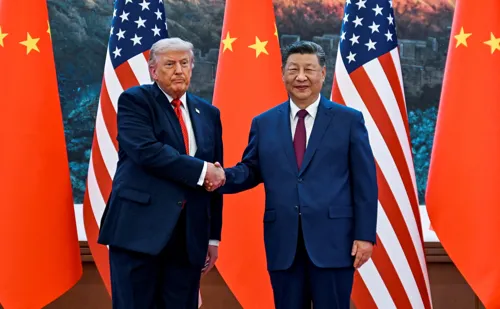
The US and China have agreed to establish a joint AI dialogue forum and discuss an "AI safety notification system" for incidents linked to national security, signaling rare cooperation on governance. However, the two powers remain in direct competition: Trump announced an "AI Force" and AI Czar position to accelerate US AI dominance, while China rejected calls for development restraint, emphasizing "open, inclusive, and constructive" AI practices. For Thai SMEs in tech and adjacent sectors, this reflects intensifying geopolitical competition over AI that will reshape supply chains, standards, and market access globally.
▾ Hover for summary ▾ Tap for summary
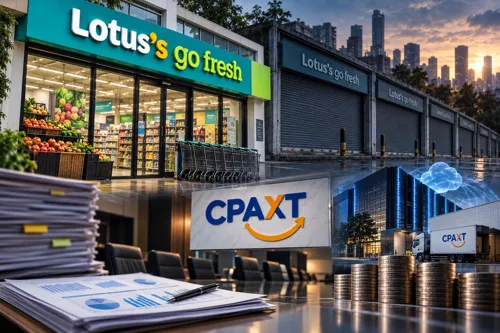
CP Axtra (CPAXT) is shuttering Lotus Go Fresh and Express branches after struggling with hundreds of billions in debt incurred from the 2020 Tesco Lotus acquisition. The company is cutting store-level capital expenditure despite strong cash flow, instead redirecting liquidity toward cloud infrastructure and data center projects—raising serious governance questions about capital allocation priorities, conflict of interest, and whether board decisions favor upstream agricultural suppliers over core retail sustainability or worker welfare.

 Stop running your company on Excel.