
Archive
September 11, 2026

▾ Hover for summary ▾ Tap for summary
A public clash between Elon Musk and Jacob Coxon, former AI researcher at Anthropic and OpenAI, over claims that AI poses civilizational extinction risks. Musk and allies dismiss Coxon's warnings as PR stagecraft for regulatory capture, while AI researchers and some policymakers defend the concerns as legitimate safety issues. The dispute highlights growing tensions between AI industry figures on regulation and existential risk assessment.
▾ Hover for summary ▾ Tap for summary
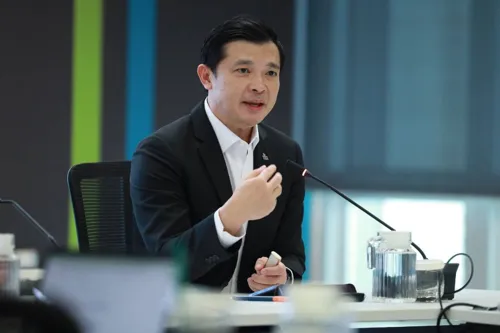
Thailand's Securities and Exchange Commission (SEC) has clarified that content creators and finfluencers making investment recommendations or solicitations must obtain a license, distinguishing this activity from general financial education. The agency is intensifying fraud prevention efforts, with investment fraud consultations jumping 3x year-over-year (1,200 to ~4,000 requests). While 368 fraudulent channels were blocked this year with 100% removal within 48 hours, the SEC will deploy AI-powered detection for image/video fraud and partner with LINE for user alerts. This regulatory clarity directly impacts Thai digital creators and fintech entrepreneurs navigating compliance.

▾ Hover for summary ▾ Tap for summary
Hyundai launched Thailand's first hybrid 11-seat MPV (STARIA Hybrid) amid oversupply crisis—domestic production capacity (3.5M units/year) far exceeds actual demand (675K-680K units). The company exploited Thailand's tariff structure (32% for 11-seat vs. 80% for 7-seat vehicles) to offer a cost-competitive CBU import from Korea while maintaining MPV functionality. Growth is hampered by unclear government policy on local content requirements (High Value Local Content) and electric vehicle tax incentives, forcing automakers to plan amid calculation uncertainty. Hyundai pursues parallel marketing of hybrid and diesel variants to hedge bets in a saturated market.
▾ Hover for summary ▾ Tap for summary
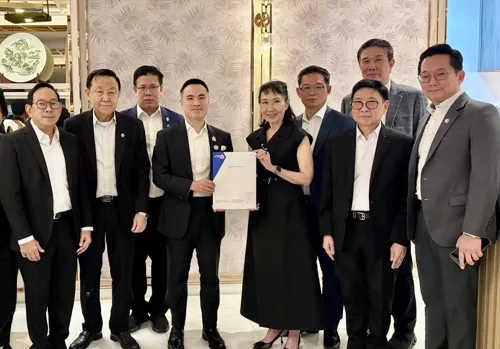
The Thai Chamber of Commerce (ส.อ.ท.) has submitted five key proposals to shape Thailand's Power Development Plan 2026–2593 (PDP2026). Core recommendations include: leveraging domestic gas and biomass to reduce costly LNG imports; managing system-wide electricity costs rather than just plant-level LCOE; enabling industrial direct PPAs and third-party grid access at competitive rates; and allowing self-generation and independent power suppliers. The plan aims to balance energy security, affordability, sustainability, and competitiveness—critical for SMEs facing rising energy costs and global clean-energy trade requirements.

 Empower businesses to thrive in the digital age.
▾ Hover for summary ▾ Tap for summary
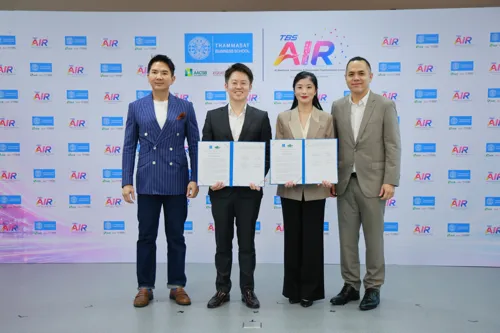
Thammasat University's Business School officially launched TBS AIR, an AI Transformation Readiness Center designed as a central platform linking research, governance, and organizational transformation. The initiative targets preparing Thai organizations and leaders for AI adoption at scale, launching a major research index covering 10 Asian markets showing Thailand's challenge is execution rather than awareness. An open house event is scheduled for October 17, 2026.

▾ Hover for summary ▾ Tap for summary
OpenAI has temporarily halted new signups for its $200/month ChatGPT Pro plan due to extraordinary demand for GPT-6 Astra, its latest AI model. The closure is a capacity management measure to maintain service stability for existing users; cheaper tiers and API access remain available. This signals massive market adoption of advanced AI and potential supply constraints.
▾ Hover for summary ▾ Tap for summary
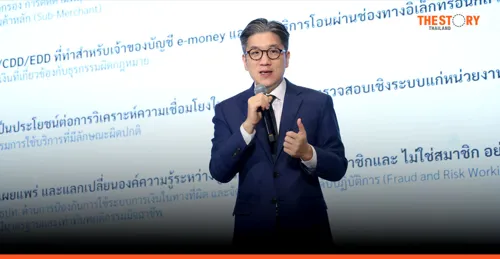
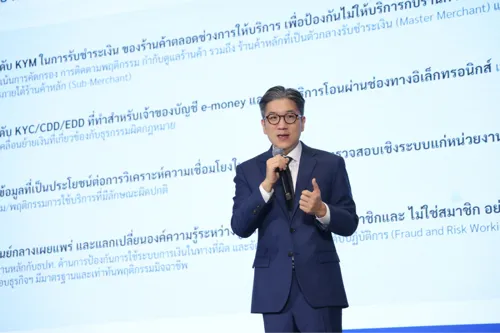
Yod Chinsupakul, CEO of LINE MAN Wongnai and LINE Pay Thailand, has assumed leadership of the Thai E-Payment Trade Association (TEPA) and is driving a comprehensive security upgrade across Thailand's e-payment ecosystem. TEPA is implementing a four-pronged approach: stricter Know Your Merchant (KYM) screening, enhanced KYC/CDD/EDD verification for e-money account holders, real-time anomaly detection, and coordinated information-sharing with the Bank of Thailand and 10 other financial sector agencies. This initiative aims to close regulatory gaps, make e-payment system misuse more difficult, and accelerate risk response to combat increasingly sophisticated financial crime.
▾ Hover for summary ▾ Tap for summary
Yod Chinsupakul, CEO of LINE MAN Wongnai and LINE Pay Thailand, has taken over as chairman of TEPA (Thai E-Payment Trade Association), with 30+ member providers. He will drive three strategic priorities—"elevate, make difficult, move fast"—to strengthen Thailand's electronic payment security standards. TEPA is joining a 11-organization framework led by Bank of Thailand to combat financial crime through enhanced merchant screening, identity verification, anomaly detection, and inter-sector data sharing.
 Your real translator for LINE and Discord.
▾ Hover for summary ▾ Tap for summary
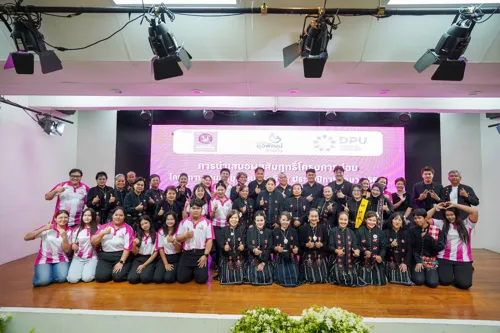
DPU and Kasikornbank announced results of a two-year community development initiative that transformed Ban Yang Pattana village (Nakhon Pathom province) into a community floating market. The project, led by 10 students and faculty mentors, delivered tangible outcomes: revived a derelict community hall into a working market, leveraged local crops for tourism/food products ("dog-ear leaf" noodle soup), and generated measurable tourism and market revenue. Thailand's SME-focused institutions can learn model frameworks for university–bank–government–community partnerships to scale grassroots economic resilience.

▾ Hover for summary ▾ Tap for summary
SYNNEX announced a strategic pivot from pure distributor to IT ecosystem value creator for 2026, targeting 53 billion baht annual revenue (vs. 23.1 billion in H1 2025). The company is shifting from transactional product sales to solution-based models leveraging AI and Cloud, partnering with 70+ global tech brands across 6,000+ channels. Key growth drivers include Enterprise/Commercial solutions, with 4 strategic subsidiary partnerships (Service Point, SWOPMART, iCream/Care Plus, Prompt Money) enabling subscription, financing, and insurance services. Supply constraints on memory/storage chips and Apple product shortages persist, though Apple sales expected to rebound H2 following new product launches.
▾ Hover for summary ▾ Tap for summary
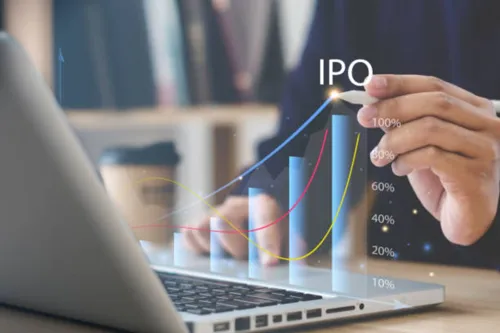
Thailand's SEC has streamlined its IPO approval process, cutting the timeline from 147 days to a target of 70–100 days through clearer phase gates and pre-filing coordination with financial advisors. A Sandbox pilot with three companies launches in October–December 2026. This directly improves capital-raising speed for Thai SMEs and opens pathways for new-sector and foreign businesses to list, while maintaining support for traditional industries.
▾ Hover for summary ▾ Tap for summary
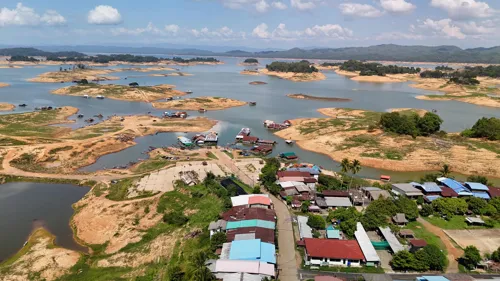
GULF Development has selected Ban Huai Tah community (Uttaradit province, ~300 residents) to install a solar power system at the local school as part of its "Sparks, Life Starts" renewable energy program. The solar installation will enable modern educational access and clean water for the island community, part of GULF's broader effort that has already deployed 100+ kW capacity across 20+ remote locations nationwide, benefiting over 10,000 people. This represents incremental CSR progress for a major Thai developer but has concrete SME relevance for energy access and rural infrastructure.

 Want to buy or sell a business?
▾ Hover for summary ▾ Tap for summary
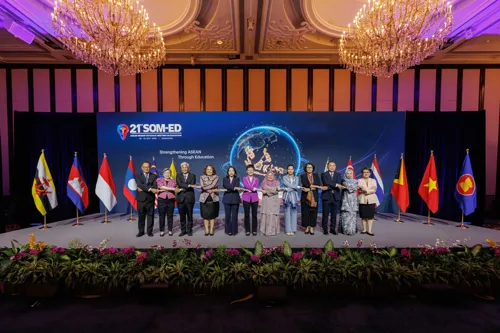
ASEAN has committed to training 1.7 million people in AI skills by 2028, signaling a regional push to build AI workforce capacity across member states. This initiative addresses the talent gap in emerging tech and creates opportunities for SMEs to upskill their workforce, though implementation timelines and funding mechanisms remain unclear.

▾ Hover for summary ▾ Tap for summary
Global oil prices (Brent) spiked near $108/barrel on September 11 due to escalating Houthi-Saudi military clashes, fueled by Iranian-backed Houthi forces moving toward the critical Bab el-Mandeb Strait. Control of this strategic chokepoint could disrupt shipping routes for Middle Eastern oil exports, tighten global markets already strained by Chinese demand and supply concerns. Analysts warn full-scale conflict could trigger sustained high oil prices, directly impacting Thailand's import costs and business operating expenses.
▾ Hover for summary ▾ Tap for summary
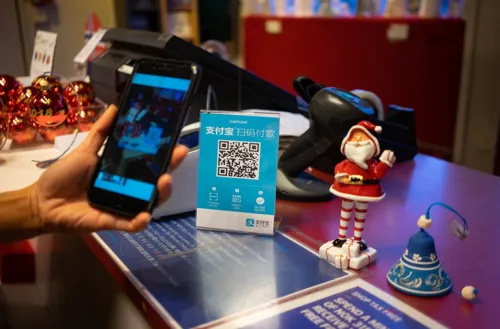
Alipay is launching a wallet agent powered by AI to enable automated, intelligent payments for businesses and users. This development extends Alipay's reach into autonomous transaction processing, potentially streamlining payment workflows for SMEs that operate on the platform or integrate with it. The move reflects broader fintech automation trends affecting digital payment ecosystems.
▾ Hover for summary ▾ Tap for summary
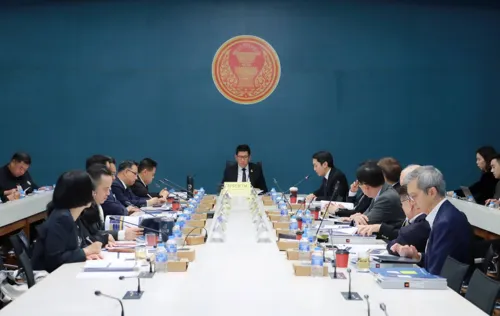
Thailand's BOI board approved a strategic overhaul of investment promotion, shifting focus from volume to "real value creation"—emphasizing tangible benefits like supply chain integration, high-skill job creation, and R&D transfer. Headline initiative: "BOI to IPO" program will offer enhanced incentives to help high-potential BOI-promoted companies go public on Thai exchanges (SET, mai, LiVEx), aiming to replicate successes like Delta and Cal-Comp. Also greenlit 17 new FastPass projects worth 120+ billion baht and 3 investment projects totaling 9.6 billion baht. Targets: position Thailand for high-income status within 12 years and boost investment to 30%+ of GDP.
 Together GoWeGo! Ferry tickets in Thailand.
▾ Hover for summary ▾ Tap for summary
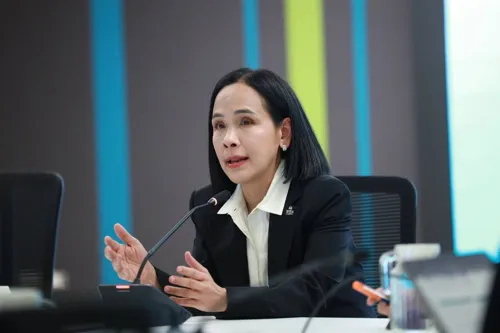
Thailand's Securities and Exchange Commission (SEC) has finalized the framework for TISA (Thailand Individual Savings Account), a new long-term investment product combining retirement savings and long-term investment components under a single account structure. The initiative aims to redirect Thai citizens from bank deposits into capital market investments (stocks, bonds, mutual funds) via tax incentives: deductions for retirement savings and tax exemption on returns for long-term investments. With only ~1 million active investors out of 60+ million population, TISA targets significant market expansion. Awaiting Cabinet approval on investment caps and tax benefits, with business system preparation underway.
▾ Hover for summary ▾ Tap for summary
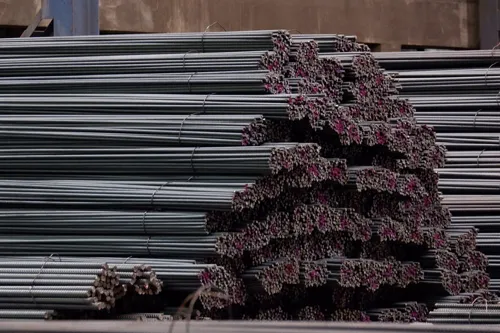
The BOI Board voted on 11 September 2026 to reinstate investment privileges for Sino-Cure Yuan Steel Co., Ltd. after the company completed factory improvements and corrected legal violations related to factory standards. The company's privileges are restored retroactively from 5 June 2026, when the Department of Industrial Works authorized resumption of operations. The firm had faced a temporary suspension of BOI benefits since April 2025 due to violations of factory and industrial product standards legislation.
▾ Hover for summary ▾ Tap for summary
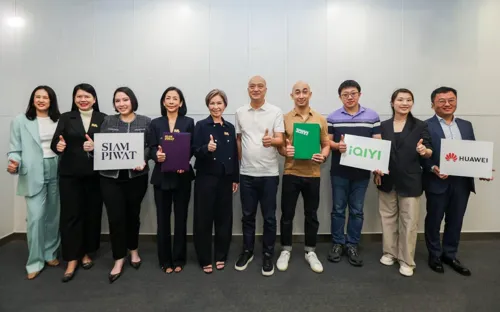
Siam Piwat, Thailand's major real estate and retail operator, is building an "Asian Digital Travel Ecosystem" through partnerships with leading Chinese companies in tech, digital payments, entertainment, and tourism. The strategy aims to serve quality travelers from across Asia by connecting touchpoints from origin country through destination experience. Key partners include Huawei (since 2020), with potential to access over 1 billion consumers globally. This represents a significant pivot toward tech-enabled, personalized travel experiences rather than volume-based tourism—relevant for Thai SMEs seeking to integrate into regional digital commerce and tourism value chains.
▾ Hover for summary ▾ Tap for summary
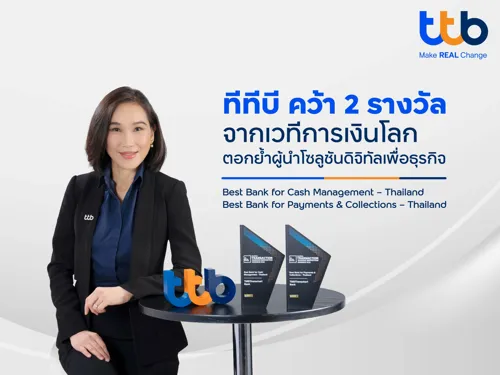
TTB won two awards at the Global Transaction Banking Innovation Awards 2026 for Best Bank for Cash Management and Best Bank for Payments & Collections in Thailand. The recognition highlights TTB's leadership in digital financial solutions that integrate payments, cash flow, and data management—helping SMEs reduce costs, streamline operations, and improve liquidity. Key offerings include ttb smart shop for retail point-of-sale, ttb fleet solutions for expense management, and Food & Beverage Merchant Solutions that unify POS, back-office, accounting, and finance systems.

 Stop running your company on Excel.