
Archive
September 11, 2026

▾ Hover for summary ▾ Tap for summary
Thailand's government is implementing comprehensive new regulations for data centres, with a key requirement that facilities cannot be located in city centres. Deputy PM Ekniti reported that inter-agency task forces have been assigned to establish minimum standards across economic, social, and environmental dimensions within one month, including stricter electricity pricing for data centre operators and mandatory EIA compliance. This regulatory overhaul aims to address previous loopholes, with only 3 BOI-approved data centres currently in Bangkok.

▾ Hover for summary ▾ Tap for summary
Thailand's rising public debt poses systemic risks to investment portfolios beyond direct government bond exposure. The article identifies five transmission channels: rising bond yields compress valuations of interest-rate-sensitive stocks; higher government borrowing costs force corporates to refinance at higher rates, pressuring earnings and cash flow; fiscal constraints reduce economic stimulus and public spending; capital outflows weaken the baht; and bond volatility cascades through banking and fund valuations. SMEs with leveraged balance sheets or revenue dependent on public spending face elevated refinancing and demand risks.

▾ Hover for summary ▾ Tap for summary
Krungsri Finnovate, a corporate venture capital arm, hosted the Future Wellness Economy Forum 2026 to position healthcare as an investment and economic opportunity rather than mere cost. The event brought together healthcare, HealthTech, and investment leaders to discuss the shift from preventive care to longevity-driven business models, emphasizing that scaling HealthTech requires an integrated ecosystem spanning research, partnerships, market access, and funding. Key highlights included keynotes on wellness economy trends, panels on health-as-wealth framing, and VC matching sessions connecting startups like BAIYA and CuraPay Global with investors and strategic partners.
▾ Hover for summary ▾ Tap for summary
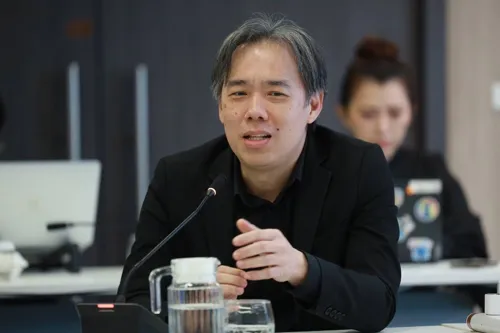
Thailand's SEC (ก.ล.ต.) has reduced average capital market case investigation time from 2.3–2.5 years to 1 year 5 months, targeting all cases under 2 years by early 2027. The regulator is pushing through law amendments to expand short-sell oversight to individual investors (not just brokers), introduce joint investigation powers for serious cases, and adjust trading rules: Uptick Rule will apply per-stock based on 10% price drops, HFT definitions will shift to behavioral criteria, and Tick Size adjustments will begin with stocks priced 10–25 baht. These changes aim to improve market surveillance efficiency while maintaining fair process.

 Empower businesses to thrive in the digital age.

▾ Hover for summary ▾ Tap for summary
Anthropic's latest economic modeling shows that while AI could boost US GDP by 32.4% by 2030, the benefits are unevenly distributed across professions. Knowledge workers—particularly programmers and call center staff—face wage pressure and job displacement (21.5% reduction in severe scenarios), while manual labor like electricians gains competitive advantage as AI accelerates complementary work. The report emphasizes job task restructuring rather than wholesale replacement, but warns that career transitions are constrained by skill specificity and retraining barriers.
▾ Hover for summary ▾ Tap for summary
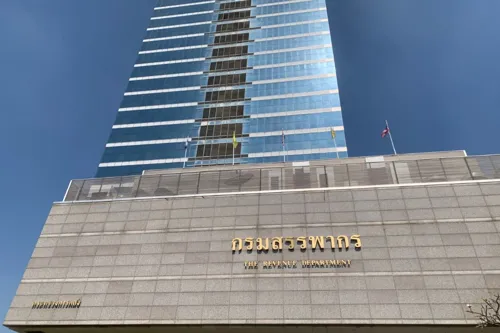
Thailand's Revenue Department confirmed ongoing legal proceedings to collect taxes from former PM Thaksin Shinawatra following a Supreme Court ruling (Nov 2025) that upheld the tax assessment. The Department is conducting asset searches and investigations through proper legal channels but declined to disclose collection figures. Officials emphasized compliance with law and clarified that the 10-year statute of limitations begins from the Supreme Court judgment date (2026), providing a defined enforcement window. This signals the tax case remains active but progress details remain opaque.

▾ Hover for summary ▾ Tap for summary
Australia's government has introduced the "My Feed, My Way" legislation requiring social media platforms to allow users to toggle content recommendation algorithms on and off. The law also mandates stricter content controls for users under 18, blocking harmful content like eating disorder promotion, explicit material, dangerous activities, and violence. This represents a global trend in social media regulation, giving users agency over their feed while authorities expect most users will keep algorithms enabled.

▾ Hover for summary ▾ Tap for summary
Pimpaporn Kampoob, a Thai fashion designer, has built the Pimpaparis brand by blending traditional Thai textiles and craftsmanship with contemporary global fashion design. After 16 years in the French fashion industry, she returned to Thailand to teach, work with local silk communities, and eventually launched her brand on international runways (London, Paris, Luxembourg, New York). The brand demonstrates how cultural heritage and local artisan networks can scale into sustainable, commercially viable international enterprises—relevant for Thai SMEs looking to add value through craft and design innovation.
 Your real translator for LINE and Discord.
▾ Hover for summary ▾ Tap for summary
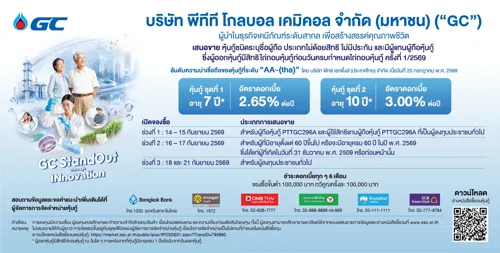
PTT Global Chemical (GC), a major Thai chemicals manufacturer, launched a public bond offering of up to 17 billion baht in two series (7-year at 2.65% and 10-year at 3.00% interest) from September 14–21, 2026. The bonds are rated AA-(tha) and distributed through six leading banks. Proceeds will refinance maturing debt and strengthen liquidity. GC reported 15.4 billion baht net profit in H1 2026 and maintains disciplined debt reduction policy despite 24 billion baht annual repayments.

▾ Hover for summary ▾ Tap for summary
Thailand's bilateral trade with the U.S. surged 72% in H1 2026—the highest growth in 36 years—driven by supply chain rebalancing and production relocation away from China. While initial tariffs under IEEPA hit 19%, effective rates averaged 8-10%, later reduced to 5.5% after the U.S. Supreme Court ruled those tariffs illegal. Thai SMEs face ongoing uncertainty around Section 301 tariffs and forced-labor tariffs (now 12.5%), but current bilateral trade momentum remains positive with U.S. exports to Thailand up 30%.

▾ Hover for summary ▾ Tap for summary
Thailand's bilateral trade with the U.S. surged 72% in H1 2026—the highest in 36 years—driven by supply chain rebalancing away from China. However, rising policy uncertainty looms: Trump administration tariffs under IEEPA (averaging 8-10%, reduced to 5.5% after court ruling) and potential Section 301 measures targeting Thailand as one of 16 countries with excess production capacity pose risks. U.S. exports to Thailand also grew 30%, indicating two-way momentum, but unpredictability around trade enforcement remains a cost for investors.

▾ Hover for summary ▾ Tap for summary
Thailand's Finance Ministry launched "AI Nok Kratip Loan," a new lending product that uses real sales data and payment history from the Tung Ngern app to help SMEs and micro-merchants access formal financing. Three financial institutions (Bangkok Bank, Government Savings Bank, and SCSMEB) are participating with loan products ranging from 50,000 to 3 million baht, addressing a critical gap for informal traders who lack conventional documentation. This bridges behavioral data from a state AI tool into actual credit products, potentially reducing SME reliance on informal debt channels.

 Want to buy or sell a business?
▾ Hover for summary ▾ Tap for summary
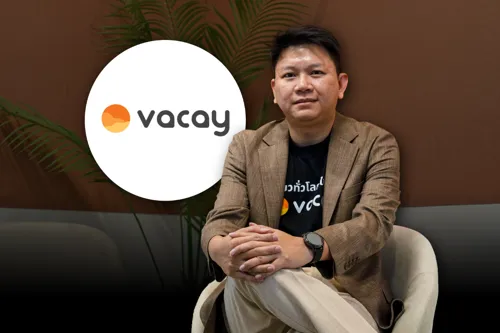
Thai startup Vacay has developed an eSIM service for international travellers, born from founder Sittidej Theppueotrakul's personal pain points with expensive roaming and local SIM cards. Building on 10+ years of software expertise, Vacay offers an integrated platform combining eSIM connectivity, travel insurance (via Insurverse), airport transfers, and flight comparison tools—positioning itself as a niche, quality-focused tech infrastructure play rather than a mass-market marketplace. The service targets Thai digital nomads and frequent travellers who need reliable internet for work across borders.

▾ Hover for summary ▾ Tap for summary
Andreessen Horowitz (a16z) discusses how substantial AI funding enables companies to establish competitive advantages through scale economics. The article likely explores the venture capital thesis that large capital raises in AI allow dominant firms to build defensible moats via superior infrastructure, data, and model performance—relevant to Thai tech entrepreneurs evaluating fundraising strategy and competitive positioning in the AI race.

▾ Hover for summary ▾ Tap for summary
Thailand's Revenue Department reports 2.16 quadrillion baht in cumulative tax collection over 11 months of fiscal year 2569 (88.35% of annual target), outperforming the prior year by 7.2%. Strong growth stems from VAT on imports and higher energy prices, plus increased corporate income tax from energy businesses. For SMEs, the department has onboarded 173,579 new taxpayers (exceeding the 149,026 target), including 56,091 online operators, generating 7.05 billion baht in additional revenue. Digital services adoption continues to rise: e-Filing usage reached 96.05%, e-Tax Invoice/Receipt added 4,719 new users (+26.9%), and e-Withholding Tax grew 15.76%. The department expects fiscal year 2569 to close at approximately 2.5 quadrillion baht, a ~2% increase from the 2.44 quadrillion target.

▾ Hover for summary ▾ Tap for summary
A public clash between Elon Musk and Jacob Coxon, former AI researcher at Anthropic and OpenAI, over claims that AI poses civilizational extinction risks. Musk and allies dismiss Coxon's warnings as PR stagecraft for regulatory capture, while AI researchers and some policymakers defend the concerns as legitimate safety issues. The dispute highlights growing tensions between AI industry figures on regulation and existential risk assessment.
 Together GoWeGo! Ferry tickets in Thailand.
▾ Hover for summary ▾ Tap for summary
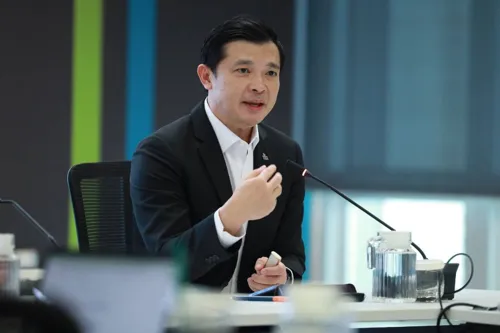
Thailand's Securities and Exchange Commission (SEC) has clarified that content creators and finfluencers making investment recommendations or solicitations must obtain a license, distinguishing this activity from general financial education. The agency is intensifying fraud prevention efforts, with investment fraud consultations jumping 3x year-over-year (1,200 to ~4,000 requests). While 368 fraudulent channels were blocked this year with 100% removal within 48 hours, the SEC will deploy AI-powered detection for image/video fraud and partner with LINE for user alerts. This regulatory clarity directly impacts Thai digital creators and fintech entrepreneurs navigating compliance.

▾ Hover for summary ▾ Tap for summary
Hyundai launched Thailand's first hybrid 11-seat MPV (STARIA Hybrid) amid oversupply crisis—domestic production capacity (3.5M units/year) far exceeds actual demand (675K-680K units). The company exploited Thailand's tariff structure (32% for 11-seat vs. 80% for 7-seat vehicles) to offer a cost-competitive CBU import from Korea while maintaining MPV functionality. Growth is hampered by unclear government policy on local content requirements (High Value Local Content) and electric vehicle tax incentives, forcing automakers to plan amid calculation uncertainty. Hyundai pursues parallel marketing of hybrid and diesel variants to hedge bets in a saturated market.

▾ Hover for summary ▾ Tap for summary
The Thai Chamber of Commerce (ส.อ.ท.) has submitted five key proposals to shape Thailand's Power Development Plan 2026–2593 (PDP2026). Core recommendations include: leveraging domestic gas and biomass to reduce costly LNG imports; managing system-wide electricity costs rather than just plant-level LCOE; enabling industrial direct PPAs and third-party grid access at competitive rates; and allowing self-generation and independent power suppliers. The plan aims to balance energy security, affordability, sustainability, and competitiveness—critical for SMEs facing rising energy costs and global clean-energy trade requirements.

▾ Hover for summary ▾ Tap for summary
Thammasat University's Business School officially launched TBS AIR, an AI Transformation Readiness Center designed as a central platform linking research, governance, and organizational transformation. The initiative targets preparing Thai organizations and leaders for AI adoption at scale, launching a major research index covering 10 Asian markets showing Thailand's challenge is execution rather than awareness. An open house event is scheduled for October 17, 2026.

 Stop running your company on Excel.