
Archive
September 21, 2026
▾ Hover for summary ▾ Tap for summary
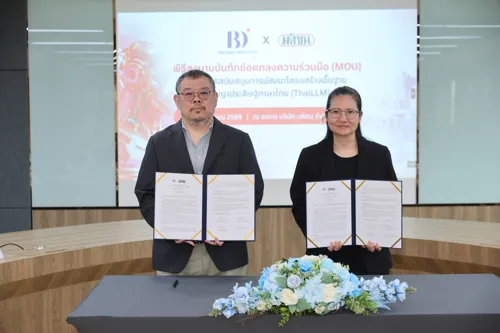
Thailand's Big Data Institute (BDI) and media company Matichon have signed an MOU to collaboratively develop ThaiLLM, a Thai-language large language model, and establish a National Data Bank for AI. Matichon will supply high-quality Thai-language content from its decades of news archives to train models that understand Thai language, culture, and social context. The initiative aims to build Thailand's AI infrastructure and sovereignty rather than compete globally, supported by Thailand's Digital Economy Fund (DEF).

▾ Hover for summary ▾ Tap for summary
The Board of Trade (BoT) chairman calls for government to shift investment focus from short-term communication to measurable outcomes at provincial level, integrating BOI data with GPP metrics, employment figures, and central bank credit data. Thailand has relied on old investment base for 20+ years and needs new investments to build competitiveness, jobs, and revenue. Recent initiatives like Bangkok Business Summit and Gastech 2026 are positioning Thailand to attract foreign capital into infrastructure including clean energy and data centers.
▾ Hover for summary ▾ Tap for summary
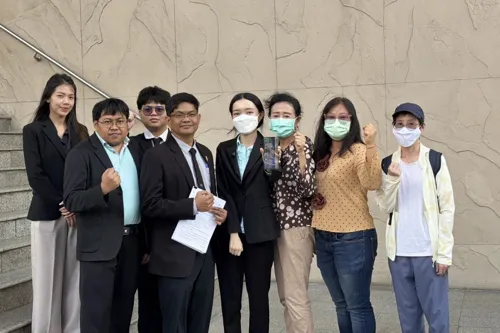
Thailand's Consumer Council has filed a second class-action lawsuit against Samsung and Thai Samsung Electronics over widespread display line defects in mobile phones. After closing registrations for the initial relief program in September 2568, an additional 2,103 complaints emerged—including consumers whose replacement screens developed the same defect. The first mediation hearing is scheduled for 26 October 2569. This signals ongoing product quality issues and expands liability exposure for Samsung in a key market.

▾ Hover for summary ▾ Tap for summary
Thailand's Fisheries Department marked its 100th anniversary with a major trade showcase (Sept 21–22, 2569) highlighting research, innovation, and community products. The sector exported over 1.67 million tonnes of seafood worth 223.1 billion baht in 2568, underpinning food security and rural livelihoods. The department manages resource conservation, production promotion, quality standards, and aquatic resource restoration. The event featured exhibitions, an urban fish market, and an open-house learning zone across four agencies, aiming to boost agritech and small-enterprise visibility domestically.

 Empower businesses to thrive in the digital age.

▾ Hover for summary ▾ Tap for summary
Deputy PM Ekniti warns that cutting oil excise taxes amid rising crude prices (>$100/bbl) and regional tensions risks compounding Thailand's fiscal crisis, given the fuel fund's -87 billion baht deficit and shrinking borrowing room (10 billion baht left in FY2569). However, he signals openness to tax reductions specifically for domestic biofuels (E20, B20) that benefit Thai farmers, provided fiscal sustainability is maintained.

▾ Hover for summary ▾ Tap for summary
Nvidia and Aolani are expanding AI manufacturing capacity in Southeast Asia, with reported investments in advanced Blackwell systems infrastructure in Malaysia. This signals growing enterprise AI adoption and localized AI hardware availability in the region, which could benefit Thai businesses seeking cost-effective access to cutting-edge compute infrastructure.

▾ Hover for summary ▾ Tap for summary
TOA Paint, a major Thai paint and wood solutions company, launched the "Wood Expert" campaign (Sept 17–23, 2026) positioning wood care—from home maintenance to forest stewardship—as personal environmental action. The campaign partners with the Mae Fah Luang Foundation to manage 6,000 rai of community forests across 111 communities in five provinces, creating carbon sinks while preserving resources. For SMEs in construction, home improvement, and retail, this signals a maturing market trend: ESG-linked product positioning and community engagement as competitive differentiators.

▾ Hover for summary ▾ Tap for summary
Deputy PM Ekachai Nitigaepra outlined a 3-phase economic acceleration plan aimed at elevating Thailand to high-income status by 2037, with targets including 3% annual GDP growth, 30% investment ratio, and top-20 global competitiveness ranking. The strategy focuses on seven target business sectors (agri-processing, automotive, retail, smart electronics, healthcare, tourism, creative economy) supported by digital infrastructure, AI, energy, and financial system reforms. Quick wins and policy recommendations will be presented to the PM within 4 weeks.
 Your real translator for LINE and Discord.
▾ Hover for summary ▾ Tap for summary
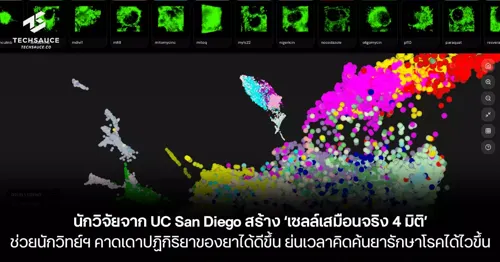
UC San Diego researchers developed MitoSpace, an unsupervised AI model trained on 40,000 4D cellular videos to classify drugs by mechanism with 75% accuracy—19 points higher than 2D imaging methods. A parallel physics-based digital twin approach uses rule-based simulation to replicate real cellular behavior. Both methods could accelerate drug screening and enable broader cell biology research beyond mitochondria alone.

▾ Hover for summary ▾ Tap for summary
TikTok creator agencies are increasingly adopting AI tools to streamline operations and reduce production costs. This shift reflects the industry's push to automate content creation workflows, manage talent more efficiently, and maintain profitability amid rising competition.

▾ Hover for summary ▾ Tap for summary
Thailand's Department of Intellectual Property is intensifying enforcement against online copyright infringement, particularly pirated movies and series distributed through illegal platforms. The operation has become more sophisticated, using payment schemes, multi-layered redirects, and foreign servers to evade detection. Consumers are warned that "free" or suspiciously cheap content risks personal data theft and financial fraud, while distributors face 6 months to 4 years imprisonment or fines up to 800,000 baht for commercial distribution.

▾ Hover for summary ▾ Tap for summary
Thailand's Deputy PM and Finance Minister warns that fiscal space for borrowing in FY2026 (ending September 2026) is critically tight at only ~10 billion baht. While the government has managed energy crisis via fuel reserves, refinery margins, and oil excise taxes, cutting oil taxes now risks triggering a cascading fiscal crisis given poor budget fundamentals. The government is reconsidering energy policy tools carefully—prioritizing agricultural sectors (ethanol/biodiesel) but only if fiscal capacity allows. Fitch recently upgraded Thailand's outlook to stable, but policymakers remain cautious about repeating international precedents of tax cuts during weak fiscal positions.

 Want to buy or sell a business?
▾ Hover for summary ▾ Tap for summary
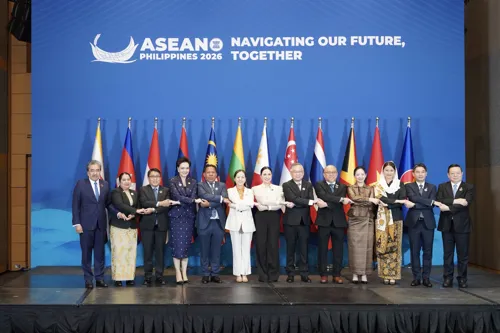
Thailand's Deputy PM Supachai announced major ASEAN economic outcomes including successful closure of the Digital Economy Framework Agreement (DEFA), a new investment protocol with Hong Kong (AHKIA), and a semiconductor strategic framework. Thailand spearheaded DEFA negotiations and the Hong Kong investment agreement, aimed at deepening regional supply chain resilience and competitiveness amid energy volatility and food security concerns. ASEAN economies are expected to grow 4.5% in 2025, with intra-regional trade and investment as key drivers.

▾ Hover for summary ▾ Tap for summary
Actress-turned-entrepreneur Aom-Suchart built Fleen Beauty to 100M baht in year-2 sales (on track for 120M in 2026) by positioning as a skin-focused, Thailand-climate-optimized brand within the 200B+ baht beauty market. Key lessons: product differentiation over trend-chasing, 3-4 new products annually via R&D, supply-chain discipline, and 90% revenue from e-commerce (livestream + Double Digit campaigns). Structural challenges included internal disputes requiring a 25M buyback, rebuilding accounting/systems, and competing against high-volume Chinese/Korean imports. Future plans: international expansion leveraging her China fanbase for T-Beauty positioning globally.

▾ Hover for summary ▾ Tap for summary
Thai healthcare system faces a critical inflection point: aging population and rising medical costs are straining government finances, expected to push 100,000+ million baht in healthcare burden to private sector by 2025. Private health insurance penetration is only 6.4% with 8% annual growth, offering substantial upside. KKPS upgrades hospital stocks to Overweight with "Buy" ratings on BH, BDMS, PR9, BCH, and CHG, citing Q3 recovery trajectory, attractive valuations (P/E 19x vs regional 30x), and 4-5% dividend yields. Foreign patient revenue rebounding as geopolitical impacts ease.

▾ Hover for summary ▾ Tap for summary
Thailand's "Thailand Helps Thailand Plus" government subsidy program (2.57B baht distributed via LINE MAN) partners public and private sectors to lift SMEs and merchants post-economic crisis. The initiative targets 5 areas: reducing cost-of-living while boosting sales; expanding platform reach; integrating AI-powered analytics (Wongnai Genie, Nok Grasip); providing capital through microfinance; and securing loans via government insurance. Over 59,000 merchants participated, completing 16M+ orders, with AI tools helping analyze customers, optimize pricing, and cut costs—sustainability built in for post-program growth.
 Together GoWeGo! Ferry tickets in Thailand.
▾ Hover for summary ▾ Tap for summary
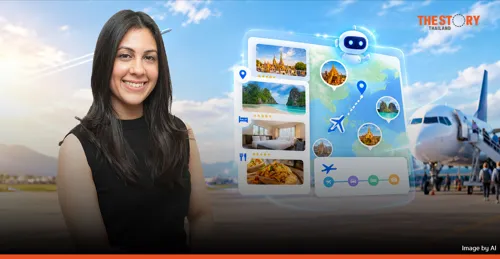
Russian outbound tourism is shifting from destination-focused to experience-driven travel, with an average 28-day planning cycle before booking. Half of Russian-speaking users employ AI tools for travel research, and Yandex Ads advocates leveraging AI-powered behavioral analysis across Thailand's digital ecosystem to intercept early-stage travel planning signals. Key markets: Phuket, Pattaya, Bangkok. Actionable for Thai hospitality, wellness, and digital nomad-focused SMEs targeting Russian-speaking demographics.
▾ Hover for summary ▾ Tap for summary
Russian outbound tourism to Thailand is growing with a shift from destination-driven to experience-driven travel (wellness, digital detox, local food, remote work retreats). Russian travelers spend ~28 days researching before booking, using multiple platforms and tools. Yango Ad advises Thai tourism businesses to use AI-powered recommendation systems to analyze long-term behavioral signals and reach Russian-speaking users across 120+ million digital touchpoints, starting from early travel planning phases.
▾ Hover for summary ▾ Tap for summary
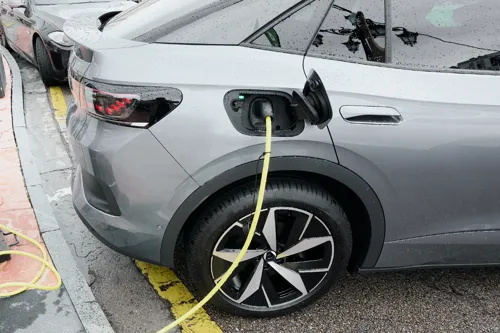
EV repair costs average 40% higher than ICE vehicles due to complex battery systems and specialized technicians required. Insurance company Ruujai warns of rainy season risks to EV batteries and high-voltage systems; hidden damage from flooding or accidents may not be immediately visible. Owners should get professional inspections post-incident and maintain proper charging practices (typically ~80% daily) to preserve battery health—many battery issues can be partially repaired rather than requiring complete replacement.
▾ Hover for summary ▾ Tap for summary
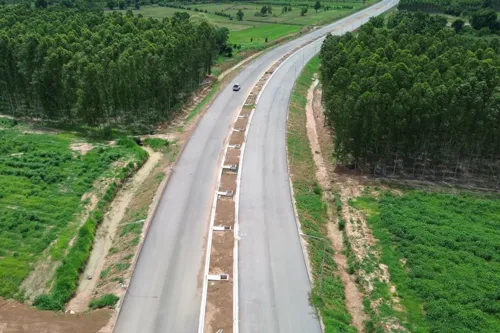
The Rural Roads Department is progressing 70% through construction of a 12.8 km ring road in Chachoengsao Province (completion targeted 2027, budget 914.5 million baht). The 4-lane asphalt project aims to improve traffic flow in the city center, support economic linkages across northeastern Thailand, and strengthen Chachoengsao's role as a gateway to Indochina. Includes two bridge crossings and pedestrian pathways to serve both intercity transport and quality-of-life improvements.

 Stop running your company on Excel.