
Archive
September 21, 2026
▾ Hover for summary ▾ Tap for summary
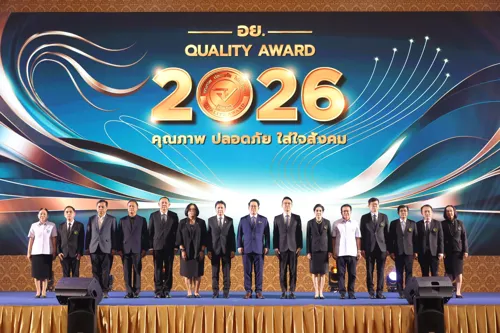
Thailand's Public Health Ministry awarded 119 FDA Quality Awards for 2026 to health product manufacturers across food, pharmaceuticals, herbal products, medical devices, cosmetics, and community health products. The initiative supports the government's "health economy" strategy, aiming to elevate Thai products to global standards, boost export competitiveness, and align with regulatory modernization efforts. This reflects Bangkok's push to position Thai health innovation as economically viable and internationally competitive.

▾ Hover for summary ▾ Tap for summary
An AI-driven triage system is being deployed to address critical shortages of OB-GYN specialists in the Southeast Asian region. This healthcare innovation uses AI to prioritize fertility care cases, allowing better allocation of limited specialist resources and improving patient access to reproductive health services in underserved areas.

▾ Hover for summary ▾ Tap for summary
A leading Thai hospital warns that heart disease develops silently over years through metabolic dysfunction, not acute symptoms. The article highlights 5 key metrics to monitor — blood sugar, blood lipids, blood pressure, waist circumference, and muscle mass — that signal cardiovascular risk before chest pain occurs. Even lean, normal-weight individuals can harbor hidden metabolic risk factors, making regular health screening crucial for early intervention and prevention of potentially fatal cardiac events.

▾ Hover for summary ▾ Tap for summary
Thailand's home-building sector showed resilience as the EXPO 2026 event generated 1,643 million baht in bookings, up 6.5% year-on-year, with 8,500 visitors (up 13.3%). Four key drivers underpinned success: consumer confidence in a new 1-million-baht protection fund, fixed pricing from builders, favorable credit partnerships, and targeted digital marketing. Post-event follow-up is expected to add another 1,000 million baht, supporting the sector's full-year target of 10 billion baht.

 Empower businesses to thrive in the digital age.

▾ Hover for summary ▾ Tap for summary
Vietnam's stock market has been reclassified from frontier to emerging market status by FTSE Russell, attracting an estimated $6 billion inflow and potentially enabling future MSCI upgrades. While significant for Vietnam's capital markets, this is primarily regional financial news with limited direct operational impact on Thai SMEs unless they have Vietnamese exposure or competition concerns. The article signals growing Southeast Asian market maturation but requires monitoring for broader regional competitive dynamics.

▾ Hover for summary ▾ Tap for summary
Thailand's Deputy PM and Commerce Minister Suphajee is accelerating negotiations with US trade representatives (Rick Switzer and Jamieson Greer) to finalize an agreement before the US announces Section 301 tariffs. Thailand aims to maintain the 19% tariff rate negotiated under the previous government, down from an initial 36% proposal. The urgency stems from the US's section 122 measure expiring on July 24; negotiations now focus on forced labor practices and excess production indices. Thailand currently faces a 12.5% tariff on forced labor compared to 10% for neighboring countries, making swift conclusion critical for competitive parity in the region.

▾ Hover for summary ▾ Tap for summary
Goldman Sachs Asset Management signals a structural shift in global markets: the era of near-zero rates, full globalization, and central bank backstops has ended. Four major trends will reshape investment over 3–5 years: supply chain realignment (nearshoring, friendshoring), second-order AI deployment in business operations, a $80-trillion wealth transfer to new generations, and geographic diversification away from US-centric portfolios. The traditional 60/40 portfolio may no longer provide adequate risk protection; active portfolio management becomes increasingly valuable as market dispersion rises.

▾ Hover for summary ▾ Tap for summary
Singapore's National Library Board launched ReadSG, a five-year national reading initiative using gamification and micro-incentives to combat smartphone addiction and declining reading habits. Users earn virtual coins (SGD $1 per 50 days of 15-min daily reading) or donate reading time to charities. The scheme combines behavioral economics insights—small immediate rewards trigger habits, while streaks and progress tracking maintain engagement. Relevance: demonstrates how public institutions use fintech/digital engagement strategies to reshape citizen behavior; applicable model for Thai SME content platforms and civic tech.
 Your real translator for LINE and Discord.
▾ Hover for summary ▾ Tap for summary
As AI makes content production faster and cheaper, credibility and trust are becoming scarce assets in Thailand's creator economy (valued at ~60B baht in 2026). Followers are no longer the primary metric; brands now prioritize engagement signals, consumer intent data, and measurable outcomes. Creators who differentiate through expertise, authenticity, and trust-building will thrive, while average content becomes commoditized. This shift reflects a broader reorganization of the creator landscape driven by AI and platform algorithms.
▾ Hover for summary ▾ Tap for summary
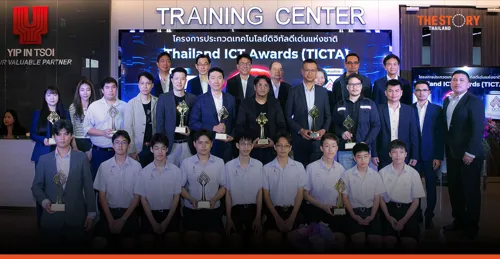
Thailand ICT Awards (TICTA) 2026 announced results for 395 submitted entries across 31 categories, with strong emphasis on AI-driven innovation. Award winners span public and private sectors, SMEs, startups, and research institutions. Standout AI solutions include RIFFAI's Earth Observation Platform, Amity Accent's Debt Collection Voice AI Agent, and FamilyDeaf. The top local winners now advance to compete at the regional APICTA Awards, positioning Thai tech talent and solutions for international visibility.

▾ Hover for summary ▾ Tap for summary
A 10-year Southeast Asia outlook report ranks Thailand's GDP growth at just 2.2% annually (2026–2035)—the slowest in SEA-6, well behind Vietnam (6.2%), Philippines (5.8%), and Indonesia (5.4%). The core issue isn't lack of assets or talent, but slow speed of economic transformation: while competitors build new growth engines in semiconductors, tech, and export upgrading, Thailand is still managing legacy industries. Compounding this, household debt hit a 17-year high (794,945 baht average, up 7.3% YoY), with BNPL usage nearly doubling (6.2% to 14.2% in one year)—a structural drag on consumer-led growth and future economic resilience.

▾ Hover for summary ▾ Tap for summary
NVIDIA CEO Jensen Huang dismissed existential AI fears in a CBS interview, stating there is zero chance of AGI causing extinction by 2030 and criticizing fearmongering without scientific evidence. He argued existing U.S. laws are sufficient for AI regulation, aligned with Trump's stance against additional safety measures. Huang also acknowledged tech companies should better engage communities before building new data centers, which he noted are becoming more energy and water-efficient while creating local jobs.

 Want to buy or sell a business?

▾ Hover for summary ▾ Tap for summary
Indonesia's quick commerce sector is experiencing a resurgence with a notably different approach from previous iterations. While the specific details are unavailable due to content loading issues, the trend suggests the regional ultra-fast delivery market continues to evolve with new business models. This is relevant for Thailand SMEs evaluating competitive dynamics in Southeast Asia's e-commerce landscape.

▾ Hover for summary ▾ Tap for summary
Fitch Ratings upgraded Thailand's credit outlook from Negative to Stable while maintaining BBB+ rating, a move expected to boost foreign investor confidence and capital inflows into Thai stocks. Foreign investors have already purchased net 51 billion baht in Thai equities since year-start through mid-September. Commercial banks—particularly BBL, SCB, KTB, and KBANK—are positioned to benefit most from improved credit sentiment and potential lower financing costs, with analysts highlighting strong dividend yields and growth opportunities in corporate lending and wealth management segments.

▾ Hover for summary ▾ Tap for summary
Sony CEO Hiroki Totoki confirmed PS5 is in its late-stage lifecycle and shifting strategy away from aggressive hardware sales toward recurring revenue via PlayStation Plus (125M subscribers). The company plans a potential price increase in 2026 with minimal business impact. PS6 timeline remains undecided, partly due to semiconductor supply chain challenges extending typical 7-year console cycles.
▾ Hover for summary ▾ Tap for summary
China's yuan strengthens to a multi-year high as the People's Bank of China relaxes currency controls ahead of talks between Trump and Xi, signaling potential shifts in US-China trade and monetary relations.
 Together GoWeGo! Ferry tickets in Thailand.
▾ Hover for summary ▾ Tap for summary
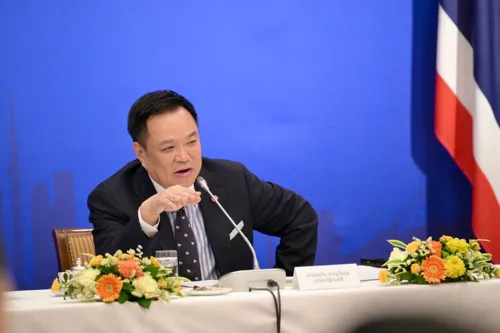
PM Anutin met with Thailand's diplomatic team in Japan to reassure Japanese investors of Thailand's continued investment appeal. Key messages included: Japan-Thailand relations remain strong despite moderating investment flows; Thailand is shifting from combustion engines to EV manufacturing with Japanese support; clean energy transition is a shared priority; anti-scam measures align with Japanese concerns; and geographic advantages make Thailand a reliable regional hub. This signals government commitment to retaining Japanese manufacturing and positioning Thailand competitively against Chinese EV producers.

▾ Hover for summary ▾ Tap for summary
A coalition of media scholars, law experts, and public policy academics—representing 108 signatories—issued a statement urging the National Broadcasting and Telecommunications Commission (NBTC) to resume normal operations. The NBTC's operational freeze has stalled critical decisions affecting broadcast roadmaps (2026–2030), OTT/Connected TV regulation, 5G/6G spectrum auctions, emergency alert systems (Cell Broadcast), fraud prevention, and satellite licensing—each with legal deadlines. The statement emphasizes legal principles and court rulings requiring the NBTC to function in the public interest and calls for the office secretariat to facilitate meetings to clear the backlog.

▾ Hover for summary ▾ Tap for summary
Thailand's Royal Irrigation Department is preparing to increase water discharge through Chao Phraya Dam to 1,000–1,300 cubic meters per second due to continued heavy rainfall and elevated upstream flows. Water levels downstream are expected to rise 0.50–1.50 meters, particularly affecting low-lying areas in Ayutthaya province outside flood barriers. While communities within the main embankment should remain unaffected, residents in vulnerable zones are urged to monitor official warnings and prepare for potential flooding. This impacts agricultural zones and SMEs dependent on irrigation and water management.

▾ Hover for summary ▾ Tap for summary
BTS Group, the operator of Bangkok's sky train network, is offering fixed-rate bonds (3.20–3.75% p.a., 2–4 year terms) rated BBB+ Investment Grade by TRIS Rating. The company's revenue is stabilized by long-term O&M contracts and diversified business segments (MOVE/MIX/MATCH strategy spanning transit, media/retail, and strategic partnerships). Subscription opens Sept 25–29, 2025, with a minimum investment of 100,000 THB across 13 financial institutions—relevant for retail investors seeking steady fixed-income returns backed by critical infrastructure.

 Stop running your company on Excel.