
Archive
August 6, 2026

▾ Hover for summary ▾ Tap for summary
OR's H1 2026 revenue rose 9.2% to 381.8 billion baht, with Q2 up 16.8% QoQ. However, EBITDA declined 35.2% YoY to 7.2 billion baht due to energy market volatility and margin pressure in Mobility/Global segments, offset partly by strong Lifestyle unit growth (Café Amazon hit record 117M units sold). OR is pivoting toward future growth via EV charging expansion, food-service partnerships with Minor Food, and sustainability initiatives while optimizing international operations.
▾ Hover for summary ▾ Tap for summary
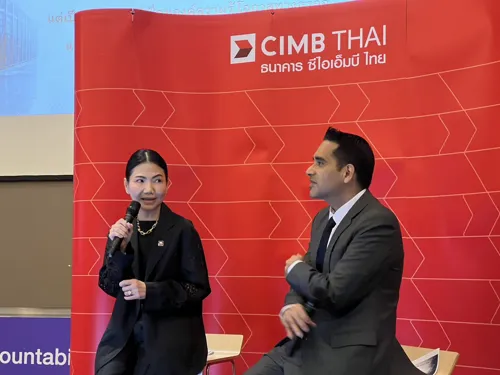
CIMB estimates 1.6 trillion baht in BOI-approved data center investments since 2567 will create a multiplier effect across Thai industries including electrical systems (25–35%), cooling systems (20–30%), real estate (5–15%), and civil works (15–20%). However, early-stage GDP impact may be limited due to high import dependency; meaningful growth requires Thai SMEs to develop complementary capabilities, upskill workforces, and increase local content to move beyond basic utility sales and create long-term export opportunities and supply chain integration.
▾ Hover for summary ▾ Tap for summary
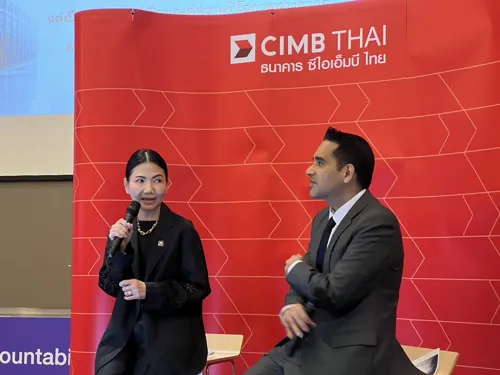
CIMB analysts highlight BOI-approved data centre projects worth 1.6 trillion baht since 2567, which will cascade investment across power, cooling, construction, and IT supply chains. However, initial GDP impact may be limited due to heavy import dependency. Real economic gain requires urgent local capability development, workforce upskilling, and government regulation to localize content and build domestic manufacturing clusters—not just selling land, water, and electricity.

▾ Hover for summary ▾ Tap for summary
Thailand and Myanmar have reactivated their Joint Trade Commission (JTC) for the first time in over a decade, targeting $12 billion in bilateral trade by 2032. Key initiatives include relaxing import licensing, promoting use of Thai baht for Myanmar investments, opening new border crossing points (especially Myawaddy-Mae Sot and Khlong Toei), and developing the Dawei deep-water port and special economic zone. Three cooperation agreements on labour, water quality management, and space technology were signed. Current trade stands at ~$7.4 billion annually, suggesting significant growth potential for Thai SMEs seeking Myanmar expansion, particularly in machinery, construction materials, cement, energy, manufacturing, and financial services.

 Empower businesses to thrive in the digital age.

▾ Hover for summary ▾ Tap for summary
Deputy PM Ekniti confirms 'Thailand Travel Plus' programme discussions are underway with the Tourism Ministry on using the 400 billion baht emergency loan, contingent on SME relief focus. Government is readying the 'Puao Tang' mobile app platform for benefit distribution and expects sufficient budget allocation for 'Thai Help Thai Plus Phase 2'. The tourism stimulus targets 500,000 privileges with 1.75 billion baht total—combining hotel subsidies (up to 3,000 baht per stay) and 500 baht spending vouchers now expanded to spas, massages, and tourism services beyond food.

▾ Hover for summary ▾ Tap for summary
Makalius, a Thai e-voucher aggregation platform, highlights how tourism businesses are shifting from price-focused promotions to e-voucher-based revenue management. With accommodation vouchers growing 50% YoY and consumers increasingly using vouchers for planned travel (especially in low seasons and weekdays), e-vouchers are becoming a strategic tool for demand management, cash flow forecasting, and brand value preservation—moving beyond simple discounting to sustainable revenue optimization.

▾ Hover for summary ▾ Tap for summary
InterGOLD's GOLD2go app is expanding its gold delivery network across Thailand, opening a new pickup point in Chachoengsao after success in Bangkok and Chiang Mai. The fintech platform enables round-the-clock trading starting at 100 baht with physical gold redemption from 0.5 grams, addressing rising provincial demand for tangible asset ownership alongside digital investment convenience. This reflects a strategic shift in Thailand's retail gold investment market toward integrated digital-to-physical services.

▾ Hover for summary ▾ Tap for summary
Global cryptocurrency hacks in the first half of 2026 totaled $1.3 billion (44 billion baht) across 344 networks, down 46.8% year-over-year per Certik's Hack3D report. July 2026 alone saw $210 million in losses, including a $70 million Coldcard Wallet breach. The article challenges the crypto mantra "not your keys, not your coins" by showing that even self-custody of private keys offers no guarantee against theft and financial loss.
 Your real translator for LINE and Discord.

▾ Hover for summary ▾ Tap for summary
Vathana Veckin Group (Choti Tharawat Co.) is launching PADDIO, a 700M baht Neighborhood Hub on 45 rai of a larger 400-rai Bangna development, targeting young families and professionals in the area. The project, opening late 2026, features 40% green space (Singapore-inspired), 10,000+ sqm of retail, and over 500 parking spaces, designed as a daily-use community space rather than a traditional shopping destination. It's the first phase of an integrated ecosystem linking residential, education, commerce, and public areas in the fast-growing Bangna zone where 200,000+ residents within 5–10 km represent strong purchasing power.

▾ Hover for summary ▾ Tap for summary
Smooth E, an established Thai skincare brand, is undergoing a major rebrand to shift perception from a single-product brand to a comprehensive skincare label. Facing a slowing market (growth dropped to 0.6% in 2026 from prior 3-4% average), the company is targeting teenagers through vertical-format video content and presenter Ling-Om, moving away from traditional TV advertising. The brand aims for double-digit annual growth by emphasizing gentle, accessible Medical Grade products suited to 70% of Thai consumers' sensitive skin, and leveraging its 50% online sales channel—particularly strong on TikTok. This reflects wider SME adaptation to shifting consumer behaviour and digital-first strategies in a competitive skincare landscape.

▾ Hover for summary ▾ Tap for summary
Thailand's National Science and Technology Development Agency (NSTDA) and Department of Intellectual Property (DIP) are jointly launching "IP x Venture Rise Thailand 2026" (Aug 27–29, 2569) — a major marketplace connecting 200+ research innovations with businesses and investors. The initiative aims to bridge Thai research and commercialization through IP protection and business matching (targeting 100+ partnerships), supported by the TRIUP Act to unlock researcher ownership and accelerate SME competitiveness in global markets. Expected 5,000+ attendees across 9 activity zones plus awards competition.

▾ Hover for summary ▾ Tap for summary
Deputy PM Supajee announced that the "Thai Tourism Plus" stimulus programme remains under discussion and has not yet reached Cabinet approval, pending budget clarity. The initiative aims to support SME tourism operators equitably (avoiding concentration among large players), modelled on the popular "Chiang Rai Half-Cost Travel" scheme. Separately, Thailand is preparing technical-level negotiations on US trade tariffs (Section 301/ART agreement) at month-end, with Supajee pledging not to concede Thailand's "red lines" on key economic interests despite high trade imbalance.

 Want to buy or sell a business?

▾ Hover for summary ▾ Tap for summary
Grab reports a significant health-wellness trend shift in Thailand: low-sugar drink orders have surged 50%, with zero-sugar black coffee and clear matcha accounting for over 10 million cups annually. Fitness culture is booming—jogging trips to Bangkok parks jumped 5x—while high-protein foods (especially chicken breast, 3.3M orders/year) and sports nutrition products grew 3.5x. Grab is rolling out a "Nutrition Tag" feature to help users identify health-focused menu options. This reflects a broader lifestyle shift toward longevity and active living, especially among urban millennials.

▾ Hover for summary ▾ Tap for summary
Thailand Post is repositioning from a traditional parcel delivery operator into a "Lifestyle Logistics" platform by leveraging "Super Data"—granular insights gleaned from 50,000+ physical touchpoints and postal workers' on-ground knowledge. The strategy merges digital and physical ecosystems through Postman Cloud and apps like Prompt Post to identify micro-level demand (e.g., which households need adult diapers or supplements), helping SME partners target real customers and enabling new revenue streams beyond shipping. The move aims to monetize trust and proximity as a core differentiator in e-commerce logistics.
▾ Hover for summary ▾ Tap for summary
Pfizer is advancing berobenatide (Phase 3) as its flagship obesity treatment, claiming efficacy comparable to tirzepatide and potentially superior to semaglutide. The company discontinued MET-224o, MET-097o, and the GIPR antagonist PF-07976016 after mid-phase trials failed to meet expectations. Berobenatide's monthly dosing and lower GI side effects position it competitively, though Pfizer's portfolio consolidation reflects challenges in crowded weight-loss drug development.

▾ Hover for summary ▾ Tap for summary
Comprehensive educational explainer on why the US dollar remains the center of global finance, despite no longer being backed by gold since 1971. The article outlines how dollar dominance rests on deep-rooted systems (pricing, trade settlement, lending, reserves) rather than commodity backing, and explains the cascading effects of Fed policy on emerging markets, exchange rates, corporate debt, and asset prices worldwide. Essential context for Thai SME operators with import/export exposure or dollar-denominated liabilities.
 Together GoWeGo! Ferry tickets in Thailand.

▾ Hover for summary ▾ Tap for summary
Memory chip prices have quadrupled in under a year (DDR5 32GB from ~3,500 to 15,000 THB), driven by AI data centers hoarding 70% of global DRAM/NAND production. The three major manufacturers—Samsung, SK Hynix, Micron—prioritize high-margin AI chips over consumer products. New manufacturing capacity won't arrive until 2029-2030, locking consumers into 3-5 years of high prices across gaming consoles (Xbox, Switch 2), GPUs (RTX 20-30% hikes), and PC components. Deloitte projects global memory revenues to hit $1 trillion in 2027 vs. $230B in 2025.

▾ Hover for summary ▾ Tap for summary
Thailand's cabinet has approved a 7.2-billion-baht water reservoir project (Wang Tone Canal Dam) in Chanthaburi to support water security and the Eastern Economic Corridor (EEC) with capacity of 99.5 million cubic meters serving 87,700 rai. However, it faces strong environmental opposition from the Sustain Foundation and civil society groups, citing inaccurate environmental assessments and potential loss of protected forest and wildlife habitat in Khao Sip Ha Chhan National Park, including potential impacts on wild elephants. A lawsuit has been filed to annul the project's environmental approval.

▾ Hover for summary ▾ Tap for summary
Prime Minister Anuwat Charoenvierakul outlined a strategic vision for Thailand's competitiveness in an unstable global landscape, emphasizing three concurrent pillars: human capital development, innovation, and civil service reform. Key initiatives include decentralizing development (creating multiple economic hubs), leveraging geographic/logistics advantages, implementing a data-driven credit assessment system (via central bank) to improve SME access to capital, and a 4P AI framework. The Bank of Thailand focuses on capital allocation efficiency and combating informal/corrupt capital flows. This signals concrete policy momentum on SME financial inclusion and structural economic reform.

▾ Hover for summary ▾ Tap for summary
Global wellness economy grew from $4.7T (2019) to $6.8T (2024), with Thailand's wellness tourism segment expanding 36.4% annually. BDMS is positioning "Vela" as an integrated health/hospitality model targeting long-term affluent visitors. Thailand's strategic advantage—natural resources, cuisine, traditional medicine, and medical expertise—can be unified under a "Better Living Destination" brand, shifting from volume-based tourism to higher-margin wellness stays. Key opportunity: bridging the ~10-year "health span" gap between life expectancy and active healthy living.

 Stop running your company on Excel.