
Archive
August 6, 2026
▾ Hover for summary ▾ Tap for summary
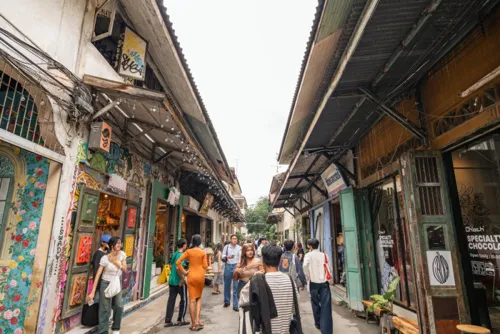
Thailand plans to secure UNESCO Creative Cities Network recognition for two new destinations every two years, targeting 35 Thai cities by 2037. The strategy aims to boost tourism revenue in recognized areas by 10-30%, with nine cities currently holding UCCN status and six more designated since 2019. Candidates for 2027 recognition include Pattaya (film), Chanthaburi (gastronomy), and Si Sa Ket (crafts), while community-based tourism within designated areas generated 137 million baht in 2025, up 22.3% year-on-year.
▾ Hover for summary ▾ Tap for summary
US trade actions targeting Chinese solar and semiconductor competition may reshape supply chains and affect Thai tech exporters' market access and input costs.

▾ Hover for summary ▾ Tap for summary
Workplace Telepressure is a psychological phenomenon where employees feel compelled to respond immediately to work messages even outside work hours, driven by organizational culture and unspoken expectations rather than explicit demands. A 234-person study found this constant need to remain "on standby" prevents genuine mental disengagement, keeps the brain in stress mode, and paradoxically erodes long-term job engagement and well-being. Simple fixes like setting clear message-checking times, distinguishing urgent from routine communications, and disabling notifications after hours can help workers reclaim genuine rest and maintain productivity.
▾ Hover for summary ▾ Tap for summary
Chinese router manufacturer Zbtlink has suspended sales after security researchers discovered a backdoor vulnerability in its products, raising concerns for SMEs using the equipment in their networks.

 Empower businesses to thrive in the digital age.
▾ Hover for summary ▾ Tap for summary
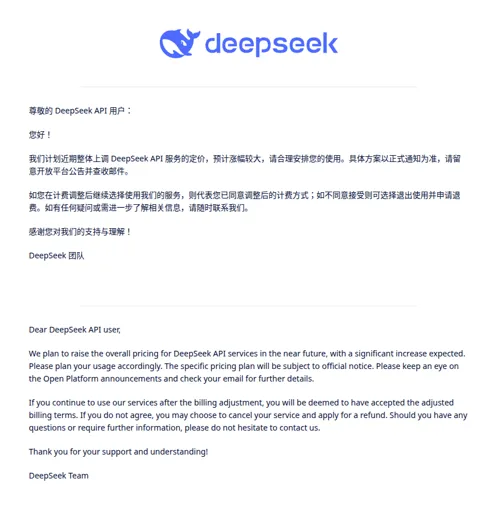
DeepSeek has announced a significant increase in API pricing and urged customers to prepare or request refunds on pre-loaded credits. Currently DeepSeek V4 Pro is among the cheapest AI APIs at $0.435/0.87 per million tokens, with cached input priced 10× lower than competitors. The price hike may reflect DeepSeek having sufficient training data and shifting to normal commercial terms that restrict data usage rights. No timeline was given, though the move could follow the upcoming full V4 Pro release.

▾ Hover for summary ▾ Tap for summary
Both Shopee and Lazada have increased marketplace fees effective August 2026. Shopee sellers now pay up to 19.26% (including VAT) with increases of 1-2% across categories like Electronics, Fashion, FMCG, and Lifestyle. Lazada increased fees up to 17.5% (ex-VAT) for LazMall sellers. Both platforms justified increases as necessary to support seller growth tools, buyer reach, and business sustainability amid rising operational costs.
▾ Hover for summary ▾ Tap for summary
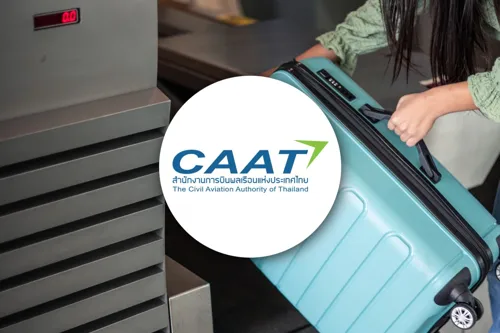
Thailand's aviation authority (CAAT) has clarified new baggage inspection procedures effective 16 October 2026. Checked luggage will only be opened when X-ray scanning detects suspicious items posing flight safety risks. All inspections are recorded, auditable, and passengers are notified afterward. This aligns with international standards used in Singapore, Japan, South Korea, and major global hubs, aiming to enhance security while reducing delays from manual baggage tracing.
▾ Hover for summary ▾ Tap for summary
DeepSeek, a Chinese AI firm, invested $20.8 million in Unitree's Shanghai IPO, signaling strategic interest in robotics and hardware innovation.
 Your real translator for LINE and Discord.
▾ Hover for summary ▾ Tap for summary
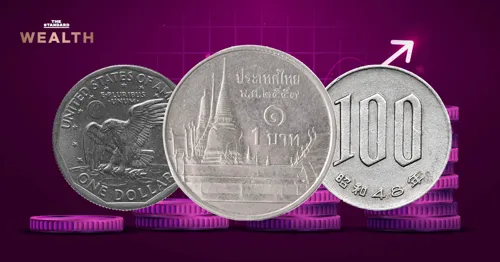
Thai baht strengthened to 33.02–33.13 per USD on August 6, 2026, marking a 6-week high driven by US-Japan yen intervention (weakening the dollar), rising global gold prices (~$4,300/oz), and interest rate differentials favoring carry trades. Standard Chartered forecasts year-end strengthening to 32.50 baht/USD but warns Thailand faces structural headwinds—weak fundamentals, soft private consumption, and slower-than-expected tourism recovery (Chinese visitors lagging, hotel occupancy at 69%). Economists caution that currency weakness alone cannot substitute for economic reform and stimulus measures.

▾ Hover for summary ▾ Tap for summary
Thailand and Myanmar are reactivating their Joint Trade Commission (JTC) for the first time in over a decade to accelerate bilateral trade and investment. Key measures include streamlining import licensing, reducing trade barriers, and enabling Thai baht use in investment transactions. The two countries aim to grow bilateral trade from the current ~$7.4 billion (FY2024) to $12 billion by 2025, with cooperation also expanding into energy, manufacturing, finance, and mining sectors.

▾ Hover for summary ▾ Tap for summary
Thailand is reviving the Joint Trade Commission (JTC) with Myanmar for the first time in over 10 years following the Myanmar President's state visit in August 2026. The two countries aim to increase bilateral trade to $12 billion by 2032 by removing trade barriers, streamlining import licensing, enabling Thai baht use for investment transactions, and expanding cooperation in energy, manufacturing, and other sectors. Currently, Myanmar is Thailand's 8th largest ASEAN trading partner with $7.4 billion in total trade during 2025.
▾ Hover for summary ▾ Tap for summary
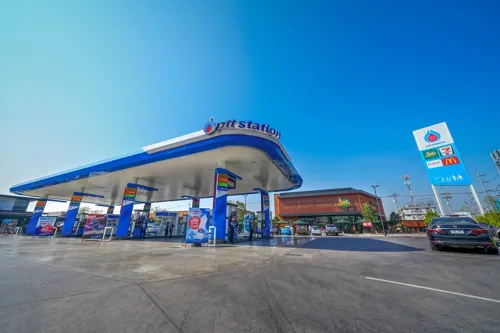
OR's H1 2026 revenue rose 9.2% to 381.8 billion baht, with Q2 up 16.8% QoQ. However, EBITDA declined 35.2% YoY to 7.2 billion baht due to energy market volatility and margin pressure in Mobility/Global segments, offset partly by strong Lifestyle unit growth (Café Amazon hit record 117M units sold). OR is pivoting toward future growth via EV charging expansion, food-service partnerships with Minor Food, and sustainability initiatives while optimizing international operations.

 Want to buy or sell a business?
▾ Hover for summary ▾ Tap for summary
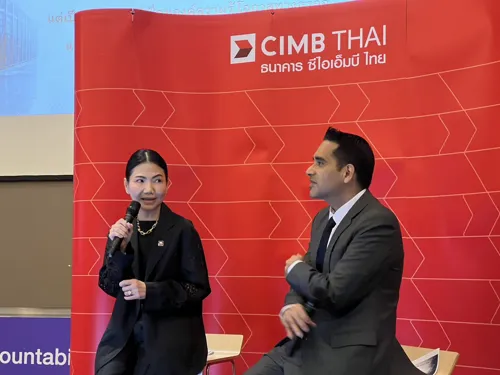
CIMB estimates 1.6 trillion baht in BOI-approved data center investments since 2567 will create a multiplier effect across Thai industries including electrical systems (25–35%), cooling systems (20–30%), real estate (5–15%), and civil works (15–20%). However, early-stage GDP impact may be limited due to high import dependency; meaningful growth requires Thai SMEs to develop complementary capabilities, upskill workforces, and increase local content to move beyond basic utility sales and create long-term export opportunities and supply chain integration.
▾ Hover for summary ▾ Tap for summary
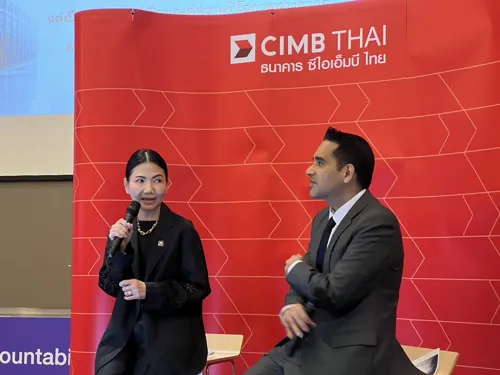
CIMB analysts highlight BOI-approved data centre projects worth 1.6 trillion baht since 2567, which will cascade investment across power, cooling, construction, and IT supply chains. However, initial GDP impact may be limited due to heavy import dependency. Real economic gain requires urgent local capability development, workforce upskilling, and government regulation to localize content and build domestic manufacturing clusters—not just selling land, water, and electricity.
▾ Hover for summary ▾ Tap for summary
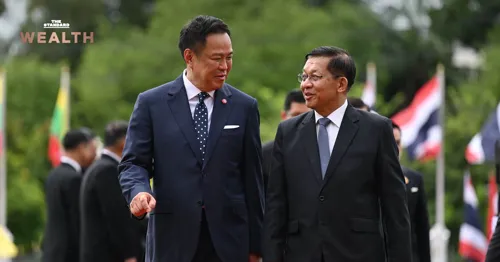
Thailand and Myanmar have reactivated their Joint Trade Commission (JTC) for the first time in over a decade, targeting $12 billion in bilateral trade by 2032. Key initiatives include relaxing import licensing, promoting use of Thai baht for Myanmar investments, opening new border crossing points (especially Myawaddy-Mae Sot and Khlong Toei), and developing the Dawei deep-water port and special economic zone. Three cooperation agreements on labour, water quality management, and space technology were signed. Current trade stands at ~$7.4 billion annually, suggesting significant growth potential for Thai SMEs seeking Myanmar expansion, particularly in machinery, construction materials, cement, energy, manufacturing, and financial services.

▾ Hover for summary ▾ Tap for summary
Deputy PM Ekniti confirms 'Thailand Travel Plus' programme discussions are underway with the Tourism Ministry on using the 400 billion baht emergency loan, contingent on SME relief focus. Government is readying the 'Puao Tang' mobile app platform for benefit distribution and expects sufficient budget allocation for 'Thai Help Thai Plus Phase 2'. The tourism stimulus targets 500,000 privileges with 1.75 billion baht total—combining hotel subsidies (up to 3,000 baht per stay) and 500 baht spending vouchers now expanded to spas, massages, and tourism services beyond food.
 Together GoWeGo! Ferry tickets in Thailand.

▾ Hover for summary ▾ Tap for summary
Makalius, a Thai e-voucher aggregation platform, highlights how tourism businesses are shifting from price-focused promotions to e-voucher-based revenue management. With accommodation vouchers growing 50% YoY and consumers increasingly using vouchers for planned travel (especially in low seasons and weekdays), e-vouchers are becoming a strategic tool for demand management, cash flow forecasting, and brand value preservation—moving beyond simple discounting to sustainable revenue optimization.

▾ Hover for summary ▾ Tap for summary
InterGOLD's GOLD2go app is expanding its gold delivery network across Thailand, opening a new pickup point in Chachoengsao after success in Bangkok and Chiang Mai. The fintech platform enables round-the-clock trading starting at 100 baht with physical gold redemption from 0.5 grams, addressing rising provincial demand for tangible asset ownership alongside digital investment convenience. This reflects a strategic shift in Thailand's retail gold investment market toward integrated digital-to-physical services.

▾ Hover for summary ▾ Tap for summary
Global cryptocurrency hacks in the first half of 2026 totaled $1.3 billion (44 billion baht) across 344 networks, down 46.8% year-over-year per Certik's Hack3D report. July 2026 alone saw $210 million in losses, including a $70 million Coldcard Wallet breach. The article challenges the crypto mantra "not your keys, not your coins" by showing that even self-custody of private keys offers no guarantee against theft and financial loss.

▾ Hover for summary ▾ Tap for summary
Vathana Veckin Group (Choti Tharawat Co.) is launching PADDIO, a 700M baht Neighborhood Hub on 45 rai of a larger 400-rai Bangna development, targeting young families and professionals in the area. The project, opening late 2026, features 40% green space (Singapore-inspired), 10,000+ sqm of retail, and over 500 parking spaces, designed as a daily-use community space rather than a traditional shopping destination. It's the first phase of an integrated ecosystem linking residential, education, commerce, and public areas in the fast-growing Bangna zone where 200,000+ residents within 5–10 km represent strong purchasing power.

 Stop running your company on Excel.