
Archive
August 8, 2026

▾ Hover for summary ▾ Tap for summary
Asia Plus Securities is marketing bonds from 9 Thai companies across finance, jewelry, hospitality, fruit export, and holding sectors, offering yields between 2.75-6.95% to high-net-worth and general investors during August-September. This provides SME investors and financial decision-makers a curated overview of mid-to-large corporate bond opportunities with varying risk ratings (BBB to BB) and tenors (1-10 years), enabling portfolio diversification beyond traditional savings instruments.

▾ Hover for summary ▾ Tap for summary
Thailand's government is escalating its response to a major exam corruption scandal affecting local government recruitment. Beyond removing 5,925 exam officials implicated in fraud, authorities are pursuing criminal charges against 13 individuals (including high-ranking officials), investigating financial trails linked to ~200 suspects, and planning civil and ethical proceedings. The multi-pronged approach aims to restore public confidence in the civil service examination system.

▾ Hover for summary ▾ Tap for summary
Central Retail Corporation (CRC) has acquired AEON (Thailand)'s MaxValu supermarket chain with 30 branches for approximately 890 million baht through its subsidiary Central Food Retail (CFR). The acquisition expands CFR's customer base by over 900,000 immediately and secures a Ready-to-Eat food production facility. All acquired MaxValu branches will be rebranded as Tops. This move addresses CRC's strategy to strengthen its food retail business amid intense competition. MaxValu, which originated as JUSCO in 1984 and was rebranded in the mid-1990s, has faced declining revenue (down from 5.6 billion baht in 2023 to 4 billion in 2025) and mounting losses, reflecting broader pressure on Thailand's supermarket retail sector.

▾ Hover for summary ▾ Tap for summary
Thailand's Deputy PM and Finance Minister (Ekanat) outlined allocation of the first 2-trillion-baht emergency loan decree, with 400 billion baht remaining. Of the remaining 2 trillion allocated later, 500-600 billion baht is designated for energy transition programs including solar rooftop subsidies, EV conversion for public transport, and smart meter deployment. Thailand Travel Plus tourism stimulus (1.75–2 billion baht) awaits approval contingent on economic conditions. Grab's AI-powered "Plus" initiative under Thailand Help Thailand Plus Phase 1 increased merchant sales by 68%, informing Phase 2 planning. The government emphasizes systemic energy infrastructure development over isolated clean-energy projects.

 Empower businesses to thrive in the digital age.
▾ Hover for summary ▾ Tap for summary
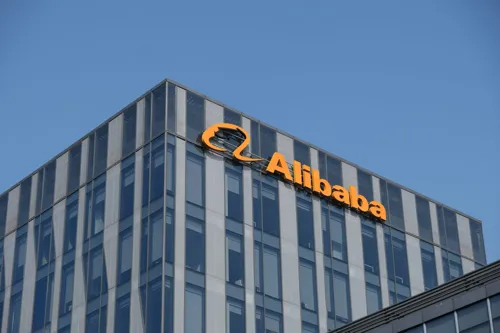
Alibaba is introducing a revenue-sharing model for its Qwen AI platform, making it more attractive for developers and businesses to build on its AI infrastructure. This move reflects competition in the generative AI space and could benefit SMEs looking to leverage advanced AI capabilities without heavy upfront investment.

▾ Hover for summary ▾ Tap for summary
X is replacing its Verified-account revenue-sharing program with a stricter "Original Content Rewards Program" launching September 8, 2026. The new program requires X Premium subscription, 500+ Verified followers, and 500K+ impressions from Verified accounts over 90 days—but only rewards genuinely original content (news, knowledge, storytelling, entertainment). Explicitly excluded: copied posts, re-uploaded media, reaction videos, or recontextualized third-party clips. Content creators and SMEs using X for audience monetization need to audit their upload practices immediately.

▾ Hover for summary ▾ Tap for summary
Foreign buyers are shifting focus to tourism destinations like Chiang Mai and Phuket as Bangkok condo demand weakens, with returns of 7–13% attracting capital from China, Russia, Taiwan, and Myanmar. Major developers (Sena, Origins, Aorsin, Sansiri) are opening new distribution channels (Chinese platforms Douyin, XiaoHongshu, Taiwan expos) and offering agent commissions of 7% and lifestyle perks (free visas, airport fast-track) to capture the market. However, overall foreign condo transfers in Q1 2026 grew only 1% year-on-year and fell 22% sequentially, with Bangkok declining 2% and Chinese buyers particularly soft. Recovery in H2 is expected to remain weak due to government anti-nominee measures dampening business buyer confidence.

▾ Hover for summary ▾ Tap for summary
Nine major Thai-listed companies have announced interim dividends following H1 2026 earnings reports, with ADVANC leading at 8.69 baht per share. Other major payouts include PTTEP (4.50 baht), SCC (3.50 baht), and SCCC (4.00 baht). Ex-dividend dates cluster in late August with payment occurring August–September. This is a routine corporate action following mid-year results; relevant for investors tracking dividend income and portfolio timing.
 Your real translator for LINE and Discord.
▾ Hover for summary ▾ Tap for summary
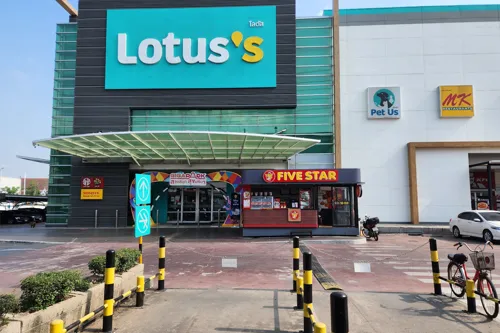
CP, Central, and The Mall are jointly developing a major mixed-use project in Huamark-Ramkhamhaeng area, leasing 45 rai from the Thai Ostad Association to build a lifestyle community with Lotus hypermarket as anchor tenant. The development is part of a broader eastern Bangkok CBD strategy capitalizing on upcoming orange and yellow BTS extensions, premium residential growth (50-100M baht luxury homes), and strong daily foot traffic (20,000-30,000 in Huamark Center). This represents a significant shift for Ostad Association (80% revenue from energy drinks) into real estate, with mixed-use retail, offices, and lifestyle amenities expected to drive higher tenant activity.

▾ Hover for summary ▾ Tap for summary
Thai e-commerce platforms (Shopee, Lazada, TikTok Shop) have raised seller fees for the second or third time in 2026, with Shopee alone increasing by 1–3% in August. Shopee Mall Sellers now pay up to 19.26% in fees. The Thai Competition Commission held a hearing on August 4 to address seller grievances around unfair fees, forced promotions, and arbitrary account suspensions, but merchants struggle to file complaints due to inadequate evidence-gathering skills—70% cannot prepare complete documentation. Only 15–16 digital platform cases were filed in 2025, far below the actual complaint volume.
August 7, 2026
▾ Hover for summary ▾ Tap for summary
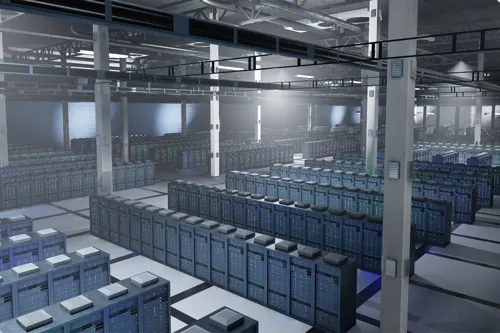
Thailand's Board of Investment (BOI) has suspended data center approvals since April and is developing four new regulatory criteria to govern both future and existing projects. Deputy PM Ekniti is establishing an oversight committee to balance economic growth with environmental and employment concerns—past approvals totaled 42 projects worth 750 billion baht over 3 years. Policy will now mandate standards for power/water usage, environmental controls, labor requirements, and service rates, with stricter controls similar to Singapore and Malaysia's models.
▾ Hover for summary ▾ Tap for summary
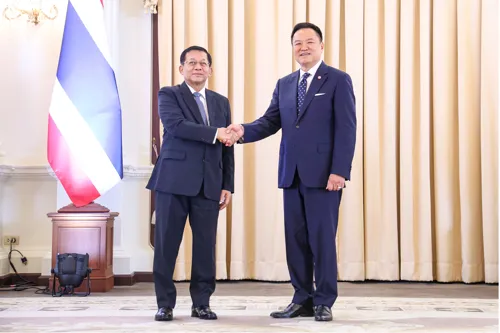
Myanmar's President Min Aung Hlaing visited Thailand (August 6-7) to strengthen bilateral ties. Key outcomes include reopening the second Thai-Myanmar Friendship Bridge (Mae Sot-Myawady), hosting the 8th Joint Trade Commission within 2026 after a 10+ year gap, and signing 3 MOUs on labour cooperation, water quality management, and space technology. Thailand targets $12 billion in bilateral trade by 2031 and emphasizes Myanmar's importance to Thailand's economy, particularly its workforce. Security cooperation also advances on drug trafficking, online fraud, and cross-border crime.

 Want to buy or sell a business?

▾ Hover for summary ▾ Tap for summary
Thailand's cabinet approved the National Big Data Strategic Plan 2025-27, establishing the country's first comprehensive big data framework to become "data-driven." The plan targets a 35% year-on-year increase in big data economy value and aims to improve Thailand's World Digital Competitiveness Ranking from 27th to 25th. Key initiatives include building national data infrastructure, applying AI across sectors (health, tourism, environment, agriculture), and training 160,000+ personnel in big data and AI skills. This represents a structural policy shift to address fragmented government data systems and support both public service delivery and private sector competitiveness.
▾ Hover for summary ▾ Tap for summary
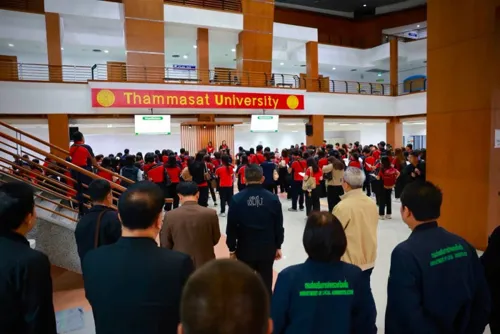
Thai authorities discovered massive score manipulation in civil service exams affecting 5,925 candidates—3,404 unqualified officials are being terminated and 774 re-examined. The Interior Ministry has established accountability measures with criminal referrals and a deadline of Aug 31 for revocations, with replacements starting October. This reflects governance risks and institutional integrity concerns relevant to SME contracting and regulatory environments.
▾ Hover for summary ▾ Tap for summary
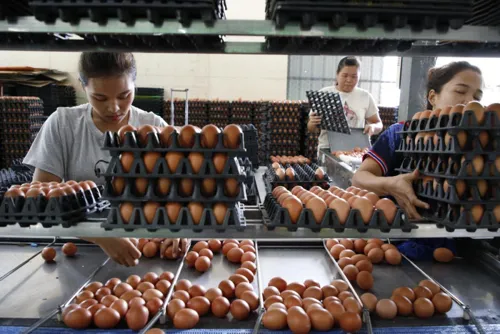
Thai egg prices have surged to 4 baht per unit—a 2-year high—driven by weather-related supply constraints and elevated feed costs (14-16 baht/kg vs. 13 baht earlier). While SME restaurants may switch to cheaper smaller eggs, broader food price inflation is a relevant risk factor for F&B operators. Relief is expected in October as conditions improve and supply normalizes.

▾ Hover for summary ▾ Tap for summary
Thailand's Finance Ministry plans to roll out excise tax incentives by September to attract foreign automakers to establish local production and source components domestically. The scheme offers lower tax rates to manufacturers building factories in Thailand and using Thai suppliers, while penalizing full imports without local production. Approved by cabinet next month, this supports the government's "Thailand's New Horizon" strategy to boost investment and raise GDP growth from 2% to over 3% within four years, positioning Thailand as an alternative manufacturing hub amid geopolitical shifts.
 Together GoWeGo! Ferry tickets in Thailand.

▾ Hover for summary ▾ Tap for summary
Thailand's Energy Ministry increased LPG subsidies from 7.22 to 9.86 baht/kg to keep cooking gas prices stable at 423 baht per 15-kg cylinder for three months. This price-control measure is meant to protect consumers' cost of living, but strains the state Oil Fuel Fund, which had a 71.8 billion baht deficit as of early August. SMEs dependent on stable energy costs for food production, logistics, and goods distribution should monitor subsidy policy changes, as fund depletion could trigger price liberalisation.
▾ Hover for summary ▾ Tap for summary
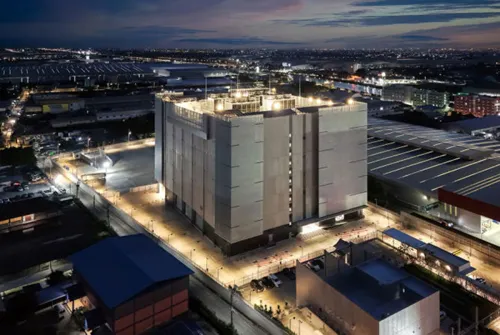
FTI survey reveals Thai entrepreneurs see data centre expansion as critical for industry development (48.1% support), but warn of serious infrastructure challenges: 68.8% cite water scarcity as top concern, 61.3% worry about electricity demand, and 61.3% fear regulatory gaps. Nearly half believe Thailand could become a regional data centre hub, but only if the country addresses water, energy, and legal frameworks. Key risk: unmanaged resource competition between industries and communities could undermine energy security and limit the sector's growth potential.
▾ Hover for summary ▾ Tap for summary
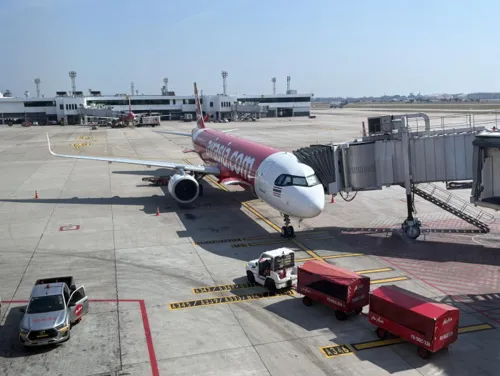
Thailand's airline seat capacity fell to third place in Southeast Asia for the second consecutive month, with Vietnam now ranking second after a 10% year-on-year increase. Thai capacity declined 1.7% to 7.19 million seats, driven primarily by Thai AirAsia's 23.4% capacity cut at Don Mueang airport in response to fuel costs. The shift reflects Vietnam's competitive advantages: rapid infrastructure development, new tourist destinations (Da Nang, Phu Quoc), bulk booking practices, and strong GDP growth—contrasting with Thailand's reliance on two major Bangkok hubs and slower expansion pace. Industry experts warn that Vietnam's perceived freshness and investment momentum are attracting both tourists and investors faster than Thailand can adapt.

▾ Hover for summary ▾ Tap for summary
Thailand's government is pursuing an ambitious civil service reform to reduce a 3+ million-strong bureaucracy to ~2 million through voluntary early retirement and attrition, aiming to redirect savings into higher wages for remaining staff. The move addresses severe fiscal strain—personnel costs now consume 70% of recurring government spending—but faces political obstacles given the bureaucracy's institutional power. Success here could free capital for infrastructure and innovation investment.

 Stop running your company on Excel.