
Archive
August 26, 2026
▾ Hover for summary ▾ Tap for summary
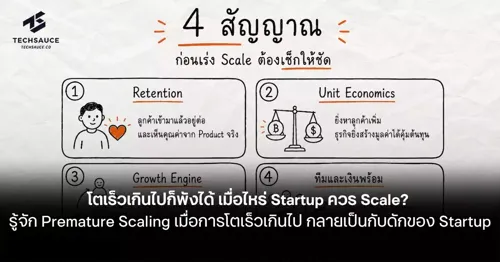
This article explains the critical difference between Growth (adding resources to increase output proportionally) and Scaling (growing revenue while costs grow slower). Using Startup Genome research showing 70% of startups scale prematurely—with 93% of those failing to reach $100K USD monthly revenue—the piece outlines key readiness factors: proven repeatable customer acquisition, strong unit economics, and retention metrics. It warns Thai startup founders that more customers, revenue, or team size doesn't automatically mean readiness to scale; premature scaling amplifies existing problems rather than accelerating success.
▾ Hover for summary ▾ Tap for summary
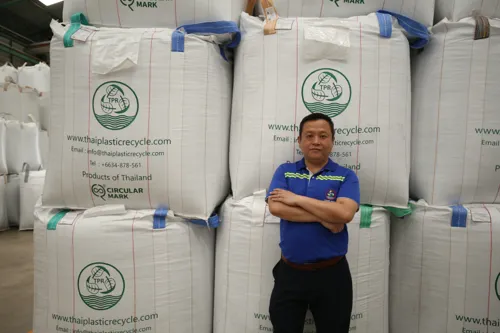
Thai Plastic Recycle Group has secured FDA No Objection Letter approval for its recycled PET (rPET) flakes, confirming compliance with US food safety standards. The certification covers mechanical recycling processes and permits use in direct food-contact packaging, films, and multi-layer structures. This opens market access to the US and signals global competitiveness for Thai SMEs in circular economy solutions amid rising demand for recycled-material products.

▾ Hover for summary ▾ Tap for summary
Thailand's largest private-sector consortium—CP Group, True Corporation, and Arice Ventures—has signed a 5-year strategic partnership with AWS to position the country as an ASEAN AI hub. The initiative, called "AI in All," aims to deploy AI across all business sectors and train 3 million Thais (including CP employees) in cloud and AI skills. The partnership will establish the companies as regional "AI Lighthouses" while addressing a reported 74% digital-skills gap among Thai youth, and introduces "AI for ALL," a national Generative AI hackathon for citizens to solve challenges in healthcare, agriculture, and education.

▾ Hover for summary ▾ Tap for summary
Thailand's Q2 GDP expanded 1.9% YoY, driven by AI and data center sectors, but the growth is unevenly distributed—a "two-speed economy" where leading-edge industries boom while traditional sectors and SMEs struggle. Private investment surged 13.4%, but structural challenges persist: SMEs face credit constraints, household debt is high, and policy responses remain temporary fixes. Economist Burin Adulwattana warns that without addressing energy transition barriers (like Direct PPA), supporting SME credit access, and managing unequal income growth, consumer confidence will erode and the economy risks stagnation despite positive headline GDP figures.

 Empower businesses to thrive in the digital age.

▾ Hover for summary ▾ Tap for summary
Pan Cosmetic and Rajvithi Clinic partner with Thailand's National Science Museum (NSM) to launch a 200+ sqm science exhibition on skincare and beauty, featuring 5 learning zones covering skin structure, acne, age-related changes, and 50 years of brand heritage. The "TRUE BEAUTY" campaign reframes beauty as science-based self-understanding and sustained care rather than quick fixes, targeting youth education in biomedical science, dermatology, cosmetic science, and wellness careers.

▾ Hover for summary ▾ Tap for summary
The Bank of Thailand has issued official guidance on account suspension procedures, categorizing blocked accounts into four risk levels (black, dark gray, light gray, and brown horses) with distinct unlock pathways. High-risk accounts require applications to police/AMLO; medium-risk to respective banks; suspicious accounts to originating banks. The central bank emphasizes suspension is preventative, not conviction, and urges financial institutions to communicate clearly with affected customers and expedite verification for legitimate account holders, as fraud losses have dropped 79% (8.6B→1.8B baht) since implementation.

▾ Hover for summary ▾ Tap for summary
The Bank of Thailand's Monetary Policy Committee unanimously voted on 26 August to maintain the policy rate at 1.00% per annum, deeming current rates appropriate to support economic recovery. The Committee noted that while headline inflation is below earlier forecasts, it faces temporary upward pressures until Q1 2027 from El Niño effects and cost pass-through, with SME credit continuing to contract. Financial institutions remain cautious on lending to risky SME borrowers, requiring close monitoring of vulnerable SMEs' debt repayment capacity alongside targeted financial support measures.
▾ Hover for summary ▾ Tap for summary
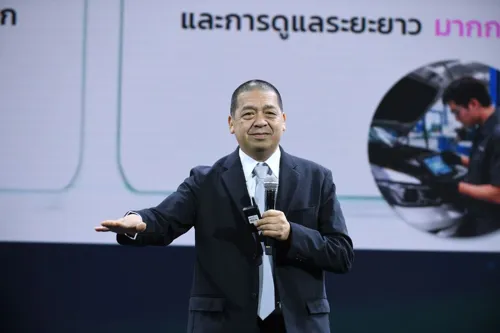
Thailand's electric vehicle market has grown explosively to 515,000+ units (80% of ASEAN's total), with 7-month sales exceeding 144,000 units. However, over 60% are imports, prompting EVAT to call for tariff review to strengthen local manufacturers. Key challenges include: uneven charging infrastructure (50% concentrated in Bangkok, inadequate outside urban areas), rapid proliferation of brands (112 models from 52 brands vs. 26 models in 2021), and growing competition from Chinese manufacturers establishing production facilities in Thailand. Government 30@30 policy is attracting foreign EV producers to build factories locally, partially driven by US-China trade tensions and EU tariffs on Chinese EVs.
 Your real translator for LINE and Discord.

▾ Hover for summary ▾ Tap for summary
TechInAsia is hosting an "AI Leaders Breakfast" event focused on addressing the gap between AI capabilities and enterprise adoption. This is a networking/event opportunity for Thai tech leaders and SMEs to connect with industry peers and learn practical strategies for implementing AI in their organizations.
▾ Hover for summary ▾ Tap for summary
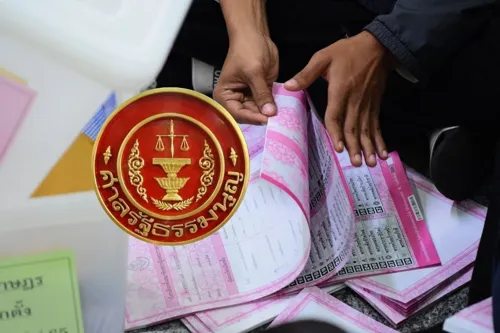
Thailand's Constitutional Court held a hearing with five witnesses on the constitutionality of barcodes and QR codes printed on ballots used in the February 2026 general election. A complaint filed by the Ombudsman raised 22 grievances alleging the ballot coding system violates electoral secrecy and constitutional principles. The court will deliver its ruling on 28 September, which could have significant implications for election procedures and ballot security protocols in Thailand.
▾ Hover for summary ▾ Tap for summary
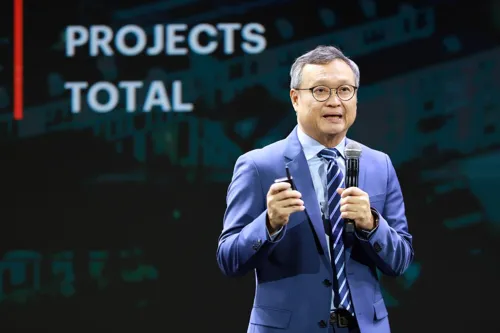
Sansiri, Thailand's leading property developer, is scaling its T77 clean energy community model across 18 nationwide projects (103.8B baht portfolio). The company has installed 1,200 EV chargers, 3,800 solar systems, and achieved 7,000 tonnes CO2 reduction. In partnership with Ladkrabang Institute of Technology, Sansiri is testing graphene-infused precast walls to reduce building temperature by 2°C (deployment expected 1–2 years). Initial results show 20–35% electricity savings across pilot condominiums. This mainstream scaling of energy-efficient design signals broader ESG commitment in Thai real estate and competitive differentiation for SME tenants seeking sustainable office/retail spaces.

▾ Hover for summary ▾ Tap for summary
Sansiri and Krungthai Bank are launching a 5-year digital bond offering 3.70% fixed interest, sold via the Pao Tang mobile app starting August 27. Minimum investment is 1,000 baht with a cap of 50 million per transaction. This marks a meaningful democratization of bond investing for Thai retail investors, combining Sansiri's strong property market position (BBB+ rated, 12 sold-out projects, 26+ billion baht backlog) with fintech accessibility. Real-time secondary market trading via app enhances liquidity for small savers entering fixed-income products.

 Want to buy or sell a business?
▾ Hover for summary ▾ Tap for summary
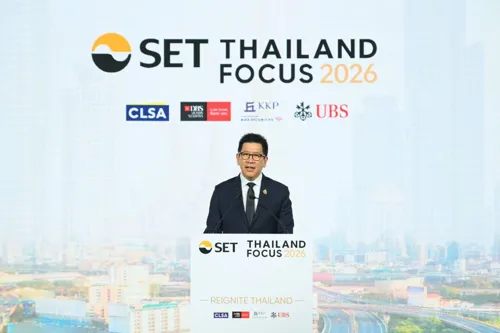
Thailand's Deputy PM announced an ambitious plan to increase investment from 20% to 30% of GDP, following strong Q2 growth of 14% (highest in ~10 years). Key initiatives include the Thailand Fast Pass program to attract FDI, a BOI to IPO initiative to list New Economy companies, and focus on R&D, AI, EV, and biotech sectors. The government aims to integrate Thai SMEs into global supply chains and aims for GDP growth above 3% and Top 20 global competitiveness ranking. Q1-Q2 foreign investment applications hit 1.47 trillion baht, up 37%.
▾ Hover for summary ▾ Tap for summary
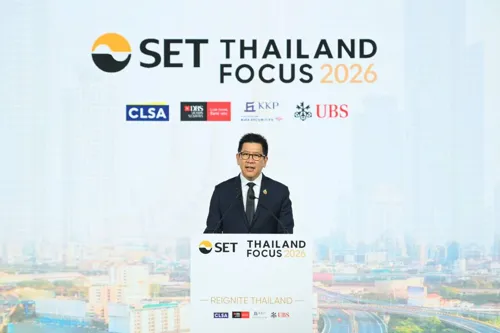
Thailand's Deputy PM Ekniti announced an ambitious economic target to increase investment share from 20% to 30% of GDP, capitalizing on Q2 growth of 14% (10-year high). Key initiatives include accelerating foreign direct investment through Thailand Fast Pass, promoting tech/AI/EV sectors, integrating Thai SMEs into global supply chains, and fast-tracking New Economy companies to IPO via the BOI to IPO program. This directly impacts SME growth, venture financing opportunities, and tech sector expansion.

▾ Hover for summary ▾ Tap for summary
Thai TV broadcasters (Workpoint, Thai Rath) are redefining television beyond traditional viewing by integrating Connected TV with mobile engagement—using QR codes to convert passive viewers into active participants. Real-world examples include polling campaigns reaching 2,600+ respondents in 5 days and 3-month promotional drives engaging 1.3M smartphone users. Trust built over 71 years of Thai TV now translates directly to measurable business outcomes (sales, data insights, conversions) rather than just viewership metrics, positioning TV as a bridge between content and e-commerce.

▾ Hover for summary ▾ Tap for summary
Thailand's Tourism Authority (TAT) has partnered with TikTok to launch "TikTok LIVE Community Fest 2026," bringing over 300 content creators from Southeast Asia and Central Asia to Bangkok. Creators will produce authentic on-the-ground content showcasing Thai culture, attractions, and lifestyle to global audiences, shifting from tourism inspiration to actual travel decisions. The initiative reflects a strategic pivot toward "creator-powered tourism" that leverages digital influencers to drive visitor growth.
 Together GoWeGo! Ferry tickets in Thailand.
▾ Hover for summary ▾ Tap for summary
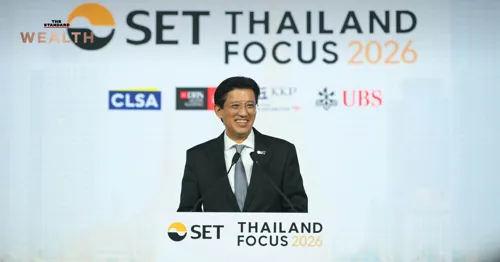
The Stock Exchange of Thailand (SET) is negotiating with China to develop a new 60:40 index (60% China/HK/A-shares, 40% ASEAN/Thai stocks) targeting fund flows from Chinese institutional investors leveraging Beijing's policy liberalizing overseas investment. The index would underpin new ETF products and serve as a strategic tool to attract global institutional capital during Thailand's hosting of the IMF-World Bank Annual Meeting in October. This positions Thailand and ASEAN in the regional capital markets hierarchy while capitalizing on China's domestic capital-reallocation cycle.

▾ Hover for summary ▾ Tap for summary
Thailand's aviation authority (CAAT) is systematizing development of six high-capacity regional airports (Surat Thani, Ubon Ratchathani, Khon Kaen, Nakhon Si Thammarat, Udon Thani, Krabi) serving 2,500–5,000 passengers/day. The strategy: tailored infrastructure expansion—not uniform growth—coupled with 50% fee cuts on landing/parking to incentivize new airline routes (6 months for new carriers, 12 months for new routes). Objective is to decentralize travel and economic activity from Bangkok, unlocking regional tourism, trade, and investment potential via interconnected transport and logistics hubs.
▾ Hover for summary ▾ Tap for summary
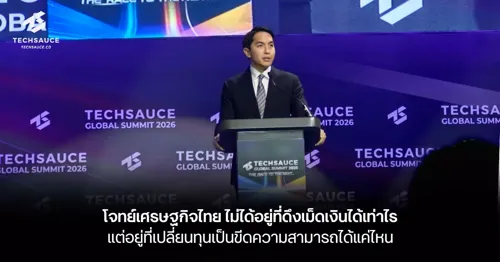
Thailand received ~1.5 trillion baht (US$45bn) in BOI investment applications in H1 2026—up 40% YoY—but the real challenge is converting this capital into productive capability. Deputy Finance Minister Santhithar outlined that Thailand's growth model based on labor and resources is exhausted due to aging demographics; success must shift to productivity and developing strength in emerging sectors (AI infrastructure, advanced electronics, green economy, robotics). The opportunity lies in positioning Thailand as a "trusted connector" in an increasingly fragmented global economy, while Thai startups must compete in AI applications rather than frontier models.
▾ Hover for summary ▾ Tap for summary
Thailand's central bank held its policy rate at 1.00% to support economic recovery while monitoring risks. Key concern for SMEs: SME credit remains in contraction despite broader credit expansion, with financial institutions cautious on risky borrowers. The committee will watch Middle East developments, inflation trajectory (expected to rise temporarily), and vulnerabilities in SME/household segments. This signals continued accommodative policy but no immediate relief for struggling SME lending without targeted financing measures.

 Stop running your company on Excel.