
Archive
August 26, 2026
▾ Hover for summary ▾ Tap for summary
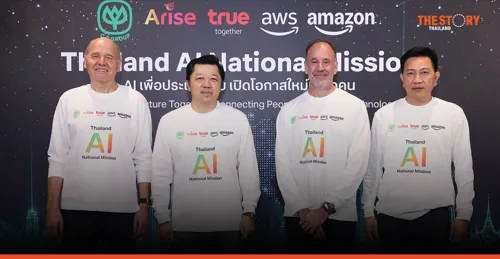
CP Group, Aireize Ventures, True Corporation, and AWS announced a strategic 5-year partnership ("Thailand AI National Mission") to drive AI adoption across Thai business and upskill 3 million Thais in cloud and AI. Key initiatives include: deploying AI across CP's 65+ million customer base via a Single ID system, targeting 20,000 AI startups, reforming university AI curricula, and developing sovereign cloud/AI infrastructure. This positions Thailand as a regional AI hub while balancing technology adoption with ethics, security, and human-centric governance—critical for Thailand's competitive positioning as AI becomes national infrastructure.
▾ Hover for summary ▾ Tap for summary
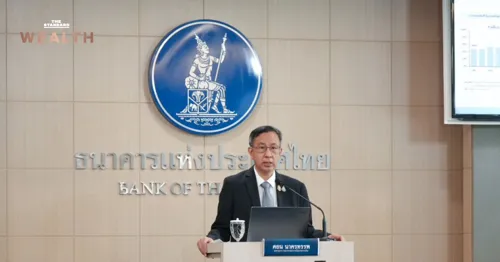
Thailand's central bank (BOT) held its policy rate at 1.0% and decided against cutting rates now, arguing current economic conditions don't justify the move despite weak recovery. The BOT signaled it has room to cut to 0.5% if crisis emerges, but prefers coordinated fiscal and targeted financial measures to support growth. This reflects cautious monetary stance amid uneven economic recovery.

▾ Hover for summary ▾ Tap for summary
AMD has crossed the 30% market share threshold in x86 PC CPUs (desktop + laptop combined), up from 21.1% two years ago. Desktop CPUs hold 34.9% while laptop CPUs reach 28.9%, collectively pushing AMD above Intel for the first time. However, the emerging threat of ARM-based PCs is growing, now capturing 15.3% of the total PC market. This signals a structural shift in the CPU landscape beyond the Intel-AMD duopoly.
▾ Hover for summary ▾ Tap for summary
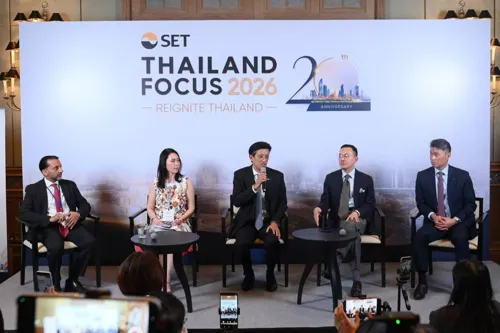
Thailand Focus 2026 event attracted 220 investors from 74 funds, including 42 foreign funds, signaling renewed foreign investor interest in Thai capital markets. UBS and DBS highlighted positive momentum, with major funds returning to Thailand for the first time since 2018. Key drivers include political stability, prospects for AI leadership in ASEAN, and government growth commitments—though sustained capital inflows depend on Thailand executing its economic policies and growth plans. Long-term risks include competition from extended US market trading hours and regional market dynamics.

 Empower businesses to thrive in the digital age.

▾ Hover for summary ▾ Tap for summary
Senior Thai executives from CP, AIS Ventures, and True Corp announced a 5-year partnership with AWS to position Thailand as a regional AI hub. The article emphasizes that AI could add $11–19 trillion to global GDP by 2039, but Thailand ranks 26th globally in competitiveness (IMD 2026), with critical gaps in technological infrastructure and AI readiness. Thailand's GDP per capita ($8,057) lags Singapore ($98,814) by 12x despite having 12x more people. The AI value chain—spanning energy, chips, infrastructure, models, and applications—is outlined as essential for Thailand to escape the middle-income trap and become a technology creator rather than mere consumer.
▾ Hover for summary ▾ Tap for summary
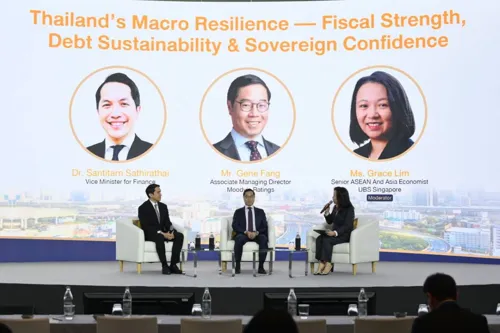
Thailand's Finance Ministry is targeting a structural shift from 23–24% to 30% of GDP in total investment to achieve sustainable 3%+ annual growth, addressing low productivity and an aging population. The government is streamlining regulations, attracting private capital and FDI into advanced industries (photonics, power electronics, EVs, robotics, biotech), and pivoting away from data centers. Moody's upgraded Thailand's outlook to Stable (Baa1) but warns growth remains the key credit constraint, with potential growth estimated at only 2.5% absent major structural reform. Success hinges on debt control, efficient spending, and sustained investor confidence amid China-Plus-One reshoring trends.
▾ Hover for summary ▾ Tap for summary
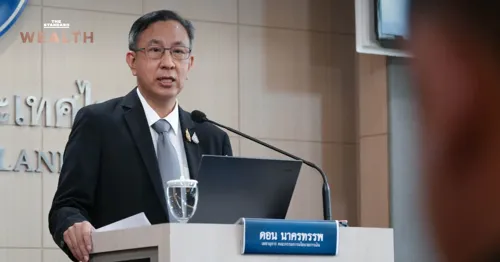
Bank of Thailand warns that despite rising tech/AI investment and exports, job creation has plummeted—new investments now generate only half the jobs-to-capital ratio they did five years ago (0.20 vs 0.45 jobs per million baht). The central bank identifies three structural headwinds: new business openings cannot offset closures, companies increasingly hire foreign workers over Thais due to skill gaps, and temporary contracts are replacing permanent roles. This labor-market structural shift signals rising unemployment ahead.
▾ Hover for summary ▾ Tap for summary
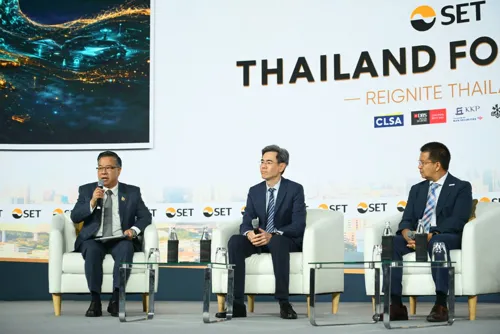
Thailand's Board of Investment projects a major FDI wave over the next 3–5 years, driven by AI, semiconductors, smart vehicles, and smart electronics. Two global tech giants are actively expanding: Infineon is building a new backend factory with advanced automation (targeting 2x its current largest hub), while Lumentum has grown from hundreds to 9,000 Thai workers and is scaling to 10,000, producing photonics for AI and data-center infrastructure. Key gaps remain in skilled workforce development, supply-chain integration, regulatory modernization, and power-grid stability—critical for SMEs seeking to participate in these high-value supply chains.
 Your real translator for LINE and Discord.

▾ Hover for summary ▾ Tap for summary
Taiwan authorities have indicted 8 people, including NVIDIA and Supermicro employees, for illegally smuggling 130 Supermicro servers equipped with NVIDIA B300 GPUs to China across three shipment routes. The B300 chips are subject to strict export controls requiring whitelist-only sales and non-transferability. This case highlights supply chain vulnerability and enforcement challenges for high-tech hardware subject to export restrictions—a concern for tech hardware vendors and distributors across Southeast Asia.
▾ Hover for summary ▾ Tap for summary
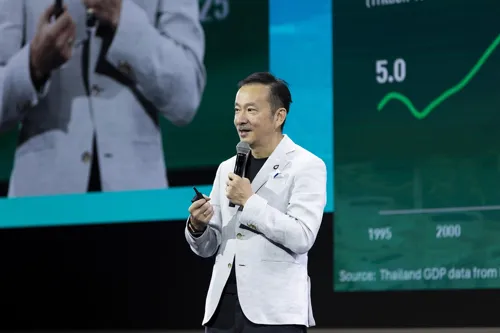
PTT's CEO presented a strategic proposal to increase drop-in biofuel blending to 20% in Thailand's transport sector, claiming potential economic gains equivalent to 2% of GDP (~153 billion baht in domestic spending, 63 billion baht in reduced oil imports). The approach leverages existing fuel infrastructure and domestic biomass resources, particularly palm-based biodiesel, while supporting biofuel production across aviation (SAF), road transport (HVO), and maritime (B24) sectors. Key benefit: energy independence without major infrastructure overhaul.

▾ Hover for summary ▾ Tap for summary
Arincare has launched a regulatory-approved telepharmacy platform enabling Thai pharmacies (both independent and chains) to offer remote consultation services legally. The system directly connects patient data to individual pharmacies rather than centralised platforms, supports pharmacist fee structures without commission deductions, and is backed by ISO/IEC 29110 certification and APICTA recognition. The software serves community pharmacies of all sizes with customisation options and integration capabilities.

▾ Hover for summary ▾ Tap for summary
A robotics founder argues that polished demo videos mask the real challenge in AI development: systems must gracefully handle errors and unexpected situations, not just perform flawlessly in controlled settings. This insight matters for SMEs evaluating AI/robotics solutions—focus on resilience and failure modes, not marketing videos.

 Want to buy or sell a business?
▾ Hover for summary ▾ Tap for summary
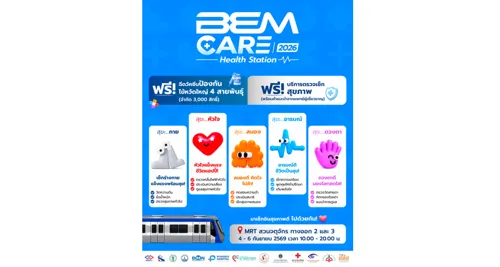
Bangkok Mass Transit System (BEM) is hosting a three-day health event at Chatuchak Park MRT station (Sept 4–6, 2026) offering free health services including flu vaccinations (1,000 per day), stroke screening via Mobile Stroke Unit, ECG checks, and mental health consultations. The initiative partners government and private sector to make healthcare accessible to urban commuters, featuring expert talks, workshops, and fitness activities led by well-known trainers and health advocates.
▾ Hover for summary ▾ Tap for summary
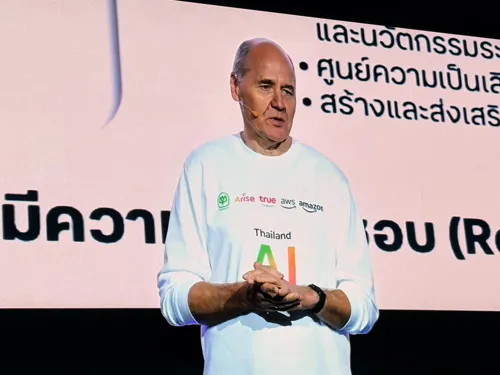
True Corporation's CEO revealed the telecom giant is exploring low-earth orbit (LEO) satellite technology in partnership with Amazon's Kuiper project to extend network coverage to underserved areas (remote islands, mountains, sea). True is studying what licensing requirements it needs from the National Broadcasting and Telecommunications Commission (NBTC) to offer retail satellite services domestically. Details on investment, timeline, and service models remain under discussion and will be disclosed when appropriate. This move signals True's competitive response to infrastructure gaps and upcoming connectivity demand.
▾ Hover for summary ▾ Tap for summary
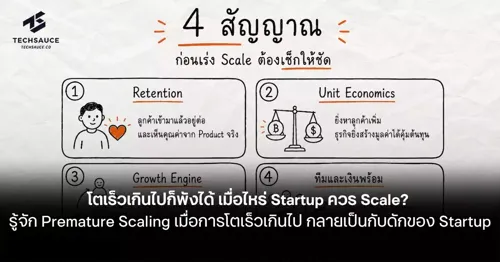
This article explains the critical difference between Growth (adding resources to increase output proportionally) and Scaling (growing revenue while costs grow slower). Using Startup Genome research showing 70% of startups scale prematurely—with 93% of those failing to reach $100K USD monthly revenue—the piece outlines key readiness factors: proven repeatable customer acquisition, strong unit economics, and retention metrics. It warns Thai startup founders that more customers, revenue, or team size doesn't automatically mean readiness to scale; premature scaling amplifies existing problems rather than accelerating success.
▾ Hover for summary ▾ Tap for summary
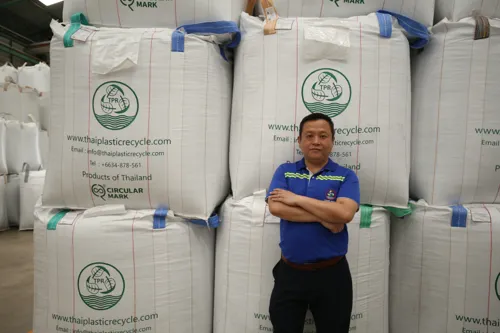
Thai Plastic Recycle Group has secured FDA No Objection Letter approval for its recycled PET (rPET) flakes, confirming compliance with US food safety standards. The certification covers mechanical recycling processes and permits use in direct food-contact packaging, films, and multi-layer structures. This opens market access to the US and signals global competitiveness for Thai SMEs in circular economy solutions amid rising demand for recycled-material products.
 Together GoWeGo! Ferry tickets in Thailand.

▾ Hover for summary ▾ Tap for summary
Thailand's largest private-sector consortium—CP Group, True Corporation, and Arice Ventures—has signed a 5-year strategic partnership with AWS to position the country as an ASEAN AI hub. The initiative, called "AI in All," aims to deploy AI across all business sectors and train 3 million Thais (including CP employees) in cloud and AI skills. The partnership will establish the companies as regional "AI Lighthouses" while addressing a reported 74% digital-skills gap among Thai youth, and introduces "AI for ALL," a national Generative AI hackathon for citizens to solve challenges in healthcare, agriculture, and education.

▾ Hover for summary ▾ Tap for summary
Thailand's Q2 GDP expanded 1.9% YoY, driven by AI and data center sectors, but the growth is unevenly distributed—a "two-speed economy" where leading-edge industries boom while traditional sectors and SMEs struggle. Private investment surged 13.4%, but structural challenges persist: SMEs face credit constraints, household debt is high, and policy responses remain temporary fixes. Economist Burin Adulwattana warns that without addressing energy transition barriers (like Direct PPA), supporting SME credit access, and managing unequal income growth, consumer confidence will erode and the economy risks stagnation despite positive headline GDP figures.

▾ Hover for summary ▾ Tap for summary
Pan Cosmetic and Rajvithi Clinic partner with Thailand's National Science Museum (NSM) to launch a 200+ sqm science exhibition on skincare and beauty, featuring 5 learning zones covering skin structure, acne, age-related changes, and 50 years of brand heritage. The "TRUE BEAUTY" campaign reframes beauty as science-based self-understanding and sustained care rather than quick fixes, targeting youth education in biomedical science, dermatology, cosmetic science, and wellness careers.

▾ Hover for summary ▾ Tap for summary
The Bank of Thailand has issued official guidance on account suspension procedures, categorizing blocked accounts into four risk levels (black, dark gray, light gray, and brown horses) with distinct unlock pathways. High-risk accounts require applications to police/AMLO; medium-risk to respective banks; suspicious accounts to originating banks. The central bank emphasizes suspension is preventative, not conviction, and urges financial institutions to communicate clearly with affected customers and expedite verification for legitimate account holders, as fraud losses have dropped 79% (8.6B→1.8B baht) since implementation.

 Stop running your company on Excel.