Archive
September 24, 2026

▾ Hover for summary ▾ Tap for summary
REIC and GHB say H1 2026 Bangkok-area transfers rose 20.8% in units, but the rise was driven by a rush before the transfer-fee cut ended 30 June 2026, and the cut was reportedly extended to 30 June 2027. Units above 7.5m baht fell 12.1%, a sign of softer upper-end demand. New project launches fell 20.9% and land-subdivision permits fell 50.7%, as developers clear stock, face tighter bank lending and higher construction costs. For suppliers and contractors, expect slower new-project orders and more price competition; for businesses selling to the mid-to-low price segment, demand is still growing.

▾ Hover for summary ▾ Tap for summary
US 10-year Treasury yields rose to 5.12% on 24 September, the highest since 2007, after the Fed raised rates for the first time in this cycle to 3.75-4%. Markets expect up to three more 0.25% hikes within a year. Analysts say the sell-off is driven by oil-linked inflation worries and heavy government and corporate bond supply. For a Thai SME, the main channel is higher global borrowing costs and possible pressure on stock markets and the baht. No immediate action is needed, but watch loan rates, import costs and the US mid-term elections, which could slow the sell-off.

▾ Hover for summary ▾ Tap for summary
At the Greenest Cities Forum in Phuket (24-26 Sept 2026), the Energy Ministry spokesperson said the 1-million-rooftop solar scheme is being designed, with registration expected in October 2026. Systems up to 5 kW per meter would sell power back to the grid at 2.20 baht per unit on 20-year contracts, with a 10,000 MW total cap. Hotels and property businesses are named as target users. If your premises have suitable roof space, start checking roof condition, meter size and quotes now so you can register when the window opens. The article gives no final rules, so confirm terms before committing money.
▾ Hover for summary ▾ Tap for summary
Kasikorn Bank agreed new employment terms with its unions. From 1 Jan 2027, the annual staff medical reimbursement cap rises from 250,000 to 300,000 baht, with unused balances carried over for up to one year. A staff welfare loan of up to 50,000 baht at 0.75% a year, repayable over three years, runs 1 Oct to 30 Dec 2026. Relevant mainly to employers who benchmark staff benefits against big banks; the loan and voluntary-resignation terms are bank-specific and do not apply to other firms.

▾ Hover for summary ▾ Tap for summary
SCB EIC says Thai recovery is K-shaped: large firms have grown well past 2019 levels, while SME revenue share fell from about 18% before COVID to about 15% in 2025, and SME net margins have only partly recovered. Upstream auto parts, electronics, chemicals and agriculture SMEs are seeing revenue recover but profits stay flat because they cannot pass costs on. Housing-related and domestic-demand businesses (property, construction, retail, luxury goods) face weak purchasing power. Review pricing power and cost pass-through, and check whether your sector sits in the exposed group. US Section 301 tariffs and Chinese excess capacity are risks to watch.
▾ Hover for summary ▾ Tap for summary
PTT's board approved an interim dividend of THB 1.40 per share (about THB 39.7bn, roughly 51% of net profit for Jan-Jun 2026). Ex-date is 7 Oct, record date 8 Oct, payment 22 Oct. Only the THB 0.91 portion gets the personal-shareholder dividend tax credit; the THB 0.49 portion, paid from PTTEP dividend income, does not. The company will also sell up to 238.66m buyback shares on SET from 28 Sep to 12 Oct at no less than 85% of the 5-day average close. Relevant only if you hold PTT shares; otherwise background for energy-sector sentiment.
▾ Hover for summary ▾ Tap for summary
Authorities expect a new round of heavy rain on 23-27 September 2026 and plan to release up to 1,800 cubic metres per second from the Chao Phraya Dam. Water levels below the dam could rise 0.7-1.7 m, putting low-lying areas outside the river embankments at risk. Watch flood alerts for Phra Nakhon Si Ayutthaya, Ang Thong, Sing Buri and Chai Nat (9 districts), and for Bangkok and Samut Prakan, where canals are being drained. If your premises, stock or delivery routes are in these areas, move stock up and check your flood plan this week.

▾ Hover for summary ▾ Tap for summary
The Fisheries Department issued one standard guide for removing invasive tilapia (ปลาหมอคางดำ). Group 1: rod, nets, traps, fyke nets, and non-motorised trawl/push nets can be used without permission, but not for hauling ashore, encircling catches, or during the spawning/nursery season. Group 2: motorised push nets, chemical (กากชา) and large nets need a provincial fisheries committee approval or must be run by officials; electrofishing is banned for the public. Group 3: folding "ไอ้โง่" traps and phong-phang (โพงพาง) remain fully banned. Provinces can adapt the rules locally. If you fish or work in affected waterways, check which group your gear falls into before using it.
 Your real translator for LINE and Discord.
▾ Hover for summary ▾ Tap for summary
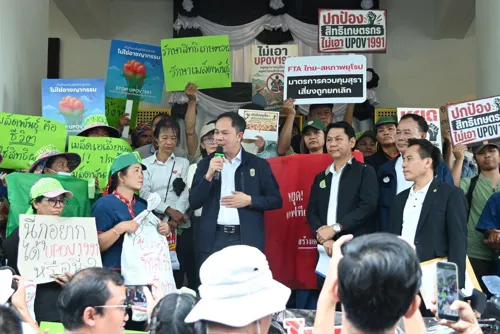
The Ministry of Agriculture and Cooperatives says Thailand has not decided whether to join UPOV 1991 in the Thai-EU FTA talks, and it is still studying the issue and taking public comment. It says it will not proceed with any term that costs farmers their rights. Farmers may still save and replant their existing traditional seed, though protection would apply to newly bred varieties bought from breeders. No change for your business yet; if you buy or sell seed or farm inputs, watch for a final decision and any amendment to the Plant Variety Protection Act.

▾ Hover for summary ▾ Tap for summary
The Royal Irrigation Department raised water releases through the Chao Phraya dam to 1,750 m³/s on 24 September, after 1,777 m³/s was recorded at the Nakhon Sawan C.2 station. The Meteorological Department expects more rain in the central region from 24 to 27 September, so levels in the Chao Phraya basin could rise again. If your shop, factory or land sits along the river or downstream of the dam, watch local flood alerts this week, protect stock and equipment stored at ground level, and plan for disrupted access roads.
▾ Hover for summary ▾ Tap for summary
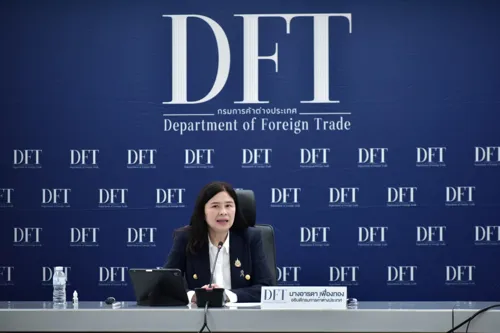
Thailand's Department of Foreign Trade reports imports from China reached about 2.21 trillion baht in the first two quarters of 2026, up 31.55% year on year. At the 8th Thai-China trade remedy meeting on 22 September 2569 (2026), Thailand proposed an "Early Warning" mechanism with China's TRB to flag fast-rising imports and possible dumping before they hurt local operators or become trade disputes. The department says the aim is proportionate use of trade remedies, not more retaliation. For a Thai SME, this signals more scrutiny of cheap Chinese goods and e-commerce imports, which could mean future anti-dumping measures affecting your inputs or competitors. No immediate action is required; watch for any named products or investigations.

▾ Hover for summary ▾ Tap for summary
A Rangsit University economist estimates Thai exports to the US could face a combined 31.5% tariff: the 19% ART reciprocal rate plus a 12.5% Section 301 forced-labour duty, which Thailand falls under because it has not yet enacted a forced-labour import ban. This is an estimate, not confirmed, and many products are excluded or may face 0%. Scenarios range from 19% to 44%. Exporters to the US should price in the possibility of higher duties and watch the ART signing and any forced-labour import law. He urges negotiators to cap total additional duties at 19%.


▾ Hover for summary ▾ Tap for summary
The US set a Section 301 tariff of 12.5% on Thai goods over forced labour. Countries with forced-labour import bans or ART commitments get 10%. Thailand is still finalising the ART trade agreement, aiming to keep total tariffs at 19% or lower, before the US announces its separate structural excess capacity ruling, which is still pending and not reflected in the 12.5% rate. Exporters should track official sources closely, since rates may change with each legal basis.

▾ Hover for summary ▾ Tap for summary
A columnist argues that charging late arrivals against annual leave (1 hour late = 1 hour of leave) is wrong. Lateness is a disciplinary matter, handled through the work rules with verbal and written warnings, pay or bonus effects, and dismissal only after repeated warnings. Annual leave under Section 30 is the employee's right to rest, which the employer must schedule (at least 6 working days a year after one year of work). It is not sick or personal leave. If an employee sues, the employer could be ordered to pay back the leave. Check your own work rules: use discipline for lateness, and keep leave for leave.

▾ Hover for summary ▾ Tap for summary
Government Savings Bank (GSB) opens registration for its QR Maheng x Nokkrasib working-capital loan on 24 Sep 2026, running to 31 Oct 2026. Eligible: market vendors and small shops with real sales and payments of at least 10,000 baht a month for 3 months, using the Thung Ngern app. Limit is up to 50,000 baht or 1.5x average monthly sales; flat rate 0.75% a month (16.20% effective a year); no collateral. Revolving credit, reusable after repayment. Bank starts assessing from 1 Oct 2026. Apply via www.gsb.or.th or call 1115; those without the GSB Maheng and MyMo apps must first sign up with the bank. Check whether your sales qualify and whether the effective rate beats your current borrowing cost before registering.
▾ Hover for summary ▾ Tap for summary
The Bank of Thailand is preparing rules to regulate Buy Now Pay Later (BNPL) lending. Per NCB data, household debt reached 13.6 trillion baht at end of Q1 2026 across 98.7 million accounts. A Thai Chamber of Commerce survey found 91.8% of households carry debt, averaging 794,945 baht, the highest in 17 years. BNPL use rose to 14.2% from 6.2% a year earlier. For a business owner, expect tighter BNPL and consumer credit rules that could affect how your customers pay, and watch your own staff and household borrowing. The article itself is an opinion piece and gives no effective date for the rules.
 Together GoWeGo! Ferry tickets in Thailand.

▾ Hover for summary ▾ Tap for summary
Fitch moved Thailand's outlook to Stable, but officials say fiscal room is only about 3-4% of GDP and public debt is near 70%. The NESDC secretary-general says spending must be tightly controlled for 2-3 more years. The VAT rate is 7% and officials are only discussing a possible increase (one point is estimated at about 10,000 million baht), with no decision or date given. For a Thai SME, this is a watch item: budget for possible tax changes and tighter government spending, but no action is needed yet.

▾ Hover for summary ▾ Tap for summary
The Department of Special Investigation has recommended prosecution of 34 people and companies (10 legal entities, 24 individuals) over unlicensed Forex trading and online investment solicitation, with losses reported in the billions of baht. The case includes charges of fraud against the public, operating unlicensed securities brokerage and forex contracts, and money laundering. For a business owner, the practical point is to check licences before paying into or partnering with any online trading or "guaranteed return" scheme, and to verify that any broker is registered with the SEC before moving money.

▾ Hover for summary ▾ Tap for summary
Bangkok Governor Chadchart says heavy rain is forecast across Bangkok 24–27 Sept, with the worst likely on Saturday–Sunday (26–27 Sept). The city is pumping canals down and says Chao Phraya river levels remain well below the 2.80 m flood wall, so the upstream water is not yet critical. For a shop or workshop in flood-prone areas: protect stock and equipment ahead of the weekend, plan staff to leave early on rainy evenings, and keep the city's 24-hour line or Traffy Fondue app handy to report flooding. Clear rubbish from your frontage, since blocked drains add to local flooding.

▾ Hover for summary ▾ Tap for summary
Thai farmers' association opposes amending the Plant Varieties Protection Act B.E. 2542, worried about seed-saving rights. It says average rice production costs are about 6,000-6,500 baht per rai, while the pending 1,000 baht/rai aid (about 230,000 households, 1,846 million baht) has been delayed about 4 months. A new 2,000 baht/rai proposal (max 20 rai) is awaiting the national rice policy committee (นบข.), with meetings repeatedly postponed. For SME owners serving rice-farming customers or suppliers, expect weaker farm purchasing power and possible seed-cost changes; no action is required yet.