
Archive
August 31, 2026

▾ Hover for summary ▾ Tap for summary
Thailand's Korat Expo 2029 (World Horticultural Expo) faces a venue relocation decision from Khong to Pak Chong district. Pak Chong offers better infrastructure and lower state investment (~4 billion baht), while Khong requires 6 billion baht in additional infrastructure but promises greater economic dispersal to rural areas and neighboring provinces. The Chamber president warns that Pak Chong's timeline may be tight for 2029 preparation. Cabinet approval is expected September 1, with AIPH international notification by September 4. This major infrastructure and tourism project could create thousands of jobs and generate roughly 30 billion baht in economic value—critical for Isaan development strategy.
▾ Hover for summary ▾ Tap for summary
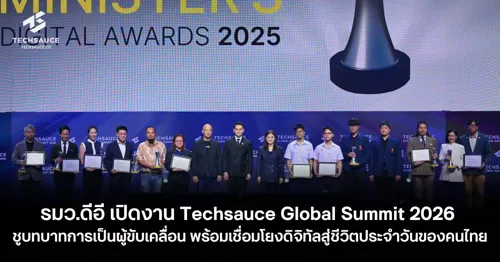
Thailand's Digital Economy Minister formally opened Southeast Asia's largest tech summit, Techsauce Global Summit 2026, emphasizing the government's role as an enabler for digital innovation and accessibility. The event, themed "The Race to the NEXT...", aims to unite all sectors in solving structural challenges including food security, climate change, and AI-driven economic growth. The government announced the Prime Minister's Digital Awards 2025, recognizing 8 outstanding projects across agriculture, healthcare, and logistics sectors that demonstrate practical digital transformation by SMEs and community enterprises.
▾ Hover for summary ▾ Tap for summary
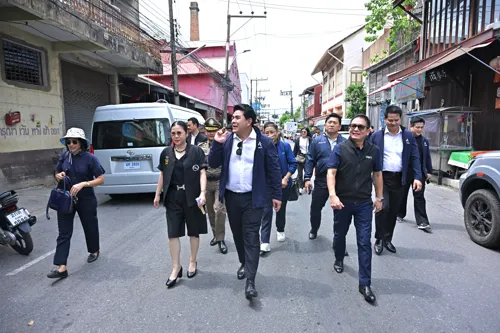
Thailand's Tourism & Sports Minister announced a cross-cabinet initiative for 5 southern border provinces (Songkhla, Satun, Pattani, Yala, Narathiwat) focusing on sports tourism, food events, and trade facilitation. Key action items include resolving border checkpoint congestion at Sadao (22 gates but understaffed), completing 1.2km connecting road, extending Satun border hours to 20:00, resolving cross-border transport MOU asymmetry, reviving the 10-year stalled Narathiwat sports complex, upgrading Pattani FC's stadium (attracting 12,000+ fans per match), and positioning Songkhla as a global food destination via "Songkhla World Table" (targeting 50,000–70,000 visitors, ฿150–225M circulation). The strategy aims to unlock regional economic potential through soft power and improved logistics.
▾ Hover for summary ▾ Tap for summary
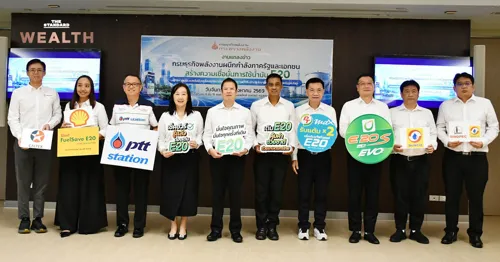
Thailand's government and private sector are launching a coordinated push to boost E20 ethanol fuel adoption, with 13 automakers, 5 motorcycle brands, and 7 oil companies confirming compatibility and safety. Current consumption is only 5.88 million liters/day (18% of gasoline-group fuel), despite 4+ million cars and ~80% of motorcycles capable of using it. Main barriers are consumer confusion about vehicle compatibility and incorrect beliefs about engine damage. Thailand has 28 ethanol plants with 7 million liters/day capacity and can support 3-4 million additional liters/day. Government and oil distributors plan awareness campaigns and promotional incentives to drive adoption, strengthening energy security and supporting domestic agriculture.

 Empower businesses to thrive in the digital age.
▾ Hover for summary ▾ Tap for summary
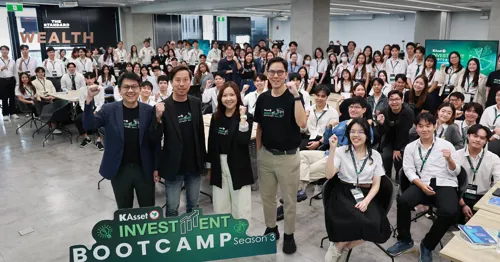
Kasikornbank's investment subsidiary launched Season 3 of its KAsset Investment Bootcamp, selecting 130 students from 900+ applicants nationwide. The program covers professional portfolio management fundamentals including global macro analysis, asset allocation, risk management, and portfolio construction—with instructors from JP Morgan, CFA Institute, and major financial institutions. Key takeaway: professional investors build portfolios by analyzing macroeconomic conditions first, then allocating across assets and individual securities, not the reverse as retail investors often do. The curriculum also emphasizes that diversification requires understanding asset correlation, not just holding multiple securities.

▾ Hover for summary ▾ Tap for summary
This KBank advertorial addresses the critical challenge of family business succession in Thailand, where over 80% of Thai families lack clear succession plans—far below the Asia-Pacific average of 26.9%. The article emphasizes that the core issue is not financial performance but governance and people management: separating family relationships from business roles, establishing clear "family constitutions" defining rights and responsibilities, and adopting a Hybrid model (Ownership/Decision-making/Management/Operations) that doesn't require heirs to do everything themselves. The insight that next-generation entrepreneurs increasingly prefer external professional management (Family Office growth of 200% in Singapore over 10 years) is directly relevant to Thai SME and family business readiness for the coming wealth transfer wave.

▾ Hover for summary ▾ Tap for summary
Sansiri forecasts H2 2026 real estate market will remain challenging despite stable transaction volumes. Key insight: Thais are buying same number of properties but shifting to lower price points, with secondhand market capturing ~67% of transfers. Top 5 developers reported flat 2.5% revenue growth (65.8B baht) but 3.2% profit decline. Resilient segments: condos near employment/education hubs and flat-pack homes at ~10M baht. Success now requires developer brand strength, Investment Grade ratings, and financial discipline. Structural headwinds include buyer power weakness and accumulated inventory hangover requiring extended absorption time.
▾ Hover for summary ▾ Tap for summary
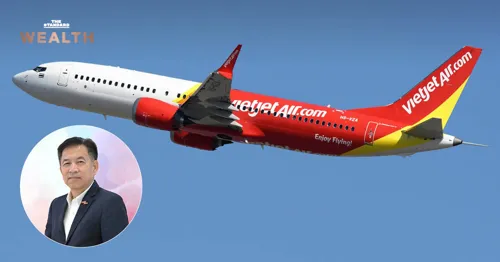
VietJet Thailand launched Sky ConX, a through-check-in service allowing passengers from Udon Thani to check bags once and have them delivered to final destinations (Tokyo, Osaka, Taipei, Da Nang), eliminating layover hassles. The airline is scaling flights from 2 to 5 daily Udon Thani-Bangkok routes and plans to expand the model to Khon Kaen and Surat Thani airports. Success depends on infrastructure improvements in Udon Thani—signage in Vietnamese, extended "Vietnam Town" hours, and coordinated tourism messaging—to unlock connections with Mekong sub-region travelers, particularly Vietnamese visitors.
 Your real translator for LINE and Discord.
▾ Hover for summary ▾ Tap for summary
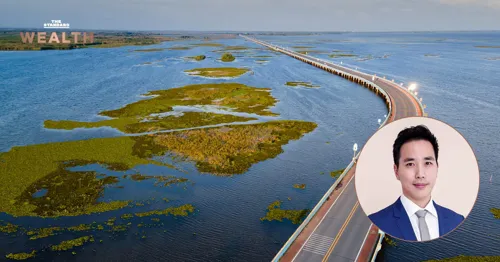
Songkhla Chamber of Commerce proposes four policy initiatives to the cabinet: (1) 25-billion-baht soft loan program for flood-affected businesses at 0–1.5% interest over 5 years; (2) dredging the port's shipping channel from 7m to 10m depth (requiring 230–340 million baht) to enable direct East Asian shipping and triple cargo throughput to 4 million tons/year; (3) developing seamless multimodal logistics; and (4) promoting Songkhla as a UNESCO gastronomy destination. The measures aim to accelerate economic recovery post-flooding and position Songkhla as a Southeast Asia trade hub.
▾ Hover for summary ▾ Tap for summary
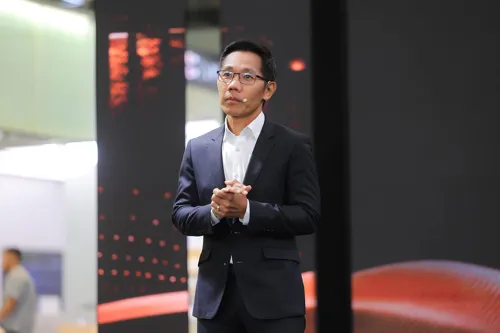
Toyota Thailand achieved 135,199 domestic sales in the first seven months (Jan–Jul), with pickup trucks leading at 43,082 units and eco-cars (Yaris/Yaris ATIV) at 40,904 units (+20.35% YoY). Export volume reached 208,500 units, dominated by Hilux (137,400 units) and Yaris ATIV (40,500 units). The data underscores Thailand's manufacturing strength globally and Toyota's contribution to local employment and the economy, with hybrid vehicles accounting for ~70% domestic content.
▾ Hover for summary ▾ Tap for summary
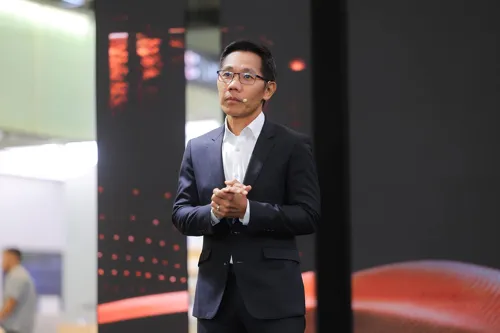
Toyota Thailand reported 7-month sales of 135,199 vehicles (33.29% market share, +2.39% YoY) with Hilux pickups leading at 43,082 units. Exports reached 208,500 units, with Hilux at 137,400 units and Yaris ATIV at 40,500 units. Hybrid vehicles grew 13%, with 70% local content on average. This underscores Thailand's automotive manufacturing competitiveness and export capabilities driving economic growth and employment.
▾ Hover for summary ▾ Tap for summary
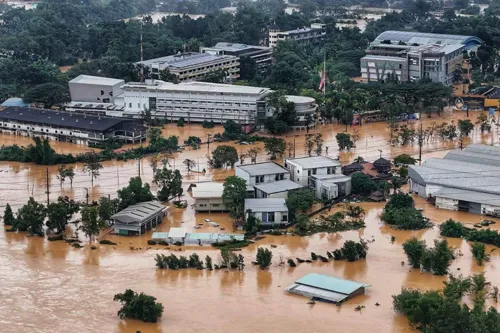
The Cabinet has proposed a major disaster insurance scheme funded with 10 billion baht from emergency reserves to cover approximately 20 million households nationwide. The program will replace the current reactive relief system (averaging 30 billion baht annually) with proactive insurance coverage for floods, storms, and earthquakes, with standardized payouts (death benefit 2M baht, flood damage up to 100K baht, initial flood compensation 10K baht within 7 days). Implementation will leverage satellite technology to accelerate damage assessment and compensation.

 Want to buy or sell a business?
▾ Hover for summary ▾ Tap for summary
Huawei reported a 36% profit decline in H1 2026, driven by rising operational costs and elevated R&D investment, signaling intensifying margin pressure amid global competition.
▾ Hover for summary ▾ Tap for summary
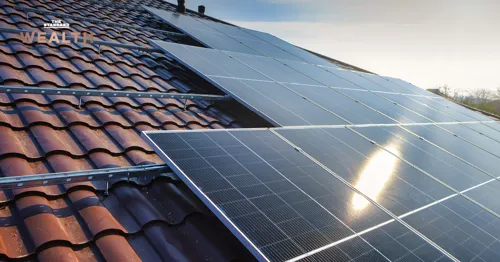
Thailand's Public Debt Management Office is adjusting its Solar Rooftop subsidy programme to lower the system size from 5 kW to 3 kW and reduce the subsidy from 50,000 to 30,000–50,000 baht per household. The change aims to include smaller-home owners who cannot justify 5 kW systems (requiring 3,000+ baht/month electricity consumption). The 1-million-household target may also be revised. A subcommittee will meet soon to finalize details before the 30 September 2026 project submission deadline under the 400-billion-baht energy crisis emergency decree.

▾ Hover for summary ▾ Tap for summary
South Korea is launching "AI for All," a nationwide programme to provide free premium AI services to all citizens by 2027, treating AI as public infrastructure. The government will invest in 512 Nvidia B200 GPUs distributed to 2–3 selected providers (SK Telecom, LG, Kakao, Korea Telecom) to power domestic AI models while limiting reliance on US and Chinese alternatives. Thai SMEs and tech firms should note this regional policy shift toward sovereign AI ecosystems and domestic model deployment mandates (≥50% Korean models required in participating services).
▾ Hover for summary ▾ Tap for summary
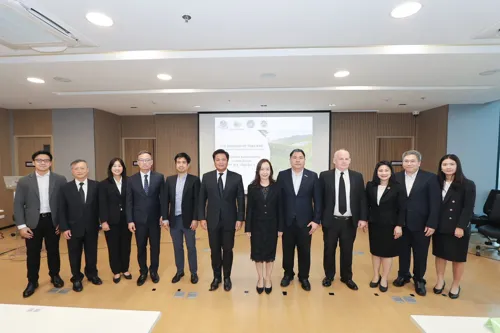
Thailand's Public Debt Management Office is launching Sustainability-Linked Bonds Series 2 (SLB425A) on September 17, with a 15–30 billion baht issuance tied to two climate and biodiversity targets: reducing net greenhouse gas emissions to ≤152 MtCOxe by 2035 (47% reduction from 2019 baseline) and expanding protected/conservation areas to ≥30% by 2030. Interest rates will adjust by ±2.5 basis points per target met or missed, creating a market-based incentive for government agencies to coordinate on sustainability goals. This is Thailand's second SLB issuance and aims to deepen the local debt market while supporting national climate commitments.
 Together GoWeGo! Ferry tickets in Thailand.

▾ Hover for summary ▾ Tap for summary
Thailand's Finance Ministry is revising its flagship 1-million-household solar rooftop subsidy program ahead of a September 30 proposal deadline. The subsidy structure may shift from 50,000 baht for 5kW systems to variable subsidies (30,000–50,000 baht) scaled to lower capacity thresholds (3kW), targeting smaller households. Key decisions on vendor availability, project scope, and KPIs are pending review by the sub-committee; implementation must complete by December 31, 2027. This signals active energy transition investment but execution timelines remain tight.
▾ Hover for summary ▾ Tap for summary
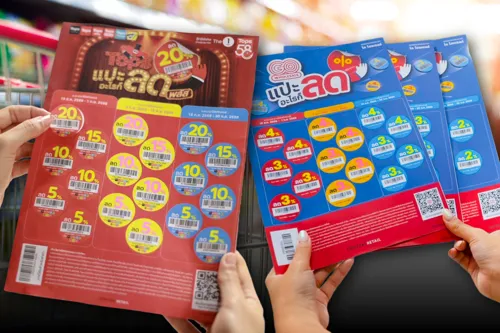
Tops supermarket's annual "Stick Anything, Get Discount" campaign is a strategic response to Thailand's shift toward "smart spending" consumers who plan purchases carefully. Launched in 2019 with 10% discounts and expanded to 25% by 2020, the campaign evolved into a data-rich platform offering up to 20–30% discounts through 200+ partner brands and gamification mechanics. Recent April–May 2026 results showed 15% higher average basket size, 16% increase in repeat visits, and 13% new customer acquisition. The campaign's success lies in customer empowerment—letting shoppers choose which products receive discounts—and is now being adapted to GO Wholesale for B2B merchant planning, demonstrating scalable retail innovation.

▾ Hover for summary ▾ Tap for summary
Shein is preparing for a Hong Kong IPO at a valuation of roughly $25 billion—down from $100 billion in 2022—due to tariff pressures, regulatory scrutiny, intense market competition, and poor timing (rival Chinese consumer brands and AI firms captured investor appetite instead). Founder Xu Sky's net worth is projected to fall from $23 billion to $8 billion. The company's strategy of shipping small parcels to dodge import taxes has been undermined by Trump-era policy changes and EU tariffs. Competitors are using AI to respond faster to consumer trends, while Shein faces continued scrutiny over labor practices in the US and UK markets.
▾ Hover for summary ▾ Tap for summary
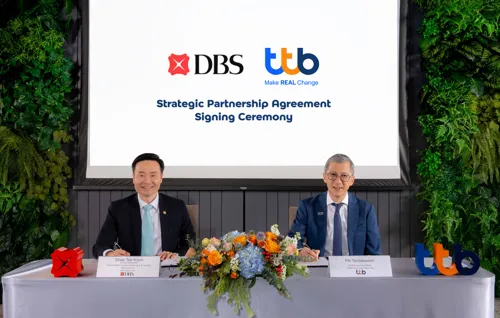
TTB Bank and DBS announce a strategic wealth management partnership. TTB will receive the transfer of baht-denominated investment portfolios from DBSVT clients (expected completion May 2027), combining DBS's regional expertise with TTB's local market knowledge. Both parties are developing plans to offer global-class investment products and solutions to high-net-worth clients, while DBS continues private wealth services for non-baht portfolios. This positions TTB to expand its wealth ecosystem and compete more aggressively in Thailand's HNW segment.

 Stop running your company on Excel.