
Archive
September 7, 2026
▾ Hover for summary ▾ Tap for summary
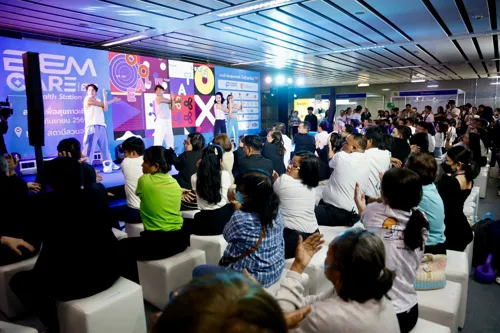
Bangkok's BEM (Mass Transit System) partnered with multiple hospitals and health agencies to launch a three-day free health screening event at MRT Sanam Luang (4–6 Sept 2026). Services include 3,000 free flu vaccinations, mobile stroke detection units, and 20+ health checkup booths covering preventive care, nutrition, and rehabilitation. The initiative reflects a broader shift toward preventive healthcare in urban transit infrastructure.

▾ Hover for summary ▾ Tap for summary
Thai Obayashi held a groundbreaking ceremony for O-Mesh Ratchadamri, an 8-billion-baht mixed-use development on a 6-rai site in Bangkok's Ratchadamri area. The project features a Grade-A office tower, hotel, and retail space connected to BTS Ratchadamri station. It pioneers LRV (Last Runway Value) construction technology in Thailand—pre-fabricating components off-site to improve efficiency, quality control, and reduce waste and noise. The 30-year-old office site marks Thai Obayashi's historical roots and will showcase smart building systems, LEED/WELL sustainability standards, and a "Garden in the Sky" design integrating nature with high-rise architecture.

▾ Hover for summary ▾ Tap for summary
Graph Engineering is an emerging technique for structuring AI agent systems using predefined graph workflows—distinct from Knowledge Graphs and Agent Swarms. Google's new ADK 2 Codelab teaches developers to build orchestrated AI workflows by mapping nodes (Agent or Function) and connections, enabling better predictability and control for multi-step tasks like code review automation. This approach is ideal when workflow steps are known upfront, versus agent swarms which suit ambiguous problems.

▾ Hover for summary ▾ Tap for summary
PEA, Thailand's regional power utility, marks its 66th anniversary by unveiling a strategic transformation roadmap centred on digital grid modernization, AI integration, and renewable energy adoption. Key initiatives include Smart Grid and Grid Modernization deployment, the "AI GOES" framework for operational efficiency, Energy Trading Platform development, and expanded solar/battery solutions for rural electrification. While strategically significant for energy infrastructure and SME connectivity, this is primarily an institutional milestone announcement rather than immediate market-moving news.

 Empower businesses to thrive in the digital age.
▾ Hover for summary ▾ Tap for summary
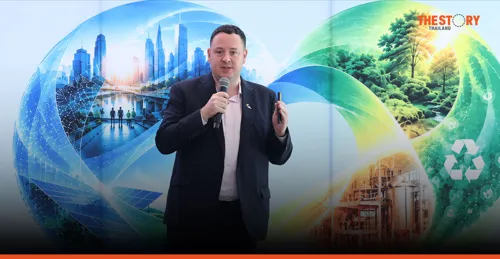
Thai Union Group marks 10 years of sustainable seafood efforts through its SeaChange® strategy, now integrating circular economy principles to maximize value from every part of seafood products. The company exemplifies this by processing entire tuna—converting head, bones, and skin into calcium supplements, collagen products, and fish oil—while targeting zero food waste and wastewater discharge at its largest facilities by 2030. This approach directly links resource efficiency to business resilience: overfishing collapses stocks for a decade; circular practices reduce environmental pressure and unlock new product opportunities.

▾ Hover for summary ▾ Tap for summary
Thai Housing Bank (GHB) is launching a 200 billion baht promotional loan programme for its 73rd anniversary, offering exceptionally low interest rates starting at just 0.73% per annum in the first three months, with tiered rates thereafter. The programme covers all housing loan purposes, extends up to 40 years, and includes fee waivers on registration and appraisal for refinancing customers through September 2026. For SMEs and small borrowers, this significantly reduces the cost of property financing.
▾ Hover for summary ▾ Tap for summary
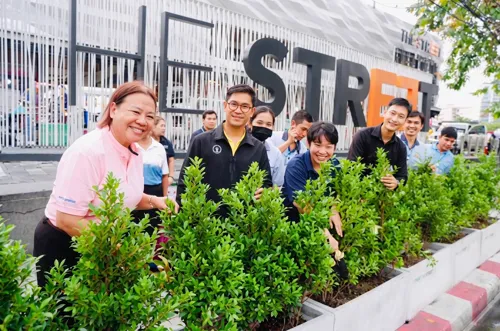
King Mongkut's University of Technology Thonburi (KMUTT) has developed an AI-powered program to design dust-reducing green spaces that can cut PM2.5 pollution by up to 40% in three-tiered planting configurations. The research combines data from 73 Thai plant species with four years of air quality sensor data (2021-2024) across Bangkok and is now being tested on Ratchada Road in partnership with Bangkok Metropolitan Administration. The work demonstrates that AI-optimized plant arrangement and layered planting can significantly outperform single-layer approaches (40.5% vs. 6–8.2% PM2.5 reduction), offering a scalable model for creating "Clean Zones" across urban areas.

▾ Hover for summary ▾ Tap for summary
7 Days Sport, an importer of Japanese and European running/sports brands (YAMAtune, T8, Injinji, Compressport), is executing aggressive expansion to capture growing Thai running market (6% avg. growth). Strategy includes: adding 2-3 new brands to portfolio, opening flagship showroom at Paradise Park, shifting budget to offline/experiential marketing (running clubs), and developing private-label products within 3–5 years. The company is also coordinating with resellers on price controls and using Thai body-size data to optimize stock, reflecting a maturing SME adapting to competitive foreign brand influx into Thailand.
 Your real translator for LINE and Discord.
▾ Hover for summary ▾ Tap for summary
FETCO, Thailand's capital market federation, is proposing four policy measures to increase national savings from ~25% to 28% of GDP to support a new investment cycle. The proposals include: raising TISA (Personal Investment Account) limits with tax incentives; making mandatory retirement savings; developing trust/family office frameworks to attract foreign wealth; and a 2-year tax exemption for overseas Thai investments repatriated into Thai capital markets. The goal is to reduce Thailand's reliance on foreign capital for its target of increasing investment from 23% to 30% of GDP.
▾ Hover for summary ▾ Tap for summary
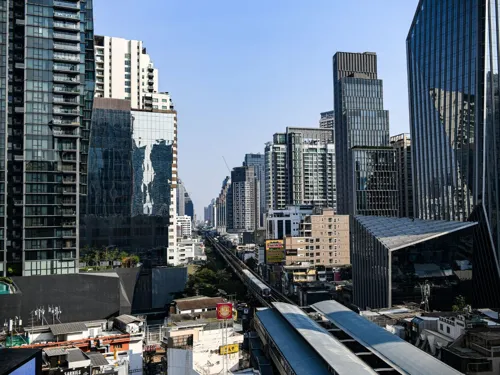
Thailand's Commerce and Interior ministries are intensifying enforcement against "nominee" schemes used by foreigners to circumvent land and property restrictions. They have scanned 125,622 legal entities holding 4.5 million rai of land, with 31,516 entities (86.88% of foreign-invested companies) holding 0.01–49% stakes—a suspicious ownership range. Hotspots are Bangkok, Chon Buri, Samut Prakan, and Pathum Thani. SMEs and property firms must expect stricter registration criteria and deeper scrutiny of actual vs. nominee ownership; higher compliance costs and slower foreign investment approvals are likely in the short term.

▾ Hover for summary ▾ Tap for summary
Oral Link, a healthtech firm, has received HSA (Health Sciences Authority) registration for its AI-powered dental diagnostic tool. This regulatory approval signals growing adoption of artificial intelligence in healthcare diagnostics in Singapore/Southeast Asia. The milestone demonstrates a viable commercial path for healthtech SMEs seeking to integrate AI into medical services.

▾ Hover for summary ▾ Tap for summary
Shopee expands its O2O platform with two new services: Shopee Instant Mart (1-hour grocery/convenience delivery) and Shopee Telepharmacy (online pharmacist consultation). Both services launched in Bangkok, major cities, and will expand nationwide, featuring free delivery with 30-baht compensation if late. Telepharmacy is co-branded with Pharmcare and major pharmacy chains, offering video/voice/chat consultation and home medicine delivery. The move targets Thailand's growing demand for speed and instant convenience in online shopping.

 Want to buy or sell a business?
▾ Hover for summary ▾ Tap for summary
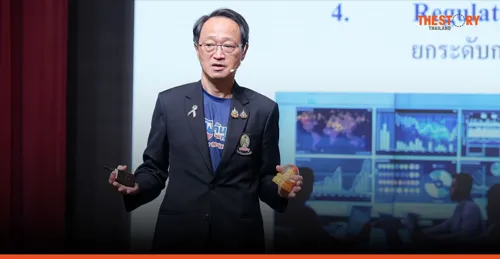
Thailand's Water Economy framework proposes converting water management from crisis-response to strategic asset creation. Three key initiatives are highlighted: (1) Water Smart Communities—empowering local areas with technology and knowledge to manage water resources; (2) Integrated Water Data Platform using AI to predict extreme events like "Rainbomb" and enable rapid response; (3) Blue Infrastructure combining grey and nature-based systems with private-sector investment. The shift addresses new climate risks where traditional management tools are insufficient.

▾ Hover for summary ▾ Tap for summary
FETCO signals continued positive momentum for Thai equities, with year-end 2026 target around 1,700 SET points. Foreign investors, holding low positions historically, have already bought net 50 billion baht YTD and could reach 100 billion baht by year-end. Foreign analysts are upgrading earnings forecasts for Thai listed companies—a shift from prior years' pattern of forecast cuts. Key risks remain political stability and continuity of investment plans; market strength depends on fundamentals, foreign fund flows, and policy consistency rather than sentiment alone.
▾ Hover for summary ▾ Tap for summary
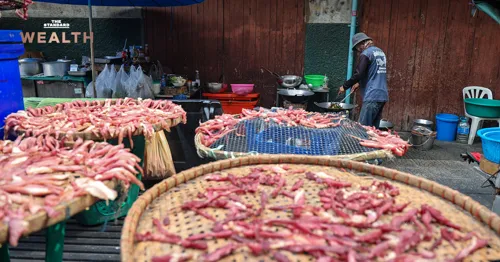
Thailand's headline inflation reached 2.53% YoY in August, marking the fifth consecutive month of expansion, driven by elevated oil prices (Middle East tensions and sanctions), rising processed food prices (partly boosted by the Thai aid stimulus), and weather-related fresh produce supply constraints. Core CPI also accelerated to 1.44% YoY. The Commerce Ministry forecasts full-year inflation at 1.81% but warns of an 81% probability of severe El Niño intensifying in Q4 2025, which could sharply lift food and livestock price inflation. Currency and fiscal headwinds remain monitored; the Thai aid-plus stimulus ending in September is expected to provide modest relief.

▾ Hover for summary ▾ Tap for summary
Climate-driven shifts in international travel patterns are upending Japan's tourism business model. European tourists increasingly avoid summer heat, moving peak demand from June-August (Obon festival) to autumn-winter months. Airlines (ANA +32% Oct-Dec 2025 profit vs. summer's -22% YoY decline, JAL +19%) and railways now see autumn-winter as more profitable than summer. Hotel rates have flipped: Oct-Dec 2025 rates now ~2,800 yen higher than Jul-Sep, versus only 90 yen higher in 2019. Regional labor shortages are emerging as seasonal workers traditionally filled summer peak roles. Thai tourists, accustomed to late-year Japan trips, will face increased crowding.
 Together GoWeGo! Ferry tickets in Thailand.

▾ Hover for summary ▾ Tap for summary
Thailand's Public Administration Development Board (PADG) launched an AI Hackathon for Public Sector Development in 2026 in partnership with Thammasat University's Innovation College, Techsauce, and NECTEC. Three winning solutions emerged: Tax Mates' AI chatbot for personal income tax filing (Department of Revenue); One MIND's factory hazard alert system (Yasothon Provincial Industrial Office); and HR RAG's AI assistant for personnel management (Department of Justice). The initiative aims to shift government from reactive to proactive innovation while building civil servant skills and public trust through practical AI applications solving real administrative pain points.

▾ Hover for summary ▾ Tap for summary
Andreessen Horowitz (a16z) framework on scaling AI ventures, drawing lessons from platform ecosystems like TikTok. Relevant for Thailand tech founders and SMEs exploring AI product-market fit and growth loops, though the article content is inaccessible (JavaScript required). The a16z perspective offers strategic insights into ambitious AI scaling strategies.

▾ Hover for summary ▾ Tap for summary
Thailand registered 60,198 new businesses in the first 8 months of 2025, up 1.7% year-on-year, with clothing retail (+87%), e-commerce (+52%), and food service (+21%) showing the strongest expansion. However, business closures surged 17.4% and capital registered declined 6.5%, signaling uneven recovery amid global economic headwinds and geopolitical risks.
▾ Hover for summary ▾ Tap for summary
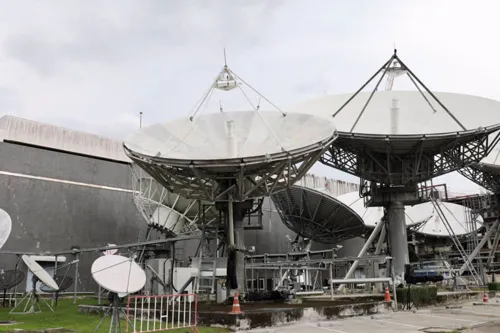
Thai Kom (SET-listed telecoms/satellite operator) has issued a statement defending its compliance with the state satellite concession contract, claiming it has fully returned all required assets as of September 2021. The company disputes a 1.25-billion-baht damages claim from the Ministry of Digital Economy and Society, arguing that the assets in question fall outside the contract scope. The case now proceeds to arbitration, where Thai Kom will defend its position.

 Stop running your company on Excel.