
Archive
September 7, 2026

▾ Hover for summary ▾ Tap for summary
South Korea's tourism sector faces a crisis: tourist complaints hit record highs (1,753 in Jan–July vs. 1,744 for all of 2025), driven by unilateral accommodation cancellations, inflated retail prices, and taxis refusing meter use. Despite welcoming 10+ million foreign visitors, the industry risks reputation damage from poor service infrastructure. Experts cite insufficient capacity in transport and lodging—competition and stricter standards are proposed solutions, but negative reviews on social media threaten long-term growth.

▾ Hover for summary ▾ Tap for summary
SNNP (Srinana Phrom Marketing) experienced a fire at its warehouse and chicken snack production facility in Bangkok's Buddhamonthon area on September 7. The blaze was controlled within 1.5 hours with no casualties. The company expects minimal revenue impact thanks to one month of existing inventory and backup production capacity at its Vietnam plant and OEM manufacturers. Insurance coverage is in place for asset damage.
▾ Hover for summary ▾ Tap for summary
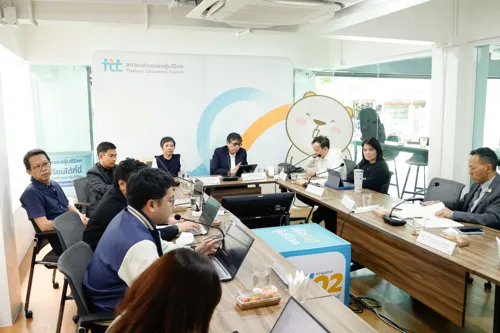
Thailand's National Broadcasting and Telecommunications Commission (NBTC) is gridlocked with 148 pending agendas due to leadership disputes, threatening digital TV transitions, telecom competition oversight, and consumer protections. The Consumer Council warns delays risk damaging content investment, broadcast quality, market access for SMEs, and broader digital economy confidence. Urgent intervention needed to resolve governance impasse and enable regulatory decision-making.
▾ Hover for summary ▾ Tap for summary
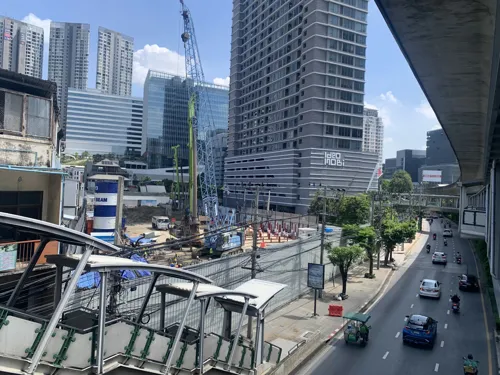
Empyrion Digital is developing "TH1 Bangna," a 20 MW data centre in a prime Bangkok location near BTS On Nut station. The 8-storey facility on ~17,000 m² is designed for large tech firms, AI-driven applications, and cloud providers, with secure power and comprehensive fibre connectivity. Commercial operation is targeted for Q3 2027. This represents significant infrastructure investment in Thailand's growing digital ecosystem and signals expanding capacity for enterprise cloud/data services.

 Empower businesses to thrive in the digital age.
▾ Hover for summary ▾ Tap for summary
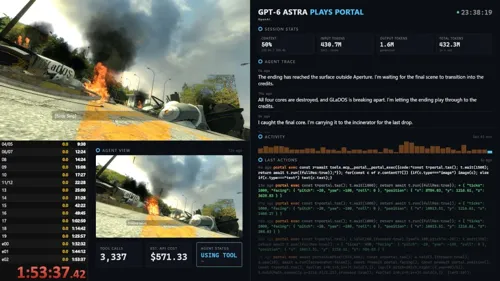
OpenAI's GPT-6 Astra AI model has autonomously completed the Portal puzzle game, demonstrating advanced reasoning and problem-solving capabilities. A user (cozyblazex) documented the feat, showing Astra using SourcePauseTool to pause gameplay during computation cycles. The achievement consumed ~571 USD (~19,000 THB) in API token costs, highlighting both the model's capability gains and the economic implications of running sophisticated AI agents—relevant for Thai SMEs evaluating generative AI ROI and operational costs.

▾ Hover for summary ▾ Tap for summary
Thailand's insurance regulator (OIC) is strengthening oversight of systemic risks threatening the industry structure. Key measures include implementing forward-looking risk assessment tools (ERM/ORSA), stress testing, composite risk ratings (CRR), and group-wide supervision (GWS) to monitor interconnected risks across conglomerates. This shift from static to dynamic risk governance aims to strengthen the sector as a national buffer against financial shocks.
▾ Hover for summary ▾ Tap for summary
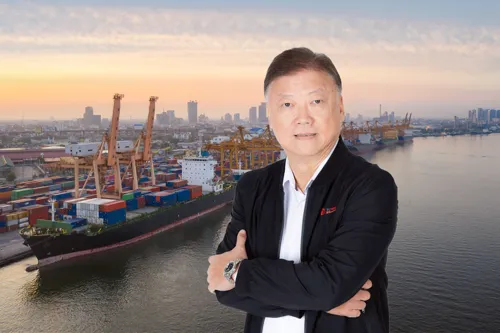
Thai exports grew 17.6% in H1 2026, with potential full-year growth of 8–10%, but face headwinds from US trade negotiations (ART), geopolitical tensions, energy costs, and logistics risks. The Thai Shippers Association chair urges the state to balance negotiations—leveraging Thailand's supply-chain role and import capacity while protecting agricultural and high-value exports. Key long-term challenge: reduce dependence on a few product stars (electronics, AI-related goods) by developing new export pillars (agro-processing, health, BCG) to diversify revenue base and build resilience against sector shocks.
▾ Hover for summary ▾ Tap for summary
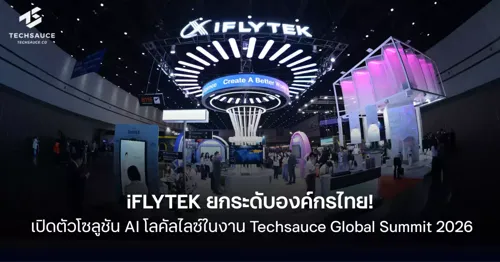
Chinese AI giant iFLYTEK showcased Thailand-localized AI solutions at Techsauce Global Summit 2026 (Aug 26-28), winning "The Sauciest AI-Driven Company" award. The company unveiled three solution clusters: AI communication tools (translation screen, GuideX virtual receptionist—deployed at Suvarnabhumi Airport and 30+ languages), enterprise workflow platforms (Stars MaaS for zero-code model fine-tuning, Astron Agent/Workflow connecting to 50+ foundation models), and smart infrastructure solutions (WallEX for premium hotels/buildings, on-premise data-secure systems). For Thai SMEs, this signals accessible enterprise AI adoption pathways and real-world deployment models across hospitality, government, and corporate sectors.
 Your real translator for LINE and Discord.

▾ Hover for summary ▾ Tap for summary
Japanese investors submitted 302 investment promotion applications totaling 113,700 million baht for 2025—doubling the prior year—marking one of Japan's highest annual investment commitments to Thailand. The BOI highlighted that this reflects a strategic shift from capacity expansion to technology upgrading: automotive and components (28,310 million baht, +57%), electronics and appliances (19,378 million baht, +76%), and emerging digital and aerospace sectors. Major projects include Isuzu's 15,000 million baht automation upgrade, Mazda's 7,400 million baht mild-hybrid production facility, Mitsubishi Motors' 16,000 million baht EV commitment, and Honda's 12,000 million baht new model investment. The trend underscores Thailand's evolution into a high-value-add regional manufacturing hub for EV powertrains and advanced components.
▾ Hover for summary ▾ Tap for summary
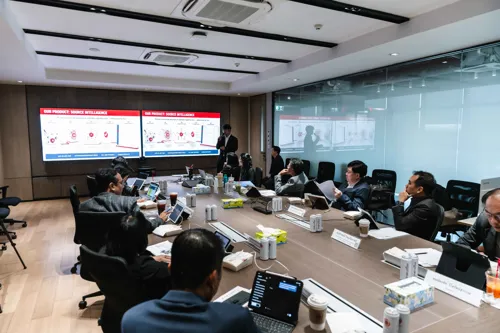
CP Group's Innovation Expo 2026 is evaluating 319 innovations, with 60 finalists competing under a rigorous three-dimensional framework: Project Rationale & Strategic Alignment, Novelty & Differentiation, and Technical Excellence & Business Impact. Judges emphasize that innovation must solve real problems, drive scalability, and generate tangible business or social outcomes—not merely novelty. Success requires demonstrating IP protection, market applicability, and sustainability value alongside technical merit.
▾ Hover for summary ▾ Tap for summary
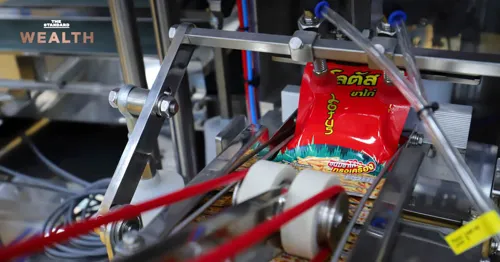
Srinana Phrom Marketing (SNNP), a Thai listed food producer, experienced a warehouse fire on 7 September 2026 that was contained within ~1.5 hours with no casualties or community impact. The company stated no operational disruption is expected due to sufficient inventory covering ~1 month of sales, plus backup production capacity in Vietnam and through contract manufacturers. Insurance coverage is expected to cover all damages. Key risk: supply chain vulnerability if warehouse repairs take longer than projected.
▾ Hover for summary ▾ Tap for summary
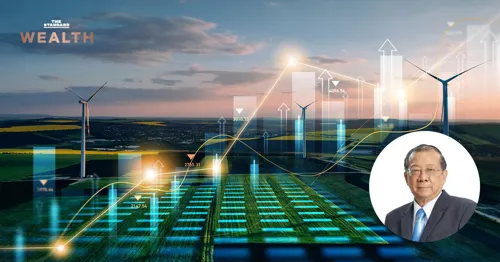
Academics critique Thailand's draft Power Development Plan 2026, raising critical gaps in planning. Key concerns: (1) 200-billion-baht government loan for solar rooftops may trigger a surge in independent power producers (IPS), altering actual grid demand; (2) Load Factor is declining sharply, yet demand-response measures (smart meters, time-of-use pricing) may reduce new plant investment needs if properly managed; (3) Cost data for new technologies (SMR small reactors, CCS carbon capture, green hydrogen) remains vague, making budget allocation unclear. The plan risks overinvestment if IPS growth and peak-shaving strategies aren't factored in.

 Want to buy or sell a business?

▾ Hover for summary ▾ Tap for summary
LINE is rolling out a UI update starting September 1st that replaces the VOOM button in the main navigation bar with OpenChat, following the planned shutdown of LINE VOOM at the end of September. Users who update will lose access to VOOM, Story features, and Birthday cards—though the service continues with limited features in Japan and Taiwan. This affects Thai LINE users directly.

▾ Hover for summary ▾ Tap for summary
Nike was removed from the S&P100 index as its stock price collapsed nearly 50% in one year and 76% over five years, falling to a 12-year low of $38.40. The removal reflects a broader market shift away from traditional consumer goods toward technology, digital, and AI sectors. Despite Nike's dominant revenue position, investor sentiment has turned toward higher-growth tech companies—exemplified by SanDisk replacing Nike in the index—signaling changing capital flows in global markets.
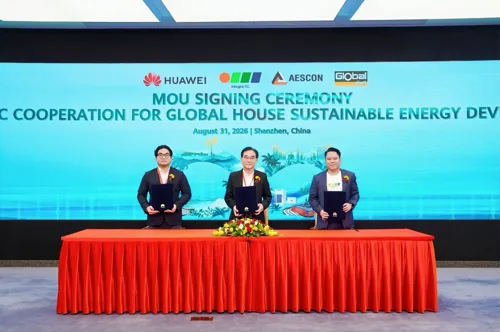
▾ Hover for summary ▾ Tap for summary
Siam Global House has signed an MOU with AES Con and Integra R.E. to deploy Battery Energy Storage Systems (BESS) using Huawei technology across all branches nationwide. The system will store excess solar energy during peak production hours for use during evening peak demand or low-production periods, improving energy efficiency, reducing grid dependency, and lowering operational costs. This partnership establishes a foundation for scalable clean energy management in the Thai C&I sector.
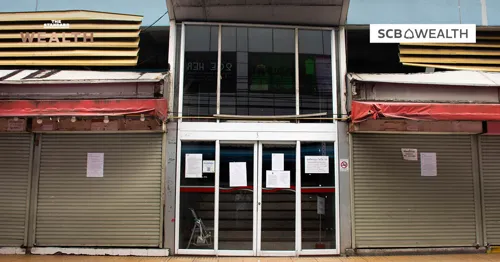
▾ Hover for summary ▾ Tap for summary
Thailand's economy showed resilience in the final months of 2026, revising 2.2% growth upward from earlier forecasts, driven by private investment and exports. However, 2027 outlook reveals critical structural shifts: private consumption is stalling (Q2 growth only 1.9%), while private investment is becoming the new growth engine. A severe K-shaped inequality is intensifying—top 1% corporations recovered 30-40% above pre-COVID levels with strong financial buffers, while SMEs remain below 2019 baselines with stalled credit access (16 consecutive quarters of negative growth). Tech/electronics and AI sectors concentrate gains, while most other sectors diverge, limiting broad-based employment benefits despite strong headline GDP projection of 2.1% for 2027.
 Together GoWeGo! Ferry tickets in Thailand.
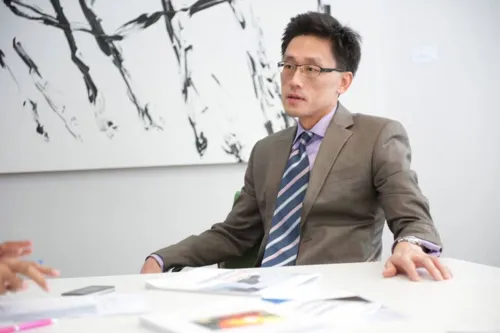
▾ Hover for summary ▾ Tap for summary
FETCO chairman argues Thailand's central bank should maintain the 1% policy rate despite recent inflation spikes, citing weak and uneven economic recovery and continued SME credit contraction. Rate hikes could worsen financial burden on small businesses and constrain their credit access at a critical juncture; the core issue is whether inflation stems from demand-driven overheating or supply-side costs—only the former justifies tighter policy.
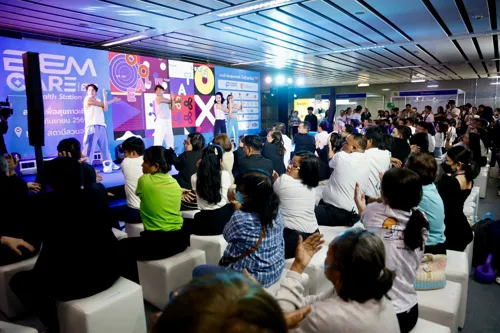
▾ Hover for summary ▾ Tap for summary
Bangkok's BEM (Mass Transit System) partnered with multiple hospitals and health agencies to launch a three-day free health screening event at MRT Sanam Luang (4–6 Sept 2026). Services include 3,000 free flu vaccinations, mobile stroke detection units, and 20+ health checkup booths covering preventive care, nutrition, and rehabilitation. The initiative reflects a broader shift toward preventive healthcare in urban transit infrastructure.

▾ Hover for summary ▾ Tap for summary
Thai Obayashi held a groundbreaking ceremony for O-Mesh Ratchadamri, an 8-billion-baht mixed-use development on a 6-rai site in Bangkok's Ratchadamri area. The project features a Grade-A office tower, hotel, and retail space connected to BTS Ratchadamri station. It pioneers LRV (Last Runway Value) construction technology in Thailand—pre-fabricating components off-site to improve efficiency, quality control, and reduce waste and noise. The 30-year-old office site marks Thai Obayashi's historical roots and will showcase smart building systems, LEED/WELL sustainability standards, and a "Garden in the Sky" design integrating nature with high-rise architecture.

▾ Hover for summary ▾ Tap for summary
Graph Engineering is an emerging technique for structuring AI agent systems using predefined graph workflows—distinct from Knowledge Graphs and Agent Swarms. Google's new ADK 2 Codelab teaches developers to build orchestrated AI workflows by mapping nodes (Agent or Function) and connections, enabling better predictability and control for multi-step tasks like code review automation. This approach is ideal when workflow steps are known upfront, versus agent swarms which suit ambiguous problems.

 Stop running your company on Excel.