
Archive
September 8, 2026
▾ Hover for summary ▾ Tap for summary
Huawei launched the Mate XT2 tri-fold smartphone to strengthen its position in the premium foldable market. This move represents Huawei's continued innovation in advanced display technology and competitive response to rivals in the high-end segment, relevant to Thai tech entrepreneurs tracking smartphone innovation trends and premium device manufacturing capabilities.
September 7, 2026
▾ Hover for summary ▾ Tap for summary
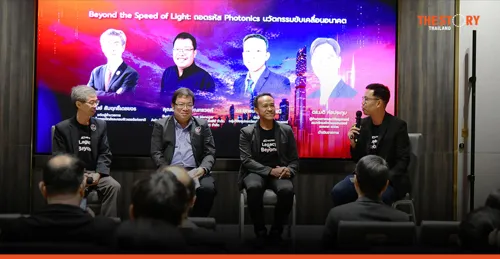
Thailand has a 20+ year foundation in photonics technology, from NECTEC's 1993 research to established manufacturing by companies like Fabrinet, Lumentum, and the Thai firm Photonics Science. AI-driven data center demand is now revitalizing this sector as optical systems overcome electronic bandwidth/heat limits. Silicon photonics and photonic integrated circuits (PICs) are becoming critical infrastructure, positioning Thailand to move beyond manufacturing into IP development and higher-value roles in the global photonics supply chain.

▾ Hover for summary ▾ Tap for summary
Thailand's Department of Business Development has referred 36,277 foreign-owned entities holding 305,838 land plots (1.6 million rai) to enforcement agencies for investigation into possible nominee business violations. The probe covers entities with varying foreign ownership stakes; 3,450 entities have 100% foreign ownership, while others operate as joint ventures. Authorities will use the data to verify compliance with investment promotion conditions and identify illegitimate nominee operations, though many holdings may represent legitimate Thai-foreign joint investments.

▾ Hover for summary ▾ Tap for summary
Thailand's DBD has identified 36,277 foreign-owned entities holding land and property in Thailand and forwarded data to enforcement agencies for investigation. The crackdown focuses on nominee businesses—entities used by foreign investors to circumvent foreign ownership restrictions. Of these, 3,450 entities hold 100% foreign shares across ~10,200 land plots valued over 590 billion baht, with highest concentrations in Bangkok, Chon Buri, Rayong, Samut Prakan, and Chaiyaphum. This enforcement effort signals tighter regulatory scrutiny on foreign land holdings.

 Empower businesses to thrive in the digital age.

▾ Hover for summary ▾ Tap for summary
The Thai Cabinet has authorized the Ministry of Digital Economy and Society to pursue arbitration and court proceedings against satellite operator Thaicom Plc and Gulf Development Plc over an incomplete asset handover from an expired domestic communications satellite concession. The state is seeking at least 1.26 billion baht in fines and damages. Both companies have filed responses asserting they fulfilled their obligations under the concession agreement and dispute the ministry's claims about missing assets.

▾ Hover for summary ▾ Tap for summary
The Federation of Thai Capital Market Organizations (Fetco) is urging the government to increase Thailand's national savings rate from 25% to 28% of GDP to reduce dependence on foreign capital and support long-term investment in infrastructure and technology. The group proposes tax incentives for individual savings accounts, mandatory retirement savings schemes, and enhanced trust frameworks to retain domestic wealth. These measures aim to create a stable local funding source for strategic investments in AI, data centers, and tourism-related sectors amid volatile global capital flows.

▾ Hover for summary ▾ Tap for summary
Thailand's Tourism Authority expects the sector to recover from worst-case scenarios, targeting 2.7 trillion baht in revenue through Q4 event staging including major festivals and a new Neon Festival series. Government is also launching the Thai Teaw Plus domestic co-payment scheme (with cabinet approval expected next week) to stimulate local tourism spending and offset reliance on international arrivals. Top source markets remain China, Malaysia, and Russia.
▾ Hover for summary ▾ Tap for summary
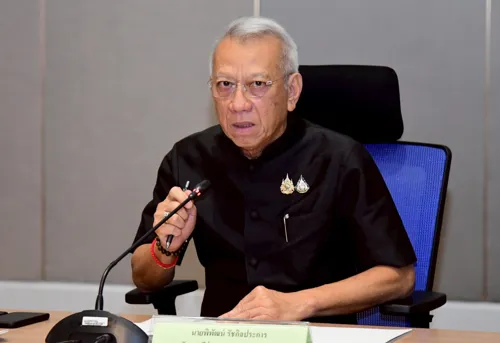
Thailand's Cabinet will review a draft Startup Promotion Bill to establish a framework supporting startup businesses—a positive signal for SME/tech ecosystem development. The meeting also covers economic ministry reshuffles and personnel changes set for late September. The startup bill is material for the tech sector and policymakers tracking government support mechanisms, though Cabinet approval timelines remain unclear.
 Your real translator for LINE and Discord.

▾ Hover for summary ▾ Tap for summary
Thailand's Digital Infrastructure Association calls for data centres to be strategically classified as critical infrastructure and evaluated by economic value per megawatt rather than investment size alone. Key proposals include conditional power allocation with a "use-it-or-lose-it" framework, a National AI Compute Reserve (targeting 1–5% of capacity for R&D and startups), and national-level planning for land, electricity, water, and fibre networks. This signals growing policy focus on making Thailand an AI infrastructure hub.

▾ Hover for summary ▾ Tap for summary
Thailand's government plans to launch a national disaster insurance scheme in October covering 30 million households against floods, windstorms, and earthquakes, with an annual budget of 15.5 billion baht in premiums. Initial compensation will be paid within 15 days with a cap of 100,000 baht per household, plus additional payments based on actual damage. Beneficiaries of deceased individuals will receive 2 million baht. The scheme aims to provide broader protection and manage disaster-related expenses more systematically while complementing existing relief efforts.

▾ Hover for summary ▾ Tap for summary
Thailand's government will launch a national disaster insurance scheme in October to cover 30 million households against floods, windstorms, and earthquakes, with annual state-funded premiums of 15.5 billion baht. Initial payments will be made within 15 days with compensation capped at 100,000 baht per household per incident, plus death benefits of 2 million baht. This broader protection framework aims to reduce reliance on traditional relief spending and strengthen systematic disaster risk management.

▾ Hover for summary ▾ Tap for summary
Global billionaire count hit 3,795 in 2025—a record high—driven primarily by AI investment enthusiasm, with their collective wealth reaching $15.1 quadrillion (up 12.8% YoY). However, wealth concentration is widening dramatically: 29 "super-billionaires" with $50B+ holdings now control 27% of all billionaire wealth (up from 7.2% in 2017). AI-exposed companies outperformed non-AI peers by 23% in market value (2024–2025), yet this concentration also creates risk—tech-stock volatility has already wiped out $1.3 quadrillion in market value mid-2025, with figures like Elon Musk losing $18B in a single day. For Thailand SMEs, this signals continued capital flows into tech ecosystems but also warns of potential AI bubble correction risk.

 Want to buy or sell a business?

▾ Hover for summary ▾ Tap for summary
Thailand's draft Power Development Plan (PDP 2026) will substantially reshape energy investment and infrastructure. The plan targets clean energy increasing from 65% to 70–80%, enabling major opportunities for SMEs and businesses across renewable energy (solar, wind, biomass), battery storage systems (BESS), smart grids, LNG terminals, and data center infrastructure. The plan prioritizes future technologies including small modular reactors (SMR), hydrogen, and carbon capture (CCS). Private sector involvement will expand significantly compared to the current state-centric model, driven partly by compliance pressures from CBAM and NDC 3.0 carbon frameworks.

▾ Hover for summary ▾ Tap for summary
A major disconnect defines American attitudes toward AI infrastructure: over 50% of Americans use AI chatbots regularly (Morning Consult, July), yet 70% oppose building data centers in their own communities (Gallup, May). This "not-in-my-backyard" stance—driven by concerns about power consumption, water usage, noise, and limited permanent job creation—has become a pivotal political battleground, forcing politicians from both parties to shift positions. Trump frames data center expansion as national security imperative against China while acknowledging PR challenges; governors like Shapiro (PA, Democrat) and Abbott (TX, Republican) have reversed pro-development stances by introducing stricter regulations.
▾ Hover for summary ▾ Tap for summary
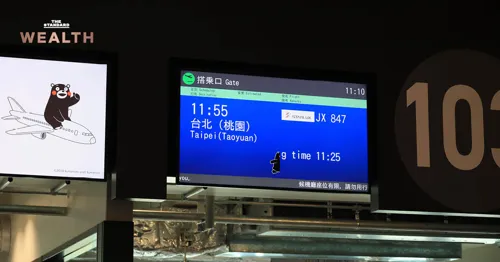
Japan's Kumamoto Airport will launch direct flights to Bangkok by March 2030 as part of an expansion plan targeting Southeast Asia. The airport has recovered dramatically since 2016 earthquake damage, with international passenger traffic surging 32-fold and achieving profitability for the first time. It aims to increase international routes from 6 to 11 by 2029, supported by proximity to TSMC and Sony manufacturing hubs, and is developing cargo handling capacity to serve regional supply chains.

▾ Hover for summary ▾ Tap for summary
The Federation of Thai Industries (FTI) is advancing the "Buy Thai" initiative targeting 200 billion baht in government and private sector procurement. The program focuses on three strategic industries—defense, rail systems, and medical devices—to boost SME revenues, increase factory capacity utilization, and reduce import dependency. This leverages state purchasing power as a market-creation tool while supporting Thailand's supply chain resilience and economic security.
 Together GoWeGo! Ferry tickets in Thailand.

▾ Hover for summary ▾ Tap for summary
South Korea's tourism sector faces a crisis: tourist complaints hit record highs (1,753 in Jan–July vs. 1,744 for all of 2025), driven by unilateral accommodation cancellations, inflated retail prices, and taxis refusing meter use. Despite welcoming 10+ million foreign visitors, the industry risks reputation damage from poor service infrastructure. Experts cite insufficient capacity in transport and lodging—competition and stricter standards are proposed solutions, but negative reviews on social media threaten long-term growth.

▾ Hover for summary ▾ Tap for summary
SNNP (Srinana Phrom Marketing) experienced a fire at its warehouse and chicken snack production facility in Bangkok's Buddhamonthon area on September 7. The blaze was controlled within 1.5 hours with no casualties. The company expects minimal revenue impact thanks to one month of existing inventory and backup production capacity at its Vietnam plant and OEM manufacturers. Insurance coverage is in place for asset damage.
▾ Hover for summary ▾ Tap for summary
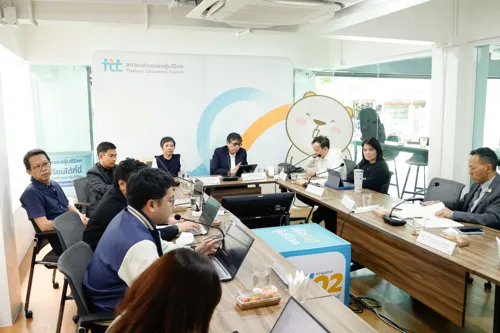
Thailand's National Broadcasting and Telecommunications Commission (NBTC) is gridlocked with 148 pending agendas due to leadership disputes, threatening digital TV transitions, telecom competition oversight, and consumer protections. The Consumer Council warns delays risk damaging content investment, broadcast quality, market access for SMEs, and broader digital economy confidence. Urgent intervention needed to resolve governance impasse and enable regulatory decision-making.
▾ Hover for summary ▾ Tap for summary
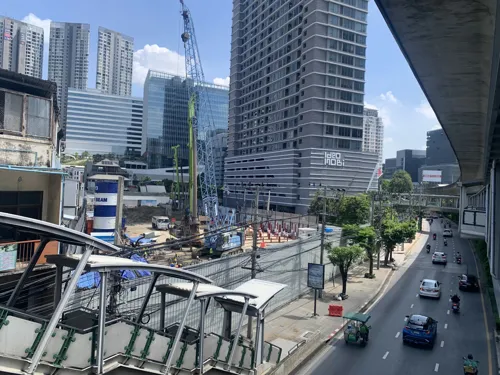
Empyrion Digital is developing "TH1 Bangna," a 20 MW data centre in a prime Bangkok location near BTS On Nut station. The 8-storey facility on ~17,000 m² is designed for large tech firms, AI-driven applications, and cloud providers, with secure power and comprehensive fibre connectivity. Commercial operation is targeted for Q3 2027. This represents significant infrastructure investment in Thailand's growing digital ecosystem and signals expanding capacity for enterprise cloud/data services.

 Stop running your company on Excel.