
Archive
September 17, 2026

▾ Hover for summary ▾ Tap for summary
Satya Nadella, Microsoft's CEO, urges AI companies to conduct rigorous testing and prioritize human benefit over speed-to-market, warning that moving products hastily risks losing business licenses. Speaking at the All-In Summit, he emphasized thorough external audits, quality control processes, and transparency in data use. Nadella acknowledged new risks from autonomous AI agents and called for strict monitoring alongside international safety standards, cautioning that any major failure would impact systems globally.
▾ Hover for summary ▾ Tap for summary
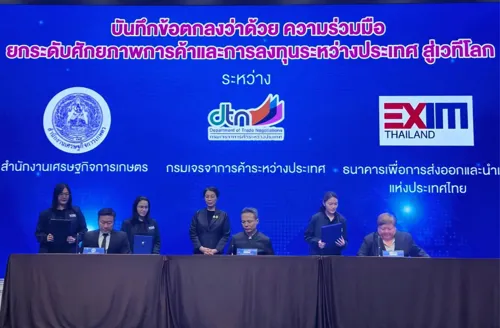
Thailand's Agricultural Office (สศก.), Trade Negotiation Department, and EXIM Bank have signed a Memorandum of Understanding to integrate agricultural economic data, FTA knowledge, tax benefits, trade regulations, and financial services. This initiative aims to help farmers and entrepreneurs make more accurate production and market-entry decisions while preparing for trade liberalization impacts. The collaboration will provide coordinated information on market opportunities, financing options, and competitive positioning for Thai agricultural exporters.
▾ Hover for summary ▾ Tap for summary
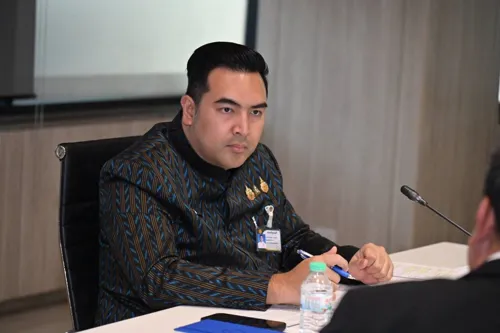
Thailand's Agriculture Ministry is intensifying its campaign against invasive northern snakehead fish (ปลาหมอคางดำ), securing 350 million baht in additional budget and coordinating 29 agencies across policy and field levels. Since February 2567, over 10 million kilograms have been eliminated across 21 provinces. The multi-pronged approach includes culling, research, ecosystem recovery, and public awareness—critical for aquatic biodiversity and rural livelihoods affected by rapid fish proliferation.
▾ Hover for summary ▾ Tap for summary
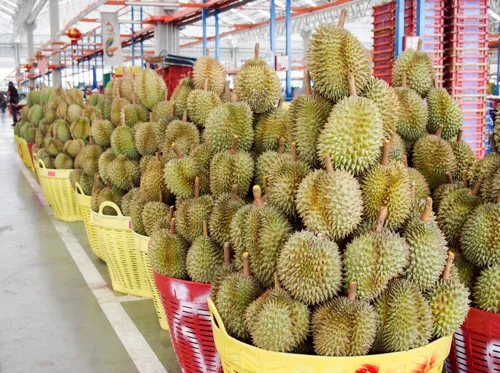
Thai durian exports through cross-border trade to China reached 1.005 million tonnes (124.7 billion baht) in the first seven months of 2026, reflecting strong demand from China's market. Overall cross-border trade in July 2026 grew 31.3% year-on-year to 131 billion baht, with durian as a major export commodity alongside electronics and petroleum products. The data underscores Thailand's agricultural export capacity and China's dominance as a key buyer in the cross-border trade channel.

 Empower businesses to thrive in the digital age.
▾ Hover for summary ▾ Tap for summary
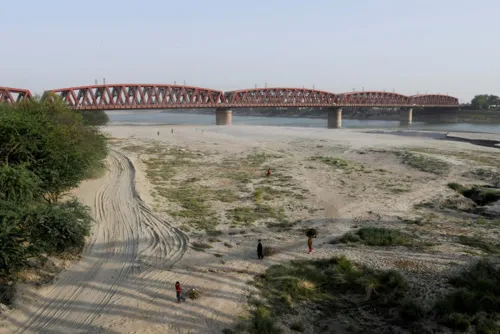
The UN's World Meteorological Organization reported that global river flows hit 35-year lows in 2025, with over a third of river basins experiencing below-normal water levels. Terrestrial water storage has declined for a decade, glaciers lost 1,400 gigatonnes of water in just two years, and nearly two-thirds of monitored groundwater wells show abnormal conditions. This systemic depletion threatens long-term water security and increases drought/flood risks, particularly affecting cross-border water resources and regions like South Asia where erratic patterns are intensifying.

▾ Hover for summary ▾ Tap for summary
Thailand's tilapia industry produces 260,000–270,000 tons annually, but faces a structural market crisis rather than a production issue. Border closures since July and the return migration of ~100,000+ Cambodian workers—a significant consumer segment—have collapsed domestic and regional demand, causing a 30–40% price collapse and inventory buildup. The association urges the government to prioritize market support and export channel restoration over current small-scale subsidy schemes, as farmers risk cash-flow crises if dealers stop purchases.

▾ Hover for summary ▾ Tap for summary
Thailand's central bank is intensifying regulatory oversight of non-bank lenders, targeting interest rate practices across P-Loans, nano-finance, and vehicle chattel mortgages. The sector has grown rapidly from 280 billion to 470 billion baht over five years, now representing 55% of total credit. The BoT will scrutinize licensing compliance, including cases where nano-finance licenses (max 33% interest) are misused for personal loans (capped at 25%), and aims to align rates with actual collateral risk, particularly for vehicle pledges. This regulatory tightening aims to strengthen consumer protection and standardization in a sector that increasingly serves underbanked populations previously denied access to traditional commercial bank credit.
▾ Hover for summary ▾ Tap for summary
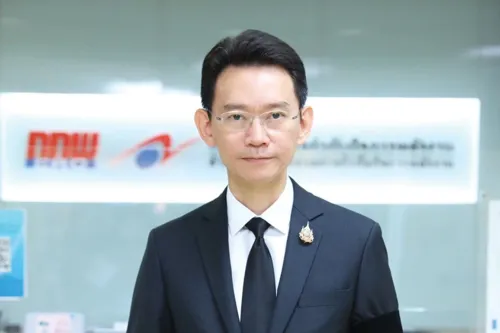
Thailand's Energy Commission is leveraging the Gastech 2026 conference to attract foreign investment in new gas sources and domestic petroleum exploration (Round 26 bidding), aiming to diversify gas supplies and reduce reliance on LNG imports. The initiative also addresses rapid data center growth through flexible electricity procurement options (including Direct PPAs), while the commission works to finalize wheeling charges by year-end 2026 and complete appointment of four new board members before end-year.
 Your real translator for LINE and Discord.

▾ Hover for summary ▾ Tap for summary
Phuket's 2025 real estate market leads Thai provinces with 176.5 billion baht in sales value across 806 projects, driven by foreign investment (Russians, Europeans, Chinese) buying vacation villas and condos. The market shows 85% sell-through on 90,597 units valued at 705 billion baht, with an average unit price of 12.8 million baht—significantly higher than Bangkok or industrial zones. Vacation properties dominate (52% of inventory), while Thai domestic housing remains a smaller, fragile segment. Developers should note the concentration risk: new projects average 10 million baht (villas 32 million), bulk in Thaland district, with 19.2-month remaining absorption if no new launches occur.
▾ Hover for summary ▾ Tap for summary
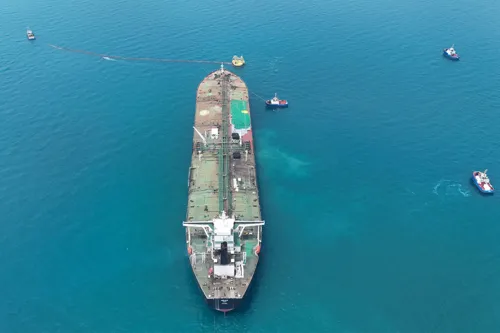
A Thai investment analysis argues that Middle East oil supply disruptions through the Strait of Hormuz are unlikely to resolve soon. Current market stabilization relies on temporary fixes (US strategic reserves, Chinese reduced imports, alternative shipping routes) rather than structural solutions. With ongoing Houthi attacks on tankers and US-Iran tensions unresolved, research houses are shifting to a "new normal" scenario of prolonged disruption. Fair-value oil is estimated at $100–110/bbl short-term, with upside risk from geopolitical premium. The author recommends overweighting energy assets, though short-term US political pressure (mid-term elections) may cap crude price rallies.

▾ Hover for summary ▾ Tap for summary
An exploration of why the travel industry has lagged behind others in AI adoption and innovation. The article examines barriers to AI implementation in travel services—from booking and customer service to personalization—and discusses why this sector remains relatively resistant to AI transformation despite its potential to improve efficiency and customer experience.

▾ Hover for summary ▾ Tap for summary
Manus, a global AI startup, is pursuing a $500m funding round following the collapse of its strategic deal with Meta. This signals both a setback in tech partnerships and continued investor appetite for AI solutions outside traditional big-tech ecosystems. Relevant for Thai SMEs exploring AI and international funding trends.

 Want to buy or sell a business?
▾ Hover for summary ▾ Tap for summary
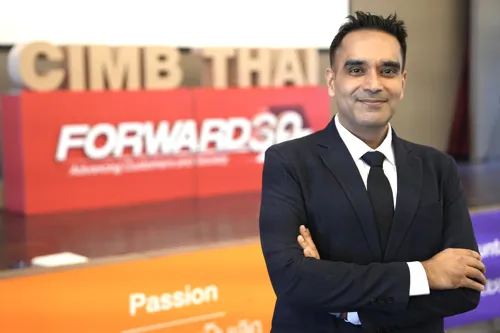
CIMB Thailand's chief economist warns that global interest rates will remain elevated longer than expected following the Fed's first rate hike in 3 years (25 bps to 4%). Four key risks for Thai SMEs and investors: (1) inflation still not controlled—Fed likely to hike again in Oct/Dec, potentially reaching 4.75% by mid-2026; (2) bond yields surging, 10-year US treasuries could hit 5.3%, dragging regional bonds up; (3) baht weakening risk to 34 THB/USD amid higher US rates and oil above $100/barrel; (4) Bank of Thailand may be forced to raise rates in 2026 despite slower Thai economic recovery. Investors must guard against interest-rate and currency volatility.
▾ Hover for summary ▾ Tap for summary
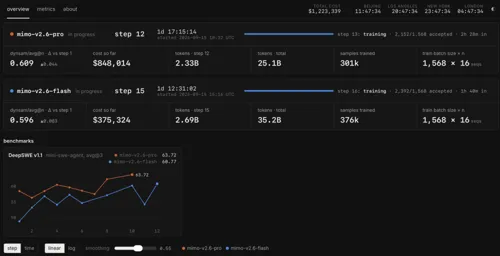
Xiaomi's MiMo team revealed training progress on MiMo-v2.6 models (pro and flash variants), showing DeepSWE benchmark scores exceeding 60%, on par with GLM-5.3-Flash. The v2.5 model remains popular on OpenRouter (ranked 6th) due to cost advantages, particularly low cache pricing. Latest training dashboard shows reinforcement learning costs over $1.2M, though full model training likely costs substantially more. Significant improvement trajectory suggests competitive positioning in the LLM market.
▾ Hover for summary ▾ Tap for summary
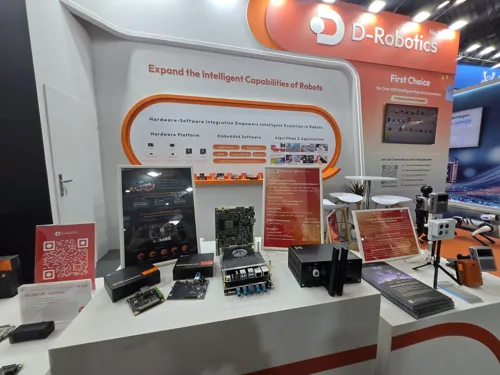
D-Robotics, a Chinese AI and robotics chipmaker, secured a substantial $400m funding round led by Mirae Asset, signaling investor confidence in specialized semiconductor development for AI/robotics applications. While this demonstrates significant capital deployment in chip innovation, the direct relevance to Thai SMEs is limited unless they operate in AI/robotics supply chains or seek regional partnerships.

▾ Hover for summary ▾ Tap for summary
Anthropic has unified Claude Cowork with its standard chat interface into a single Claude product, while launching Claude Docs and Claude Slides for document and presentation work. Users no longer need to pre-select where a task belongs; Claude automatically assesses task complexity and applies appropriate capabilities. Features roll out progressively to Pro/Max users first, then Team and Free tiers. This consolidation reduces friction by maintaining conversation context across all output types—documents, slides, and design artifacts—while allowing fine-grained control over Claude's autonomous task continuation.
 Together GoWeGo! Ferry tickets in Thailand.
▾ Hover for summary ▾ Tap for summary
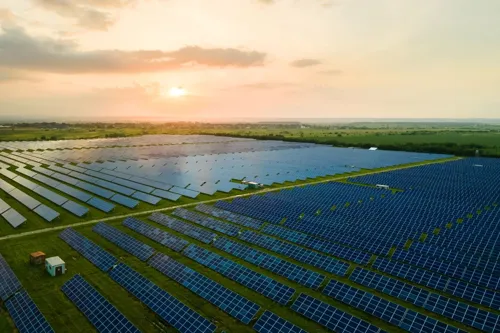
Industrial Estate Authority (IEAT) has formed a joint venture with GULF1 and GPSC to develop a 17.5 MW solar farm on a 92-acre silt pond site at Map Ta Phut Industrial Port. The project converts unused land into clean energy infrastructure to supply Thai industries, supporting the nation's carbon neutrality goal by 2050 and net zero by 2065. This represents a scalable model for resource-efficient industrial energy transition aligned with SME competitiveness and climate commitments.

▾ Hover for summary ▾ Tap for summary
SoftBank has secured a $10 billion loan backed by its stake in OpenAI, signaling growing concentration of risk in a single AI asset. For Thai SMEs, this highlights the importance of understanding how major tech investors manage AI exposure and the potential market implications of concentrated bets on emerging AI platforms.
▾ Hover for summary ▾ Tap for summary
Thai listed company TKN (Tao Kae Noi, a food and marketing firm) announced a share buyback program of up to 80 million baht for 17 million shares (1.23% of outstanding stock) running from September 22, 2026 to March 21, 2027. The buyback aims to boost investor returns, improve ROE and EPS through capital structure optimization, and signal financial confidence. This is TKN's second buyback in recent years, building on a 15-million-share program completed in early 2025.
▾ Hover for summary ▾ Tap for summary
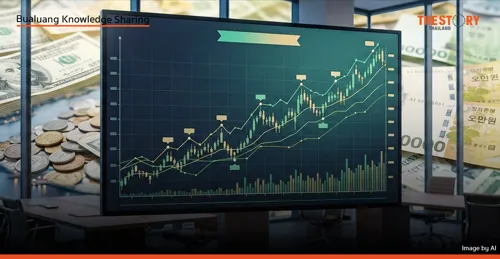
Bualuang Wealth Research identifies six factors suggesting foreign fund flows into Thai stocks have 89% probability of continuing over the next 3 months, with potential inflows averaging 34 billion baht. Key drivers include recovering global tech/manufacturing demand (South Korean exports up 52.9–70.4% YoY), improving Thai corporate earnings forecasts (revised from -7.3% to +12.7%), and positive ISM manufacturing data. Analysts recommend accumulating KCE, PTT, and PTTGC as beneficiaries of the global tech cycle and foreign capital flows.

 Stop running your company on Excel.