
Archive
September 17, 2026

▾ Hover for summary ▾ Tap for summary
SoftBank has secured a $10 billion loan backed by its stake in OpenAI, signaling growing concentration of risk in a single AI asset. For Thai SMEs, this highlights the importance of understanding how major tech investors manage AI exposure and the potential market implications of concentrated bets on emerging AI platforms.
▾ Hover for summary ▾ Tap for summary
Thai listed company TKN (Tao Kae Noi, a food and marketing firm) announced a share buyback program of up to 80 million baht for 17 million shares (1.23% of outstanding stock) running from September 22, 2026 to March 21, 2027. The buyback aims to boost investor returns, improve ROE and EPS through capital structure optimization, and signal financial confidence. This is TKN's second buyback in recent years, building on a 15-million-share program completed in early 2025.
▾ Hover for summary ▾ Tap for summary
Bualuang Wealth Research identifies six factors suggesting foreign fund flows into Thai stocks have 89% probability of continuing over the next 3 months, with potential inflows averaging 34 billion baht. Key drivers include recovering global tech/manufacturing demand (South Korean exports up 52.9–70.4% YoY), improving Thai corporate earnings forecasts (revised from -7.3% to +12.7%), and positive ISM manufacturing data. Analysts recommend accumulating KCE, PTT, and PTTGC as beneficiaries of the global tech cycle and foreign capital flows.

▾ Hover for summary ▾ Tap for summary
The US Federal Reserve raised interest rates by 0.25% for the first time since 2023, citing persistent inflation pressures. Gold prices fell over $130 per ounce to a new low around $4,235, with the dollar strengthening and US Treasury yields rising to their highest levels since 2007. Analysts note resistance at $4,300 with potential support at $4,010 if that level breaks, while mid-to-long-term trends remain bullish for gold.

 Empower businesses to thrive in the digital age.

▾ Hover for summary ▾ Tap for summary
Fed raised rates by 0.25% to 3.75-4.00% as expected, signaling one more hike possible by year-end. Thai equity market expected to consolidate with short-term recovery potential; support at 1,550-1,555 SET points, resistance at 1,575-1,580. Rising US yields pressure interest-rate-sensitive stocks but favor banks (BBL, KBANK, KTB) and life insurers (TLI, BLA). Brokers recommend selective stock-picking and dollar-cost averaging on dips, pending BOJ meeting Sept 18.

▾ Hover for summary ▾ Tap for summary
Thai enterprises are graduating from AI experimentation to production deployment, with current AI supporting 24% of work tasks (expected to rise to 42% in 2 years) and generating an average 18% ROI. However, significant scaling barriers persist: 47% still deploy AI in siloed projects rather than strategically across the organization, only 8% integrate AI end-to-end across departments, and a critical 2% are fully ready for Agentic AI despite 78% seeing its transformational potential. Data quality, workforce upskilling, and governance gaps remain key obstacles to enterprise-wide AI adoption.
▾ Hover for summary ▾ Tap for summary
Huawei is ramping up AI chip production and claiming strong demand, signaling intensified competition in the global semiconductor market where it aims to challenge Nvidia's dominance.

▾ Hover for summary ▾ Tap for summary
Saudi Arabia is rushing to restore the damaged East-West Pipeline through bypass construction, expected to reach 50% capacity within days and full capacity within 6 weeks. This news triggered a 3–4% drop in WTI and Brent crude prices. While Middle East tensions persist (Iran attacks, Houthi drone strikes), the supply recovery signal is easing near-term price pressure. Thai energy importers and fuel-hedged businesses should monitor restoration timelines.
 Your real translator for LINE and Discord.

▾ Hover for summary ▾ Tap for summary
TTB Bank has launched 'My Wealth,' a digital wealth advisory service integrated into its ttb touch app, partnering with Webull to enable customers to invest in U.S. stocks and ETFs. The move addresses a structural gap in Thai investor behavior: 57% of household financial assets are in bank deposits versus the global average of 45% for investment assets. The service targets the emerging 'Mass Affluent' segment (ages 30–45, assets 1–5M baht) by starting with financial goals rather than individual products, offering unified portfolio management and automated rebalancing. Webull contributes international investment expertise and technology, completing TTB's 'USD Ecosystem' for currency exchange, foreign currency savings, and U.S. investments within a single app.
▾ Hover for summary ▾ Tap for summary
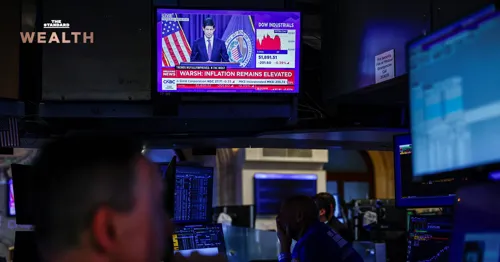
The U.S. Federal Reserve unanimously raised the federal funds rate by 0.25% to 3.75–4.00%—the first increase since July 2023—to combat persistent inflation. Chair Kevin Warsh signaled further hikes ahead this year, though President Trump immediately called for cuts to 1% or below and threatened trade restrictions if the Fed does not comply. The baht weakened to 33.40 against the dollar following the rate hike and stronger U.S. dollar. Thai SMEs and financial institutions face headwinds from a stronger dollar, higher U.S. rates, and currency volatility; management of FX exposure and hedging strategies are increasingly critical.

▾ Hover for summary ▾ Tap for summary
BitCub Capital founder Jirayut Sapsrisopa joined Thailand's National Human Capital Superboard and proposed two key initiatives to position Thailand on the growth side of the K-Shape economy: (1) establishing a Center for the Fourth Industrial Revolution to develop Industry 4.0 skills, and (2) creating an open AI-powered education platform to democratize access to learning. The board, chaired by Deputy PM Yuthasak Wongswatsdi, coordinates five ministries to drive Thailand's transition toward high-income economy status through tech-aligned workforce development.

▾ Hover for summary ▾ Tap for summary
AI agents are now making investment decisions that previously required human judgment, picking companies destined for $100B+ valuation. This represents a fundamental shift in how capital allocation and business evaluation work, with significant implications for venture capital, market dynamics, and the role of human investors in identifying winners.

 Want to buy or sell a business?

▾ Hover for summary ▾ Tap for summary
Z.ai, a Chinese AI developer, has raised its year-end ARR forecast to $3 billion, signaling strong momentum in its AI and cloud services businesses. This growth milestone reflects broader trends in enterprise AI adoption and cloud infrastructure—relevant for Thai SMEs evaluating AI partners and cloud technology investments.

▾ Hover for summary ▾ Tap for summary
Ant International is making strategic moves in the payments space, likely related to cross-border or emerging market payment solutions. The specifics are unavailable due to page loading issues, but the headline suggests important developments in fintech infrastructure relevant to Southeast Asian markets including Thailand's payment ecosystem.
September 16, 2026

▾ Hover for summary ▾ Tap for summary
TWA (Thai web and online media association) is hosting WebPresso, an annual forum featuring two prominent Thai content creators: AdToy (DataRockie founder, AI/data science educator) and Dr. Tany (medical YouTube personality with millions of followers). The event explores how writing and authentic communication remain critical skills in the AI era, and how creators can build influence and credibility through quality content. The forum also serves as the association's annual general meeting to discuss industry standards, data privacy, and AI governance for Thailand's media ecosystem.

▾ Hover for summary ▾ Tap for summary
Thailand is aggressively diversifying its natural gas supply portfolio away from Middle Eastern dependence due to geopolitical disruptions and LNG price spikes (now at $28/mmBtu, nearly double prior levels). The country is expanding US LNG imports (now 70–80% of spot/term procurement) and securing non-Gulf contracts with Oman and others to stabilize power generation costs and prevent blackouts. Strategic procurement shifts and infrastructure investment are critical to insulating domestic economies from global energy volatility.
 Together GoWeGo! Ferry tickets in Thailand.

▾ Hover for summary ▾ Tap for summary
A Chulalongkorn University political scientist warns Thailand's fiscal system risks collapse within a decade without urgent reform. Public debt is rising toward 80% of GDP (from 70%), with projections reaching 100% GDP within 5-6 years. Key challenges include overlapping government agencies, inefficient welfare distribution, and hidden state-owned institution debt. The government must restructure public sector spending, target welfare more strategically, and broaden the tax base rather than hastily raising VAT rates.

▾ Hover for summary ▾ Tap for summary
Thailand's cabinet approved a ministerial regulation on 1 September to expand permitted activities in forest zones from six to more categories, affecting 300,000+ pending applications. The proposed changes would streamline approvals for renewable energy, telecommunications, infrastructure, waste management, and other development projects on degraded forest land. While designed to clear bureaucratic backlogs and respond to evolving development needs, forestry experts warn the broad "other purposes" category could undermine forest rehabilitation efforts and create loopholes for projects outside existing protections, particularly for large-scale renewable energy developments.
▾ Hover for summary ▾ Tap for summary
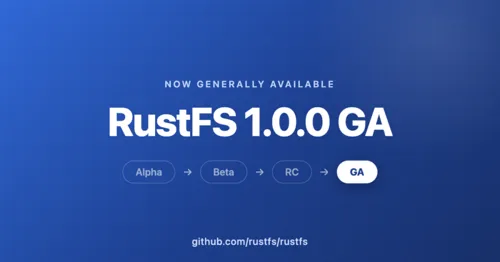
RustFS, a Rust-based S3 server software, reached 1.0.0 GA after ~2 years of development, positioning itself as a MinIO alternative. With MinIO shifting to AGPL licensing in 2021 and discontinuing binary distribution in 2025, RustFS offers a compelling open alternative for SMEs and enterprises needing S3-compatible storage. The project's focus on drop-in MinIO replacement and early binary releases make it relevant for infrastructure modernization decisions.
▾ Hover for summary ▾ Tap for summary
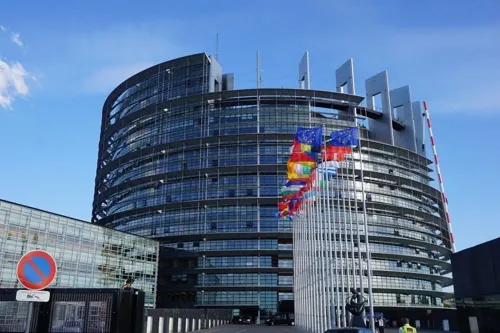
The EU is introducing the Kids Act, which would ban children under 13 from social media entirely, with tiered access for ages 13–14 (parental controls) and 15+ (standard accounts). This regulatory approach aims to set a binding standard across all member states, pressuring large tech companies to comply. Australia already implemented similar legislation but faces enforcement challenges around age verification and privacy concerns.

 Stop running your company on Excel.