
Archive
September 18, 2026

▾ Hover for summary ▾ Tap for summary
Huawei announced the Atlas 960E SuperPoD supercomputer and Peerium computing architecture at HUAWEI CONNECT 2026, addressing the massive computing demands of the Agentic AI era. The Atlas 960E uses Near-Packaged Optics (NPO) technology to achieve 2.75× better efficiency over traditional servers, supporting up to 4,096 AI cards with 8 EFLOPS compute power and 1 Petabyte HBM. Peerium's peer-to-peer chip interconnect enables coordination of 1 million processors seamlessly, shifting away from traditional master-slave architectures. These innovations target enterprises scaling large AI inference and training workloads, with potential applications across data centers, cloud providers, and AI-intensive industries.

▾ Hover for summary ▾ Tap for summary
Thailand's BOI, SET, and SEC have signed an MOU launching "BOI to IPO" — a framework to help BOI-promoted companies, especially in New Economy sectors, access capital markets for growth. The initiative aims to position Thailand as a long-term business hub, not just a manufacturing base. A major wave of 5 trillion baht in investment approvals since 2023 — spanning semiconductors, PCBs, AI supply chains, EVs, robotics, and biotech — is reaching the funding stage. New Economy IPO entrants will receive enhanced tax incentives: 3 extra years of full corporate income tax exemption or 5 additional years of 50% relief, plus upstream R&D integration via Skill Bridge training.

▾ Hover for summary ▾ Tap for summary
A forensic psychologist explains why intelligence and education don't protect against fraud—scammers exploit emotion over reason through social engineering. AI-enabled deepfakes intensify the threat by creating convincing fake identities. The core vulnerability isn't IQ but EQ: when triggered by greed, fear, or delusion, the brain's emotional amygdala overrides logical reasoning. Thai SMEs and professionals should recognize that fraud success depends on manipulating emotions during high-pressure decisions, not outsmarting technology defenses.

▾ Hover for summary ▾ Tap for summary
Thailand's Ministry of Higher Education and Ministry of Public Health are launching a 3-year collaboration to operationalize Medical AI in hospitals. Key initiative: connecting university research with health system needs via HPC and GPU infrastructure, establishing validation/certification frameworks, and piloting 3 Medical AI tools (hip fracture detection, liver cancer screening via ultrasound, and others). This bridges research-to-deployment gap and positions Thailand as a regional leader in clinical AI adoption with proper data governance.

 Empower businesses to thrive in the digital age.

▾ Hover for summary ▾ Tap for summary
Panasonic Thailand is repositioning its hair and scalp care strategy with the launch of the nanocare EH-NB70 hair dryer featuring nanoe MOISTURE+ technology. The company aims for 30% sales growth in the nano-care product segment by end of 2025, targeting affluent 25-45 year-olds through pop-up stores, influencer partnerships, and salon distribution channels. The Thai scalp-care market is projected to grow from $39.3M (2024) to $62.8M (2032) at 5.81% CAGR, despite current hair dryer market contraction and intense price competition.

▾ Hover for summary ▾ Tap for summary
Bangkok Mass Transit Authority (BMTA) is phasing out 8-baht non-AC buses in favor of 1,520 electric air-conditioned buses with fares of 15–25 baht. The first 500 EVs are expected to be delivered by March 2027, with subsequent batches in April and May. All non-AC red buses will be retired by June 2027. This represents a significant infrastructure modernization with implications for public transport SMEs, charging station operators, and service providers, though it raises affordability concerns for budget commuters.

▾ Hover for summary ▾ Tap for summary
Google has relaunched CC, an AI agent that consolidates family scheduling, bills, meal plans, and daily tasks into a shared household hub. Built on Gemini via Antigravity, each family instance runs isolated in the cloud with shared memory of preferences—no personal data siloed. Currently experimental and US-only, it signals Google's pivot toward household management as a multi-user coordination problem. Relevant for SMEs exploring family/lifestyle automation and AI-powered admin tools.
▾ Hover for summary ▾ Tap for summary
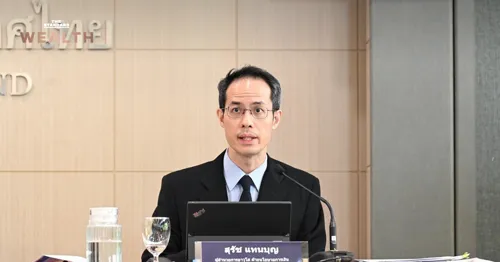
Thailand's central bank (BOT) maintains its policy rate at 1.00%, affirming it remains appropriate for Thailand's economic context despite global central banks raising rates. The BOT downplays capital flight risks, noting strong external reserves (US$300bn+), limited outflows relative to regional peers, and baht stability. Thailand maintains one of the world's lowest rates, supporting domestic economic recovery that remains below potential.
 Your real translator for LINE and Discord.
▾ Hover for summary ▾ Tap for summary
Fitch Ratings upgraded Thailand's outlook from Negative to Stable while maintaining the BBB+ sovereign credit rating. The improvement reflects stronger government stability and reduced political uncertainty, supporting continued fiscal consolidation. Government debt is now projected below 63% of GDP by 2571 (2028), improved from prior estimates of 65%. Key growth drivers include AI and data center investments, domestic consumption, and tourism recovery, with GDP growth forecast at 2.3% for 2569 (2026).
▾ Hover for summary ▾ Tap for summary
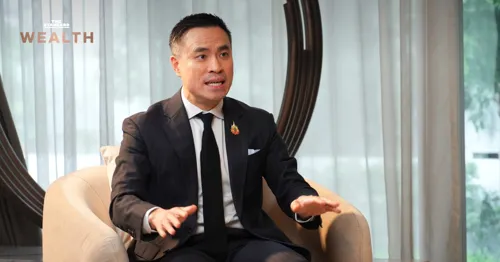
Thailand's National Energy Policy Committee approved two major energy measures in September 2026: (1) a 16.1 billion baht fund to reduce electricity bills Sept–Dec 2026 by capping gas plant prices at 363.53 baht/MMBtu and using recovered surplus rebates; (2) expansion of community solar programs to 10,000 MW total (including existing 500 MW), offering 2.20 baht/kWh buyback rates for 20 years under Net Billing. This addresses near-term consumer cost relief while establishing long-term renewable energy infrastructure and enabling prosumers (producer-consumers) to lower their own electricity costs and monetize surplus generation.

▾ Hover for summary ▾ Tap for summary
The Thai Restaurant Association petitioned the government to expand the "Thai Helps Thai Half-Price Plus" subsidy programme to include VAT-registered small restaurants and SMEs, arguing that using VAT registration status alone as an exclusion criterion penalizes compliant operators. They propose replacing this with composite criteria—annual revenue, firm size, and employee headcount—to ensure equitable support for grassroots businesses genuinely constrained by high operating costs and stagnant demand.

▾ Hover for summary ▾ Tap for summary
Microsoft released its September 2026 Patch Tuesday with a record 966 vulnerability fixes, the highest in a single month. The update includes 105 critical-level vulnerabilities, 2 zero-day exploits already disclosed, and critical Windows Update Stack and ALPC privilege escalation flaws. The surge suggests AI-assisted security tools are identifying vulnerabilities at unprecedented scale, with recent months showing exponential growth (July had 570).

 Want to buy or sell a business?
▾ Hover for summary ▾ Tap for summary
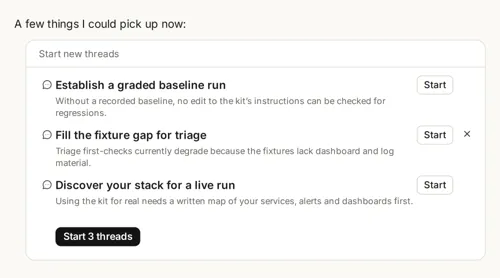
Anthropic has upgraded Claude Code's Project tool to automatically decompose complex tasks into subtasks and manage execution—previously users had to manually split work and combine results. The new feature (beta for Pro/Max users) handles task analysis, thread management, and result aggregation. Key consideration: multi-threaded execution consumes tokens faster and currently requires cloud-based sessions, not local execution.

▾ Hover for summary ▾ Tap for summary
Anthropic has merged its Claude Chat and Cowork interfaces into a single unified workspace, eliminating the need to switch between modes. The consolidated interface integrates Claude Docs, Slides, and Design tools in one environment. The feature is rolling out first to Pro and Max plan subscribers, with other users to follow. This streamlines workflow for users managing multiple Claude-based tasks.

▾ Hover for summary ▾ Tap for summary
Fitch reversed its negative outlook on Thailand to "stable," signalling improved confidence in debt stabilisation and political stability post-February elections. The upgrade highlights technology and data-centre investment as growth drivers, with government debt projected to stay below 63% of GDP by 2028. This reinforces Thailand's BBB+ investment-grade rating and demonstrates reduced policy uncertainty for businesses and investors.
▾ Hover for summary ▾ Tap for summary
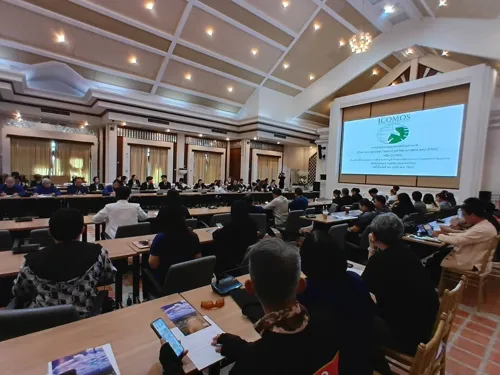
Chiang Mai is in the critical documentation phase of its UNESCO World Heritage bid. After a field evaluation in August 2026, ICOMOS has requested 19 additional items covering technical details (cross-sections, construction controls, ancient water systems) and cultural-historical questions, with a deadline of 27 October 2026. No further site visits are planned—evaluation will be document-based only. Local authorities are simultaneously building public understanding of Lanna culture and heritage zones to ensure coordinated messaging and lay groundwork for a World Heritage Master Plan for sustainable urban management.
 Together GoWeGo! Ferry tickets in Thailand.

▾ Hover for summary ▾ Tap for summary
Chonburi is hosting Tomorrowland Thailand at "Wisdom Valley" from 11–13 December 2026, expecting 30,000 visitors daily and generating 5+ billion baht in first-year economic impact. The 5-year partnership will create 7,500 jobs, drive 42,000 already-booked room nights, and position Pattaya as a major international tourism hub, benefiting hospitality and local SMEs through direct spending and tourism spillover.

▾ Hover for summary ▾ Tap for summary
Thailand's central bank (BOT) states that the interest rate differential with the US is not pressuring the baht or driving capital outflows. The BOT views market expectations as already priced in and notes the current 1% policy rate is appropriate for Thailand's below-potential recovery. Foreign direct investment has flowed in at a net 50 billion baht since start of year, with strong external buffers (300+ billion USD reserves covering short-term debt 2.8x) limiting capital flight risks despite recent Middle East tensions.
▾ Hover for summary ▾ Tap for summary
Fitch upgraded Thailand's sovereign outlook from Negative to Stable while maintaining the BBB+ credit rating, citing political stability, steady economic growth (2.3% forecast), improved fiscal consolidation, strong external finances, and continued policy discipline. This makes all three major rating agencies (Fitch, Moody's, S&P) aligned on a Stable outlook for Thailand, signaling growing confidence in the government's economic direction and AI/data center investment momentum.

▾ Hover for summary ▾ Tap for summary
Six competing candidate groups presented structural reform policies for Thailand's Social Security Board elections in 2026, focusing on managing a 2.5 trillion baht fund. Key proposals include pension formula adjustments, digitalization of contribution systems, removal of childbirth payment reserves, establishment of a social security bank, and expanded healthcare and elder-care benefits. These initiatives aim to balance financial sustainability with worker protections and improved benefit accessibility across the system.

 Stop running your company on Excel.