
Archive
September 18, 2026
▾ Hover for summary ▾ Tap for summary
Fitch upgraded Thailand's sovereign outlook from Negative to Stable while maintaining the BBB+ credit rating, citing political stability, steady economic growth (2.3% forecast), improved fiscal consolidation, strong external finances, and continued policy discipline. This makes all three major rating agencies (Fitch, Moody's, S&P) aligned on a Stable outlook for Thailand, signaling growing confidence in the government's economic direction and AI/data center investment momentum.
▾ Hover for summary ▾ Tap for summary
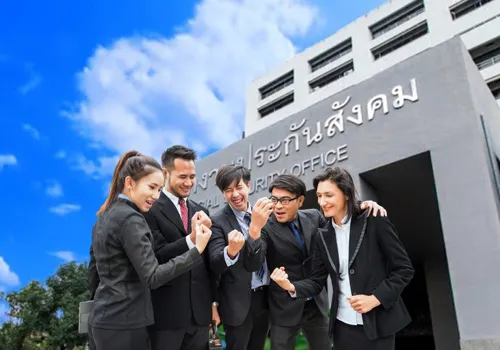
Six competing candidate groups presented structural reform policies for Thailand's Social Security Board elections in 2026, focusing on managing a 2.5 trillion baht fund. Key proposals include pension formula adjustments, digitalization of contribution systems, removal of childbirth payment reserves, establishment of a social security bank, and expanded healthcare and elder-care benefits. These initiatives aim to balance financial sustainability with worker protections and improved benefit accessibility across the system.
▾ Hover for summary ▾ Tap for summary
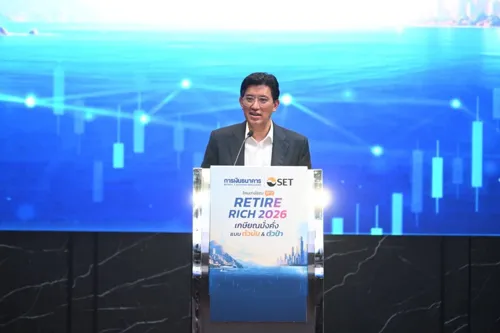
Thailand's Stock Exchange (SET) recommends dividend-paying stocks as a retirement income strategy, with SET HD index yielding 4–5% and some bank stocks yielding 6–7%. The SET CEO advises pre-retirees to set cash-flow targets first, then allocate dividend stocks alongside bonds, treating them as long-term income streams rather than trading vehicles. Rising US 10-year Treasury yields (~5%) create competitive pressure but strong-fundamentals Thai companies with consistent payouts remain attractive for diversified retirement portfolios.
▾ Hover for summary ▾ Tap for summary
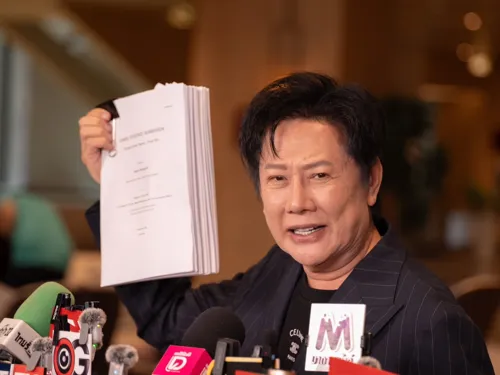
Miss Universe Organization (MUO) declared all agreements made by Miss Universe Eastern Pte. Ltd. void, stripping franchise rights from six countries (Thailand, Indonesia, Vietnam, Laos, Malaysia, Singapore). Nawat Isaraguil, representing the Eastern faction, countersued, asserting Thai contestant Tarinaa will compete at Miss Universe 75 in Puerto Rico. The dispute hinges on governance structure and a 50-50 shareholder split, with Nawat claiming MUO lacked board consensus for its announcement and questioning the legitimacy of JKN Universe LLC.

 Empower businesses to thrive in the digital age.
▾ Hover for summary ▾ Tap for summary
Thailand's Finance Ministry will present a restructuring plan for 8 state-owned enterprises (SOEs) to Cabinet on September 22, including MCOT, with the goal of improving efficiency and reducing redundancy. Officials explicitly denied plans to merge MCOT with Thai PBS, citing structural, legal, and organizational differences between the two entities. Full details are embargoed until Cabinet approval to protect MCOT's shareholders (as a listed company) and comply with securities regulations.
▾ Hover for summary ▾ Tap for summary
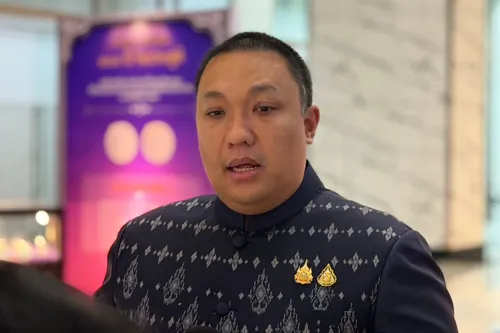
The Interior Ministry's Deputy Minister announced that PM Anuthin will sign the solar rooftop project document today, with a cabinet approval process expected within ~2 weeks. The National Energy Policy Committee approved scaling solar installations from 5,000 MW to 10,000 MW to support the government's solar rooftop initiative. Additionally, the government is finalizing electricity pricing criteria for data centers (classified as Type 9 users) by September, with plans to use data center revenue to offset public power line costs. The Interior Ministry is also preparing simplified identity verification processes at district offices for future programs.

▾ Hover for summary ▾ Tap for summary
Thailand's special investigation bureau (DSI) has requested documents from BCPG related to its ~9 billion baht investment in an oil storage and port facility in Phetchaburi. BCPG publicly confirmed cooperation with authorities and stated there are no conclusions yet, no significant impact on financials or operations, and business continues normally. The company reaffirmed commitment to good governance and transparency.
▾ Hover for summary ▾ Tap for summary
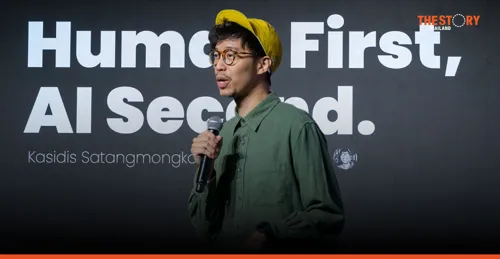
A thought leadership piece from DataRockie founder Ksidis Satangmongkol argues that as AI advances, Thai businesses and individuals should prioritize human capability development over tool optimization. The core thesis: AI is amoral software—the real risk lies in how humans deploy it. Rather than competing on tool usage, people need wisdom, courage, justice, and moderation (Aristotelian virtues) plus "agency"—the ability to think, decide, and act independently. Practical for SME leaders weighing AI adoption strategies.
 Your real translator for LINE and Discord.
▾ Hover for summary ▾ Tap for summary
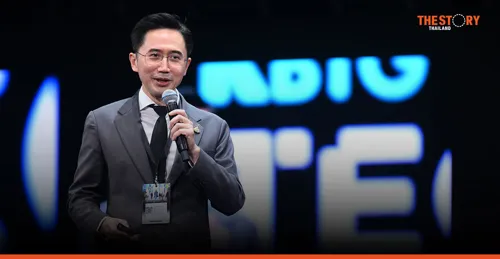
Thailand must shift from mass production competition to innovation-driven economic growth by investing in R&D, technology, and workforce upskilling. Deputy PM Yotsanan Wongswaddi outlined a strategy to break sectoral silos, leverage AI for local data advantages (agriculture, satellites), and distribute technology through universities to SMEs and regional communities—critical for escaping middle-income trap and sustaining productivity as the population ages.
▾ Hover for summary ▾ Tap for summary
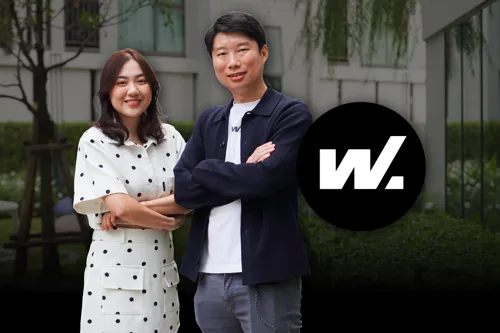
Fontcraft, a 15-year-old Thai font design studio, has developed over 100 proprietary typefaces and hundreds of custom fonts for government, corporate, game developers, and creators. The co-founders share their design philosophy: building a strong "main character structure" from day one to maintain design consistency, save time, and future-proof fonts across weights and styles. Their approach covers high-impact projects (custom handwriting preservation, accessibility fonts for children and elderly, game localization) and demonstrates how human craftsmanship in typography remains valuable despite AI's rapid advancement.
▾ Hover for summary ▾ Tap for summary
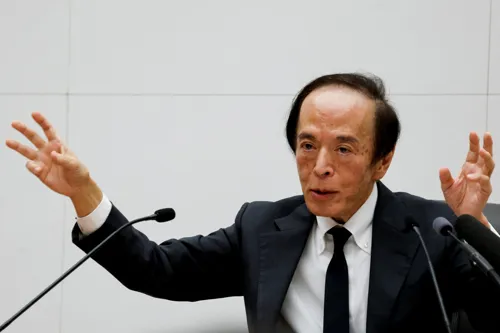
Japan's central bank (BOJ) raised its policy rate to 1.25%, marking the second increase this year and the highest level since 1995. Governor Ueda signaled a strategic pivot from stimulating inflation toward 2% to maintaining price stability at that level, citing rising inflation risks. The decision was not unanimous, with two board members dissenting. Despite monetary tightening, Ueda maintained that financial conditions remain accommodative, suggesting room for further policy stiffening. Currency markets reacted with initial yen weakness.

▾ Hover for summary ▾ Tap for summary
Google has opened its Google Home Model Context Protocol (MCP) server to external AI agents (Claude, Hermes, etc.), enabling them to interact with smart home devices. Early use cases include analyzing security footage, detecting open lights, and building device dashboards. Currently available only to Google Home Premium Advanced subscribers ($20/month) in early access—signals expansion of AI agent integration into home automation platforms.

 Want to buy or sell a business?
▾ Hover for summary ▾ Tap for summary
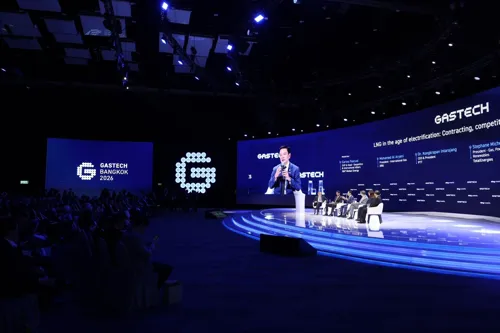
PTT Group executives presented at the Gastech 2026 conference in Bangkok (14–17 September) on balancing energy security, affordability, and sustainability. Key messages: natural gas and LNG remain strategic to grid stability and renewable integration; LNG supply diversification and management flexibility are critical; energy systems must transform holistically toward clean, resilient, competitive infrastructure. The group is advancing CCS technology and methane reduction. Actionable for energy businesses and suppliers to the power sector, but primarily promotional messaging rather than hard policy or market shifts.
▾ Hover for summary ▾ Tap for summary
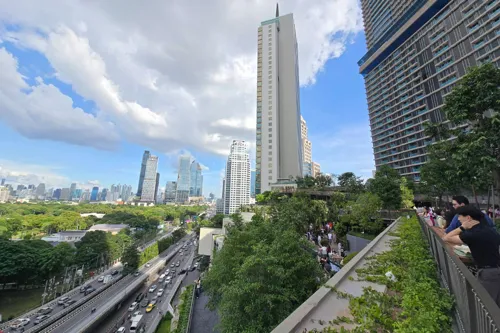
Bangkok's two largest mixed-use retail players—One Bangkok (Thai Beverage/Sirivattanaphakdi group) and Central Park (Central Pattana)—are intensifying competition around Lumpini Park in late 2026 and 2027. Both are deploying aggressive strategies: One Bangkok targets 10% traffic growth (to 120,000 daily visitors by 2027) and has attracted flagship tenants including Tsutaya Bookstore (first in Thailand), Edikted (first in Asia), and a HarborLandIsland water park. Central Park aims for 10% growth (25 million annual visits in 2026) and is positioning itself as a "Bangkok's World Stage" culinary landmark with Michelin-guide restaurants and global first-in-Thailand brands (e.g., Blue Bottle Coffee). Both are investing heavily in MRT connectivity. Relevant to SMEs in fashion, F&B, and retail—expect heightened competition and rising tenant vetting standards.

▾ Hover for summary ▾ Tap for summary
Grab reports a 68% year-on-year surge in drivers and riders using the platform for supplementary income during the first half of 2026, driven by the "side hustle" trend. Most users are Gen Z (42%) and Millennials (44%), primarily active 18:00–22:00 on weekdays. Grab is scaling its "Part-time for Thai" program—targeting government employees, military, police, students, and vocational trainees—offering Fast Track onboarding, equipment, and special incentives to expand gig income opportunities across demographics.

▾ Hover for summary ▾ Tap for summary
Thailand's Denchai-Chiang Rai-Chiang Khong dual-track railway (323.1 km across 4 provinces) is 70% complete, with the ambitious Ngao Tunnel—Thailand's longest at 6.2 km—on track to break through in 2569 (2026). Three other tunnels have already been pierced; the project aims to open for passenger and freight service by 2571 (2027). Key challenges include geological variability and safety protocols for weak rock strata.
 Together GoWeGo! Ferry tickets in Thailand.
▾ Hover for summary ▾ Tap for summary
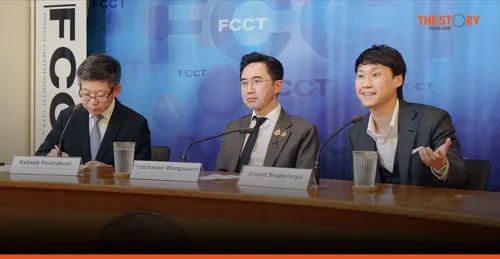
Thailand's Deputy PM and key tech leaders presented a framework for AI-driven competitiveness at an FCCT forum. Core message: AI adoption success hinges on converting technology into organizational capability (not merely access), developing human capital, and building Thailand's own tech sovereignty through domestic R&D and data assets. Critical challenge: 95% of AI pilot projects fail due to poor data quality and weak decision-making integration—Thai businesses must urgently shift to AI-powered efficiency to escape middle-income trap.

▾ Hover for summary ▾ Tap for summary
Thaivivat Insurance launched TVI Crash Detection, a smartphone-based crash detection system that automatically alerts emergency services when an accident occurs, eliminating the need for users to manually call for help while in shock. The zero-hardware solution uses existing smartphone sensors and integrates into the Thaivivat app, representing a shift from reactive (waiting for incident reports) to proactive customer care in motor insurance, with real-time emergency response coordination and GPS location tracking.
▾ Hover for summary ▾ Tap for summary
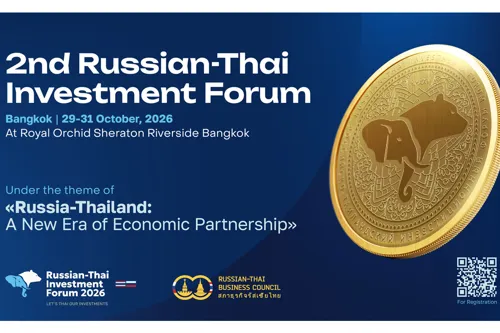
The Russian-Thai Business Council will host the second Russia-Thailand Investment Forum (RTIF2026) on October 29–31 at the Royal Orchid Sheraton Riverside in Bangkok. The forum targets high-level economic collaboration across core industries (metals, agriculture, renewable energy) and emerging sectors, building on the first forum's success which generated $3+ billion in potential investment projects. For Thai SMEs and international operators, this is a key networking and B2B matchmaking event that bridges both established and new business opportunities with Russian counterparts and Southeast Asian partners.
▾ Hover for summary ▾ Tap for summary
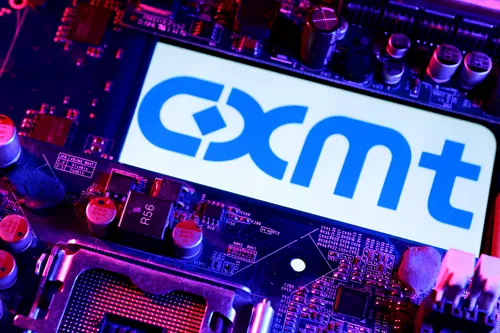
China's CXMT is establishing a NAND flash memory research production line in Beijing, signalling continued investment in semiconductor manufacturing capabilities. This development is relevant to tech supply chain observers and companies monitoring chip production trends in the region, though the direct impact on Thai SMEs remains indirect unless they're suppliers or partners in the semiconductor ecosystem.

 Stop running your company on Excel.