
Archive
August 3, 2026
▾ Hover for summary ▾ Tap for summary
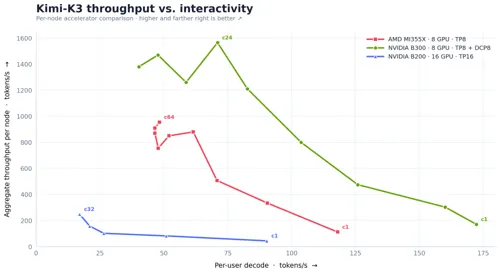
Wafer.ai benchmarked open-source LLM Kimi K3 on AMD MI355X GPUs, finding cost advantages (2.5$/GPU/hr vs NVIDIA B300 at 6$/GPU/hr) but notable performance gaps. ROCm compatibility issues require workarounds (e.g., PyTorch function rewrites, attention head padding), resulting in 118 tokens/s decode rate versus B300's 172 tokens/s. AMD's value proposition is primarily cost-based for price-sensitive AI infrastructure projects.

▾ Hover for summary ▾ Tap for summary
Panasonic is reallocating capital from TV manufacturing to air conditioning, closing its Malaysia TV factory by March 2027 and 4x-scaling AC production capacity in India by 2028 through a ~700M baht investment. The shift reflects broader industry consolidation (outsourcing low-margin consumer electronics to Chinese partners like TCL) and focus on higher-growth markets with low AC penetration. Thailand SMEs in electronics assembly, component supply, or logistics should monitor supply chain reorientation in Southeast Asia and India.

▾ Hover for summary ▾ Tap for summary
Panasonic is restructuring its appliance portfolio: expanding AC manufacturing in India (4x capacity by 2028, targeting 8% market share) while exiting TV production by closing its Malaysia factory in September 2026. The company is outsourcing mass-market TVs to Chinese partners like TCL and Skyworth, retaining only Taiwan production for local markets. This reflects broader industry consolidation where Japanese manufacturers cede low-margin TV business to Chinese competitors while doubling down on higher-margin categories like climate control.
▾ Hover for summary ▾ Tap for summary
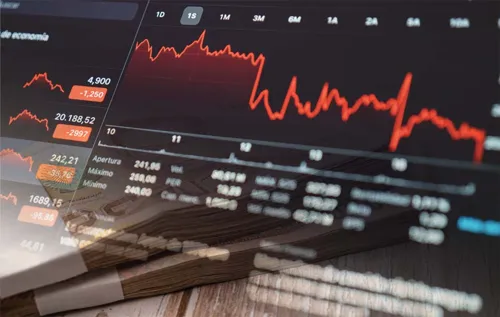
Thailand faces stagflation risk as global oil prices spike 40% due to renewed US-Iran tensions and Ukraine-Russia conflict, threatening to push inflation to 2.4–3.3% in 2026 while growth stalls. The government must urgently expand exports, stimulate domestic investment, and support household purchasing power to navigate energy cost shocks and a record trade deficit (1.4 billion USD in Q2 alone).

 Empower businesses to thrive in the digital age.

▾ Hover for summary ▾ Tap for summary
Naver has secured major funding from Nvidia and Brookfield to build AI factories with gigawatt-scale infrastructure. This represents significant capital commitment to large-scale AI compute capacity, likely positioning Naver as a major player in cloud AI services across Asia. For Thai SMEs, this signals growing competition in AI infrastructure and potential new options for accessing high-performance computing services.
▾ Hover for summary ▾ Tap for summary
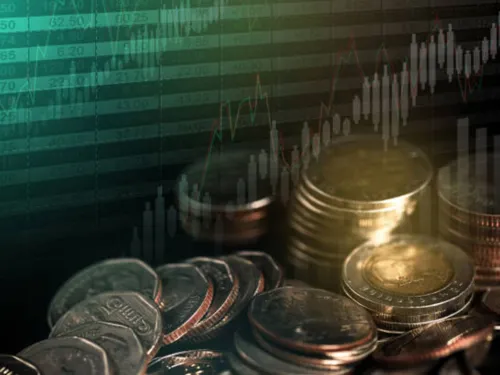
Thai baht opened strong at 33.32 baht/USD on August 3, 2026, strengthening from Friday's 33.40 close. The move follows weakening of the US dollar against the yen after US Treasury intervention and Bank of Japan currency support, combined with the Fed's hold on interest rates raising inflation control concerns. WTI and Brent crude fell 4% after Trump postponed Iran strikes. Key factors to watch: Thai July inflation data, geopolitical risk, foreign fund flows, and US economic indicators (jobs, ISM/PMI, China export figures).

▾ Hover for summary ▾ Tap for summary
The article explores memory as an emerging critical frontier in AI development and competition. As AI systems become more sophisticated, efficient memory architecture and management are increasingly becoming key differentiators between AI providers—similar to how compute power and training data have been previous battlegrounds. This matters for SMEs building AI applications, as memory efficiency directly impacts inference costs, latency, and scalability of AI solutions.
▾ Hover for summary ▾ Tap for summary
China's manufacturing expansion hit a 4-month low in July, signaling potential weakening demand that could affect Thai export-dependent SMEs and supply chains.
 Your real translator for LINE and Discord.

▾ Hover for summary ▾ Tap for summary
Thailand's Deputy PM Ekanat downplays concerns over private sector slowdown in data center investment, attributing it to legal framework gaps rather than market weakness. The government is forming a new task force to close regulatory loopholes and will present updated BOI strategy to Cabinet on Aug 4. This signals urgent clarification of data center incentives and governance rules—critical for SMEs and tech firms seeking compliance certainty in this emerging sector.
▾ Hover for summary ▾ Tap for summary
Thailand's Thais Help Thais Plus (60/40) stimulus programme has circulated THB86.4 billion in its first two months, reaching 26 million consumers and 1.19 million merchants—primarily physical retailers. The government highlights AI integration in the Tung Ngern app for SME business analytics and urges participants to utilise remaining entitlements before the September 30, 2026 deadline. This provides concrete evidence of cash injection effectiveness in supporting grassroots commerce and digital payment adoption.

▾ Hover for summary ▾ Tap for summary
TikTok Shop faces operational decisions around logistics partnerships in Indonesia, balancing speed, cost, and coverage. Relevant for Thai SMEs considering cross-border or regional expansion via social commerce platforms, as similar trade-offs apply across Southeast Asia.
▾ Hover for summary ▾ Tap for summary
Bangkok's riverside is undergoing a major second wave of investment with major corporations like Asset World Corp (controlled by Charoen Sirivadhanabhakdi) expanding luxury mixed-use developments. AWC is investing 12 billion baht to expand Asiatique from 40,000 to 224,000 sq m, opening a 16,000 sq m Blue Dome zone in Q4 2026 and Avatar-themed attraction in 2027. Recent projects include Jurassic World (1.2B baht, Aug 2025) and Skyflyers aerial ride (2B baht, Nov 2025). This aligns with Thailand's Chao Phraya River Vision Master Plan to establish the area as an international tourism destination, following successful Iconsiam development.

 Want to buy or sell a business?
▾ Hover for summary ▾ Tap for summary
Only 5 million of 12 million Thai income tax filers actually pay tax, with an estimated 21–22 million workers entirely outside the formal tax system. The core issue is not evasion but subsistence-level incomes (below 150,000 baht/year threshold) and weak perceived returns on tax paid. Thai policymakers debate sequencing: whether to raise incomes first (to organically expand the tax base) or formalize the 21 million workers now. Nordic comparisons show high compliance rates correlate with high wage floors and visible social returns, not just high tax rates.

▾ Hover for summary ▾ Tap for summary
A regional tech ecosystem report covering Southeast Asia. While the title suggests broad market insights relevant to SMEs and tech players, the article content is inaccessible (requires JavaScript), preventing verification of specific data, trends, or actionable intelligence. Potentially valuable for market context but utility is limited without readable content.
August 2, 2026
▾ Hover for summary ▾ Tap for summary
Toyota faces a fifth consecutive profit decline amid earthquake disruption in Japan, signaling supply chain and production challenges that could affect regional automotive suppliers.

▾ Hover for summary ▾ Tap for summary
Thailand's property market downturn is creating diverging strategies: residential developers are pulling back, reducing inventory, and preserving cash flow, while brokers and private equity investors are actively seeking discounted assets. The market is shifting from supply-led competition to demand-driven, with developers now more selective about new launches and focused on operational efficiency rather than expansion. This structural change reflects weak consumer confidence despite modest GDP growth, elevated household debt, and strict lending standards that continue to delay buyer decisions.
 Together GoWeGo! Ferry tickets in Thailand.
▾ Hover for summary ▾ Tap for summary
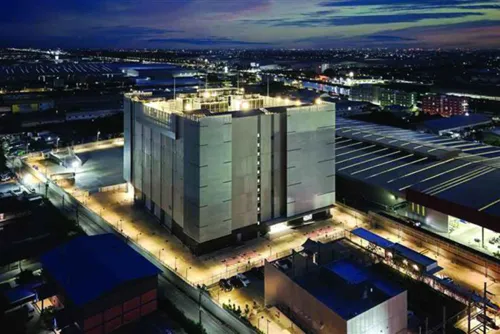
Thailand's data centre market faces a critical infrastructure bottleneck: while overseas investor interest remains steady (hyperscalers from Singapore, China, US, Europe), power capacity is the primary constraint—many investors need up to 500MW but face queues for allocations and grid capacity limits. Savills reports 10 active inquiries with 4-5 projects advancing; deals expected H2 2026. Land prices are secondary; developers now prioritize reliable electricity, water, telecom infrastructure, and flood resilience. EEC (Chon Buri/Rayong) leads due to industrial zones' fibre-optic backbone.
▾ Hover for summary ▾ Tap for summary
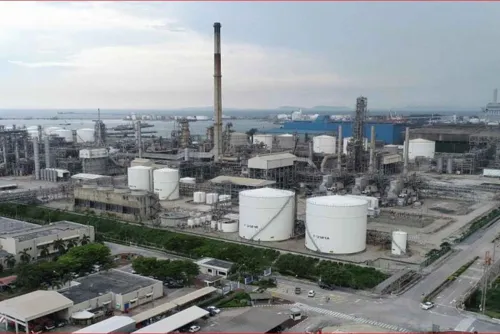
Thailand's six refineries are secure through August and beyond despite Middle East tensions, having already diversified crude sources away from the region (reduced from 58% to 30% of imports). Key players like PTT Group, Bangchak, and Star Petroleum now source from Fujairah, UAE, Malaysia, Australia, and alternative routes (Cape of Good Hope), mitigating supply-chain risks. European financing restrictions prevent Russian oil purchases. Actionable for energy-dependent SMEs: supply stability is confirmed, but watch geopolitical escalation that could affect Red Sea logistics.
▾ Hover for summary ▾ Tap for summary
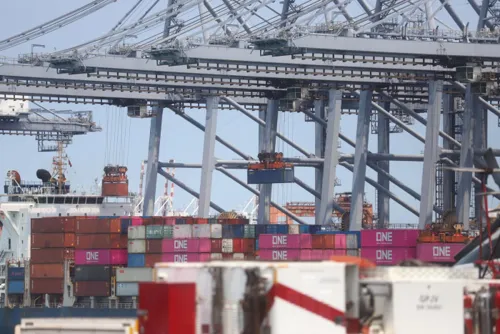
Thailand's widening trade deficit—driven primarily by imports of machinery, electronics, and raw materials—signals economic transformation rather than deterioration. The Federation of Thai Industries advocates for stricter quality controls on imports (especially through e-commerce), greater local content requirements in foreign investment, and technology transfers to strengthen domestic manufacturing. The challenge remains: high-tech assembly relies on foreign components, and energy imports are essential, limiting near-term import reduction options.
▾ Hover for summary ▾ Tap for summary
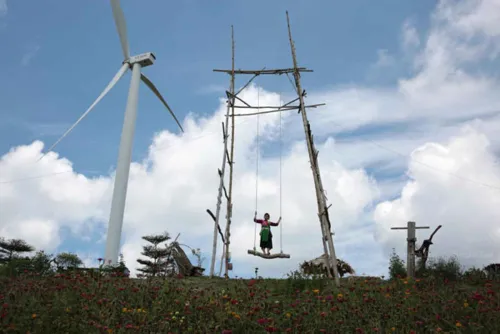
Thailand's Deputy PM announced a government review of long-term power purchase agreements (PPAs) to reduce electricity costs, with negotiations authorized to proceed without further cabinet approval. The current average purchase price is ~2.16 baht/unit; reviews will examine whether prices reflect actual production costs, availability payments, and align with international standards. This is critical for SME competitiveness, as high electricity costs threaten Thailand's ability to attract investment and compete with neighboring countries offering lower energy prices and labour costs.

 Stop running your company on Excel.