
Archive
August 2, 2026
▾ Hover for summary ▾ Tap for summary
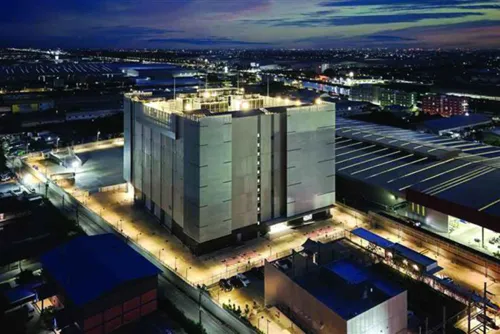
Thailand's data centre market faces a critical infrastructure bottleneck: while overseas investor interest remains steady (hyperscalers from Singapore, China, US, Europe), power capacity is the primary constraint—many investors need up to 500MW but face queues for allocations and grid capacity limits. Savills reports 10 active inquiries with 4-5 projects advancing; deals expected H2 2026. Land prices are secondary; developers now prioritize reliable electricity, water, telecom infrastructure, and flood resilience. EEC (Chon Buri/Rayong) leads due to industrial zones' fibre-optic backbone.
▾ Hover for summary ▾ Tap for summary
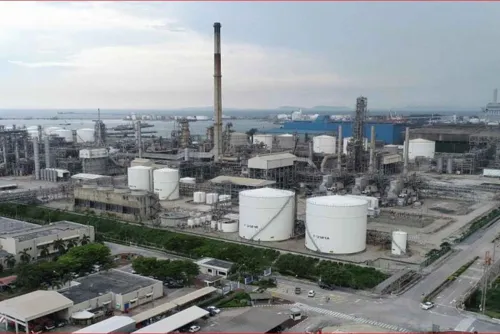
Thailand's six refineries are secure through August and beyond despite Middle East tensions, having already diversified crude sources away from the region (reduced from 58% to 30% of imports). Key players like PTT Group, Bangchak, and Star Petroleum now source from Fujairah, UAE, Malaysia, Australia, and alternative routes (Cape of Good Hope), mitigating supply-chain risks. European financing restrictions prevent Russian oil purchases. Actionable for energy-dependent SMEs: supply stability is confirmed, but watch geopolitical escalation that could affect Red Sea logistics.
▾ Hover for summary ▾ Tap for summary
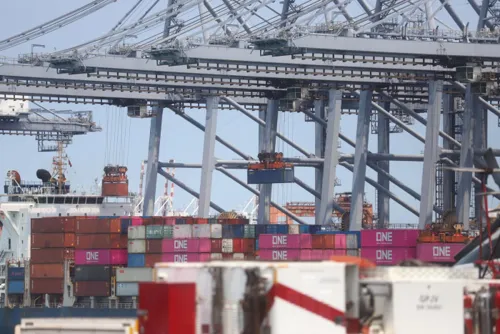
Thailand's widening trade deficit—driven primarily by imports of machinery, electronics, and raw materials—signals economic transformation rather than deterioration. The Federation of Thai Industries advocates for stricter quality controls on imports (especially through e-commerce), greater local content requirements in foreign investment, and technology transfers to strengthen domestic manufacturing. The challenge remains: high-tech assembly relies on foreign components, and energy imports are essential, limiting near-term import reduction options.
▾ Hover for summary ▾ Tap for summary
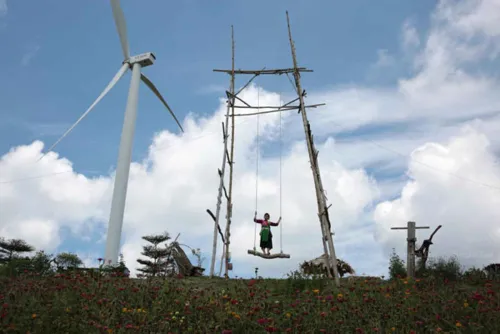
Thailand's Deputy PM announced a government review of long-term power purchase agreements (PPAs) to reduce electricity costs, with negotiations authorized to proceed without further cabinet approval. The current average purchase price is ~2.16 baht/unit; reviews will examine whether prices reflect actual production costs, availability payments, and align with international standards. This is critical for SME competitiveness, as high electricity costs threaten Thailand's ability to attract investment and compete with neighboring countries offering lower energy prices and labour costs.

 Empower businesses to thrive in the digital age.
▾ Hover for summary ▾ Tap for summary
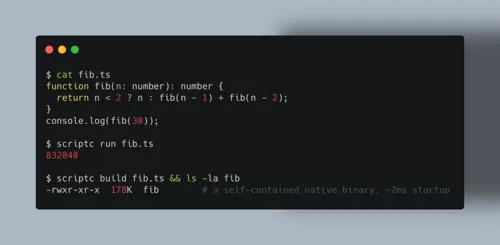
Vercel Labs released scriptc, an experimental TypeScript-to-binary compiler that eliminates runtime dependency, producing tiny binaries (170KB) with 2.4ms startup and 1-4MB RAM footprint. The tool compiles core TypeScript and Node.js APIs natively, but external libraries require --dynamic mode (embedding quickjs-ng runtime, increasing size to 620KB). While notable for developer tooling, this remains a lab project and adoption depends on library ecosystem support.

▾ Hover for summary ▾ Tap for summary
President Trump announced he is halting a new round of strikes on Iran, citing Arab allies' agreement on a 5-month ceasefire framework that includes opening the Strait of Hormuz. The US State Department simultaneously issued a travel warning across the Middle East, advising US citizens to prepare for possible flight cancellations and airspace closures. While Saudi Arabia's Crown Prince reportedly urged restraint to avoid escalation, Iran's Defence Minister dismissed the announcement as unsurprising and maintained vigilance against US threats.

▾ Hover for summary ▾ Tap for summary
DeepSeek is building a 1-gigawatt AI data center in Inner Mongolia's Ulanqab, positioning it as a major competitive move against U.S. tech leaders. The project reflects China's growing capital capacity and technological ambition in AI infrastructure; operations expected by late 2027/early 2028. While China still lags far behind U.S. players (OpenAI/Anthropic building 3–5 GW centers), this signals intensifying competition across technology, funding, and geopolitics—with Chinese AI services notably cheaper (10x+ cost advantage), pressuring Western business models.
▾ Hover for summary ▾ Tap for summary
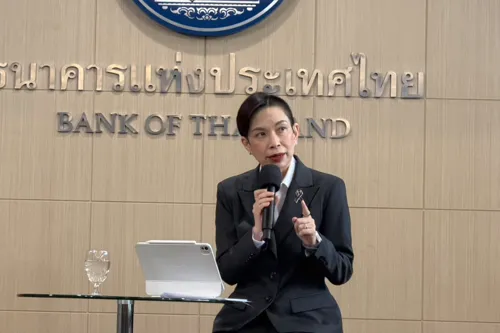
Thailand's Q2 2026 economy slowed due to Middle East conflicts, reducing tourism and raising energy costs, though technology exports grew 7.4% and imports surged 21.5% (mainly crude oil stockpiling). Private consumption fell from rising cost of living, but government stimulus programmes and a global electronics recovery cycle provided partial support. Q3 growth expected to remain uneven, concentrated in tech exports, while tourism recovery remains uncertain and household living costs and business expenses continue pressuring discretionary spending.
 Your real translator for LINE and Discord.

▾ Hover for summary ▾ Tap for summary
A thoughtful column examining the shift in career ambition among modern workers, distinguishing between burnout (emptied energy) and loss of purpose (doubt about career growth's worth). The article argues that today's talented employees increasingly question whether advancement is worth sacrificing personal identity, health, and meaningful relationships. It calls for organizations to redesign growth paths around four dimensions: personal safety, sustainability, meaning, and flexibility—requiring authentic coaching conversations rather than pressure, to help employees reconnect growth with their own values and life vision.
▾ Hover for summary ▾ Tap for summary
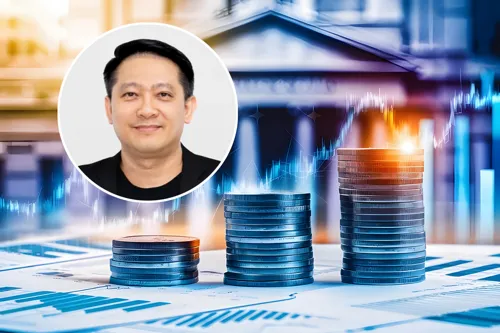
Thai commercial banks are expected to maintain dividend yields around 5.7% in 2026 despite mixed profit trends, with analysts forecasting SCB (6.8% yield), KKP (6.3%), and TISCO (6%) as strongest payers. BBL is expected to maintain prior-year dividends at 10 baht/share despite profit declines. Capital market revenue volatility in H2 will be the key profit driver, while NIM stabilization and modest credit growth are anticipated for the second half.

▾ Hover for summary ▾ Tap for summary
Thailand's transport ministry is preparing a 44.1 billion baht dual-track railway project connecting Jira to Ubon Ratchathani (308 km, 34 stations across 4 provinces) for cabinet approval, targeting construction start in 2571 (2028) with completion by 2575 (2032). The project aims to improve logistics efficiency, reduce transport costs, and support long-term economic development in lower Northeast Thailand by creating seamless connectivity between rail and public transport networks.
▾ Hover for summary ▾ Tap for summary
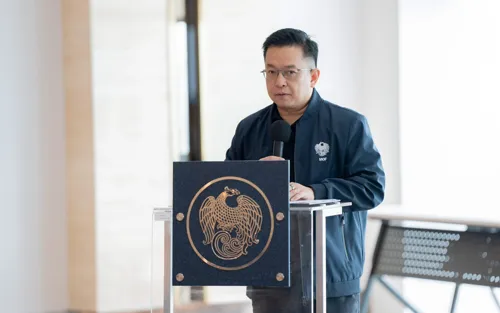
Over 800,000 Thai welfare card recipients have not completed electronic identity verification (e-KYC) as of mid-2026. The Interior Ministry is deploying verification equipment to complete the process, with full enrollment expected by October 1. The Finance Ministry also flagged concerning patterns: over 3 million new beneficiaries, many unemployed or struggling despite five years of enrollment; fraud incidents where people unknowingly opened trading accounts; and calls for better targeting and personalized welfare design. Energy transition project details expected in August.

 Want to buy or sell a business?
▾ Hover for summary ▾ Tap for summary
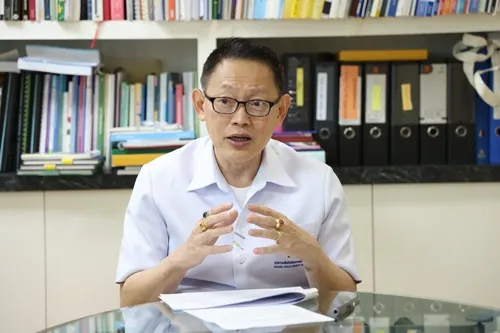
Thailand's National Health Security Office (NHSO) Secretary-General warns against co-payment models for gold card (universal healthcare) services, citing concerns for financially vulnerable populations. The NHSO allocates budgets based on service demand rather than hospitals' deficit claims, but officials caution that increased out-of-pocket costs could revert citizens to pre-gold-card uncertainty about medical expenses. This directly impacts healthcare affordability policy for SMEs and small businesses funding employee benefits.

▾ Hover for summary ▾ Tap for summary
CC DOUBLE O, Thailand's casual basics apparel brand, appoints actor Nadech Kugimiya as its first-ever brand presenter in 20 years, launching the "THE NEW BASIC" campaign to revitalize its signature product line (50% of revenue) featuring the iconic bird logo. The move reflects shifting consumer behavior toward quality basics over trend-chasing, with McKinsey data showing 51% of consumers prioritize quality and long-term value. At 290–1,990 baht price point, CC DOUBLE O captures the fast-growing "accessible premium" segment—a sweet spot between fast fashion and luxury. The brand also enlists fashion icon Pat Chanyanis to modernize its image for younger audiences.

▾ Hover for summary ▾ Tap for summary
Thailand's first government savings bond offering (OmPlus) sold out in just 21 seconds, with 2 billion baht across 3-year (1.8% yield) and 10-year (2.8% yield) tranches. Deputy PM/Finance Minister Ekniti cites strong public demand and confidence in government securities. The next round opens August 3–5 via Bond Connect with 2 billion baht allocation, using a "small lot first" priority system to ensure retail access starting at 1,000 baht minimum. Monthly issuances planned going forward.
▾ Hover for summary ▾ Tap for summary
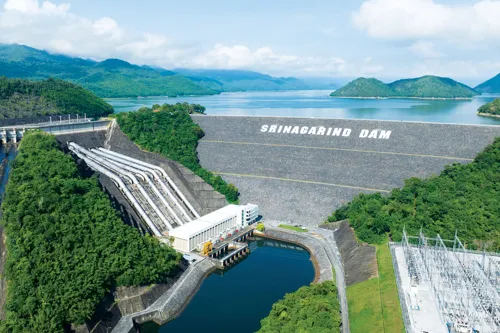
Thailand's Royal Irrigation Department faces budget and staffing constraints in managing complex water resources, but is accelerating the Chai Nat–Bang Thai floodway project to sustainably reduce Chao Phraya flooding. The department is partnering with universities and vocational institutions for data collection, while also pursuing infrastructure upgrades and early-warning systems. The floodway would divert approximately 900 cubic meters per second away from critical flood zones in three provinces.
 Together GoWeGo! Ferry tickets in Thailand.
▾ Hover for summary ▾ Tap for summary
Thailand's Department of National Parks launched 10 "Khon Doen Pa" (forest hikers) schools at national parks to train conservation-focused hiking instructors and educate visitors on responsible forest tourism. With over 10 million annual national park visitors generating 1,000+ tonnes of waste and ecosystem damage, the program shifts from reactive to preventive education using Leave No Trace principles. This supports Thailand's ecotourism growth while addressing sustainability challenges and raising nature-tourism standards.

▾ Hover for summary ▾ Tap for summary
Thailand's Department of Land Transport proposed banning combustion-engine tuk-tuks from central Bangkok and royal zones, favoring electric vehicles (EVs). However, the article argues most Bangkok tuk-tuks already run on LPG with minimal air pollution, while over 85% of drivers carry debt from COVID-era losses and lack capital for EV transition. Key concerns: insufficient state subsidies, unrealistic timelines, and that the ban threatens drivers' livelihoods without addressing root causes. The article also highlights tuk-tuks' cultural value to Thailand's tourism soft power.
▾ Hover for summary ▾ Tap for summary
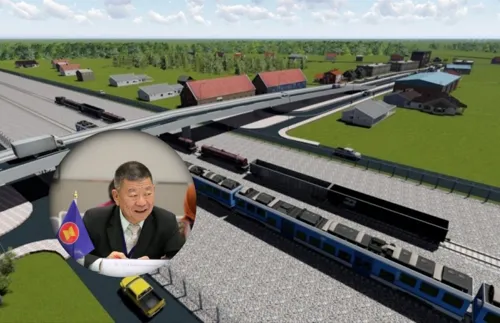
A leading logistics expert (U Chiaryuenyongpong, former ASEAN Trucking Federation chair) publicly warns that the Thailand-China Phase 2 high-speed railway project (Korat–Nong Khai, ฿347B budget) lacks a critical bridge crossing the Mekong River to Vientiane, rendering the entire ฿500B total investment ineffective. Without this bridge, passengers and freight must transfer to trucks at Nong Khai, negating "seamless" connectivity and practical ROI. The government has yet to authorize or budget for this essential connector, and the project risks becoming a sunk cost if completed without it.
▾ Hover for summary ▾ Tap for summary
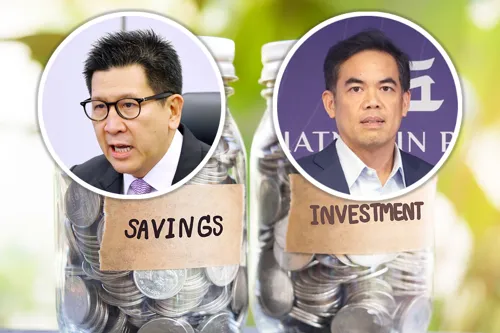
Thailand's Finance Ministry is revising the TISA (Tax-Incentivized Savings Account) program, reducing the annual tax deduction ceiling from 800,000 baht to 600,000 baht and eliminating the income-tiered multiplier system (1.3x for earners below 1.5M baht; 0.7x for those above). The goal is to redirect capital flows from savings accounts to capital markets (stocks, bonds, mutual funds) while simplifying administration, though economists debate whether the flat structure fairly balances incentives between middle-income and high-income earners. Decision expected before September 2026.

 Stop running your company on Excel.