
Archive
August 3, 2026
▾ Hover for summary ▾ Tap for summary
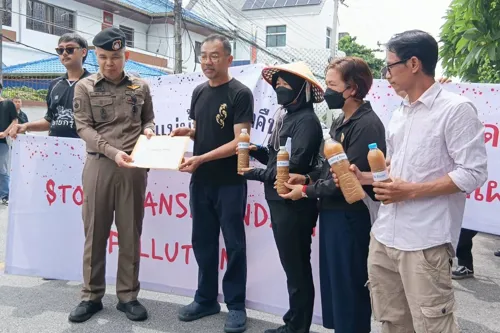
Civil society groups in the Kok-Sai-Ruak-Mekong river basin delivered a formal statement to Myanmar's military government demanding urgent action on heavy metal pollution from mining operations flowing across the Thailand border. Key concerns: a proposed bilateral TOR (Terms of Reference) between Thailand and Myanmar risks weakening water-quality monitoring standards, cutting ties with international bodies like MRC, and classifying water-test data as confidential. The network calls for Thailand to (1) immediately halt TOR signing, and (2) impose a full embargo on ore imports from Myanmar as leverage. Meanwhile, communities face acute health impacts—authorities have warned against eating Mekong shrimp, shellfish and fish—and water utilities in Chiang Rai have budgeted ~2 billion baht for alternative water sources because Kok River contamination is now critical. Local residents already pay water costs 16× higher than urban rates.

▾ Hover for summary ▾ Tap for summary
A Bank of Thailand economist examines how AI is reshaping labor and finance across two critical dimensions: (1) criminal exploitation—scam networks using AI deepfakes, real-time face-swapping, and job scams to target vulnerable workers, with regional fraud operations generating $40 billion annually; and (2) AI-enabled opportunity—evidence shows AI assistants boost productivity 15% on average (36% for low-skilled workers), suggesting AI will reshape rather than eliminate jobs. The article argues that financial institutions must integrate labor rights into ESG lending criteria and collaborate with civil society to identify trafficking victims and block money laundering, while preparing workers for skill transitions in the AI economy.

▾ Hover for summary ▾ Tap for summary
Thai Union Group (TU) delivered strong Q2 2026 results with record gross profit margin of 21.4%, driven by robust demand in processed seafood and pet food segments. The company raised full-year revenue growth guidance to 4–6% (from 3–4%) and gross margin target to 19.5–20.5% (from 19–20%), while approving an interim dividend of 0.40 baht/share, up 14.3% YoY. Debt-to-equity improved to 1.15x. The weak baht (above 33/USD since June) is expected to provide a tailwind to export revenue and FX conversions.
▾ Hover for summary ▾ Tap for summary
LINE is shutting down its VOOM social media service in Thailand on September 28, with all user-generated content permanently deleted. Users must back up content by that date through a computer-based function available since July 1. The closure stems from LINE's resource consolidation following market changes; followers can migrate by adding accounts as friends before shutdown, though this only works for official accounts.

 Empower businesses to thrive in the digital age.

▾ Hover for summary ▾ Tap for summary
Barbecue Plaza is expanding from a grilled meat restaurant chain into an experiential lifestyle brand, launching "BAR B GON PLANET GARDEN"—a multi-zone event at SAMA Garden featuring themed zones combining nature, art, dining, and family activities. The strategy reflects a shift toward memorable consumer experiences rather than product-only offerings, with exclusive menu items and family-friendly installations designed to drive brand loyalty and repeat annual visits.

▾ Hover for summary ▾ Tap for summary
Thailand Convention & Exhibition Bureau (TCEB) is positioning Ubon Ratchathani as the Northeast's 4th major MICE destination through a familiarization trip that showcases the province's cultural heritage (notably the internationally-awarded Candle Festival) as integrated business experiences. The initiative brings together 15+ buyer and supplier organizations to build a unified market offering—merging conferences, incentive travel, and festivals into commercial packages for corporate clients.

▾ Hover for summary ▾ Tap for summary
AIS Business and Huawei Cloud signed an MOU to transform Thailand's manufacturing sector through end-to-end digital infrastructure combining 5G Private Networks, Cloud AI processing, and industrial AI applications. The partnership targets smart manufacturing with six use cases: AI-powered quality inspection, predictive maintenance, connected robotics, real-time factory monitoring, production line optimization, and industrial data platforms. This addresses a critical gap for Thai SMEs—manufacturing represents 25% of GDP yet requires modernization to remain globally competitive.
▾ Hover for summary ▾ Tap for summary
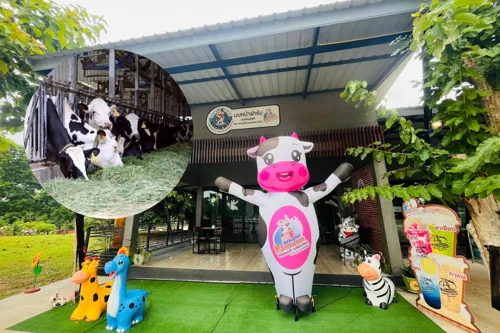
Thai dairy cooperatives are shifting from raw milk collection to branded product manufacturing and processing, moving upmarket to compete with major brands like CanMilk and Ironhat Dairy. This addresses structural pressures in the sector—excess raw milk, rising feed costs, and intense brand competition—by enabling value addition and direct consumer access. The trend reflects SME adaptation and potential for premium positioning in Thailand's dairy market.
 Your real translator for LINE and Discord.
▾ Hover for summary ▾ Tap for summary
Bangkok is investing 1+ billion baht (~$29M) in a 300-metre pedestrian-bicycle bridge across the Chao Phraya River, linking Songwat and Khlong San districts by 2030. The project prioritizes green mobility and multi-modal transit integration (MRT Silver Line, Purple Line extension, ferries) while preserving riverside communities and supporting grassroots commerce. Design work is underway; construction begins 2028. Reflects a shift toward human-centric, sustainable urban planning.
▾ Hover for summary ▾ Tap for summary
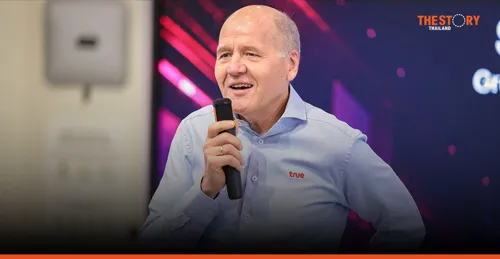
True Corporation's internship program delivered five AI-powered business solutions from student teams, with the champion project being "Cool Kit Khu Kit," an AI assistant automating restaurant operations including inventory, scheduling, and demand forecasting. The initiative demonstrates how major Thai telcos are investing in AI talent development and practical innovation labs that bridge academia and industry—relevant for SMEs seeking AI integration guidance and workforce trends in Thailand's tech ecosystem.

▾ Hover for summary ▾ Tap for summary
True Corporation's 8-week Alpha Internship Program 2026 culminated in a final pitch day where 5 student teams presented AI and digital solutions to real business problems. The winning project, "Cool Kit," is an AI assistant for small restaurant operators that consolidates POS and LINE data to manage procurement, inventory, staffing, and demand forecasting. The program reflects Thailand's corporate efforts to bridge talent development and innovation, directly addressing SME needs in retail and hospitality sectors through practical AI application.
▾ Hover for summary ▾ Tap for summary
Alibaba has launched its Qwen3.8-Max AI model on a global scale. This represents a strategic push by a major Chinese tech player to expand AI capabilities and compete in the international market. Relevant for tech-focused SMEs evaluating AI platforms and cloud infrastructure providers.

 Want to buy or sell a business?

▾ Hover for summary ▾ Tap for summary
CLICX Bank, Thailand's first virtual bank, launched a new instant loan product (up to 1 million baht at 13–25% annual interest) with quick 5-minute approval. However, since launch on August 1, social media chatter emerged about borrowers potentially defaulting deliberately. The CEO confirmed preparatory countermeasures are already in place, though specific details remain undisclosed. This is relevant to Thailand's fintech ecosystem and SME lending landscape.
▾ Hover for summary ▾ Tap for summary
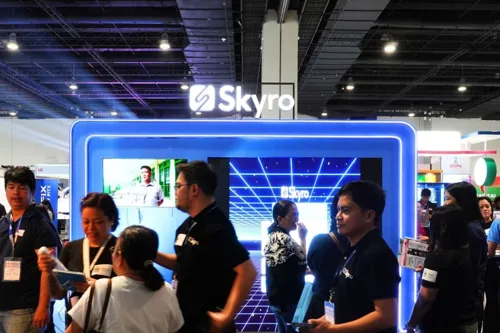
A Philippine fintech company Skyro has achieved profitability for the first time in H1, signaling potential sustainability in the Southeast Asian fintech sector. This milestone is relevant for tracking emerging fintech players in the region and their path to viability.
▾ Hover for summary ▾ Tap for summary
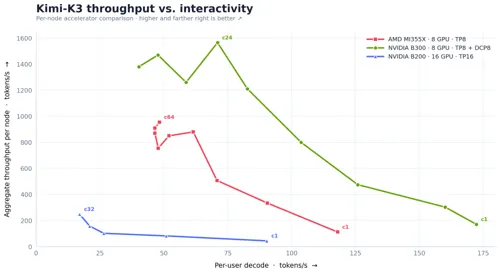
Wafer.ai benchmarked open-source LLM Kimi K3 on AMD MI355X GPUs, finding cost advantages (2.5$/GPU/hr vs NVIDIA B300 at 6$/GPU/hr) but notable performance gaps. ROCm compatibility issues require workarounds (e.g., PyTorch function rewrites, attention head padding), resulting in 118 tokens/s decode rate versus B300's 172 tokens/s. AMD's value proposition is primarily cost-based for price-sensitive AI infrastructure projects.

▾ Hover for summary ▾ Tap for summary
Panasonic is reallocating capital from TV manufacturing to air conditioning, closing its Malaysia TV factory by March 2027 and 4x-scaling AC production capacity in India by 2028 through a ~700M baht investment. The shift reflects broader industry consolidation (outsourcing low-margin consumer electronics to Chinese partners like TCL) and focus on higher-growth markets with low AC penetration. Thailand SMEs in electronics assembly, component supply, or logistics should monitor supply chain reorientation in Southeast Asia and India.
 Together GoWeGo! Ferry tickets in Thailand.

▾ Hover for summary ▾ Tap for summary
Panasonic is restructuring its appliance portfolio: expanding AC manufacturing in India (4x capacity by 2028, targeting 8% market share) while exiting TV production by closing its Malaysia factory in September 2026. The company is outsourcing mass-market TVs to Chinese partners like TCL and Skyworth, retaining only Taiwan production for local markets. This reflects broader industry consolidation where Japanese manufacturers cede low-margin TV business to Chinese competitors while doubling down on higher-margin categories like climate control.

▾ Hover for summary ▾ Tap for summary
Thailand faces stagflation risk as global oil prices spike 40% due to renewed US-Iran tensions and Ukraine-Russia conflict, threatening to push inflation to 2.4–3.3% in 2026 while growth stalls. The government must urgently expand exports, stimulate domestic investment, and support household purchasing power to navigate energy cost shocks and a record trade deficit (1.4 billion USD in Q2 alone).

▾ Hover for summary ▾ Tap for summary
Naver has secured major funding from Nvidia and Brookfield to build AI factories with gigawatt-scale infrastructure. This represents significant capital commitment to large-scale AI compute capacity, likely positioning Naver as a major player in cloud AI services across Asia. For Thai SMEs, this signals growing competition in AI infrastructure and potential new options for accessing high-performance computing services.

▾ Hover for summary ▾ Tap for summary
Thai baht opened strong at 33.32 baht/USD on August 3, 2026, strengthening from Friday's 33.40 close. The move follows weakening of the US dollar against the yen after US Treasury intervention and Bank of Japan currency support, combined with the Fed's hold on interest rates raising inflation control concerns. WTI and Brent crude fell 4% after Trump postponed Iran strikes. Key factors to watch: Thai July inflation data, geopolitical risk, foreign fund flows, and US economic indicators (jobs, ISM/PMI, China export figures).

 Stop running your company on Excel.