
Archive
August 9, 2026
▾ Hover for summary ▾ Tap for summary
Chulalongkorn University architecture researchers have published design guidelines for schools to reduce casualties from active shooter or terrorist incidents. The approach emphasizes delaying attackers through perimeter design (difficult fencing, landscaping obstacles) and interior safety systems—both active (emergency exits, rappel ropes, lockable rooms) and passive (double walls, ceiling hideouts, zigzag corridors to obstruct sightlines). The team also recommends embedding active-shooter drills into school curricula alongside fire drills and implementing mental health safeguards against bullying.

▾ Hover for summary ▾ Tap for summary
Thailand's opposition Democratic Party coalition plans to file a no-confidence motion against the government in late August, targeting corruption cases including alleged Senate manipulation fraud, local exam cheating, and the TH-AI passport scheme — all tied to Cabinet members. The opposition claims this move won't waste their annual quota and will include multiple grounds for dismissal drawn from party MPs' compiled evidence.

▾ Hover for summary ▾ Tap for summary
PM Anutin confirmed the land bridge megaproject (1 trillion baht) remains on hold as it's not yet economically viable, but the government is advancing "Missing Link" transportation infrastructure to connect the Andaman side with the Gulf of Thailand, particularly through Ranong port expansion. The strategy aims to eventually create alternative trade routes bypassing Bangkok, linking Europe-to-Southern Thailand to China and India/Middle East markets. While current cargo volumes don't justify mega-infrastructure yet, the government is laying groundwork for future expansion if demand materializes and local support holds.

▾ Hover for summary ▾ Tap for summary
Allianz Ayutthaya, funded by parent company Allianz SE (€200,000), has transitioned from emergency relief to proactive flood resilience in Hatyai, impacted by a severe 100-200 year flood event last year. Recent initiatives include repairing 33 communities, rebuilding schools (300+ students), upgrading hospital infrastructure, conducting "Hug Heartyai" community preparedness training with 100 children in water survival skills, expanding water-level monitoring cameras from 10 to 70+ units, and integrating rainfall/forecast data to provide color-coded flood warnings. The strategy shifts focus from reactive recovery to preventive education and early-warning systems ahead of the upcoming monsoon season.

 Empower businesses to thrive in the digital age.

▾ Hover for summary ▾ Tap for summary
China has overtaken the US as the world's largest R&D spender in 2024 (615 billion USD vs 613 billion USD), driven by 13% growth in corporate tech investment—particularly semiconductors, electronics, and optics. China also leads in research citation impact. This shift reflects intensifying tech competition, with US export restrictions on advanced chips (2022) accelerating China's push for indigenous semiconductor independence. For Thai SMEs, this signals accelerating global tech innovation competition and potential supply chain realignments.

▾ Hover for summary ▾ Tap for summary
Thailand's wellness economy currently represents 7.6% of GDP but only 0.6% of global wellness GDP, presenting significant growth potential. The Thai Tourism Board is pivoting from volume-driven mass tourism toward high-value wellness tourism, emphasizing quality visitors with longer stays and dispersed community benefit. Five key economy drivers—Life Economy (health tourism), Sub-Culture Economy, Night Economy, Circular Economy, and Platform Economy—are being prioritized. Thailand's wellness market was valued at $42.7 billion in 2024 (ranked 24th globally) with 10.1% YoY growth, outpacing the global 7.9%, and is projected to remain a high-growth sector through 2029. The government is establishing Thailand Wellness Valley to position the country as a global wellness destination.
▾ Hover for summary ▾ Tap for summary
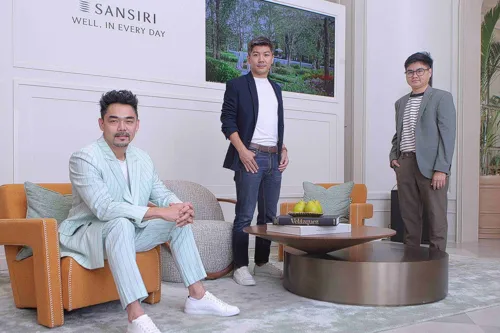
Sansiri, a major Thai real estate developer, is shifting focus from building houses to building lifestyle and living experiences through its "Sansiri WELL, IN EVERY DAY" concept. The strategy emphasizes well-being design grounded in research—incorporating nature exposure (backed by Harvard studies showing 12% mortality reduction), responsive architecture, and community ecosystem design with shared spaces like co-creative lounges, running tracks, and pet parks. New projects including Sansiri Wellscape Krungthep Kreetha and Borasiri Well showcase this philosophy of prioritizing quality of life over luxury, with air filtration, non-toxic materials, and natural light/sound design. This repositioning signals a market shift toward wellness-focused property development in Thailand.
▾ Hover for summary ▾ Tap for summary
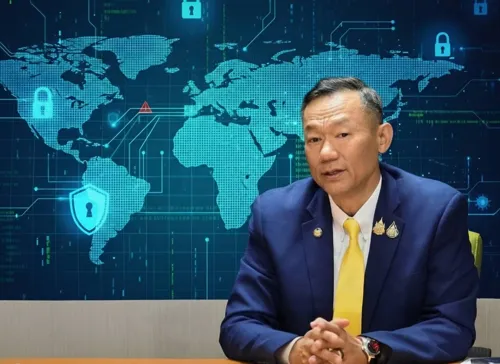
Thailand's National Cybersecurity Committee (สกมช.) has ordered 20 government ministries to remediate 24,000+ legacy systems dating from 2011 onwards that lack modern security standards. The directive mandates adoption of multi-factor authentication (MFA) instead of single-factor passwords, while discouraging reliance on ThaiD alone due to scalability constraints. The committee found evidence of credential compromise (leaked passwords) but no large-scale data breaches yet. This addresses systemic cyber hygiene gaps in state IT infrastructure built before the 2019 Cybersecurity Act.
 Your real translator for LINE and Discord.
▾ Hover for summary ▾ Tap for summary
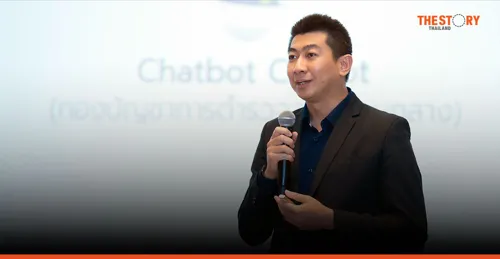
Thailand's NECTEC and Office of Public Sector Development Commission have unveiled a prototype "Agentic AI Chatbot" that consolidates fragmented government service chatbots into a single unified interface. Citizens can ask questions in natural Thai language through a central web portal; the system analyzes queries, breaks them into sub-questions, queries relevant agencies via API, aggregates responses, and returns synthesized answers with source attribution. The system integrates five pilot agencies (Department of Rights Protection & Liberty, Department of Lands, FDA, Department of Interior, Revenue Department) and powered by "Pathumma LLM" (a large Thai language model) with security guardrails to protect personal data. This directly addresses public frustration with navigating separate agency chatbots and represents a significant shift from passive chatbots to truly intelligent, cross-agency service orchestration.

▾ Hover for summary ▾ Tap for summary
Siriraj Hospital completed a five-year digital transformation (2020–2026) to become ASEAN's first 5G Smart Hospital, deploying a multi-layered architecture spanning private 5G networks, edge computing, hybrid cloud, and AI-driven clinical systems. The initiative addressed COVID-era operational bottlenecks—physical handling of medical supplies and data fragmentation—through modules including Smart EMS (real-time paramedic streaming), Smart ER (AI triage), and AI pathology systems. The phased, modular rollout minimized patient-safety risk and avoided vendor lock-in, making it a significant case study in healthcare digital transformation for large legacy institutions.
▾ Hover for summary ▾ Tap for summary
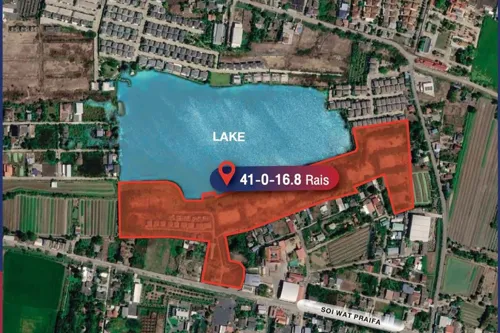
Two major Thai real-estate developers—Perfect Property (PF) and Grand Asset Hotels & Property (GRAND)—are liquidating premium-location assets worth ~10 billion baht to manage mounting debt and negative cash flow. GRAND reported a net loss of 1.54 billion baht in 2025, with Q1 2026 losses continuing at 230 million baht. Both firms are deferring bond payments pending asset-sale proceeds; management expects to clear debts over 3 years (2026–2028). Sales slowdown is at 40-year lows. The article signals broader distress in Thailand's property sector and hints at industry-wide asset fire sales.

▾ Hover for summary ▾ Tap for summary
Iran has set strict preconditions for reopening the Strait of Hormuz, including war reparations and an end to sanctions, following its blockade since February. The closure of this critical global shipping route—through which a significant portion of world oil transits—poses major supply-chain and inflation risks for Thailand's energy-dependent economy. While Oman-mediated talks show progress, Iranian attacks on vessels continue, keeping transit costs elevated and supply uncertainty high for Thai importers and energy consumers.

 Want to buy or sell a business?

▾ Hover for summary ▾ Tap for summary
Ruji Insurance, a Thai digital insurer, marks its 10-year anniversary with strong financial growth: GWP tripled from 1.04B baht (2564) to 3.02B baht (2568), with H1 2569 GWP at 1.6B baht and net profit of 212M baht. Combined Ratio improved to 86% (H1 2569). The company is expanding product portfolio (EV insurance, travel insurance, classic car insurance) and integrating AI across operations while maintaining human oversight. Strategic targets include 6% market share in auto insurance (vs. 2.8% currently) and 20% nonmotor premium mix by 2573, plus 10% international GWP. Key growth drivers: EV transition and price-conscious consumers; challenges: increasing natural disaster costs (8% in 2568 vs. 1-1.5% historically).

▾ Hover for summary ▾ Tap for summary
ICC, a 62-year-old fashion and retail conglomerate with 8 billion baht in revenue, is undergoing a major transformation into a co-investment platform. This strategic pivot suggests the company is diversifying beyond traditional retail and fashion toward venture capital or platform-based business models, potentially offering new opportunities for Thai SMEs and startups to access funding and market access.

▾ Hover for summary ▾ Tap for summary
Anthropic has established an in-house team to design custom chips optimized specifically for running Claude AI models, targeting faster performance and efficiency as customer demand grows. The company is actively recruiting hardware and software engineers for the initiative. This move reflects the broader industry trend of major AI companies developing proprietary silicon to reduce dependency on suppliers like NVIDIA and leverage competitive advantage—Anthropic has previously explored partnerships with vendors including Google, Amazon, and Samsung.

▾ Hover for summary ▾ Tap for summary
Global EV prices have dropped below hybrid vehicles for the first time, averaging $37,000 vs. $39,000 for hybrids, driven by 37% battery cost reductions (2020–2025) and wider adoption of cheaper LFP battery technology. Chinese EV makers—led by BYD and Great Wall Motor—are aggressively expanding into emerging markets including Thailand, leveraging vertical supply chains and low costs. Japanese automakers are adapting strategies (Toyota's multi-pathway, Nissan's China-based EV production), while rising oil prices and government incentives further boost EV adoption. IEA forecasts EVs and plug-in hybrids will represent ~30% of global vehicle sales by 2026, signaling a structural shift in the automotive market.
 Together GoWeGo! Ferry tickets in Thailand.

▾ Hover for summary ▾ Tap for summary
Deputy Prime Minister Phradit defended the use of 1.75–2 billion baht in emergency loan funds for the "Thailand Travel Plus" program, arguing it meets emergency criteria by supporting small tourism businesses affected by Middle East conflicts. Final approval awaits Finance Minister Akranit's decision; Phase 1 will be completed before evaluating Phase 2 continuation based on evolving geopolitical conditions.

▾ Hover for summary ▾ Tap for summary
BambooHR's Employee Happiness Index shows global eNPS scores recovered to 40 in H1 2025, the strongest first-half growth in 4 years, with high-happiness companies experiencing 46% lower turnover. However, recovery is unequal: younger workers (26–30 age group) and tech sector employees remain distressed following mass layoffs and AI disruption, with negative AI sentiment at Meta rising 83% since late 2024. This suggests opportunities and vulnerabilities in Thai SME talent strategies depending on industry positioning.
▾ Hover for summary ▾ Tap for summary
Nvidia is investing $3 billion in Lancium, a developer behind the Stargate AI infrastructure project. This major capital deployment reflects Nvidia's strategic push to secure computing infrastructure for large-scale AI workloads, though the direct impact on Thai SMEs remains indirect unless they operate in AI/cloud services or semiconductor-adjacent sectors.

▾ Hover for summary ▾ Tap for summary
Disney and TikTok have partnered to allow creators to access Disney's film and TV library (including Pixar, Marvel, Star Wars) to produce short-form content. Selected TikTok videos will be featured on Disney+. This leverages the fact that 50%+ of movie/series viewing decisions involve TikTok influence, with 6.5M+ film/TV posts shared daily. The feature will launch in the US first, then expand globally. For Thai SMEs, this signals the growing importance of short-form video platforms in content discovery and cross-platform distribution strategies.

 Stop running your company on Excel.