
Archive
August 14, 2026

▾ Hover for summary ▾ Tap for summary
Thai stock market expected to trade in 1,600–1,630 point range today. Tech stocks may recover on semiconductor strength following US PPI data weakness and CME FED hawkish pivot easing to 65% probability for September hold (down from rate hike expectations). Domestic tailwind from strong Q2 corporate earnings (CPALL, MEGA, PLANB, SC, TIDLOR report YoY profit growth) supporting valuations at 14.8x forward PE. Investment strategy highlights profit leaders: MEGA, CPALL, CENTEL, MINT, MTC, THAI, TACC plus non-bank financials positioned to benefit from falling yields.
▾ Hover for summary ▾ Tap for summary
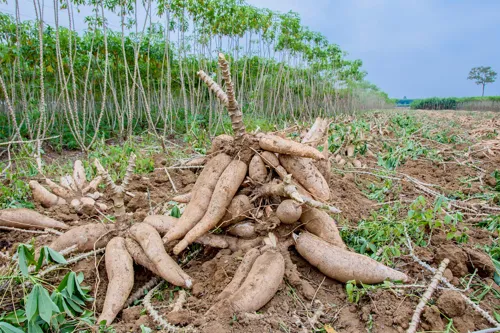
Thailand's cassava production for 2569/70 shows planted area expanding 2.29% to 6.766 million rai (driven by attractive prices), but per-rai yield declining 1.32% to 2.77 tons/rai, limiting overall production growth to just 0.94%. Key constraints include acute shortage of quality planting material, widespread leaf spot disease spreading across northern and northeastern regions, and early harvesting by farmers facing liquidity pressures—collectively undermining productivity gains and starch content efficiency.

▾ Hover for summary ▾ Tap for summary
Matichon is hosting a major national seminar on 26 August focusing on Thailand's energy transition strategy and clean energy pathways. Senior government officials (Deputy PM Ekniti Nitithanprapas), corporate leaders from Bangchak, Sansiri, Gulf, and the Electric Vehicle Association of Thailand, and experts will discuss Net Zero roadmaps, EV futures, green real estate, and small modular reactors (SMR). This event signals policy direction and private-sector commitment on energy security amid global climate-driven trade pressures—critical for Thai business competitiveness and economic strategy in the coming decade.

▾ Hover for summary ▾ Tap for summary
Microsoft is reducing its carbon removal purchases as investments in AI infrastructure accelerate, leading to a 27% rise in company emissions. This reflects the tension between corporate sustainability commitments and the resource-intensive demands of scaling AI systems—relevant for tech leaders weighing ESG targets against growth imperatives.

 Empower businesses to thrive in the digital age.
▾ Hover for summary ▾ Tap for summary
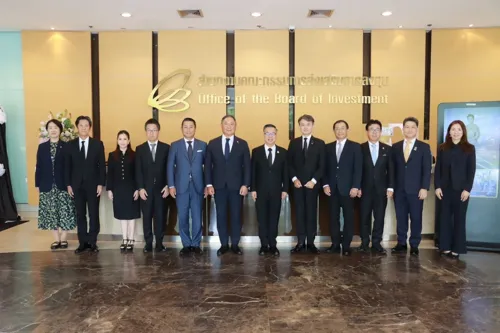
Japan's largest industrial group (JETRO) and Bangkok Chamber of Commerce confirmed strong confidence in Thailand investment despite global economic uncertainty. Over 5 years (2564–H1 2569), Japanese firms submitted 1,380 investment promotion applications worth ฿396 billion. Latest survey of 504 Japanese companies shows 23% plan increased 2569 investment while 48% maintain current levels. Investment is shifting toward machinery upgrades (59%), efficiency improvements (31%), and digital transformation (22%), signaling long-term capability enhancement. Thai government support priorities cited: tax/financial incentives (29%), domestic market promotion (26%), and FTA expansion (24%).

▾ Hover for summary ▾ Tap for summary
Apple is exploring licensing agreements to compensate publishers whose content feeds its Siri AI system. This reflects broader industry pressure to establish fair compensation models for AI training data, particularly relevant as Apple rolls out intelligence features. For Thai SMEs in publishing and media, it signals potential new revenue streams from AI partnerships—though implementation remains uncertain.

▾ Hover for summary ▾ Tap for summary
TOA Paint (Thailand), Thailand's #1 paint and construction chemicals manufacturer, reported H1 2026 revenue of 11,325 million baht (+4% YoY) with net profit of 1,671 million baht (+21%), driven by domestic paint sales, non-decorative products, and renovation demand. The company is expanding into green building certification (33 EPD-certified products, first Thai paint maker at this level) and approved 0.38 baht interim dividend per share. For H2, TOA will focus on cost management and risk mitigation amid energy volatility and construction sector uncertainty.
▾ Hover for summary ▾ Tap for summary
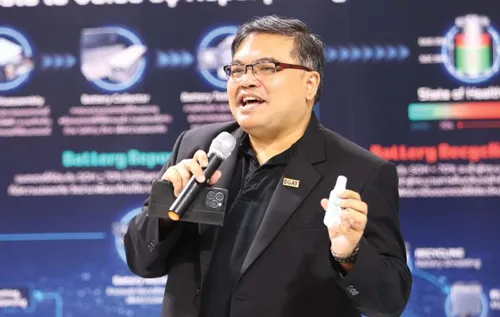
Thailand's state power utility EGAT is developing a comprehensive EV battery recycling and circular economy strategy in partnership with Thailand's industrial authority (IEAT), establishing a Circular Industrial Estate in the Eastern Economic Corridor. The initiative addresses urgent hazards from used EV batteries (evidenced by flood-damaged batteries creating fire risks) by creating processes for reuse (batteries with >70% State of Health become energy storage systems), recycling, and mineral recovery. EGAT is piloting battery storage systems at Wangno Power Plant, while researchers are developing policy frameworks including "Battery Passport" tracking and Extended Producer Responsibility (EPR) requirements—critical for Thai SMEs in energy, logistics, and emerging battery sectors as this infrastructure emerges.
 Your real translator for LINE and Discord.

▾ Hover for summary ▾ Tap for summary
Loopers is a Thai second-hand fashion resale platform founded by Gerd Pichayamad Chaiyangam that has grown from a small website to an app with 40,000+ members and 300,000 monthly visits. The platform addresses consumer concerns about used clothing through centralized warehousing, detailed product photography, and transparent condition disclosure. Revenue comes from 35%+ gross profit margin on successful sales. The founder emphasizes the need to balance sustainability, social impact, and profitability—noting that businesses must remain viable to continue their mission. Future plans include expanding to 1 million users within 5 years and broadening size ranges and men's offerings.
▾ Hover for summary ▾ Tap for summary
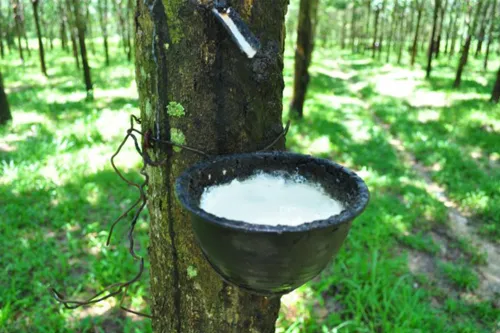
Thailand's Ministry of Agriculture is launching a coordinated enforcement campaign against illegal chemical use and adulteration in raw rubber. The initiative, led by Minister Suriya, combines upstream prevention (farmer education via Thai Rubber Organization), intelligence gathering (dedicated hotline at Department of Agricultural Extension), and field inspections by inter-agency task forces. Violators will face strict legal action with penalties extended across supply chains. This directly affects SMEs in rubber procurement, trading, and processing—quality control and compliance will become enforceable market requirements.
▾ Hover for summary ▾ Tap for summary
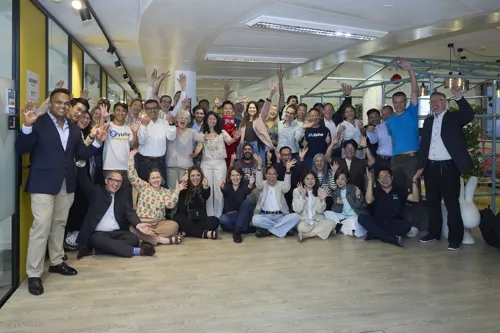
Financial inclusion progress is being highlighted, suggesting ongoing efforts to bring banking and financial services to underserved populations. However, the full article content is not available (JavaScript required to load). This likely addresses gaps in access to formal financial systems that are particularly relevant for SMEs and emerging markets in Thailand and Southeast Asia.

▾ Hover for summary ▾ Tap for summary
Thailand's Department of Rice launched a low-carbon rice initiative targeting 1 million rai nationwide, beginning with a 2,000-rai pilot in Suphan Buri involving 400 farmers. The program partners government agencies with private firms (Wanpop, GreenCal, Wave BCG) to manage production, supply-chain buyback, carbon credit MRV systems, and market linkage—aiming to reduce production costs, boost farmer incomes, and enable Thai rice export positioning under environmental sustainability credentials.

 Want to buy or sell a business?
▾ Hover for summary ▾ Tap for summary
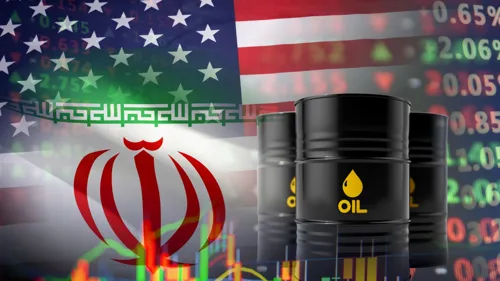
Thailand's Ministry of Commerce is monitoring escalating US-Iran tensions following Trump's July 8 announcement that a ceasefire deal has ended, expecting upward pressure on global energy costs. While Thai upstream costs show clear impact (Q2 producer price index up 8.2%, transport costs up 11.1%), the government's energy price regulation mechanisms have kept H1 inflation at just 1.08%—within the 1-3% target. The ministry reassures that Thailand's managed energy prices and subsidy policies can absorb further shocks, though businesses are advised to optimize efficiency and explore alternative energy sources to maintain competitiveness.
▾ Hover for summary ▾ Tap for summary
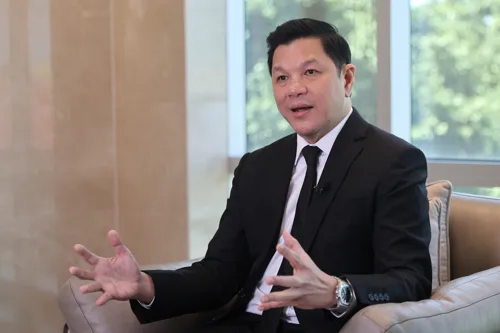
BOT Governor Vitai Rattanakorn defended the central bank's core mandate of macroeconomic stability while arguing the institution must evolve beyond traditional roles to address Thailand's structural growth challenges. He outlined four structural initiatives: household debt resolution, SME/small-business credit inclusion, fair financial service costs, and prevention of informal financial channels enabling corruption. The BOT plans to significantly enhance oversight of non-bank lenders and payment providers, framing this as essential adaptation to shifting systemic risks rather than mission creep.

▾ Hover for summary ▾ Tap for summary
Thailand's government held its first agri-SME task force meeting to address agricultural value-chain challenges across upstream, midstream, and downstream sectors. Key initiatives include recruiting private-sector partners for market access, scaling SME competitiveness (via mentorship and training systems), optimizing crop selection based on profitability/import viability, supporting young farmers, and accelerating plant-breeding innovation and drone technology to ease labor bottlenecks. The approach shifts from top-down planning to problem-solving informed by stakeholder input.
▾ Hover for summary ▾ Tap for summary
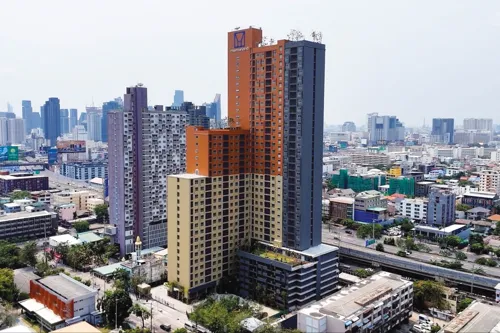
Thailand's Government Housing Bank (GHB) is restructuring its land-banking strategy with a major affordable housing initiative called "Ban Keha Phuea Khon Thai" (Houses for Thai People). The program will roll out 44,000+ units across 5 phases (2568–2575), with rentals starting at 2,000–4,000 baht/month for 28–33 sqm units on GHB land (leveraging existing assets). Phase 1 (5 projects, 4,102 units) heads to Cabinet in March 2568; Phase 2 follows in April. Concurrently, GHB is revitalizing aging urban communities (Din Daeng, Tung Song Hong, Ram Intra, Huay Khwang)—all near BTS/MRT lines—through Design & Build + PPP models, aiming to upgrade infrastructure and quality of life while maximizing asset returns. This signals a policy shift toward social housing and transit-oriented development.
 Together GoWeGo! Ferry tickets in Thailand.

▾ Hover for summary ▾ Tap for summary
Nium, a regional fintech player, achieved 20% revenue growth driven by its card products. This signals strong traction in payment solutions across Southeast Asia, relevant for tech companies and financial service providers considering partnerships or competitive positioning in the digital payments space.

▾ Hover for summary ▾ Tap for summary
Data Flywheel describes a self-reinforcing cycle where financial institutions leverage customer data with AI to improve products, driving higher engagement and generating more data—creating compounding competitive advantage. This dynamic is reshaping banking competition fundamentally: accumulated historical customer data cannot be easily replicated by competitors or new entrants, even with superior AI technology. Global financial institutions are investing massively ($760B in 2025, growing to $1.1T by 2029) to become data-rich, creating a winner-take-most dynamic where data depth and ecosystem strength now matter more than branch networks or brand alone. This is critical for Thai SMEs and fintech players to understand as regional banking consolidates.

▾ Hover for summary ▾ Tap for summary
Alibaba has released Qwen3.8-Max, an advanced language model, under a proprietary custom license. This move is part of the ongoing AI arms race and positions Alibaba as a competitor to OpenAI and other major LLM developers. For Thai tech companies and startups, this highlights the accelerating pace of AI model development and the importance of monitoring licensing terms for AI integration.

▾ Hover for summary ▾ Tap for summary
Asia's semiconductor industry is working toward developing homegrown AI chips to reduce dependence on Western technology. This reflects a strategic regional push for technological sovereignty and AI capability, with implications for supply chain resilience and long-term competitiveness. While progress exists, challenges in R&D, manufacturing scale, and talent remain significant obstacles for Asian players.

 Stop running your company on Excel.