
Archive
August 19, 2026
▾ Hover for summary ▾ Tap for summary
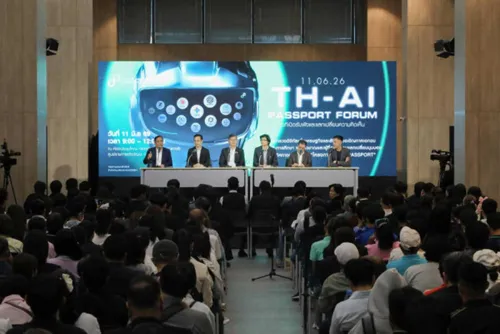
Thailand's Digital Economy and Society Ministry launched the TH-AI Passport program on August 31, offering citizens access to AI models and services through a unified digital identity. More than 500,000 registrations were recorded on launch day despite initial technical bottlenecks on verification platforms. The government targets 5 million registrations before the platform goes live, positioning this as a foundational digital infrastructure play for AI services access.
▾ Hover for summary ▾ Tap for summary
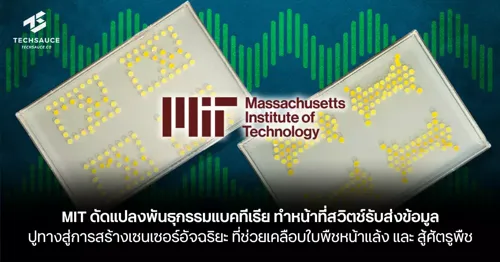
MIT researchers have engineered living bacterial circuits that function as biological transistors and logic gates, capable of performing computation on growth media. By modifying Pantoea agglomerans bacteria with 5 strains (2 transistor types + 3 relay types), they created self-growing circuit boards that process logic operations and signal routing—demonstrated through adders and demultiplexers with 24-colony networks. While proof-of-concept shows promise for future agricultural sensors, the 8-hour processing time and lab-scale limitations mean practical SME applications are still distant.
▾ Hover for summary ▾ Tap for summary
The US government is stepping in to fund African rare earth mineral development as private investors avoid the sector, signaling strategic interest in securing critical supply chains outside China.

▾ Hover for summary ▾ Tap for summary
Muang Thai Life Insurance has expanded its health insurance services by integrating with iClaim, a digital health claims system operated by WhitePlay, across over 400 public hospitals nationwide. The partnership enables policyholders to receive outpatient (OPD) and inpatient (IPD) treatment via cashless claims without upfront payment, streamlining the claims process and reducing financial barriers during medical emergencies. This expands access to specialist care and provincial hospitals, particularly benefiting customers outside Bangkok.

 Empower businesses to thrive in the digital age.

▾ Hover for summary ▾ Tap for summary
Thailand faces interconnected pressures—climate change (threatening 0.5% annual GDP drag), labor market misalignment (28M informal workers, 20% AI displacement risk in Asia), and global trade standard shifts that 95% of Thai SMEs are unprepared for. GCNT Expo 2026 (Sept 2–4, 2026) will frame sustainable economic restructuring as critical to competitiveness, with Vietnam already projected to surpass Thailand's GDP by 2027. Urgency lies not in growth rates but speed of structural adaptation across energy, tech, and skills development.

▾ Hover for summary ▾ Tap for summary
Vietnam is elevating Bac Ninh (home to Samsung's largest electronics manufacturing hub) and Quang Ninh (site of Halong Bay) from provincial status to direct central government administration. This restructuring aims to streamline project approvals by bypassing provincial bureaucracy, enabling direct dealings with Hanoi on infrastructure, budgets, and policy. Bac Ninh exported ~$93 billion in 2025 (nearly 1/5 of Vietnam's total) and received the nation's second-largest FDI inflows; Quang Ninh achieved 11.9% GDP growth last year and is transitioning from coal mining to manufacturing. The change signals strategic importance to foreign investors, though its practical impact depends on execution rather than administrative status alone.
▾ Hover for summary ▾ Tap for summary
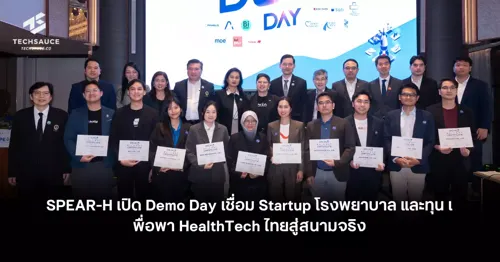
SPEAR-H, a collaborative acceleration programme between NIA, Mahidol University, and major hospitals, held a Demo Day showcasing 12 selected HealthTech startups addressing four key healthcare system challenges: diagnostics and medical technology resilience, hospital operational efficiency, risk assessment and precision medicine, and patient care continuity. The initiative shifts the conversation from hospitals buying technology to co-creating solutions, enabling startups to validate products in real clinical settings with expert guidance, funding access, and partnership pathways—critical for bringing innovations to market at scale.

▾ Hover for summary ▾ Tap for summary
Binance Blockchain Week 2026 (Asia Edition) will be held in Bangkok on November 28–29 at QSNCC, with BINANCE TH by Gulf Binance as the official local supporting partner. The event will convene thousands of developers, institutional investors, policymakers, and ecosystem leaders under the "EVOLVE" theme to discuss regulated digital asset adoption, institutional participation, and bridging traditional finance with crypto infrastructure. Top speakers include Binance Co-CEOs Richard Teng and Yi He, making this a significant opportunity for Thai SMEs and tech professionals to engage with global crypto industry leaders and understand Thailand's evolving regulatory landscape.
 Your real translator for LINE and Discord.

▾ Hover for summary ▾ Tap for summary
Thailand's TISTR institute is rolling out an "App Tech" initiative to support economic vegetable farming across 6 provinces (Chachoengsao, Saraburi, Lopburi, Nakhon Ratchasima, Khon Kaen, Nakhon Pathom) with government research funding. The program applies agtech innovations—from seed selection to production systems, quality control, and market linkage—to help farmer communities increase productivity, reduce costs, and build higher-margin crop value. Practical focus on scalable solutions for sustainable rural income growth.

▾ Hover for summary ▾ Tap for summary
Muang Thai Life Insurance partnered with White Plai to deploy the iClaim digital health claims system across 400+ state hospitals, enabling cashless claims for outpatient (OPD) and inpatient (IPD) services nationwide. This removes the friction of prepaying medical expenses and streamlines claims processing by connecting hospital and insurer data directly. The initiative supports the company's Longevity Economy strategy and is expanding specialist care to provincial areas to reduce Bangkok-dependent travel.

▾ Hover for summary ▾ Tap for summary
Singapore and Hong Kong are competing aggressively for wealth management talent through major tax incentives. Singapore announced exemptions on carried interest (profit-sharing) for fund managers and relaxed visa salary requirements, while Hong Kong has already expanded carried interest tax breaks. The stakes are high: Hong Kong's AUM grew 20% to $42.2 trillion HKD in 2025, while Singapore's sits at $6.68 trillion SGD (10% growth). Singapore's hedge fund sector grew 37% in 2024 but slowed to 5% in 2025, signaling the competitive pressure to attract global firms like Citadel and Jain Global.

▾ Hover for summary ▾ Tap for summary
Anthropic demonstrated that Claude AI can autonomously design novel proteins at scale: 14 of 15 target designs were validated by external labs, with success rates 22–35% vs. industry standard 10–15%. The system completed de novo protein-binding design in 48 hours—work that typically requires months of human expert coordination across computational and structural biology teams. This showcases AI-driven acceleration in drug discovery and biotech R&D, with implications for Thai biotech startups and research institutions exploring AI-assisted molecular design.

 Want to buy or sell a business?

▾ Hover for summary ▾ Tap for summary
PwC's August 2026 CEO survey reveals that AI adoption sentiment has shifted, with global revenue growth confidence rising to 42% (12-month outlook) and 51% (3-year outlook). However, only 39% of organizations report sustained positive AI impact, while 16% report negative returns. For Thai CEOs specifically, confidence is markedly lower (24% on revenue growth vs. global average), reflecting economic caution. The critical shift: AI must move from efficiency tool to strategic mechanism that connects early-warning signals to real business decisions—especially in cost management, demand forecasting, and identifying disruption-driven opportunities. Winners won't be those who invest most, but those who read markets and pivot fastest.

▾ Hover for summary ▾ Tap for summary
US S&P 500 companies delivered strong Q2 earnings with 15% revenue growth YoY and net profit up ~22% excluding special items. Growth concentrated in Energy (oil tailwinds), Technology (AI infrastructure capex), and Financials (+20%), while Consumer Staples/Discretionary remain sluggish at ~10%. Key lesson: investors now scrutinize cash flow quality and forward guidance over headline numbers—Meta and Amazon saw stock declines despite beating expectations. Watch: data center expansion curbs in Texas and New York over power-grid concerns, potential China competition threat to AI infrastructure.

▾ Hover for summary ▾ Tap for summary
Andrew Ng's AI Engineering Skills Map identifies 4 critical competencies for all tech professionals: understanding AI system uncertainty and evaluation, solid software engineering foundations, effective AI tooling collaboration, and product thinking. These skills extend beyond "AI Engineers" to full-stack, data, DevOps, and other developers. The underlying principle is continuous learning, as AI tools evolve rapidly and developers must balance speed with stability, security, and user impact.

▾ Hover for summary ▾ Tap for summary
Deep-dive analysis of Japanese yen currency trajectory and policy intervention. Article argues intervention may be temporary (sterilized, not tied to rate hikes), with realistic range 150–165 yen/USD through 2026. Key insight: yen strength may now signal economic recovery rather than crisis flight, changing its correlation with equity markets. Relevant for Thai investors with Japan exposure or FX exposure, though primarily macro-level analysis rather than actionable SME guidance.
 Together GoWeGo! Ferry tickets in Thailand.

▾ Hover for summary ▾ Tap for summary
Thailand's economy shows uneven recovery in H1 2025 with weak benefits reaching grassroots and SMEs despite export and stimulus measures. Easy Money Group reported 32.8% YoY growth in asset-backed financing (¥2.39tn), with gold jewelry and gemstones as top collateral, as households and small operators prioritize liquidity management over spending amid high debt, income volatility, and global uncertainty. The trend reflects structural shift toward freelance work (13.8m workers, 1 in 3 employed) and short-term cash-flow tools rather than investment expansion.

▾ Hover for summary ▾ Tap for summary
Thailand's Public Debt Management Office (PDMO) is launching its second Sustainability-Linked Bond (SLB) worth 15 billion baht with a 15-year maturity to finance budget deficits while advancing climate and biodiversity goals. The bond ties to two key performance indicators: reducing net greenhouse gas emissions to 152 million tCO2e by 2035 (47% reduction from 2019 baseline) and increasing protected land and water areas to 30% of national territory by 2030. Roadshows begin August 31, 2026, with sales expected mid-September 2026, signaling Thailand's alignment with international sustainable finance standards.

▾ Hover for summary ▾ Tap for summary
Thailand's Deputy PM and BOI chair is reviewing data center investment strategy with stricter criteria: future projects must demonstrate clear ROI and national benefit (R&D skills, local content, quality jobs), not just capital inflow. A new multi-agency oversight committee will evaluate water, electricity, and environmental impacts. This signals a shift from loose incentives to performance-based investment vetting—relevant for tech/infrastructure SMEs and foreign investors.

▾ Hover for summary ▾ Tap for summary
Google plans to completely exit China manufacturing by 2027, shifting Pixel phone and wearable production to Vietnam by leveraging Samsung's existing supply chain infrastructure. The move is feasible because Google doesn't sell Pixels in China and successfully manufactured flagship Pixels in Vietnam this year. Despite rising memory chip costs, Google is maintaining aggressive 8–10% shipment growth targets and consolidating chip purchases across cloud and smartphone divisions to negotiate better rates with suppliers like Micron, Samsung, and SK Hynix.

 Stop running your company on Excel.