
Archive
August 24, 2026

▾ Hover for summary ▾ Tap for summary
Thailand's Competition Commission is fast-tracking regulations for ride-hailing and on-demand delivery platforms after market players collapsed from 5-6 to just 2 operators. The move addresses concerns over monopoly formation, unfair practices (forced promotions, system shutdowns, algorithmic discrimination, GP fees exceeding 30%), and unequal competitive standards. The CCCT plans to require platform verification of drivers, enforce pricing/algorithm transparency, and establish a Code of Practice before advancing to binding regulations—aiming to level the playing field between digital platforms and traditional transport operators.

▾ Hover for summary ▾ Tap for summary
Article discusses the strategic value of AI's middle layer (likely referring to middleware, orchestration, or integration platforms) in business applications. Relevant for Thai SMEs and tech leaders evaluating AI infrastructure investments and operational efficiency improvements.

▾ Hover for summary ▾ Tap for summary
This article discusses how venture capital firms must provide value beyond financial investment—likely covering mentorship, networks, and strategic guidance. Relevant to Thai startups seeking VC funding, as it underscores what quality investors bring to the table beyond check-writing.

▾ Hover for summary ▾ Tap for summary
MONO Next pivots decisively away from advertising revenue toward subscription-based streaming, with Streaming-First as core strategy from H2 2026 onward. The platform anchors growth on four major sports pillars (Premier League, EURO 2028, Volleyball World, World Cup 2026/2030), paired with exclusive original content targeting specific fan demographics. With 3.5M viewers (2M free, 1.5M paid), subscription revenue has already surpassed ad income. AVOD model will monetize free tier; MONO29 TV channel repositioned as a marketing funnel to drive subscribers to the streaming platform.

 Empower businesses to thrive in the digital age.

▾ Hover for summary ▾ Tap for summary
Harvey Smith and former Arkane Austin team members have founded Black Pony Immersive, a new indie studio focused on narrative-driven immersive sims like Dishonored and Deus Ex. The studio's formation directly responds to lessons from Redfall's failure—Microsoft's live-service push that conflicted with Arkane's core expertise in single-player storytelling. The team is adopting a lean, focused approach with a small core team, avoiding external market pressures. For tech entrepreneurs, this illustrates the importance of staying true to a studio's strengths rather than chasing market trends.
▾ Hover for summary ▾ Tap for summary
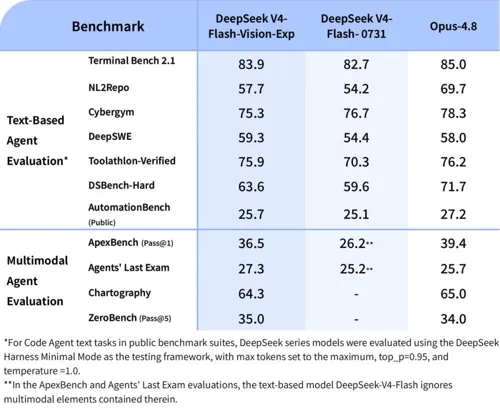
DeepSeek released V4-Flash-Vision-Exp, adding image recognition capabilities to its V4 model while maintaining the same API pricing. The new model also shows significant improvements in programming task performance, making it a strong alternative to existing solutions. DeepSeek further introduced weekend pricing discounts for API usage—similar to Thailand's TOU electricity pricing—offering cost savings outside peak hours.

▾ Hover for summary ▾ Tap for summary
Hugging Face, a major open-source AI model platform, is reportedly exploring a full acquisition with an initial valuation of $13 billion or higher. The platform is in early stages of engaging financial advisors to solicit buyer interest, though no active negotiations are underway. This move may be driven by similar acquisition activity in the AI infrastructure space (Stripe's purchase of OpenRouter) and ongoing platform security concerns.
▾ Hover for summary ▾ Tap for summary
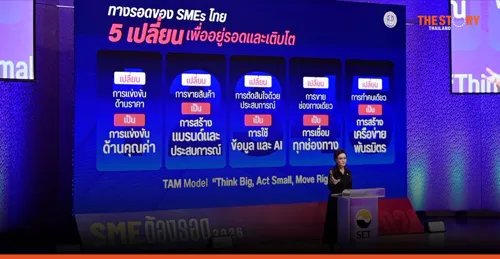
Thailand's 3.3 million SMEs represent 99% of all businesses and employ 69% of the workforce, yet contribute only 34.8% of GDP—well below developed-nation benchmarks of ~50%. Deputy PM Supattanatpong identifies five priority actions: cost-of-living support, agricultural price stabilization, SME/community strengthening, export market diversification, and tackling competitor pressures. Key weaknesses include weak accounting practices, poor inventory management, underutilization of consumer data analytics, and limited access to modern sales channels (livestream commerce, TikTok). Success cases like low-carbon rice farming demonstrate that value creation—not price-cutting—is the winning strategy.
 Your real translator for LINE and Discord.

▾ Hover for summary ▾ Tap for summary
Apple is reportedly planning a foldable "iPhone Ultra" with a 5.5-inch display when folded, expected alongside iPhone 18 Pro next month. Internal testers praised its pocket-friendly size, durable hinge, and iPad-like unfolded experience. The device will use Touch ID instead of Face ID, no telephoto lens, and estimated pricing between $2,000–$2,500. Apple is also preparing iMac M6 upgrades and redesigned Apple Store layouts for smart home products.

▾ Hover for summary ▾ Tap for summary
Google's leadership in Thailand responds to data center concerns by detailing infrastructure investments totaling $1 billion and emphasizing local economic impact: 14,000 jobs annually (2025-2029) with a 1:9 employment multiplier effect, plus $4 billion in economic activity. The company pledges to use local suppliers and Thai contractors, while supporting Direct PPAs for energy sustainability. This positions Thailand as a regional AI hub and reduces cloud service costs for Thai startups and SMEs accessing Google Cloud domestically.

▾ Hover for summary ▾ Tap for summary
The Thai Retail Association, led by Nath Wongphanik, proposes a three-pronged "ACT" strategy to revive the retail sector in 2026-2027. Short-term measures include VAT refunds and e-receipt incentives; medium-term measures focus on regulatory flexibility (hourly employment, BOI-style support for regional retailers, elder and migrant worker hiring); long-term measures aim to level the playing field on e-commerce by enforcing tax compliance and product standards against cheap imports that undercut SMEs. The sector expects Q4 2026 sales recovery contingent on holiday shopping, tourism stimulus, and successful continuation of relief programs. Retail market expected to grow 3% in 2026 to 4.38 trillion baht, and 3-3.5% in 2027.

▾ Hover for summary ▾ Tap for summary
Thailand's Energy Ministry has drafted four scenarios for the 2026 Power Development Plan (PDP 2026) to be presented for public consultation in September. The plan aims to increase clean energy to 60–80%, introduce 2,400–4,000 MW of Small Modular Reactors (SMRs), deploy battery energy storage systems (BESS), and cap average electricity prices at 4 baht per unit across the plan period. The proposal responds to growing demand from data centers and new industrial zones while accommodating emerging technologies like EVs and distributed solar systems.

 Want to buy or sell a business?
August 23, 2026
▾ Hover for summary ▾ Tap for summary
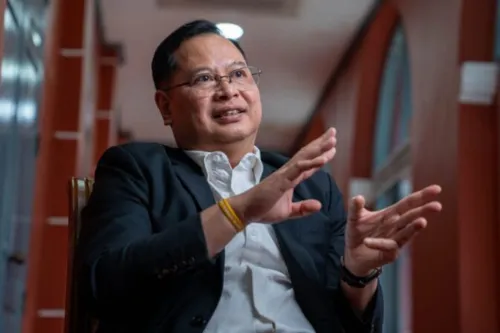
Deputy Prime Minister Pokkhrung outlines concrete plans to reform Thailand's civil service and enact laws across six dimensions: tax, budget, healthcare, quality of life, education, and environment. He critiques past governments for endless studies and committees without action, emphasizing four concrete reform pillars—eliminating inefficiency, reprocessing workflows, deploying technology, and privatizing non-core functions. For Thai SMEs, this signals potential regulatory changes affecting payroll, compliance, and service delivery; delayed execution remains a risk given Thailand's history of policy paralysis.
▾ Hover for summary ▾ Tap for summary
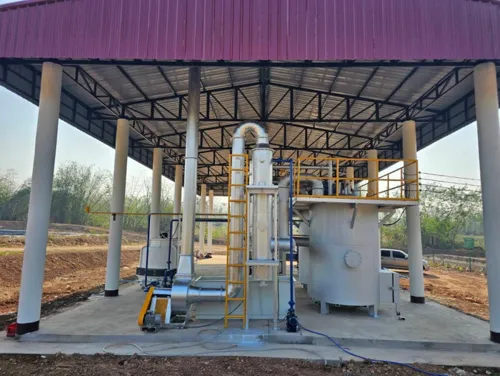
Thailand's energy authorities are reviving pyrolysis technology—which converts plastic waste into oil—as part of a broader strategy to reduce dependence on costly crude oil imports, particularly amid Middle East geopolitical tensions. The Department of Business Energy and Development (BEOED) is standardizing production systems and regulations, with major producers already generating millions of liters annually, though full fuel replacement requires further quality improvements.
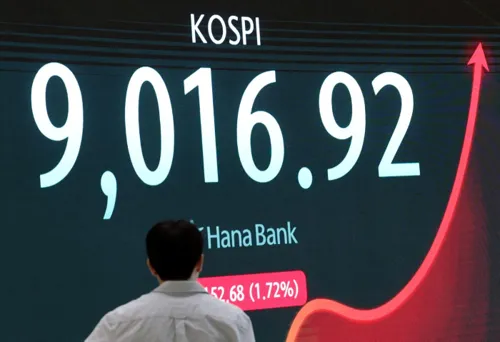
▾ Hover for summary ▾ Tap for summary
Thailand's Tourism Authority (TAT) is shifting strategy to target high-income tech professionals and younger travelers from South Korea and Taiwan, leveraging short flight distances and strong purchasing power. Rather than competing on price, TAT should develop premium experiences in wellness, golf, and culinary offerings while expanding air connectivity to secondary cities and leveraging joint marketing with airlines and tour operators to establish market presence over 6–12 months.
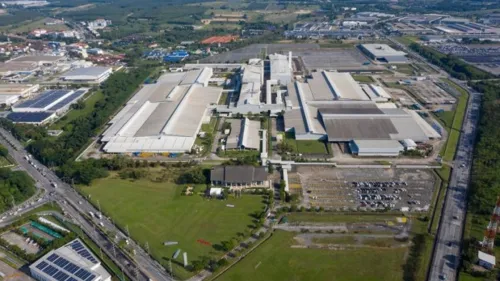
▾ Hover for summary ▾ Tap for summary
Thailand is tightening foreign investment rules to strengthen domestic supply chains and boost "Made in Thailand" recognition. The government aims to increase local content requirements over 3–5 years, shifting investment evaluation beyond capital amount to measure value creation for the Thai economy. Sectors like EVs, green energy, AI, fintech, and medical industries are priority targets; tax and structural measures will incentivize companies to manufacture locally and reduce import reliance.
 Together GoWeGo! Ferry tickets in Thailand.
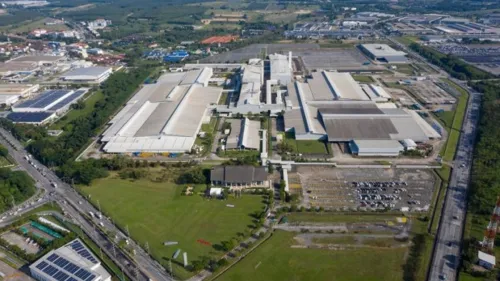
▾ Hover for summary ▾ Tap for summary
Thailand's 1.9% Q2 GDP growth—the weakest in Southeast Asia—is prompting government policy shifts to attract foreign investment tied to local supply chains and "Made in Thailand" standards. The Board of Investment and Finance Ministry are adjusting tax/excise measures and local content requirements across sectors (EVs, AI, green economy, financial hub) to ensure investments create domestic value over 3-5 years, not just capital inflow. Success hinges on whether mechanisms actually incentivize manufacturing and local production rather than simple import substitution.

▾ Hover for summary ▾ Tap for summary
Thai film "ผีใช้ได้ค่ะ" (Ghost Usable) dominated the 34th Suparnnong Awards with 10 wins, including Best Picture, Best Director (Ratchathum Bunyabanchaiyok), and Best Actress (Davika Hoorne). The ceremony showcased 53 competing Thai films and highlighted industry achievements in cinematography, sound, costume design, and scriptwriting. This signals strong performance of the Thai film industry and highlights a commercially and critically successful domestic production.
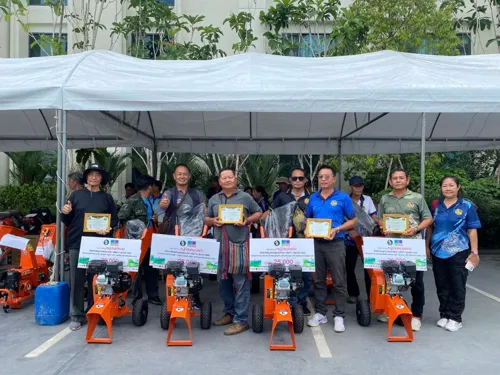
▾ Hover for summary ▾ Tap for summary
Chiang Mai Social Enterprise (CSE) held its fourth annual awards ceremony on 22 August recognizing 86 pilot villages that have maintained burn-free status, out of 2,076 total villages in the province. The "Haze Free Reward" program uses incentive-based (reward-based) approach to motivate community-level participation in reducing open burning and forest fires. Government, private sector, and civil society leaders endorsed scaling the model province-wide as part of broader air quality and sustainable development goals.
▾ Hover for summary ▾ Tap for summary
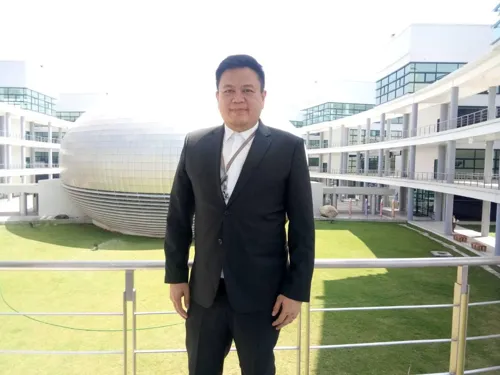
Thailand's Ministry of Higher Education, Science, Research and Innovation is advancing Regional Science Parks (RSP) into S-Curve 4, positioning 44 universities nationwide as innovation bridges. Over 12 years, RSPs have generated 84.3 billion baht in economic impact, supported 33,819 entrepreneurs, created 37,347 R&D jobs, and upskilled 2,731 tech businesses. The new phase aims to scale inclusive regional economic impact through better infrastructure, clearer funding linkages, and commercialization of university research.

 Stop running your company on Excel.