
Archive
August 24, 2026

▾ Hover for summary ▾ Tap for summary
Thailand's Securities and Exchange Commission (SEC) has released draft guidelines for establishing and regulating cryptocurrency ETFs in Thailand, enabling asset management companies (AMCs) to create ETF funds investing in Bitcoin and Ethereum via the stock exchange. The framework includes strict investor protections, mandatory use of regulated Digital Asset Custodians, passive management requirements (minimum 80% crypto net exposure), and enhanced disclosure standards. This represents a significant regulatory milestone for Thai retail and institutional investors seeking regulated crypto exposure, though initial offerings are limited to Bitcoin and Ethereum with strict custodial and qualification requirements for service providers.
▾ Hover for summary ▾ Tap for summary
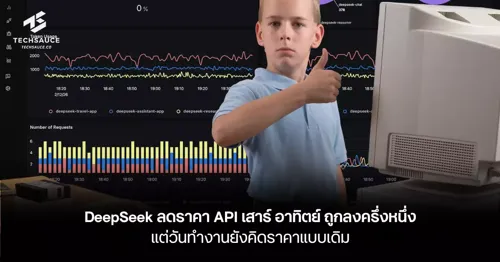
DeepSeek introduced dynamic API pricing with peak/off-peak rates on 16 Aug 2026, but just announced that weekends (Sat–Sun) will apply off-peak rates (50% cheaper) for all 24 hours. Peak hours (08:00–11:00 and 13:00–17:00 Bangkok time) remain double-priced on weekdays. This gives Thai dev teams a cost optimization lever by scheduling batch jobs on weekends or running during off-peak evening/night hours. The move signals DeepSeek's infrastructure is under strain and using pricing to manage demand.
▾ Hover for summary ▾ Tap for summary
Thailand's planning agency is calling for establishment of a central data centre authority to manage and coordinate the country's data infrastructure strategy.
▾ Hover for summary ▾ Tap for summary
Global market uncertainty driven by overlapping economic, trade, and geopolitical tensions could create volatility for SMEs and investors.

 Empower businesses to thrive in the digital age.

▾ Hover for summary ▾ Tap for summary
Fortinet acquired Virtue AI to expand its AI security capabilities beyond language models to cover autonomous AI agents and their entire operational ecosystem. The acquisition adds automated red-teaming, agent protection, continuous AI validation, and real-time guardrails to Fortinet's AI-Native Security Fabric, addressing growing demand as the market for AI ecosystem security is projected to grow from $2.8B (2026) to $16.4B (2030). This strategic move positions Fortinet for enterprise-scale AI governance as organizations increasingly deploy autonomous AI agents.

▾ Hover for summary ▾ Tap for summary
A venture capital firm is leveraging AI technology to identify promising startups before traditional metrics and market data fully reflect their potential. This approach could reshape early-stage startup evaluation and give VC firms using such tools a competitive edge in deal sourcing. However, the article text was unavailable, so specifics on the methodology and actual results remain unclear.

▾ Hover for summary ▾ Tap for summary
An overview of the 50 most well-funded greentech and cleantech companies across Asia, highlighting investment trends and leaders in the region's renewable energy and sustainability sector. Useful for Thai SMEs seeking partnerships, benchmarking, or market entry into the growing clean technology landscape.
▾ Hover for summary ▾ Tap for summary
SCBX and Hashed Open Research released a comprehensive Southeast Asia digital assets report based on insights from 4,000+ attendees at the SEABW 2026 event in Bangkok. The report reveals that regulatory clarity is no longer the bottleneck—instead, commercial and operational challenges around local-currency settlement, secondary market liquidity, and tokenization of real-world assets now drive adoption. Thailand is highlighted as the most comprehensive digital asset market ecosystem in the region, with SCBX as a key institutional player. The findings underscore that collaboration between regulators, commercial banks, local developers, and global investors will determine regional infrastructure growth.
 Your real translator for LINE and Discord.
▾ Hover for summary ▾ Tap for summary
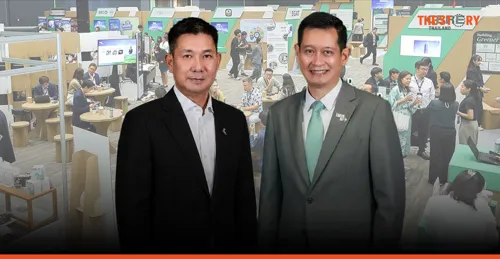
Kasikornbank and SCGP collaborated for the third consecutive year on EARTH JUMP 2026, demonstrating circular economy principles by constructing booth infrastructure entirely from 100% recycled paper and managing post-event materials responsibly. Usable materials were donated to schools in the SCGP Low Carbon School program, while non-reusable waste entered SCGP's recycling system. The event, attended by 3,500+ participants and 80+ speakers, achieved Net Zero Event certification through carbon credit offsetting, showcasing how SMEs and financial institutions can embed sustainability into operations.

▾ Hover for summary ▾ Tap for summary
Thailand's fiscal authority (NESDC) signals rising concerns over household debt as personal and mortgage lending accelerates to 4.82% YoY in Q1 2025, with total household debt at 16.41 trillion baht (85.9% of GDP). While NPL ratios declined slightly, problematic loans (SML: 31–90 day arrears) are increasing. Critically, only 15% of debtors enrolled in state relief programs (2019–2025) successfully resumed normal repayment, with 85% still struggling—indicating program limitations and weak income recovery that may require individualized support redesign.

▾ Hover for summary ▾ Tap for summary
Alibaba's share price fell 10% following a $10.2 billion share placement, signaling market concern about dilution and capital allocation decisions. While significant in absolute terms, this is a major Chinese tech company event with spillover implications for regional tech investors and competitors.

▾ Hover for summary ▾ Tap for summary
PPTV's CEO Ponchai Poonsawalert discusses the critical 2029 deadline when Thailand's digital TV broadcast licenses expire. Rather than debating license renewal mechanics, the real issue is how Thailand's free-to-air sector can compete with global platforms (YouTube, Netflix, Disney+, TikTok). He argues Thailand cannot abandon media sovereignty to foreign platforms and needs trustworthy domestic broadcasters to counter misinformation. He proposes a National Streaming Platform that consolidates Thai content to enable better data analytics, reduce cost duplication across individual operators, and create competitive scale. PPTV views 2029 not as an ending but as a transition point from traditional broadcast stations to full media brands and community platforms.

 Want to buy or sell a business?

▾ Hover for summary ▾ Tap for summary
Thailand is positioning itself within the global new economy, driven by Q2 data showing private investment surging 13% YoY (highest in 11 years) and exports up 12.5%, largely in electronics and high-tech sectors. However, the article critically examines unintended consequences—particularly data center expansion (42 projects worth 750B baht over 3 years), which consumes massive power and water but creates few jobs, raising public concern. The government faces a balancing act: scaling modern industries while managing environmental and social spillovers that a 'clean economy' was supposed to avoid.

▾ Hover for summary ▾ Tap for summary
Thailand's National Intelligence Agency head evaluates three factors driving recent southern border violence: diplomatic leverage ahead of October peace talks, military leadership transitions creating perceived vulnerabilities, and seasonal timing. Officials acknowledge knowing perpetrators but cannot disclose for security reasons. Malaysia is being asked to strengthen border monitoring to prevent cross-border escape of insurgents. This shapes negotiating strategy and requires operational coordination ahead of talks.

▾ Hover for summary ▾ Tap for summary
Thailand's Q2 unemployment rate stands at 0.95%, with long-term joblessness rising 11.3% to 8.1 million people. A new Employee Assistance Fund law begins October 1, requiring over 107,000 businesses (80.7% of employers with 10+ staff) to contribute, covering 5.7 million workers. Government warns most employees lack awareness of severance rights and urges education for employers and staff to ensure proper benefit delivery. Agricultural employment faces additional risk from El Niño phenomena.

▾ Hover for summary ▾ Tap for summary
Thailand's Ministry of Finance is implementing a three-tier credit scoring system (NCB Credit Score, Ari Score, and SBIC Score) to improve capital access for micro-SMEs and street vendors. The "Whisper Bird" AI chatbot will consolidate transaction data from the Thai Helping Thai Plus program to generate financial statements for 1.1M+ merchants, enabling them to borrow from Savings Bank and commercial banks with risk-based pricing instead of relying on informal lending. This addresses systemic financial inclusion and informal debt reduction.
 Together GoWeGo! Ferry tickets in Thailand.
▾ Hover for summary ▾ Tap for summary
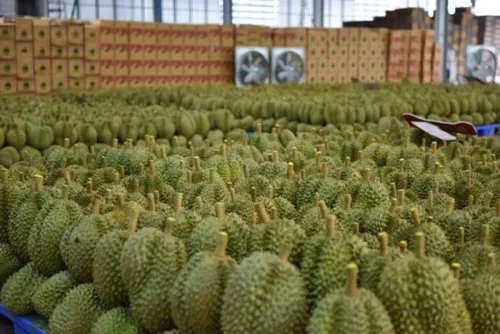
New China-Laos-Thailand rail cold-chain service (launched March 2026) cuts durian transport time to 3 days, enabling major supply expansion and price cuts in China—the world's largest durian market (90%+ of consumption). Thai durians dominated August 2026 wholesale prices at 28–31 yuan/kg (vs 29–39 last year), while China's total durian imports hit 1.45M tonnes in Jan–July 2026 (+45% YoY). Thailand exported $4.55B worth Jan–July, over 75% of global durian shipments by value. Expanded approved suppliers (Vietnam, Malaysia, Laos) since 2022 further boost competition and affordability.

▾ Hover for summary ▾ Tap for summary
Crude oil prices (Brent and WTI) rose for six consecutive days as the US prepared new economic sanctions against Iran. Treasury Secretary Scott Bessent indicated details would be announced on Monday, August 24, with potential expansion to trading partners like China. The sanctions are expected to significantly disrupt Iran's oil exports, with 41 million barrels currently stranded off the Strait of Hormuz. For Thai SMEs, energy-dependent operations face potential cost pressures from sustained higher oil prices.

▾ Hover for summary ▾ Tap for summary
Ratanapon Tookam of Phakdeebodin Ltd. is scaling spirulina (pham/ไข่น้ำ) from a traditional food ingredient to an industrial health-food market ingredient. Her approach emphasizes three critical shifts: (1) standardization via lab-verified Certificates of Analysis (COA) to meet B2B and export requirements; (2) shifting farmer mindset from volume-focused to market-demand-aligned production; and (3) building research backing for nutritional claims (essential amino acids, B12 bioavailability). The effort ties to rural economic development—keeping youth in Sarakaew by creating stable farm livelihoods. Current bottleneck: Thailand lags Europe and Japan in spirulina research; farmers need training on quality control and buyer engagement.

▾ Hover for summary ▾ Tap for summary
Beyond Beauty has grown Korean beauty brand Banobagi into Thailand's top-selling face mask brand since 2018, achieving 500% cumulative growth and 50M+ units sold. The company's success hinges on "Hybrid Beauty" strategy—adapting K-Beauty formulas to Thai skin types and climate (64.6% of Thais have oily skin and enlarged pores). With a 6-billion-baht facial mask market growing 73% in five years, Beyond Beauty is targeting 10–12% revenue growth in 2024 while managing 70% offline sales through Watson's and beauty chains, plus 30% online via e-commerce platforms. The company also acquired 10% stake in parent company and plans to list on Singapore and Korean exchanges.

 Stop running your company on Excel.