
Archive
August 25, 2026
▾ Hover for summary ▾ Tap for summary
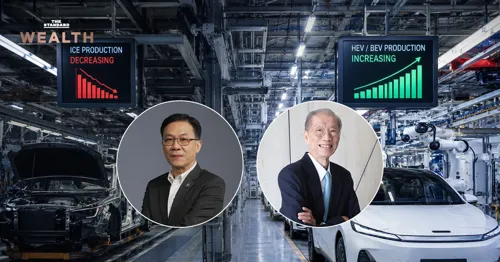
Thailand's automotive industry is rapidly shifting toward EVs (BEV sales up 97% in seven months), but domestic production is trailing sharply: only 37% of BEVs are locally made, with 63% imported. Critically, pickup truck sales—a Thai manufacturing cornerstone—have collapsed 60% due to financial institution lending tightness, threatening local component suppliers. The Federation of Thai Industries is calling on government to restructure excise tax to level the playing field between imports and domestically-produced EVs, arguing that supporting local production would strengthen the supply chain, employment, and economic growth.

▾ Hover for summary ▾ Tap for summary
Thai media industry leaders argue that television is not dying but fundamentally evolving: shifting from an endpoint for content to a launching pad for cross-platform engagement. Despite competition from streaming and social media, TV maintains competitive advantages in content credibility, editorial standards, and family-bonding experiences. The ability to produce and distribute quality Thai-language content across multiple platforms—while preserving journalistic integrity—positions traditional broadcast as a trusted foundation layer for the broader media ecosystem.

▾ Hover for summary ▾ Tap for summary
Asia Plus Group (ASP) reported H1 profit of 324.92 billion baht, up 516%, with net margin jumping to 20.9% from 5.4% YoY. The turnaround reflects a strategic pivot: ASP is shifting from stock-market-dependent brokerage toward wealth and asset management to build recurring revenue. Asset Management revenue hit 652 million baht (43% of group total), with AUM reaching 80.1 billion baht (+16.4% YTD). The company plans to scale Wealth-Asset Management to 80 billion baht AUM and integrate technology across its platform for cross-selling and comprehensive client advisory—positioning ASP as a full-service wealth platform rather than a capital-markets broker.

▾ Hover for summary ▾ Tap for summary
Thai farmer group cooperatives—a 50+ year system serving ~306,000 members across 3,762 groups—face structural challenges including severe accounting deficiencies (only 0.9% at tier-1 strength). To address this, the Thai Farmer Groups Committee is piloting province-level accounting offices in Trad and Phatthalung (launching August 2025) to reduce costs, improve financial credibility, and unlock access to direct funding sources. The ambitious 6-year development plan targets 55% of groups reaching tier-1 status (2,069 groups vs. current 31) through innovation, professional management training, and new Young Smart Group initiatives leveraging AI and modern systems.

 Empower businesses to thrive in the digital age.

▾ Hover for summary ▾ Tap for summary
Thailand's Finance Ministry has secured cabinet approval for four major capital market law amendments aimed at modernizing securities regulation for the digital economy. The reforms cover six key areas: promoting digital capital market transactions, improving financial disclosure flexibility, strengthening secondary market and related-entity oversight, enhancing audit firm and service provider governance, boosting law enforcement efficiency with tougher penalties, and expanding SEC committee composition and fee waiver powers. All bills have passed legal review and now advance to parliament, targeting investor protection, market competitiveness, and sustainable economic growth.
▾ Hover for summary ▾ Tap for summary
Thailand's customs authority began collecting 7% VAT and import tariffs on goods as low as 1 baht from January 2026. Krungthai COMPASS research projects this could reduce low-value imports by ~7% and generate 8.2 billion baht in additional revenue. However, the measure may be insufficient—Chinese fashion imports still undercut Thai products by 44-85% after tariffs. The report recommends an ecosystem-wide approach: Thai SMEs should compete on quality, government should prevent unfair trade, and banks must support sustainable business adaptation.

▾ Hover for summary ▾ Tap for summary
Five major countries—Australia, Indonesia, Brazil, Canada, and New Zealand—are shifting from self-regulation to legally enforceable age restrictions on social media platforms, primarily banning children under 16. Australia and Indonesia have already implemented laws with penalties for platforms; Brazil is enforcing similar measures; Canada is still in parliament; New Zealand faces political delays. This represents a global regulatory shift away from tech self-governance toward strict government oversight to protect youth mental health and combat online harassment.

▾ Hover for summary ▾ Tap for summary
Thai Military Bank (TTB) warns Thai consumers about "mule accounts" – bank accounts used by criminals to move illicit funds. The article identifies five risky behaviors: accepting money to lend your account, opening accounts without clear purpose, receiving transfers from strangers who ask you to send money on, letting others use your account, and applying for online jobs focused on fund transfers. Legal penalties include up to 3 years jail and 300,000 baht fines for account sellers/renters. Beyond legal consequences, mule account involvement freezes accounts, damages credit history, and hinders future loans. TTB emphasizes that "not knowing" doesn't excuse liability, and advises never renting or lending bank accounts under any circumstance.
 Your real translator for LINE and Discord.

▾ Hover for summary ▾ Tap for summary
Deputy PM Ekniti defended Thailand's 400 billion baht emergency loan decree (พ.ร.ก.) as necessary to halt an economic crisis cycle driven by high energy costs and cost-of-living pressures. The government plans to deploy funds through the "Thailand Helps Thailand Plus" scheme, accelerate energy transition, and boost investment in SME skill development. The decree will face parliamentary scrutiny on August 26. Key focus areas include supporting purchasing power, transitioning to clean energy, and addressing the K-shaped economy divide—ensuring gains reach lower-income segments rather than widening inequality.

▾ Hover for summary ▾ Tap for summary
Deputy PM Ekniti Nitithanpraphat justified the government's emergency executive decree to borrow 400 billion baht, arguing it is necessary to break a crisis cycle triggered by Middle East conflict, rising energy costs, and cost-of-living pressures. The funds will support purchasing power through the "Thailand Helps Thailand Plus" program, energy transition projects, and investment initiatives aimed at bridging Thailand's K-shaped economic divide and preventing a broader collapse into unemployment and reduced spending. SMEs and workforce skill development are highlighted as critical for recovery.

▾ Hover for summary ▾ Tap for summary
Thailand's Cabinet approved a royal decree expanding social insurance (Section 33) to cover three previously exempt worker groups: agricultural/forestry/livestock workers, domestic workers (housemaids, gardeners, drivers) employed by individuals, and street vendor employees. This extends benefits including illness, disability, unemployment, and old-age coverage. The change takes effect 180 days after Royal Gazette publication, with expectations to add 1.05 million insured persons by 2573, significantly broadening the safety net for informal and marginalized workers.

▾ Hover for summary ▾ Tap for summary
Hyundai has released an additional 200-unit quota of the domestically-assembled IONIQ 5 N Line EV at a special price of 1.499 million baht (50,000 baht above the initial Early Bird tier), following strong initial demand that nearly sold out the first 400-unit batch. The move extends promotional pricing access to EV buyers while signaling production capacity optimization and demand confidence in the domestic EV market.

 Want to buy or sell a business?

▾ Hover for summary ▾ Tap for summary
Sansiri's condominium group achieved 160 billion baht in sales over seven months (Jan–Jul 2026), hitting 70% of its annual 230 billion baht target. The developer is launching 9 new projects in H2 2026 (11.7 billion baht total value), with Phuket accounting for 36% of the pipeline, capitalizing on strong foreign demand and tourism. Five strategic pillars—luxury portfolio leadership, RTM ready-to-move units, iconic brand revival (e.g. XT Ten Ekkamai), expansion into high-potential cities, and global partnerships—are driving growth despite market headwinds.

▾ Hover for summary ▾ Tap for summary
Thailand's cabinet approved four capital market bills modernizing securities law to support digital transformation, investor protection, and market enforcement. The reforms empower the SEC to jointly investigate cases with police, reducing case processing time from 2 years to 3-6 months, and establish tighter oversight of gatekeepers (auditors, rating agencies). These bills complement an already-submitted electronic securities law and represent years of legislative work to strengthen Thailand's capital market competitiveness and align with TISA savings account initiatives.

▾ Hover for summary ▾ Tap for summary
Thailand Post has launched a free donation campaign to aid flood victims in Nan Province through its "Postal Connect Happiness" initiative. Citizens and organizations can donate essential supplies (medicine, dry food, canned items, diapers, etc.) at any post office nationwide until September 24, 2026, with items aggregated and delivered to the Nan Provincial Hall. This provides SMEs and community groups with a low-cost logistics channel for disaster relief and demonstrates corporate social responsibility in action.
▾ Hover for summary ▾ Tap for summary
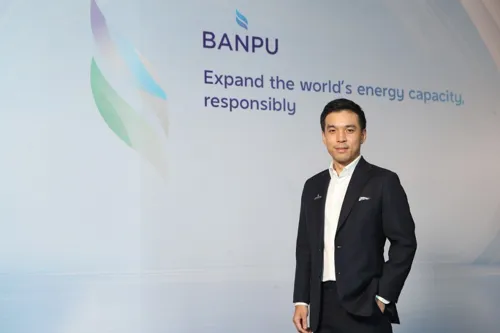
Banpu, a major Thai energy company, announced plans to ramp up U.S. natural gas production to 960 million cubic feet per day by 2026—a significant 15% increase from 836 million in 2025. The company is expanding its Texas power generation platform (Temple I&II + new Jack County facility) with CCUS carbon capture technology and securing long-term power purchase agreements (PPAs) to serve hyperscaler data centers and AI infrastructure. This directly addresses surging electricity demand from cloud and semiconductor sectors, positioning Banpu as a critical energy supplier for Asia's tech boom.
 Together GoWeGo! Ferry tickets in Thailand.

▾ Hover for summary ▾ Tap for summary
Master Plan 101, a premium home builder, disclosed a 1.4 billion baht project backlog and targets 15% growth in 2026. The company is launching "MTP HI," a modern luxury smart home series featuring 50+ integrated technologies including home automation, solar integration, EV charging, and air filtration—starting at 40 million baht. A key differentiator: Master Plan 101 claims to be the only Thai builder offering complete turnkey service (design, construction, interior, landscaping) under one contract with a single team, ensuring precise budget control and faster delivery.

▾ Hover for summary ▾ Tap for summary
A border conflict last year triggered the exodus of hundreds of thousands of migrant workers from Thailand, exposing critical structural vulnerabilities across key sectors. Agriculture, manufacturing, construction, tourism, and services all depend heavily on cross-border labor, particularly from Myanmar and Cambodia. While Thailand has extended work permits for existing migrant workers and is exploring labor agreements with Sri Lanka, Bangladesh, and Indonesia, these stabilization measures cannot quickly replace the lost workforce—especially in the Eastern border region where Cambodian workers dominated. The deeper challenge: the geographic proximity, familiarity, and low transportation costs that made neighboring countries ideal labor sources cannot be replicated or rebuilt quickly through policy alone, even as recruitment barriers and costs have risen significantly.

▾ Hover for summary ▾ Tap for summary
Thailand's government plans to introduce a disaster insurance scheme covering floods, cyclones, and earthquakes for 20 million at-risk households, modeled on Japan's system. The state will purchase baseline insurance from providers, with payouts triggered automatically by damage criteria set by the insurance regulator—faster and more generous than traditional government relief. Target rollout is October 1, aiming to reduce strain on annual disaster budgets (currently 40–50+ billion baht for floods alone).

▾ Hover for summary ▾ Tap for summary
A 16-year-old Thai guitarist from Phuket, Nene Royal, has gone viral on America's Got Talent with over 200M views. Bloomberg reports her success is sparking renewed interest in Thai tourism—a critical economic driver struggling to recover (20M visitors YTD vs. 40M pre-pandemic). The Thai government is leveraging her international visibility for the 'Amazing Thailand' campaign. Tangible SME impact: guitar shops and music schools report surged demand for electric guitars. Her modern rock image also differentiates Thai soft power beyond traditional beach-and-culture messaging.

 Stop running your company on Excel.