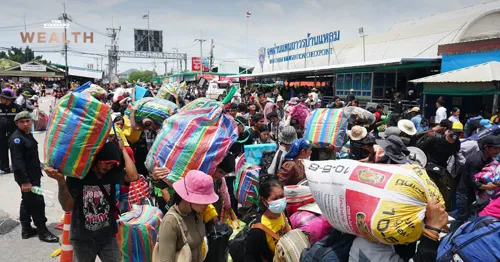
A border conflict last year triggered the exodus of hundreds of thousands of migrant workers from Thailand, exposing critical structural vulnerabilities across key sectors. Agriculture, manufacturing, construction, tourism, and services all depend heavily on cross-border labor, particularly from Myanmar and Cambodia. While Thailand has extended work permits for existing migrant workers and is exploring labor agreements with Sri Lanka, Bangladesh, and Indonesia, these stabilization measures cannot quickly replace the lost workforce—especially in the Eastern border region where Cambodian workers dominated. The deeper challenge: the geographic proximity, familiarity, and low transportation costs that made neighboring countries ideal labor sources cannot be replicated or rebuilt quickly through policy alone, even as recruitment barriers and costs have risen significantly.