
Archive
August 25, 2026

▾ Hover for summary ▾ Tap for summary
A 16-year-old Thai guitarist from Phuket, Nene Royal, has gone viral on America's Got Talent with over 200M views. Bloomberg reports her success is sparking renewed interest in Thai tourism—a critical economic driver struggling to recover (20M visitors YTD vs. 40M pre-pandemic). The Thai government is leveraging her international visibility for the 'Amazing Thailand' campaign. Tangible SME impact: guitar shops and music schools report surged demand for electric guitars. Her modern rock image also differentiates Thai soft power beyond traditional beach-and-culture messaging.
▾ Hover for summary ▾ Tap for summary
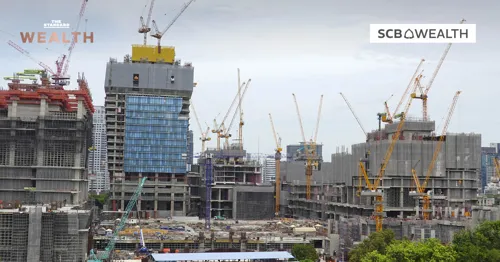
Thailand's construction sector faces significant headwinds in 2026-2027. Public construction investment will contract 13% year-over-year to ~490 billion baht in FY2570, projected to shrink 5% in absolute value. Private construction will stagnate (flat to 1% growth). The residential market is particularly weak: new unit openings in Bangkok and vicinity will drop sharply to just 44,000 units/year—a historic low—driven by high household debt, tighter lending standards, and global geopolitical uncertainty. Key risks include sustained high material costs and delayed mega-project tendering (Southern double-track rail).
▾ Hover for summary ▾ Tap for summary
Thailand's central bank (BOT) is expected to hold its policy rate steady at 1.00% at its August 26 meeting, according to consensus from major research houses (KResearch, Krungthai, and Krungsri). The decision reflects a balance between declining inflation pressure (July CPI at 1.95%) and a fragile, uneven economic recovery (Q2 GDP growth at 1.9%, below potential). The rate will likely remain at 1% throughout 2026 to support recovery while preserving policy flexibility for external risks. Key for SMEs: cautious credit environment continues; supply-side inflation risks (El Niño, high fertilizer prices) remain a tail risk into Q4.
▾ Hover for summary ▾ Tap for summary
Thailand's National Development Council is accelerating a new law to protect gig workers on digital platforms, who now number nearly 500,000 and face gaps in benefits, unsafe working conditions (10–12 hour days), and limited bargaining power. The proposed law would define platform obligations, ensure wage transparency through algorithms, and promote worker collective bargaining. Thailand is adopting international ILO standards while studying models from the UK (where Uber drivers won worker status) and others.

 Empower businesses to thrive in the digital age.

▾ Hover for summary ▾ Tap for summary
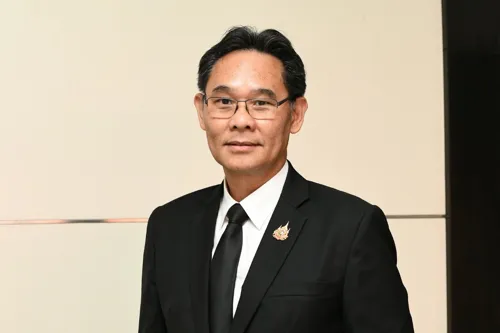
Tim Cook of Apple shares his company's hiring philosophy that goes beyond academic credentials or technical coding skills. Apple prioritizes diverse perspectives, team collaboration, curiosity, and creativity—the "1+1=3" principle—believing that synergistic teamwork produces outcomes greater than the sum of individual contributions. This insight is relevant for Thai tech companies seeking to build high-performing teams that innovate and create world-changing products.
▾ Hover for summary ▾ Tap for summary
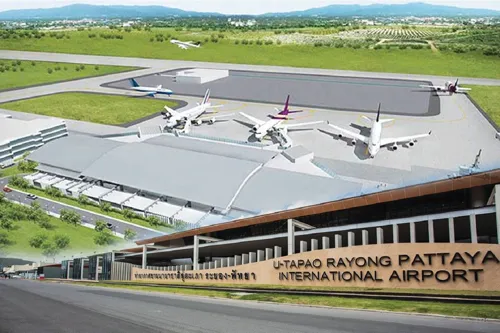
Thailand's government has approved tax and investment incentives for the U-Tapao Airport and Eastern Aerotropolis project, targeting 1.3 trillion baht in private investment and 63,700 new jobs. Key measures include double deductions for CAPEX/OPEX, special visas for foreign workers, reduced property taxes, and plans for cruise ports and yacht marinas. Implementation is aimed for September 2026, positioning the aerotropolis as an economic hub for technology, tourism, and high-value services across Thailand's Eastern Economic Corridor.

▾ Hover for summary ▾ Tap for summary
Thailand's automotive industry reports that imported EVs now account for 62.58% of EV sales (125,411 units), while domestic EV production reached only 46,924 units in the first 7 months of 2025. The gap reflects unfair tax treatment that favors imports over locally-produced EVs and combustion vehicles. Industry leaders are calling on government to restructure excise tax to level the playing field, noting that domestic production supports local employment and supply chains. Meanwhile, pickup truck sales have collapsed 60% due to tightened lending and weak economic growth (1.9% in Q2).
▾ Hover for summary ▾ Tap for summary
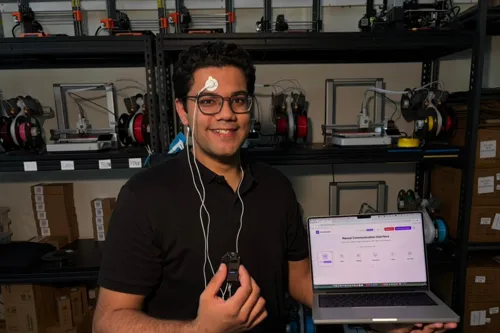
A startup is developing neural signal technology to restore communication capabilities, likely for patients with paralysis or speech disorders. While the innovation is significant for healthcare technology, the full article details were inaccessible due to JavaScript requirements, limiting assessment of the startup's location, funding, and specific Thailand/SME relevance.
 Your real translator for LINE and Discord.

▾ Hover for summary ▾ Tap for summary
A critical analysis of Thailand's geopolitical and economic entanglement with Myanmar, examining how Cold War-era support for armed ethnic groups evolved into illicit trade corridors worth tens of millions daily, while contemporary diplomatic engagement risks prioritizing trade over regional security challenges including transnational crime, narcotics, migration, and pandemic threats.

▾ Hover for summary ▾ Tap for summary
Stripe is expanding its payment infrastructure in Singapore to better serve global commerce. This is relevant for Thai SMEs looking to scale cross-border sales, as Stripe's regional expansion often precedes or parallels Thailand rollouts, and improved Singapore connectivity can facilitate regional payment flows.

▾ Hover for summary ▾ Tap for summary
The Thai SEC (ก.ล.ต.) and Stock Exchange (ตลท.) are strengthening internal audit requirements starting at the IPO approval stage to enhance corporate governance and investor protection. Key changes include repositioning internal auditors as proactive "Early Warning Systems" for risk detection rather than retrospective compliance checkers, with emphasis on faster identification of anomalies in listed companies. This affects all firms seeking public listing and will eventually extend to all listed companies, directly impacting IPO-stage startups and SMEs pursuing capital market access.

▾ Hover for summary ▾ Tap for summary
Deputy PM Pakorn will conclude public consultation on civil service early retirement on August 27 and submit to cabinet. He is also advancing 58 secondary law amendments to support business, with 11 immediately actionable. These reforms aim to restructure government decision-making and align with OECD membership criteria by 2029, shifting from top-down to collaborative governance models.

 Want to buy or sell a business?

▾ Hover for summary ▾ Tap for summary
Thailand's Cabinet approved 4 major capital market law amendments to modernize securities regulation, derivatives trading, trust structures, and digital asset oversight. The reforms aim to align legal frameworks with current market developments, improve SEC enforcement capabilities (including joint investigation powers), and enhance Thailand's capital market competitiveness. Key for fintech/digital asset businesses and institutional investors navigating evolving regulatory requirements.

▾ Hover for summary ▾ Tap for summary
NEP (a Thai real estate and industrial company) has secured exclusive global licensing from GLAD USA to develop and market WISE Stretch'n Close bags using Stretch Technology. The bags hold 30% more capacity, feature improved durability with a Diamond Pattern design, and maintain food freshness better—addressing modern consumer demand for sustainable packaging and reduced food waste. This marks NEP's first technology transfer partnership with a global packaging leader and positions Thai packaging industry at international standards, aligning with ESG and BCG Economy principles.
▾ Hover for summary ▾ Tap for summary
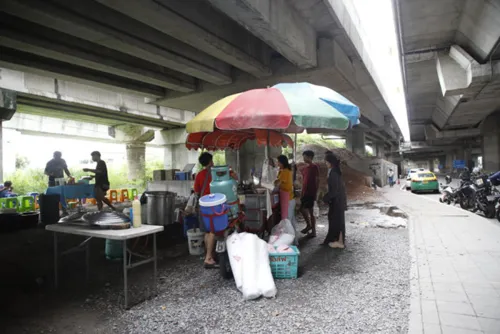
Thailand's cabinet is set to expand social security coverage under Section 33 to include agricultural workers, street vendors, and domestic workers—currently exempt from compulsory protection. After a 180-day transition period, these workers will qualify for contributions from employers, employees, and the state. The Labour Ministry is also proposing amendments to strengthen domestic violence protections, including non-compoundable offences and stricter penalties. These moves signal government prioritization of informal-sector worker rights and family safety, though implementation timelines and enforcement effectiveness remain critical variables for SMEs employing these worker categories.

▾ Hover for summary ▾ Tap for summary
Thailand's National Water Resources Office (NWRO) is monitoring a rainfall surge expected Aug 29–Sept 1 in the Nan and Mekong river basins (northeast), while preparing contingency plans for the 2569/70 dry season. Key concerns: mid-central and central Thailand have received below-average rainfall this monsoon, putting water reserves at risk. NWRO is accelerating early-warning forecasts and surveying groundwater reserves using satellite data (GISTDA) to ensure equitable water allocation during the dry season. Drought preparation measures are being submitted to the National Water Resources Committee.
 Together GoWeGo! Ferry tickets in Thailand.
▾ Hover for summary ▾ Tap for summary
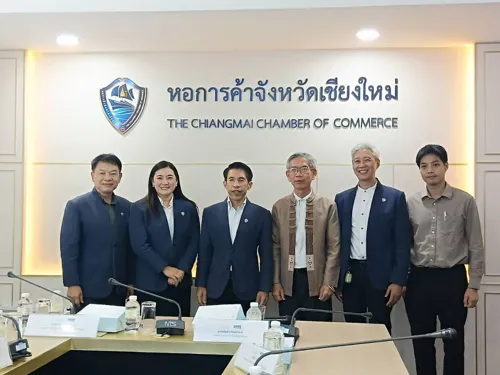
Chiang Mai's Chamber of Commerce is positioning the province as a global longevity and wellness hub through a 5-year strategy (2570-2574) targeting 150 billion baht in foreign tourist revenue. The initiative encompasses five clusters: medical/health services, health food, cosmetics/herbal products, mindfulness/lifestyle wellness, and digital/innovation marketing. Key projects include developing medical spas, herbal product upgrades to medical-grade standards, and launching the Chiang Mai Longevity Summit 2026 to attract high-spending wellness tourists (45,000-80,000 baht per visit) and scale foreign visitor numbers from 3 million to 7.5 million.

▾ Hover for summary ▾ Tap for summary
DOHOME, Thailand's major home improvement retailer-distributor, announced a multi-year growth strategy to reach Top 3 market position within 3–5 years by merging founder-era trust-building with second-generation professional management and digital innovation. The company is pursuing a balanced 50/50 B2B-B2C split, rolling out a modernized omnichannel experience, expanding house brands (now 20+ brands representing 19–20% of sales), and deploying two store formats—XL branches (27 locations) and convenience-focused "Dohome To Go" (30 branches)—across the country.

▾ Hover for summary ▾ Tap for summary
As generative AI reshapes the labor market, this analysis identifies five AI-proof skills that will retain lasting value: strategic communication (judgment over production volume), advanced social skills (relationship-building and conflict resolution), leadership and decision-making (ethical judgment in ambiguity), operations management (managing complexity with discretion), and AI implementation (integrating AI pragmatically into workflows). The key insight: competitive advantage lies not in mastering AI itself, but in understanding what AI cannot replace—human judgment, trust-building, and context-aware problem-solving. Thai SMEs should prioritize developing these metacognitive and interpersonal capabilities alongside technical AI literacy.

▾ Hover for summary ▾ Tap for summary
Thai FoodTech startups from SPACE-F Batch 7 accelerator are leveraging data and biotech to drive competitive differentiation. Kresko RNAtech uses AI-powered biodata analysis to identify bioactive RNA compounds from natural sources with Serkanto AI platform; BeNatureBioLab applies HME-DDS technology to improve bioavailability of nutrients; ComexSoft offers near-real-time retail market intelligence for product and pricing decisions. Competition is shifting from supply-chain optimization to who better understands consumer biology and market data to personalize products, with personalized nutrition markets valued at $16.32B globally in 2025.

 Stop running your company on Excel.