
Archive
September 9, 2026
▾ Hover for summary ▾ Tap for summary
OpenAI has released ChatGPT Images 2.5, a performance upgrade that reduces image generation latency by up to 50%. This improvement enhances the practical utility of AI-powered image generation for SMEs and developers building content creation workflows, making the tool faster and more responsive for production use.

▾ Hover for summary ▾ Tap for summary
Meta has launched Muse, an AI personal assistant that goes beyond chatbots to execute tasks like sending emails, booking travel, and posting product listings. A key privacy feature: each user gets an isolated Muse Secure VM with no data sharing between agents, and a Sentinel controller approves all external internet access. Meta cannot see passwords or payment data, and end-users control all data access permissions. Premium tiers (USD 20–100/month) available beyond free tier. Rollout begins in the US via iOS, Android, web (muse.ai), and AR glasses coming soon.

▾ Hover for summary ▾ Tap for summary
Thailand Game Show 2026 will expand significantly with 4 full halls (38,000+ sqm) following record 206,159 visitors in 2025—the first time attendance surpassed 200,000. The event will attract 5 additional national pavilions (Germany, Japan, Korea, Philippines, Spain), 100+ Thai game studios, 80+ indie games, and industry legends like John Romero. This expansion reinforces Thailand's position as Asia's gaming hub, with business transactions valued at 1.22 billion baht in the prior edition, while the gaming industry contributes 37 billion baht (~70%) of Thailand's 53.4 billion baht digital content market.

▾ Hover for summary ▾ Tap for summary
Thailand's government has finalized the "Thai Travel Plus" domestic tourism subsidy programme, approved for 1 million rights (up to 5 per person). Support includes up to 1,500 baht nightly lodging subsidies and co-pay vouchers (1,500–2,000 baht) for tourism-related spending. Registration opens October 2026, with travel starting 1 November. The scheme aims to generate 58,000–60,000 million baht in circulation and boost per-trip spending by ~20%. Price controls and blacklist mechanisms will monitor for fraud.

 Empower businesses to thrive in the digital age.

▾ Hover for summary ▾ Tap for summary
Thailand's PTT Group—a major 1.8 quadrillion-baht energy conglomerate managing over 100 subsidiaries—is undergoing major C-suite turnover through late 2025. PTTEP has appointed Kunita Thanita Sasvathayu as new CEO starting October 2025; OR is recruiting a replacement for its outgoing CEO; GPSC's CEO retires in October 2025; and PTT Group's main CEO retires in April 2026. This succession cycle affects strategic direction and operational continuity across Thailand's energy and utility sectors.

▾ Hover for summary ▾ Tap for summary
The article explores strategic implications for Southeast Asian firms as Chinese technology enters the region. While the full content was not accessible, the headline suggests a timely analysis of what SEA companies should prioritize owning (IP, infrastructure, capabilities) amid fragmented Chinese tech expansion into the market.
▾ Hover for summary ▾ Tap for summary
OpenAI is launching an AI tool for chip design with claimed cost savings versus open-source alternatives, signaling competition in the AI-assisted hardware design space.

▾ Hover for summary ▾ Tap for summary
Thailand's Department of Public Works and Bangkok Metropolitan Administration are developing comprehensive zoning and building control regulations for data centers. Small-to-medium data centers will be permitted in multiple zones (yellow/residential, red/commercial, green/agricultural, purple/industrial) with specific conditions; large facilities limited to purple industrial zones away from communities. Regulations address water/electricity consumption, fire safety, building coverage ratios, and setbacks. The framework aims to support SME participation while managing environmental and infrastructure impacts. New ministerial regulations on building control are being drafted for enforcement by local authorities and Bangkok.
 Your real translator for LINE and Discord.

▾ Hover for summary ▾ Tap for summary
China's economy is sustaining ~30% of global economic growth, with domestic consumption now driving nearly half of its expansion. The shift from export-dependent to consumption-led growth, combined with renewable energy cost reductions (reaching sub-60% levels over a decade) and rising innovation rankings, positions China as a critical economic stabilizer. This resilience matters for Thai SMEs: supply chain stability, market access to Chinese demand, and tech ecosystem integration are increasingly dependent on China's domestic strength amid global trade tensions and geopolitical uncertainties.

▾ Hover for summary ▾ Tap for summary
The article discusses Indonesia's state-backed venture capital firms adopting conservative investment strategies rather than taking on riskier ventures that could drive innovation and growth in the tech ecosystem.
▾ Hover for summary ▾ Tap for summary
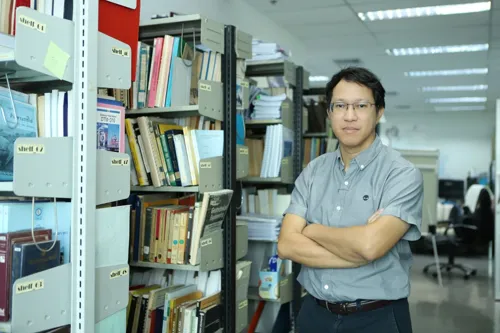
A Kasetsart University civil engineering professor analyzes the Pua subdistrict (Nan) flooding disaster, identifying multiple systemic failures: 384 mm of rainfall in 4 hours exceeded critical thresholds, exacerbated by mountainous terrain, undersized reservoirs clogged with sediment, and poor maintenance including trees growing on embankments. The analysis warns that "false sense of security" from reservoirs creates complacency—bureaucratic delays in dike maintenance, lack of proper dredging protocols, and absence of earthquake-resilient design standards compound risk, with worn-out embankments potentially failing catastrophically without urgent structural reform.

▾ Hover for summary ▾ Tap for summary
Alibaba is consolidating its B2B platforms 1688 and Alibaba.com into a single operational structure. This strategic integration likely aims to streamline operations, reduce costs, and improve market efficiency for SMEs trading across domestic China and international markets.

 Want to buy or sell a business?
▾ Hover for summary ▾ Tap for summary
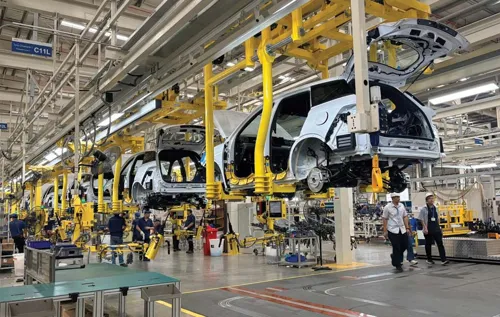
BYD confirms long-term commitment to Thailand as its primary ASEAN manufacturing base with 5,000–6,000 units/month capacity and 5,500+ employees (94% Thai). The company is ramping export volume to 40%+ and plans Thailand's first fast-charging network outside China. BYD is seeking policy support including favorable EV 3.0 incentives, PHEV parity with BEV benefits, and enhanced offset credits for exports. Local supply chain already includes 266 suppliers with 125 component manufacturers and 40 TISI-certified testing firms.
▾ Hover for summary ▾ Tap for summary
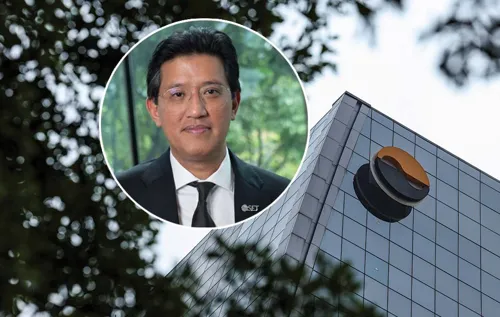
Thailand's Stock Exchange is relaxing IPO criteria effective 11 September to attract New Economy businesses and BOI/EEC-promoted companies, allowing unprofitable firms to list if they meet scale/revenue thresholds. Ten target industries (EVs, photonics, biotech, digital, advanced agriculture, medical tech, smart electronics, robotics, logistics, tourism) are now eligible. The move coordinates three pillars: SET rule changes, SEC approval streamlining (targeting ~100 days from filing to offering), and BOI incentive enhancement to compete with Singapore and Hong Kong for regional capital.
September 8, 2026

▾ Hover for summary ▾ Tap for summary
ASML's next-generation EUV (Extreme Ultraviolet) lithography machines are attracting major chipmakers Samsung and TSMC, signaling industry momentum toward advanced semiconductor manufacturing. This development affects global chip supply chains and tech capability hierarchies relevant to Thai tech ecosystem positioning and upstream supplier opportunities in advanced manufacturing.
▾ Hover for summary ▾ Tap for summary
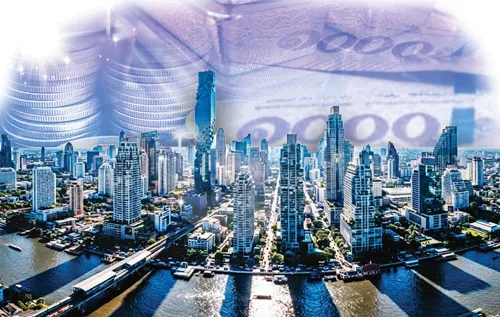
Thailand's FY2570 budget (starting October 2025) is set at 3.788 trillion baht with a deficit of 788 billion baht and public debt reaching a historic 12 trillion baht (66.35% of GDP). Off-budget revenue nearly reaches 4 trillion baht. The government forecasts economic growth of 1.7–2.7% for FY2570, supported by export expansion and private investment, with inflation expected at 0.5–1.5% and current account surplus at 1.6% of GDP. Key risks include regional tensions and elevated household/business debt levels.
 Together GoWeGo! Ferry tickets in Thailand.
▾ Hover for summary ▾ Tap for summary
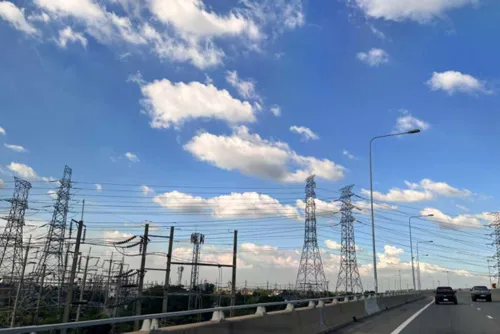
Thailand's draft 2026 Power Development Plan proposes 9,000 MW of small modular reactors (SMRs) to meet its net-zero commitment and reduce reliance on fossil fuels. The first domestic SMR unit is expected online by 2037, with capacity up to 300 MW per unit. This represents a major strategic shift for Thailand's energy transition, with clean energy projected to comprise 56–98% of the energy mix by 2050—up from 20% today. SMRs will complement renewable scaling and serve energy-intensive sectors like data centers and advanced manufacturing.

▾ Hover for summary ▾ Tap for summary
The Thai hospitality sector is divided on subsidy mechanics for the "Thai Teaw Thai Plus" scheme. Hotels prefer a 50% co-payment model over fixed-rate subsidies, citing fairness across hotel categories. The co-payment approach—familiar to travellers from prior schemes—would better incentivize bookings and accommodate price-sensitive consumers seeking upgrade options, while premium properties would still benefit. Timing concerns remain: launching during low season may not maximize domestic tourism stimulus and could push travel costs higher due to dynamic pricing.
▾ Hover for summary ▾ Tap for summary
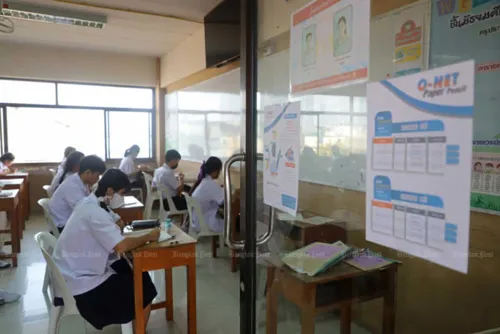
Thailand's 2025 PISA results show students scoring below OECD averages in science (342 points), mathematics (407), reading (329), and computational problem-solving (467). A 25-year trend analysis reveals overall decline in math and reading, with persistent performance gaps between top and bottom learners. Deputy Education Minister notes the results highlight gaps in global competitiveness as the country pursues OECD membership. 17% of Thai students show resilience despite socioeconomic disadvantage, and 59% meet baseline science proficiency—but significant policy upgrades are needed to close equity and achievement gaps.

▾ Hover for summary ▾ Tap for summary
Thailand's government will require all social media platforms (Facebook, Instagram, TikTok, YouTube, X, etc.) to verify advertiser identities before publishing ads starting Nov 1. The rule—published in the Royal Gazette on May 5—aims to prevent tech-related fraud and scams conducted through paid social media advertising. Platforms must verify identity through government-issued ID or reliable digital authentication; advertisers authenticated within one year are exempt. Data must be retained for at least 90 days after campaign end. This directly impacts SMEs and any business using paid social ads in Thailand.

 Stop running your company on Excel.