
Archive
September 8, 2026

▾ Hover for summary ▾ Tap for summary
Thailand's gems and jewellery sector, which employs ~800k workers and generated $26.6bn in exports in 2025 (up 44.8% YoY), is urging the government to conclude FTA negotiations with the EU and initiate talks with the US. Key headwinds include US tariffs (now at 12.5% on gemstones), rising gold/silver prices, and labour shortages. Exports are projected to grow >10% this year if no unexpected negative factors emerge. The sector is also promoting the 74th Bangkok Gems & Jewellery Fair (8-12 Sept) to generate orders.

▾ Hover for summary ▾ Tap for summary
Amity, a Thai AI company founded by Kraiwan Jearvanond, has grown to $100M+ valuation by focusing on "Vertical AI"—specialized AI solutions tailored to specific industries rather than generic approaches. The company transformed from traditional software to generative AI and now serves European clients, demonstrating a viable strategy for Thai tech firms to compete globally against tech giants by focusing on niche, high-value solutions.

▾ Hover for summary ▾ Tap for summary
Google has rolled out Google Pics, an AI-powered image creation and editing tool, to Google Workspace customers and Google AI Pro/Ultra subscribers. The tool works as a standalone app and integrates into Workspace products (Slides, Docs, Drive), enabling users to create, edit, and collaborate on images within their workflow. Key capabilities include precise object detection, text editing and translation within images, team collaboration, and variant generation. Google distinguishes Google Pics from Google Photos by positioning it as a creative workspace tool rather than a personal backup and search solution.
▾ Hover for summary ▾ Tap for summary
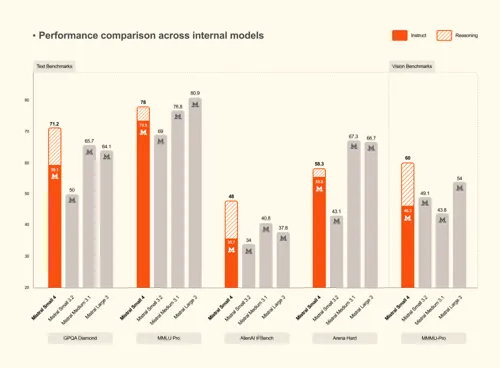
Mistral, a European AI company, has raised €3 billion in Series D funding at a €21 billion valuation, with Samsung Electronics as the lead investor. The company is pivoting toward enterprise clients (125+ customers including Airbus, ASML, HSBC) with proprietary solutions like Shieldstral and Mistral OCR, signaling a shift from competing on general-purpose models to specialized vertical applications. This reflects broader AI industry consolidation and the growing importance of enterprise-focused AI strategies for SMEs evaluating AI partnerships.

 Empower businesses to thrive in the digital age.
▾ Hover for summary ▾ Tap for summary
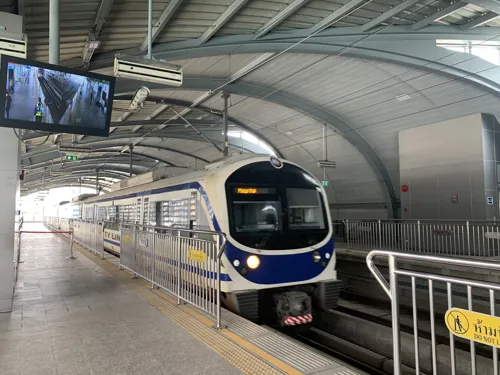
CP Group has not yet confirmed a proposal to extend Airport Link train operations by 4 months beyond the September 30 MOU expiration, with government aiming to hand over to State Railway subsidiary by January 31, 2027. Deputy PM Pipat assures the public service will continue without interruption, but the transition depends on private-sector cooperation and PM approval. Currently, only 4 of 9 trains are operational due to wheel wear maintenance, with full fleet recovery expected within days—a manageable logistics challenge distinct from the contract dispute.

▾ Hover for summary ▾ Tap for summary
The Thai government finalized the "Thailand Travel Plus" stimulus program, raising government accommodation subsidies to 1,500 baht per entitlement nationwide (vs. previous co-payment cap of 3,000 baht), with 1 million allocations limited to 5 per person. Voucher values increased to 1,500 baht (major cities) or 2,000 baht (secondary cities) under co-payment format (50/50 split). Vouchers now usable across spa, massage, nails, tourism activities, and souvenirs—not just restaurants. Program runs November 1–December 15, 2026 and January 16–February 28, 2027; registration opens October 1, 2026. This directly impacts Thailand's tourism, hospitality, and SME service sectors.
▾ Hover for summary ▾ Tap for summary
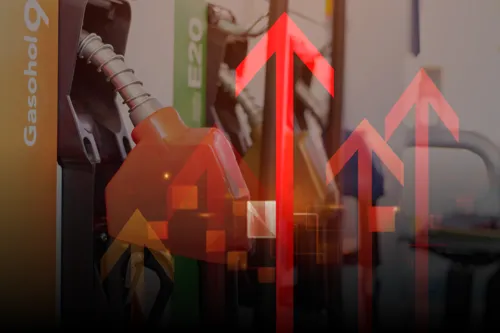
Thailand's Oil Fund Committee (OFM) approved fuel price increases effective 9 September 2026: diesel up 0.70 baht/liter, petrol and gasohol up 0.80 baht/liter, with premium grades unchanged. Major oil operators PTT and Bangchak implemented the adjustments, with diesel retailing at 39.84 baht and regular petrol (ULG) at 48.08 baht. This impacts SME logistics costs and consumer transport expenses directly.
▾ Hover for summary ▾ Tap for summary
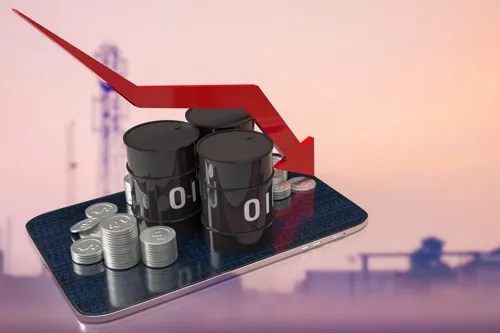
Thailand's energy regulator (GFPT) raised retail fuel prices effective 9 September 2026 — diesel by 0.70 baht/litre, petrol by 0.80 baht/litre — in response to surging global oil prices driven by Middle East geopolitical tensions and supply concerns. The Oil Fund's deficit has ballooned to over 83 billion baht, burning roughly 500 million baht daily in subsidies. Price adjustments are necessary to rebalance the fund and maintain its long-term stability, though they directly impact Thai SME transport and logistics costs.
 Your real translator for LINE and Discord.

▾ Hover for summary ▾ Tap for summary
Thailand's Ministry of Energy unveiled the PDP 2026 energy development roadmap, prioritizing Scenario 4 (hybrid approach) with 73% renewable energy by 2050 alongside SMR nuclear capacity (9,000 MW) and carbon capture technology. Key initiatives include selective screening of data centers for AI/tech attractiveness, electricity price cap of 3.88 baht/unit for general users (with premium pricing for clean energy), and grid infrastructure investment of 300,000-700,000 million baht. The plan supports Net Zero 2050 goals and aims to attract global tech investment while maintaining energy security.

▾ Hover for summary ▾ Tap for summary
Former PM Srettha Thaveesin is partnering the Serim Glab Foundation with private sector allies (including Sansiri) and government bodies to address Thailand's raw milk oversupply crisis. Rather than a simple donation, the initiative redirects surplus milk products to schools, orphanages, and child development centers in Bangkok, Pathum Thani, and Ratchaburi—linking a farm-level problem to improved nutrition for vulnerable children. This reflects an integrated approach to rural support and social welfare, moving beyond siloed problem-solving.
▾ Hover for summary ▾ Tap for summary
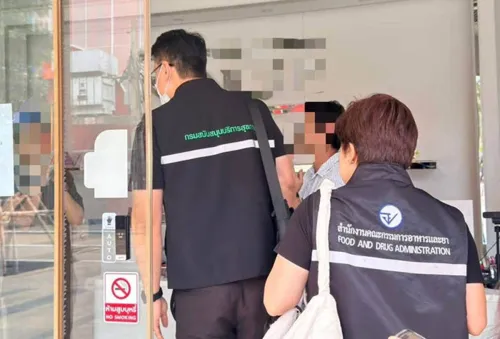
Thai health authorities (DHSS and FDA) have launched an investigation into a March 2025 fatality at a Bangkok clinic where a British influencer died from a pulmonary embolism following a penile filler injection. The patient had requested a 40cc single-session procedure against medical advice for a split treatment. The case highlights regulatory gaps in cosmetic procedure oversight and will be referred to the Medical Council of Thailand to assess professional standards compliance. This may trigger stricter enforcement of medical facility standards and procedural protocols for elective cosmetic treatments.
▾ Hover for summary ▾ Tap for summary
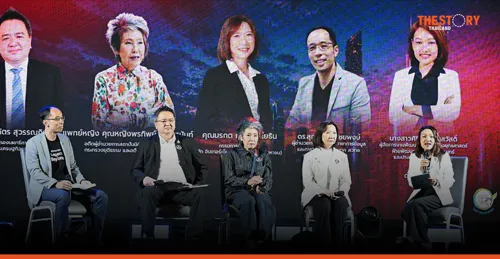
NECTEC's 40-year legacy exemplifies how applied research bridges lab innovation with real-world problems. Three case studies highlight this: DNA-linking systems for forensic crime networks in the South; TMAP platform connecting siloed government data to identify poverty patterns; and Internet infrastructure development. The core insight is that technology adoption depends not just on technical capability but on researcher engagement with actual user workflows and sustained institutional support—critical lessons for Thai SMEs and policymakers navigating digital transformation.

 Want to buy or sell a business?
▾ Hover for summary ▾ Tap for summary
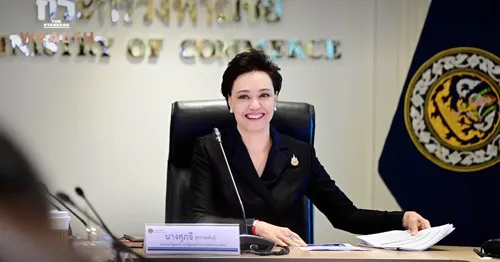
Thailand's Commerce Minister Supajee reports significant progress in US tariff negotiations, with major substantive issues resolved and only technical details remaining. Negotiations are expected to conclude within one week. Once finalized, Prime Minister Anutin will call President Trump to formally seal the deal, with export targets expected to align with previously agreed figures from the prior government.
▾ Hover for summary ▾ Tap for summary
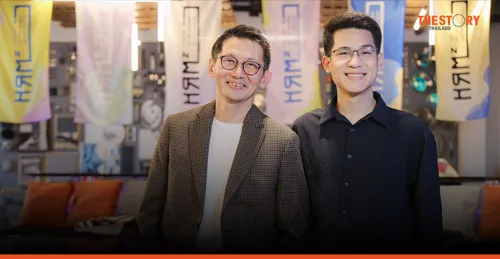
House of Human's H.O.W. (House of Wisdom) has launched HRM² (House of Reverse Mentoring), a three-month program positioning Gen Z as content designers and mentors to C-suite executives and business owners. The curriculum addresses a real business challenge: Gen Z now drives market direction, consumer behavior, and technology adoption—yet 56% plan to stay with employers only 1–2 years. The program combines four learning phases (Understand, Sell, Work, Build) with hands-on reverse internships where executives experience working as interns in Gen Z-led companies. Survey data shows 66.9% of Thai Gen Z rely on TikTok video reviews over Google search (21.9%), and both influencer reviews and user feedback outweigh AI recommendations by nearly 2x. For SME/tech-focused businesses, this signals growing demand for Gen Z-aware strategy and talent retention—core competitive advantages in Thailand's emerging market.
▾ Hover for summary ▾ Tap for summary
Industry leaders warn that global diesel supply constraints will persist through the winter, potentially affecting fuel availability and costs for businesses reliant on diesel power and logistics.
▾ Hover for summary ▾ Tap for summary
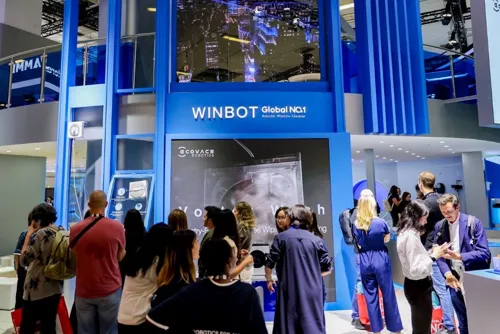
ECOVACS Robotics is expanding its portfolio beyond floor cleaning to window, lawn, and pool cleaning robots, showcasing at IFA Berlin 2026 (Sept 4–8). The company reports 44.1% YoY growth in service robot shipments in H1 2026, serving 38M+ households globally. Key innovations include WINBOT W3 OMNI with automatic mop-washing, GOAT T Series lawn mower with edge-trimming capability, and OZMO ROLLER 3.0 wet-cleaning technology. The strategy leverages a scalable tech stack (80% core tech reused, 20% customized) backed by 900+ R&D staff and 3,100+ patents, enabling faster innovation cycles across product categories.
 Together GoWeGo! Ferry tickets in Thailand.

▾ Hover for summary ▾ Tap for summary
Squid Brand, Thailand's leading fish sauce exporter to 80+ countries, launches "This is SQUID Brand"—a collectible English-language book repositioning fish sauce as a cultural heritage product. The brand balances heritage preservation with Gen Z appeal through product innovation (e.g. truffle fish sauce) while maintaining core quality, signaling a strategic shift toward cultural storytelling and premium positioning rather than commodity marketing.

▾ Hover for summary ▾ Tap for summary
Apple is exploring changes to the App Store's revenue model, including higher commission rates and recurring monetization schemes, according to Bloomberg's Mark Gurman. The initiative, backed by new CEO John Ternus and Services head Eddy Cue, reportedly prompted Phil Schiller to step down from App Store oversight due to concerns about developer relations and regulatory backlash.
▾ Hover for summary ▾ Tap for summary
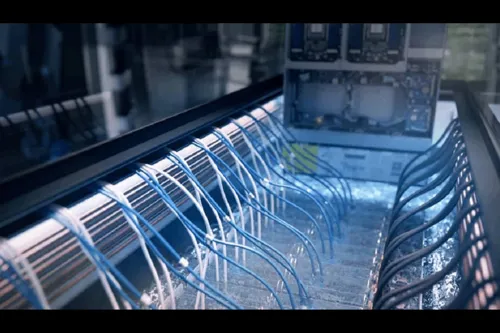
Thai data centers are adopting advanced liquid cooling systems for AI chips (especially NVIDIA GPUs) that require higher cooling capacity than water alone. These systems use specialized chemical coolants in closed loops, including ammonia and CO₂-based refrigerants. The article flags a regulatory blind spot: data centers currently exempt from EIA (environmental impact assessments) in Bangkok despite handling hazardous chemicals. Coolant leaks pose real risks (respiratory toxicity, asphyxiation in enclosed spaces). Newer Thai AI factories are upgrading cooling tech, but environmental protocols lag industry practice—key concern for SMEs building or hosting infrastructure.
▾ Hover for summary ▾ Tap for summary
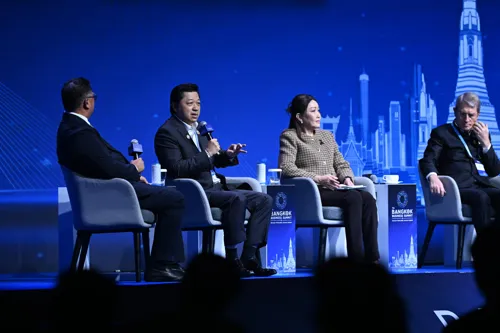
CP senior executive Suphachai Chearavanont outlines a five-tier technology ecosystem for Thailand to drive growth: from energy and connectivity infrastructure through data centers, AI models, and applications. Key opportunities lie in upgrading agriculture via precision farming and AI automation (3–5x productivity gains), shifting from raw commodity exports to value-added agri-tech products, and leveraging AI/data across manufacturing, logistics, and B2B operations. Success requires coordinated investment across public and private sectors to support SME participation throughout the supply chain.

 Stop running your company on Excel.