
Archive
September 18, 2026
▾ Hover for summary ▾ Tap for summary
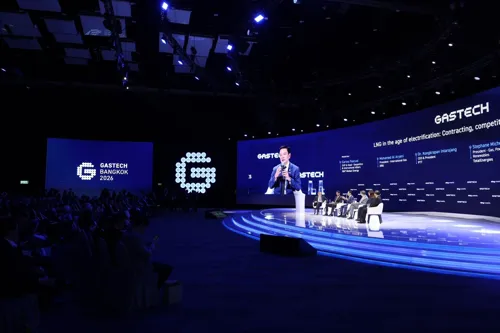
PTT Group executives presented at the Gastech 2026 conference in Bangkok (14–17 September) on balancing energy security, affordability, and sustainability. Key messages: natural gas and LNG remain strategic to grid stability and renewable integration; LNG supply diversification and management flexibility are critical; energy systems must transform holistically toward clean, resilient, competitive infrastructure. The group is advancing CCS technology and methane reduction. Actionable for energy businesses and suppliers to the power sector, but primarily promotional messaging rather than hard policy or market shifts.
▾ Hover for summary ▾ Tap for summary
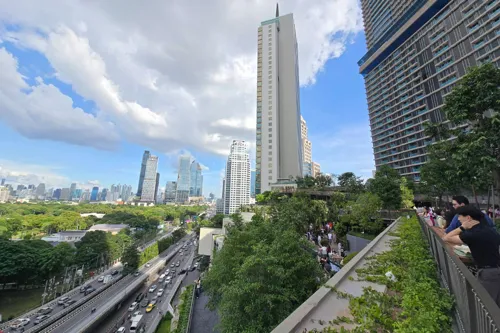
Bangkok's two largest mixed-use retail players—One Bangkok (Thai Beverage/Sirivattanaphakdi group) and Central Park (Central Pattana)—are intensifying competition around Lumpini Park in late 2026 and 2027. Both are deploying aggressive strategies: One Bangkok targets 10% traffic growth (to 120,000 daily visitors by 2027) and has attracted flagship tenants including Tsutaya Bookstore (first in Thailand), Edikted (first in Asia), and a HarborLandIsland water park. Central Park aims for 10% growth (25 million annual visits in 2026) and is positioning itself as a "Bangkok's World Stage" culinary landmark with Michelin-guide restaurants and global first-in-Thailand brands (e.g., Blue Bottle Coffee). Both are investing heavily in MRT connectivity. Relevant to SMEs in fashion, F&B, and retail—expect heightened competition and rising tenant vetting standards.

▾ Hover for summary ▾ Tap for summary
Grab reports a 68% year-on-year surge in drivers and riders using the platform for supplementary income during the first half of 2026, driven by the "side hustle" trend. Most users are Gen Z (42%) and Millennials (44%), primarily active 18:00–22:00 on weekdays. Grab is scaling its "Part-time for Thai" program—targeting government employees, military, police, students, and vocational trainees—offering Fast Track onboarding, equipment, and special incentives to expand gig income opportunities across demographics.

▾ Hover for summary ▾ Tap for summary
Thailand's Denchai-Chiang Rai-Chiang Khong dual-track railway (323.1 km across 4 provinces) is 70% complete, with the ambitious Ngao Tunnel—Thailand's longest at 6.2 km—on track to break through in 2569 (2026). Three other tunnels have already been pierced; the project aims to open for passenger and freight service by 2571 (2027). Key challenges include geological variability and safety protocols for weak rock strata.

 Empower businesses to thrive in the digital age.
▾ Hover for summary ▾ Tap for summary
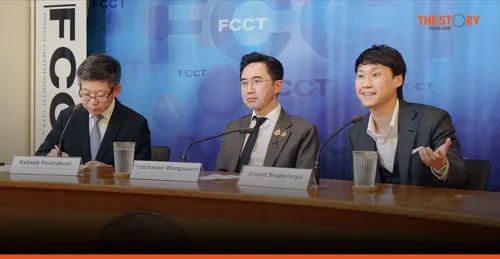
Thailand's Deputy PM and key tech leaders presented a framework for AI-driven competitiveness at an FCCT forum. Core message: AI adoption success hinges on converting technology into organizational capability (not merely access), developing human capital, and building Thailand's own tech sovereignty through domestic R&D and data assets. Critical challenge: 95% of AI pilot projects fail due to poor data quality and weak decision-making integration—Thai businesses must urgently shift to AI-powered efficiency to escape middle-income trap.

▾ Hover for summary ▾ Tap for summary
Thaivivat Insurance launched TVI Crash Detection, a smartphone-based crash detection system that automatically alerts emergency services when an accident occurs, eliminating the need for users to manually call for help while in shock. The zero-hardware solution uses existing smartphone sensors and integrates into the Thaivivat app, representing a shift from reactive (waiting for incident reports) to proactive customer care in motor insurance, with real-time emergency response coordination and GPS location tracking.
▾ Hover for summary ▾ Tap for summary
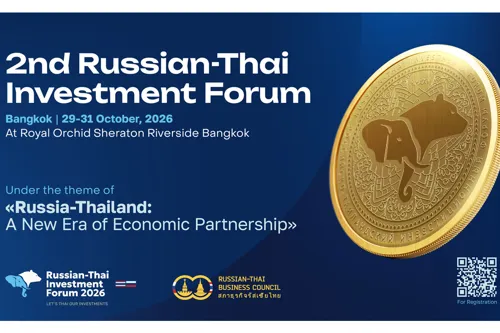
The Russian-Thai Business Council will host the second Russia-Thailand Investment Forum (RTIF2026) on October 29–31 at the Royal Orchid Sheraton Riverside in Bangkok. The forum targets high-level economic collaboration across core industries (metals, agriculture, renewable energy) and emerging sectors, building on the first forum's success which generated $3+ billion in potential investment projects. For Thai SMEs and international operators, this is a key networking and B2B matchmaking event that bridges both established and new business opportunities with Russian counterparts and Southeast Asian partners.
▾ Hover for summary ▾ Tap for summary
China's CXMT is establishing a NAND flash memory research production line in Beijing, signalling continued investment in semiconductor manufacturing capabilities. This development is relevant to tech supply chain observers and companies monitoring chip production trends in the region, though the direct impact on Thai SMEs remains indirect unless they're suppliers or partners in the semiconductor ecosystem.
 Your real translator for LINE and Discord.
▾ Hover for summary ▾ Tap for summary
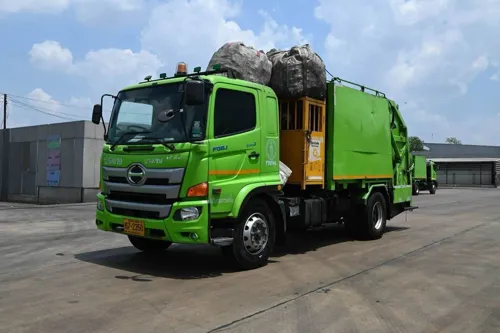
Bangkok's administration proposed a 6.04-billion-baht electric garbage truck leasing program (1,347 EVs) to reduce diesel emissions and save 4.7 billion baht over 5 years, but the Bangkok Metropolitan Council voted 27–19 to cut the entire budget. Opposition council members supported EV transition but objected to the Terms of Reference (charging station details unclear), lack of pilot testing, and contract structure, recommending instead a pilot program in Sai Yai and Khannayao districts before budget reapproval.
▾ Hover for summary ▾ Tap for summary
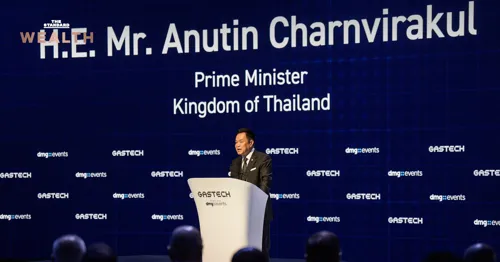
Thailand hosted Gastech 2026 in September, reaffirming energy security as a global economic priority amid Middle East tensions. The article synthesizes four strategic lessons: (1) Japan's POWERR Asia model for regional reserve sharing; (2) Singapore's ASEAN Power Grid vision with Thailand as potential hub; (3) Nigeria's success localizing energy sectors to 60%; (4) LNG producers' need for delivery speed and 20-year supply contracts. Domestically, Thailand faces a critical balancing act: Data Center demand now claims 35 GW of requested capacity (near peak national demand of 40 GW), though government revised realistic demand to 8.8 GW in PDP 2026 to avoid overinvestment. With gas representing 60% of power generation and every $3 oil swing affecting consumer electricity costs by ~5%, Thailand is accelerating transmission upgrades (35 billion baht for EEC, another 45 billion budgeted for 2027) and positioning itself as a CCS technology leader in Southeast Asia toward Net Zero 2050.

▾ Hover for summary ▾ Tap for summary
True Corporation, Charoen Pokphand Group, and AWS are jointly launching a problem-first hackathon targeting six national priority areas: education, SME/local economy, agriculture, healthcare, transport/smart cities, and disaster resilience. Unlike traditional hackathons, participants (18+, no tech background required) are matched with real societal problems and taught AI tools to solve them, with 500,000 baht in prizes and a 3-month development cycle from concept to working software. Registration closes September 30; winners may unlock scaling support.
▾ Hover for summary ▾ Tap for summary
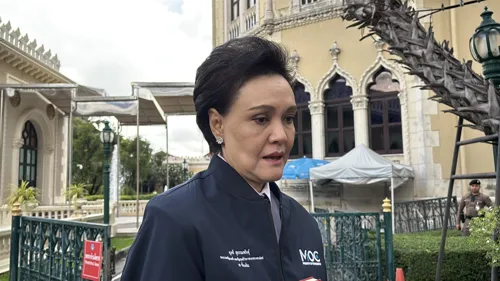
Deputy PM and Commerce Minister Suphajee announced plans to propose cabinet measures next week addressing energy costs, living expenses, and agricultural prices amid rising oil prices. Government will mobilize budget, loans, and fuel oil fund to support farmers and consumers. Thailand's inflation is projected to remain below 3% this year—lower than regional peers—while diesel prices remain heavily subsidized compared to neighboring countries. The Commerce Ministry clarified it lacks authority to set oil prices; that power rests with the Energy Policy Board.

 Want to buy or sell a business?
▾ Hover for summary ▾ Tap for summary
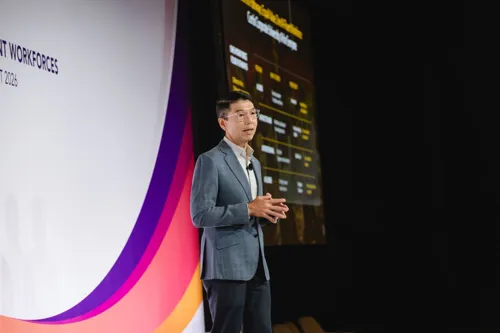
Certis focuses on building employee trust as a core strategy for scaling its security bot solutions. The article discusses how the company addresses organizational adoption challenges and employee confidence in automated security systems, making this relevant for SMEs evaluating automation and trust-building in their digital transformation.
▾ Hover for summary ▾ Tap for summary
BCPG reported to the Thai stock exchange that it received a DSI (Department of Special Investigation) request for documents related to its petroleum storage and port terminal investment project in Phetchaburi. The company has committed to full cooperation with authorities and states there are no material impacts on financial performance or operations to date, pending investigation conclusions.
▾ Hover for summary ▾ Tap for summary
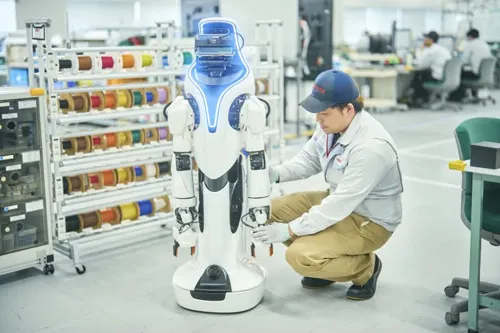
Toyota plans to deploy 400,000 robots globally by 2028, with 150,000 in its own factories and 250,000 in affiliate plants, backed by annual investments of ¥1 trillion. The company is developing humanoid robots called "ELEY" that can learn fine motor skills from human workers and help train new staff, representing a human-centric approach to manufacturing automation that emphasizes collaboration over replacement.
▾ Hover for summary ▾ Tap for summary
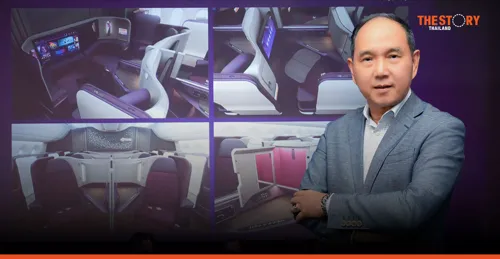
Thai Airways is undertaking a major cabin modernization program across 86 aircraft in its main fleet, introducing new Premium Business Class, Premium Economy Class, improved entertainment systems, and Wi-Fi. The first modernized aircraft will enter service mid-2027. This reflects the airline's return to financial strength (Q2 profit of 1.537 billion baht), allowing it to invest in product quality rather than compete on price. The upgrades accompany network expansion—new Bangkok-Da Nang service (14 weekly flights from December) and increased European frequencies—positioning Thai as a network carrier connecting ASEAN, China, and India through Bangkok hub.
 Together GoWeGo! Ferry tickets in Thailand.

▾ Hover for summary ▾ Tap for summary
A Thai parliament member calls for urgent clarity on alcohol advertising rules, triggered by the Lisa/BLACKPINK beer-drinking incident. The core issue: current law is too vague—entrepreneurs, influencers, and content creators don't know what's allowed. He proposes two solutions: (1) expedite subordinate legislation with clear examples of permitted vs. prohibited conduct (e.g., editorial coverage vs. paid endorsements); (2) publish a public handbook so people understand the rules without fear or legal uncertainty. Good law should clarify rules, not just create fear.
▾ Hover for summary ▾ Tap for summary
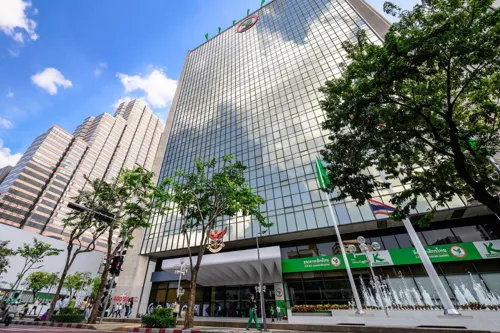
Kasikornbank successfully issued $800 million of 10-year subordinated bonds at 6.27% interest to strengthen Tier 2 capital, attracting $2.6 billion in foreign institutional investor demand. The bond issuance, rated Ba1 by Moody's, demonstrates strong international confidence in the bank's capital management and financial discipline, with 60% allocation to Asian investors. The move supports the bank's efficient capital structure planning ahead of existing Tier 2 bond redemption in October 2026.
▾ Hover for summary ▾ Tap for summary
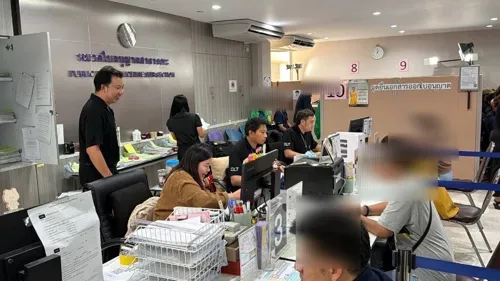
Thailand's Department of Land Transport has imposed a September 30, 2026 deadline for all app-based ride-sharing drivers (including Grab) to obtain public driving licenses. Following the MOU signed in late June, applications for public driving permits surged dramatically—car licenses up 191.6% and motorcycle licenses up 255.4% compared to pre-MOU monthly averages. The Department has opened walk-in facilities nationwide to expedite the licensing and vetting process ahead of the hard deadline.

▾ Hover for summary ▾ Tap for summary
Dr. Athipatpong Monthathicharoen from Chulalongkorn University's Economics Faculty argues that if the government extends the "Thai Help Thai Plus" (60/40) Phase 2 subsidy program, it must clarify whether the goal is alleviating hardship or stimulating the economy. With ~40 billion baht remaining in budget, he recommends targeting groups with high marginal propensity to consume, reconsidering the costly 60/40 format, and addressing potential market distortions from extended implementation. He emphasizes the scheme risks becoming a populist tool politicians favor for quick vote-getting rather than a sustainable long-term economic measure.

 Stop running your company on Excel.