
Archive
September 18, 2026

▾ Hover for summary ▾ Tap for summary
A Thai parliament member calls for urgent clarity on alcohol advertising rules, triggered by the Lisa/BLACKPINK beer-drinking incident. The core issue: current law is too vague—entrepreneurs, influencers, and content creators don't know what's allowed. He proposes two solutions: (1) expedite subordinate legislation with clear examples of permitted vs. prohibited conduct (e.g., editorial coverage vs. paid endorsements); (2) publish a public handbook so people understand the rules without fear or legal uncertainty. Good law should clarify rules, not just create fear.
▾ Hover for summary ▾ Tap for summary
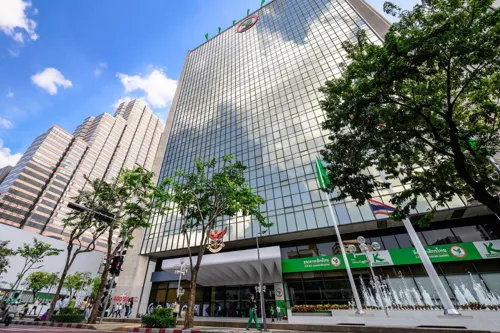
Kasikornbank successfully issued $800 million of 10-year subordinated bonds at 6.27% interest to strengthen Tier 2 capital, attracting $2.6 billion in foreign institutional investor demand. The bond issuance, rated Ba1 by Moody's, demonstrates strong international confidence in the bank's capital management and financial discipline, with 60% allocation to Asian investors. The move supports the bank's efficient capital structure planning ahead of existing Tier 2 bond redemption in October 2026.
▾ Hover for summary ▾ Tap for summary
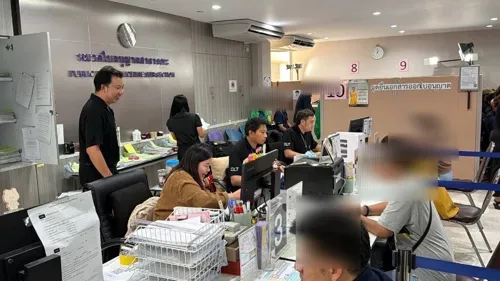
Thailand's Department of Land Transport has imposed a September 30, 2026 deadline for all app-based ride-sharing drivers (including Grab) to obtain public driving licenses. Following the MOU signed in late June, applications for public driving permits surged dramatically—car licenses up 191.6% and motorcycle licenses up 255.4% compared to pre-MOU monthly averages. The Department has opened walk-in facilities nationwide to expedite the licensing and vetting process ahead of the hard deadline.

▾ Hover for summary ▾ Tap for summary
Dr. Athipatpong Monthathicharoen from Chulalongkorn University's Economics Faculty argues that if the government extends the "Thai Help Thai Plus" (60/40) Phase 2 subsidy program, it must clarify whether the goal is alleviating hardship or stimulating the economy. With ~40 billion baht remaining in budget, he recommends targeting groups with high marginal propensity to consume, reconsidering the costly 60/40 format, and addressing potential market distortions from extended implementation. He emphasizes the scheme risks becoming a populist tool politicians favor for quick vote-getting rather than a sustainable long-term economic measure.

 Empower businesses to thrive in the digital age.
▾ Hover for summary ▾ Tap for summary
The World Bank's Board approved a new Country Partnership Framework (CPF) with Thailand for 2027-2032, focusing on economic growth and job creation. The framework emphasizes two main outcomes: boosting private sector competitiveness in advanced manufacturing, sustainable tourism, digital value chains, and agriculture; and strengthening infrastructure in water, transport, energy, fiscal resilience, and disaster preparedness. This aligns with Thailand's National Economic and Social Development Plan (14th edition, 2570-2575) and builds on commitments from Bangkok Business Summit 2026.

▾ Hover for summary ▾ Tap for summary
WPP won Coca-Cola's global data and technology advertising account, but the victory is more complex than headlines suggest. Publicis strategically withdrew to pursue the more profitable PepsiCo account, revealing that large client wins don't always translate to improved financials—WPP's net revenue declined 4.7% despite major client acquisitions. The real challenge for WPP lies in organizational restructuring and technology integration across fragmented agency units, where siloed profit-and-loss accounts undermine cross-agency collaboration on platforms like WPP Open.
▾ Hover for summary ▾ Tap for summary
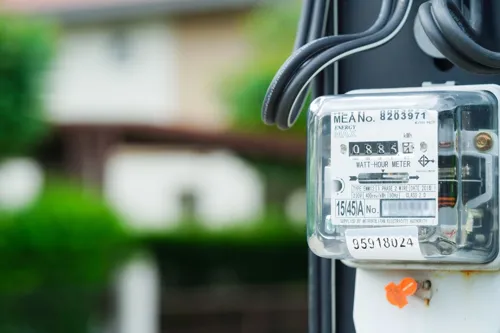
Thailand's National Energy Policy Committee approved measures to reduce electricity costs for Sept–Dec 2026 using 16.1 billion baht in returned excess benefits and capped natural gas pricing at 363.53 baht/MMBTU. Simultaneously, the government expanded community solar (rooftop, on-ground, floating) to 10,000 MW under a net billing model, allowing households to self-generate and sell surplus power at 2.20 baht/unit for 20 years—extending purchase periods from 10 to 20 years and opening distributed energy opportunities for SMEs and households.
▾ Hover for summary ▾ Tap for summary
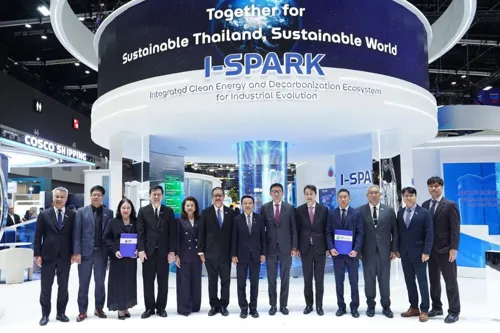
PTT, Thailand's largest energy company, has signed long-term LNG trading contracts with South Korea's GS Energy and Norway's Equinor, plus a cooperation agreement with Korea East-West Power. These deals diversify PTT's energy sourcing across regions and strengthen its position as a global LNG trader. The strategic moves support PTT's stated goal of becoming a major international LNG player while ensuring supply resilience across different geographies.
 Your real translator for LINE and Discord.

▾ Hover for summary ▾ Tap for summary
AAV (Asia Aviation) stock recovered 2.44% to 0.84 baht after heavy selling pressure, amid investor focus on AirAsia Group's financial health announcement. Key concern: AAV has 11.4 billion baht in net receivables from AirAsia Group Berhad as of Q2 2569, potentially requiring 600–1,200 million baht in credit loss provisions. Kasikornbank downgraded profit recovery expectations to 2570 due to rising fuel costs. AirAsia faces liquidity pressures with short-term debt of 18.4 billion ringgit and Q2 net loss of 831 million ringgit, though the group is seeking up to $1 billion in foreign debt financing and 700 million ringgit in Malaysian credit lines.

▾ Hover for summary ▾ Tap for summary
Government spokesperson confirms Phase 2 extension of Thailand Helps Thailand Plus program: citizens to receive 1,000 baht lump sum valid for 2 months under the existing 60:40 disbursement framework. State Welfare Card holders get 700 baht top-up plus 300 baht regular benefit. No additional budget reallocation required; awaiting final Cabinet Finance Committee approval.
▾ Hover for summary ▾ Tap for summary
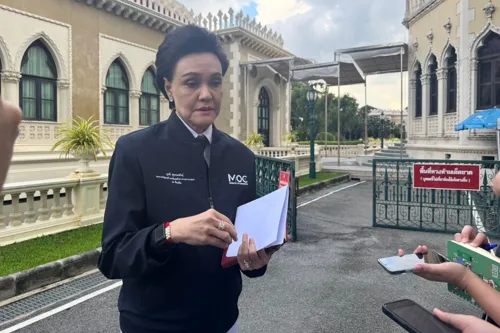
Deputy Prime Minister and Commerce Minister Supachai announced that Thailand-EU FTA negotiations have resolved approximately 2/3 of all provisions, with Round 10 scheduled for September 28 in Phuket. The government projects the agreement will boost Thailand's GDP growth from ~2% to over 3% annually and increase exports by 2.8%, while attracting FDI from the US, China, and Japan. Sensitive commodity categories will be exempted from market liberalization; the legal drafting and parliamentary approval process will take roughly one year.

▾ Hover for summary ▾ Tap for summary
Japan's central bank (BOJ) raised its policy interest rate to 1.25%, marking the highest level in 31 years and a critical milestone: Japan's rate now exceeds Thailand's 1.00% for the first time since Thailand adopted its policy rate framework in 2000. This shift reflects accelerating global monetary tightening – the Fed and ECB have also recently raised rates – and leaves Thailand with the world's second-lowest rate after Switzerland (0.00%). For Thai SMEs and exporters, this widening interest rate differential may pressure the baht, affecting import costs and export competitiveness.

 Want to buy or sell a business?
▾ Hover for summary ▾ Tap for summary
Huawei Cloud is launching AI cloud infrastructure and agent tools, likely targeting the Southeast Asian market including Thailand. This represents a competitive play in the growing cloud AI services space and could offer SMEs new options for AI-powered applications, though the specific Thailand relevance and pricing details remain unclear from the headline alone.
▾ Hover for summary ▾ Tap for summary
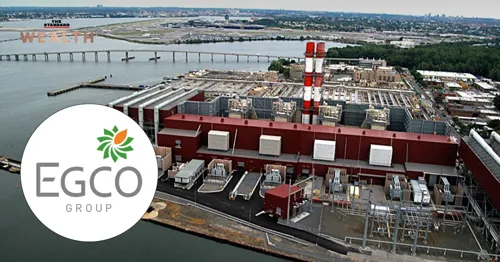
Thai energy giant EGCO completed acquisition of a 45.05% stake in Astoria Energy II, a 615MW combined-cycle gas turbine plant in Queens, New York, signed September 16. The plant has operated commercially since July 2011 and generates steady revenue via a long-term Tolling Agreement with New York Power Authority (NYPA). EGCO frames this as strategic "asset recycling"—deploying capital from mature assets into high-quality operating infrastructure in a constrained, high-demand market (NYISO Zone J). Immediate cash flow and revenue recognition support EGCO's portfolio expansion in the US energy market and broader energy transition goals.
▾ Hover for summary ▾ Tap for summary
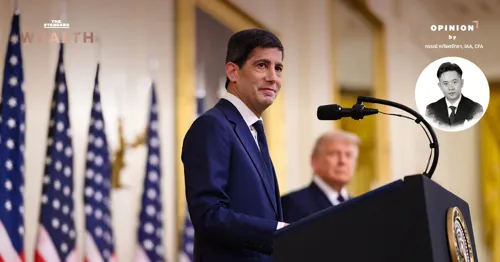
The Federal Reserve unanimously voted to raise interest rates by 0.25% to 3.75–4.00%, with 16 of 18 officials projecting at least one more hike this year, likely reaching 4.00–4.25%. The author argues that a single rate hike is unlikely based on historical patterns: every time oil prices have risen since 2001, the Fed has followed suit, and the Fed has never raised rates just once. The article also flags geopolitical factors (Iran-US tensions) as shifting Fed outlook, making further hikes probable despite the author's hope the cycle ends around 4.50% rather than 5.00–5.25%.

▾ Hover for summary ▾ Tap for summary
DPU's Communications Faculty signed an MOU with Thaimart marketplace to integrate real-world business challenges into student curriculum across brand communication, digital marketing, content creation, film production, and event management. Thaimart contributed 100,000 baht to support student projects and provided mentorship on AI-driven brand strategy. This partnership enables students to develop portfolio-ready work with potential real-world application, bridging classroom learning with Thailand's SME ecosystem.
 Together GoWeGo! Ferry tickets in Thailand.

▾ Hover for summary ▾ Tap for summary
A former alcohol control committee member highlights the legal gap in Section 32 of the Alcohol Control Act: implementing rules have not yet been issued, creating a quasi-legal vacuum that makes the advertising ban unenforceable. Using the Lisa (Chang Beer) case as example, he notes the ambiguous wording around "communication" creates legal uncertainty—Thai media and citizens risk prosecution for sharing full images while international brands get global exposure via foreign TV shows. The article questions the reasonableness of alcohol advertising laws in a borderless digital age where enforcement is inconsistent and penalties severe.
▾ Hover for summary ▾ Tap for summary
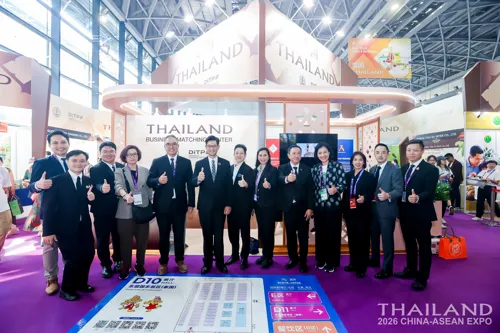
Thailand's Ministry of Commerce led 109 SMEs to the 23rd China-ASEAN Expo (CAEXPO) in Nanning to showcase food, beverages, health, beauty, fashion, and home décor products. The delegation negotiated with Guangxi authorities to reduce bureaucratic barriers for health and beauty product registration—a major cost and time burden—and proposed free trade zones for market testing. Thailand also highlighted Northeast regional logistics and supply-chain connectivity, agricultural products, and electronics as growth areas for bilateral trade expansion.
▾ Hover for summary ▾ Tap for summary
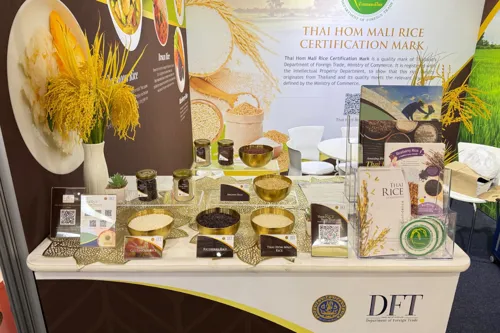
Thai rice holds 34% market share in Australia's ~240,000-tonne annual import volume, led by support from 3,500+ Thai restaurants and Asian consumers. The Department of Foreign Trade is leveraging the Fine Food Australia 2026 expo and health-focused positioning (coloured rice, nutritious variants) to expand into major retailers. Quality consistency and on-time delivery remain competitive advantages for sustained growth in the health-conscious and Asian consumer segments.
▾ Hover for summary ▾ Tap for summary
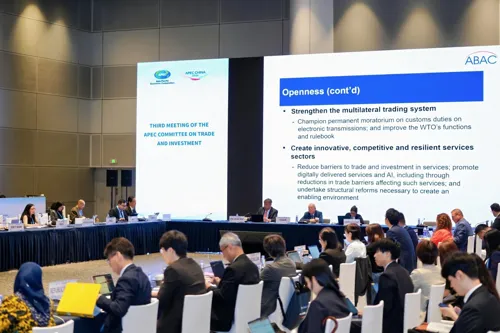
APEC is developing trade governance frameworks integrating AI and robotic technology to facilitate commerce while combating counterfeit goods sold online. At a CTI meeting in Dalian (August 2025), member economies—including Thailand—discussed embedding AI support in future free trade agreements, establishing an Asia-Pacific AI Center, and strengthening cross-border IP enforcement. Thai trade with APEC members represents 72.26% of Thailand's total trade, making these regulatory updates directly relevant to Thai SME export strategies.

 Stop running your company on Excel.