
Archive
September 22, 2026

▾ Hover for summary ▾ Tap for summary
Thailand's automotive sector is pushing for the highest excise tax on imported electric vehicles to protect local manufacturers and incentivize global automakers to establish production facilities domestically. The government is considering a 30% excise tax on imported EVs, with a new three-tier tax structure approved by the National EV Policy Committee that applies lower rates to domestically-produced EVs meeting local content requirements and highest rates to fully imported vehicles. This protectionist measure aims to shift investment toward local production as the government's 3.5% EV incentive program expires next year.

▾ Hover for summary ▾ Tap for summary
Thailand's automotive industry, through the FTI, is pushing the government to apply the highest excise tax rate to imported EVs while offering lower rates to locally-assembled vehicles. The National Electric Vehicle Policy Committee has approved a three-tier excise tax structure, with Tier 3 (fully imported EVs) facing the highest rate. The government is considering a 30% excise tax on imported EVs to encourage foreign automakers to establish local production facilities. This policy directly impacts SMEs in Thailand's automotive supply chain and EV importers.

▾ Hover for summary ▾ Tap for summary
Thailand's fitness industry is undergoing a major shift from basic exercise to performance-focused training, with strength training growing 30% year-over-year and ranking as the third most popular activity. However, 53% of working professionals admit insufficient recovery practices despite 87% recognizing its importance, creating a "Recovery Gap" linked to burnout, fatigue, and overtraining injuries. Virgin Active is responding by evolving from pure gym operator to "Social Wellness Club" model, integrating recovery infrastructure (cold plunges, hyperbaric therapy, breathwork, yoga) with functional training—a critical adaptation as demand for comprehensive performance-recovery solutions intensifies.
▾ Hover for summary ▾ Tap for summary
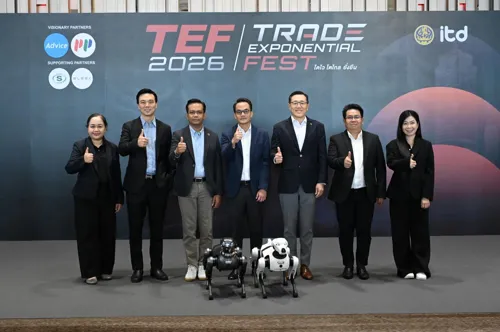
Thailand's International Trade & Development Institute (ITD) launched Trade Exponential Fest 2026 (TEF 2026), a major business conference featuring 40+ industry leaders and 50+ exhibitor booths. The event focuses on helping Thai SMEs navigate global economic volatility, digital transformation, sustainability, and new trade regulations like CBAM. Key highlights include carbon-to-capital conversion models (Super Carbon Exchange) and AI business solutions for regional expansion. Actionable for SMEs seeking international competitiveness and compliance strategies.

 Empower businesses to thrive in the digital age.

▾ Hover for summary ▾ Tap for summary
Alibaba's T-Head division unveiled the Zhenwu V900 AI accelerator chip, supporting both high-precision training and low-precision inference to optimize power efficiency. The chip scales up to 500,000 units per cluster and already has 650+ customers across automotive and AI sectors. It targets large language models with 5–10 trillion parameters, positioning Alibaba as a competitive alternative to Nvidia in AI infrastructure for Southeast Asian enterprises.

▾ Hover for summary ▾ Tap for summary
Muang Thai Life Insurance launches the Flexi Retire Series and Longevity Ecosystem to address Thailand's aging population crisis. With Thais living longer but with gaps of ~10 years between lifespan and healthy years, and 60% of workers saving less than 200,000 baht, the insurer now offers flexible pension plans (adjustable retirement age 55–70, variable payment schedules) plus direct pension payments to 44 network senior care facilities. This integrated approach connects financial planning with healthcare and elderly services—a significant move for SMEs considering retirement strategies and long-term care needs.
▾ Hover for summary ▾ Tap for summary
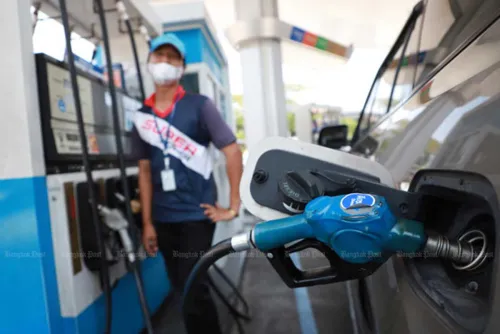
Thailand's cabinet has approved a 2026-29 strategic plan to manage fuel volatility through increased biofuel blending using domestic agricultural materials and stricter price stabilization measures. The Oil Fuel Fund faces mounting pressure with a 92-billion-baht deficit widening by ~700M daily; the OFFO is seeking up to 100B baht in new borrowing (primarily from domestic banks) to cover liabilities, though reducing subsidies remains an alternative that could raise pump prices. SMEs dependent on fuel costs should monitor subsidy policy shifts and biofuel transition timelines.
▾ Hover for summary ▾ Tap for summary
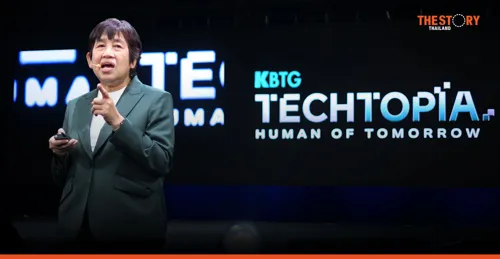
KBTG held its annual Techtopia technology conference in 2026 under the theme "Human of Tomorrow," emphasizing human agency in an AI-driven future. The bank is advancing from AI-as-tool to AI-as-workforce through its Multi-Agent Platform "Athena Mind," with 90% of staff already using AI in operations and 80+ active projects. KBTG has adopted a "Human First × AI First" governance model with human-in-the-loop controls, an AI Kill Switch, and red teams to manage risk—signaling that enterprise AI adoption in Thailand is moving beyond pilot-stage hype toward systematic integration with safeguards.
 Your real translator for LINE and Discord.
▾ Hover for summary ▾ Tap for summary
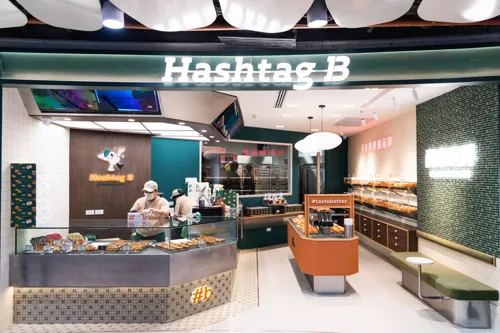
Hong Kong bakery brand Hashtag B launched its first New Concept Store in Thailand at CentralWorld, featuring an in-store bakery producing 30+ fresh items daily. The expansion reflects strong demand for premium bakery products among Thai consumers; three additional locations are planned for October 2026 (CentralLadprao, CentralBangna, Mega Bangna). Success driven by quality control (Hong Kong head chef oversight) and product diversity beyond its signature egg tarts.

▾ Hover for summary ▾ Tap for summary
Thai pharmaceutical distributor Osottsapa has partnered with Chinese health brand Yunnan Baiyao to distribute premium fluoride toothpaste in Thailand while producing for export to 6 countries (Vietnam, Singapore, Malaysia, Hong Kong, USA, Canada). The partnership combines Osottsapa's distribution and retail expertise with Yunnan Baiyao's products, launching 3 premium formulas (Gum Care, Enamel Repair, Shining White) starting September 20 at 215 baht via ecommerce and major retail chains. This deal strengthens Osottsapa's personal care portfolio and demonstrates its capability as a strategic partner for international brands.

▾ Hover for summary ▾ Tap for summary
Thailand's oil fund deficit is projected to breach 100 billion baht by late September or early October 2026, currently at 92 billion baht and rising ~700 million daily. The Energy Ministry is preparing a new loan round of approximately 100 billion baht after exhausting a previous 200 billion baht facility through debt repayment. The loan may require Treasury guarantee backing, similar to Russia–Ukraine crisis measures. Long-term fund stability depends on energy policy decisions and potential fuel subsidy adjustments.

▾ Hover for summary ▾ Tap for summary
SpaceX AI released Grok 4.7, improving code-writing and knowledge-based tasks with 2x faster performance and 50% lower costs than competing flagship models. The model matches or exceeds GPT-5.6 Sol and Fable 5.1 on key benchmarks (EEBench, Harvey Legal Agent) while maintaining pricing parity with Grok 4.6 at $2/6 per 1M tokens. Availability via Cursor, Grok Build, Grok API, and partner platforms positions this as a competitive option for developers and enterprises seeking cost-effective AI inference.

 Want to buy or sell a business?

▾ Hover for summary ▾ Tap for summary
Meta's new AI assistant Muse launched in the US just two weeks ago and has already become the #1 downloaded app on the US App Store, surpassing ChatGPT. With 2.5 million cumulative downloads and 730,000 downloads in the first 5 days, Muse targets SMEs and individuals with task automation features (email, shopping, social selling) via a freemium model starting at $20/month. Meta's massive existing user base positions it competitively, though sustainability of this momentum remains uncertain.
▾ Hover for summary ▾ Tap for summary
Binance has invested $100 million in Circle, the blockchain firm behind USDC stablecoin, signaling deeper integration of USDC across Binance's ecosystem. This deal strengthens the stablecoin's market position and may offer Thai SMEs and fintech operators better access to dollar-denominated crypto rails for cross-border payments.

▾ Hover for summary ▾ Tap for summary
HAPPY26 (มีสุข โซลูชั่นส์) listed on LiVEx on September 23, raising 31.07 million baht through an IPO of 11.1 million shares at 2.80 baht each. The real estate developer specializes in warehouse and prefabricated factory solutions across Bangkok, suburbs, and the Eastern Economic Corridor, serving SMEs and construction firms. Raised capital will fund real estate expansion, increase production capacity, and repay debt—a direct play on Thailand's industrial property and SME support sectors.

▾ Hover for summary ▾ Tap for summary
Thai Credit Guarantee Corporation (TCG) launched 'Nano Plus,' a new credit guarantee scheme targeting micro-SMEs, small traders, and self-employed workers with loans ranging from 5,000–50,000 baht at zero guarantee fees for 4 years. The program expands coverage beyond traditional commercial banks to include non-bank financial institutions and virtual banks, addressing SME credit contraction (16 consecutive quarters of decline). TCG projects the scheme will enable 100,000+ SMEs to access credit, preserve 146,000 jobs, and generate 9.86+ billion baht in economic impact. Initial funding phase caps at 500 million baht and covers up to 25,000 SMEs.
 Together GoWeGo! Ferry tickets in Thailand.

▾ Hover for summary ▾ Tap for summary
The World Bank released a report recommending Thailand shift investment focus toward secondary cities (20% Bangkok / 80% regional cities) rather than concentrating on Bangkok alone. Analysis shows this distribution would boost per capita GDP by 12.4% by 2050—outperforming Bangkok-focused investment (11.6%) and balanced allocation (10.9%). Bangkok faces declining growth rates (2% projected by mid-century vs. 5.2% needed for high-income status by 2037) and ranks 33rd globally but only 105th in future competitiveness. The report suggests secondary city development is critical for Thailand to meet its growth targets within the decade.

▾ Hover for summary ▾ Tap for summary
SCB 10X highlights the shift from prompt-based AI to autonomous AI Agents that set goals and work continuously without explicit commands. This "Always-On Economy" means AI can handle 24/7 shopping, comparison, and transactions—reducing human friction costs and changing how businesses must reach customers. Key infrastructure needs: cheaper hardware, more capable models, and inter-AI coordination. Actionable insight: SMEs should expect changing B2B/B2C dynamics as AI-to-AI interactions replace human-driven discovery and decision-making.
▾ Hover for summary ▾ Tap for summary
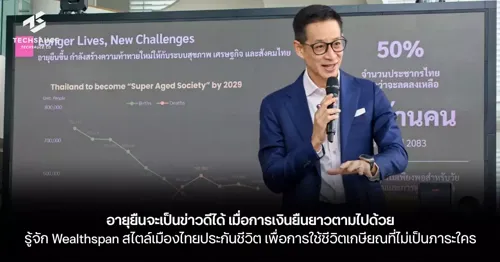
Muang Thai Life Insurance CEO Suwala Lamsa frames Thailand's aging crisis through three pillars: Lifespan, Healthspan, and Wealthspan. With Thailand's working-age population set to drop from 46M to 14M by 2083, and 90% of Thais unprepared for retirement (60% with savings under 200k THB), the missing piece in longevity discourse is financial security. Unlike Singapore's forced savings framework, Thailand lacks systematic financial literacy education and retirement infrastructure—leaving most elderly facing a 10-year health-compromised lifespan with rising medical inflation (10.8%), requiring a dual approach of savings plus extended income generation through reskilling and gig economy participation.
▾ Hover for summary ▾ Tap for summary
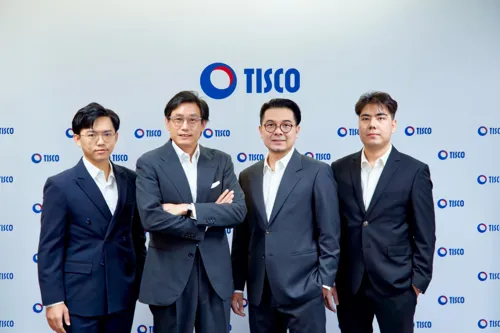
TISCO warns Thailand faces structural economic challenges echoing Japan's "Lost Decade." Q4 GDP projected at only 1.2% growth—the year's lowest—despite exports surging 20%, because manufacturing output grew just 0.1%, undercut by cheap Chinese imports via e-commerce. The deeper concern: Thailand is aging rapidly (65+ population at 14%, matching Japan's at that milestone), with workforce declining and income per capita ($20,700) still far below Japan's ($37,000). Public debt at ~68% GDP remains sustainable, but the long-term structural risks—aging workforce, low birth rates, middle-income trap—threaten a prolonged 10-year stagnation unless productivity accelerates.

 Stop running your company on Excel.