
Archive
September 23, 2026
▾ Hover for summary ▾ Tap for summary
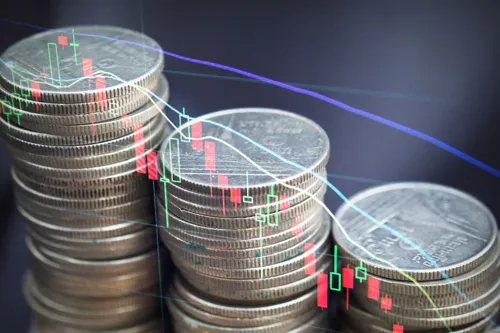
The Thai baht opened stronger at 33.13 baht per dollar on September 23 versus the previous close of 33.17. The strength reflects broader USD firmness driven by Federal Reserve policy signals supporting monetary tightening to combat inflation, with expectations of further rate hikes this year. Foreign investors sold net 796 million baht in Thai bonds and 3 billion baht in Thai equities. Geopolitical tensions in the Middle East and Trump's UNGA statements on Iran remain risk factors. Technical support at 33.00, resistance at 33.30 baht per dollar.

▾ Hover for summary ▾ Tap for summary
OpenAI launched GPT-6 Sol and GPT-6 Luna, two new models offering comparable performance to predecessor Astra with significantly faster execution and 50% price reduction versus GPT-5.6. Pricing drops to $2/$10 (Sol) and $0.1/$0.5 (Luna) per 1M input/output tokens. Both models are immediately available through ChatGPT Work and Codex for Plus, Pro, Business, Enterprise, and Edu customers. This aggressive pricing move targets competitive pressure in the AI market and aims to expand user adoption—particularly relevant for Thai SMEs exploring AI API integration for applications.
▾ Hover for summary ▾ Tap for summary
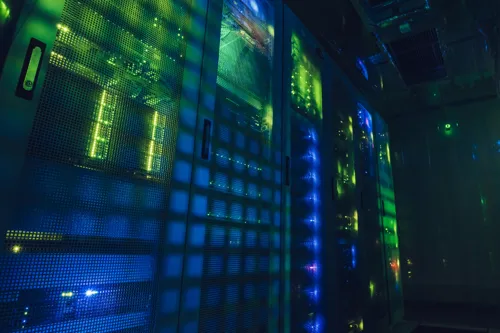
Thailand currently has 73 operational data centers, with 63% concentrated in Bangkok despite most being small-scale (avg. 1.2 MW) vs. hyperscale facilities needing 200+ MW. The Thai government is tightening regulations on zoning, power allocation, water management, and safety standards, while new electricity pricing will increase costs by ~10-14 million baht annually per Bangkok facility if rates rise 1 baht/unit. SMEs operating in the data center ecosystem should prepare for stricter compliance requirements and expect relocation pressure toward provincial areas with better infrastructure support.

▾ Hover for summary ▾ Tap for summary
Foxconn and IAT have announced a joint venture focused on scaling robot production. While the article details are not fully accessible, this partnership signals investment in automation and robotics technology that could impact Thai manufacturing supply chains and create opportunities for local tech suppliers and integrators.

 Empower businesses to thrive in the digital age.
▾ Hover for summary ▾ Tap for summary
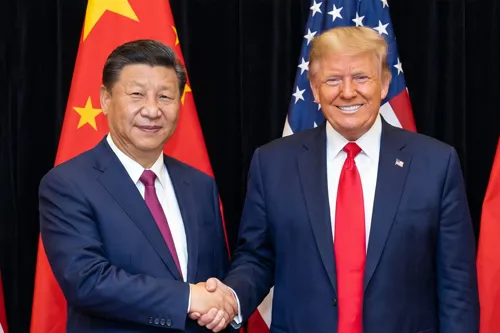
Trump and Xi Jinping are establishing a formal US-China AI dialogue framework to manage AI safety, national security risks, and advanced AI governance. The bilateral mechanism aims to prevent misuse of military AI systems, curb proliferation of foundation models to non-state actors and terrorists, and address shared cybersecurity threats. However, deep policy divides remain over semiconductor export restrictions, model IP disputes, and open vs. closed model philosophies—reflecting competing visions for global AI governance.

▾ Hover for summary ▾ Tap for summary
Anthropic released Claude Opus 5.5, the first model in the Claude 5.5 series, with performance comparable to Fable 5.1 but 40% cheaper than Opus 5. The model excels at code migration (680k lines in one day), web optimization, and coding assistance. It requires fewer compute resources while maintaining strong safety benchmarks, and is available today across all platforms including major cloud providers. Lower costs translate to higher usage quotas for Claude Pro/Max/Team/Enterprise customers.

▾ Hover for summary ▾ Tap for summary
General Catalyst has joined a $340 million funding round for Heidi, an AI health startup focused on addressing doctor burnout. The article indicates Heidi is working on AI solutions for healthcare, though the full context is limited. This signals strong investor confidence in AI applications within the healthcare sector, particularly around physician efficiency and burnout mitigation.
▾ Hover for summary ▾ Tap for summary
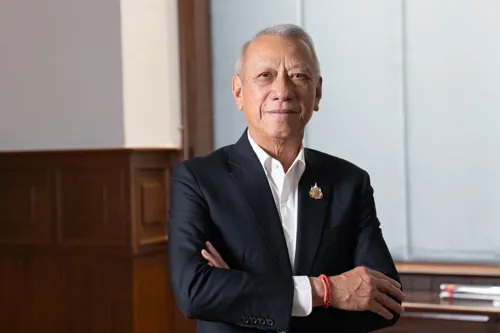
Thailand's Transport Ministry is launching a four-year mega-project (2026–2029) with 823.2 billion baht aimed at establishing the country as a regional logistics hub. The plan spans rail, road, water, and air transport: extending highway M8 from Nakhon Pathom to the southern border; developing dual-track railways connecting Chumphon–Surat Thani–Hat Yai–Padang Besar (106.8 billion baht); and planning a "missing link" route from Suphan Buri to bypass Bangkok, ultimately connecting to Laem Chabang port and Malaysia–Singapore. The initiative targets reduced logistics costs, improved regional connectivity, and positioning Thailand as Southeast Asia's transport nexus by 2032. Financing comes from loans and government investment.
 Your real translator for LINE and Discord.
▾ Hover for summary ▾ Tap for summary
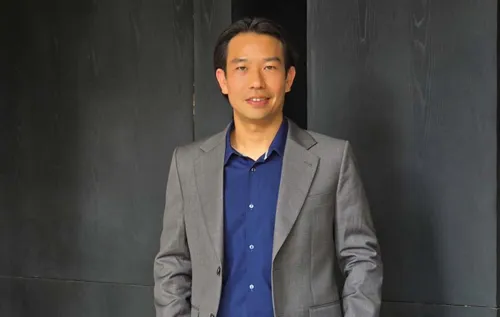
Market research firm Differential Thailand surveyed 2,651 car owners across 2567–2569, finding Thai consumers are becoming more discerning. Key findings: brand loyalty to Japanese vehicles remains strong (69%), but hesitation is rising; Chinese brands face trust challenges despite growth (46% repeat purchase vs. 44% undecided, 11% switching); nearly 40% of buyers remain undecided on powertrain type (ICE, EV, hybrid); and EV buyers now prioritize residual value more (up from 2% to 6%). For car makers and dealers, the shift signals consumers want proven service, reliability, and coherent positioning over hype.
▾ Hover for summary ▾ Tap for summary
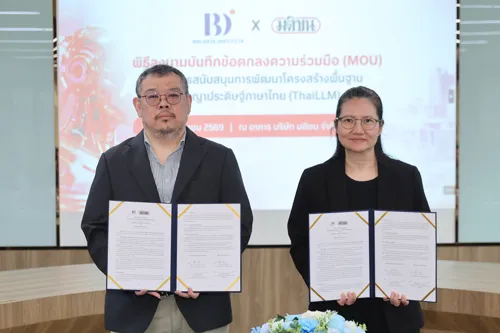
Matichon newspaper and Thailand's Big Data Institute (BDI) have signed an MOU to collaborate on developing ThaiLLM, a Thai-language large language model, addressing the critical gap that Thai-language data comprises only 0.4% of global internet content. By leveraging Matichon's 50-year archive of high-quality Thai content, the initiative aims to build a sovereign AI infrastructure that understands Thai language, culture, and context—reducing dependence on foreign AI systems and enabling Thai SMEs, startups, and educational institutions to develop AI applications without starting from scratch.
September 22, 2026

▾ Hover for summary ▾ Tap for summary
Animoca Brands, a major Web3 gaming and NFT firm, has paused its planned merger with Currenc and delayed its IPO timeline. This signals potential headwinds in the blockchain gaming sector and reflects broader caution in crypto-adjacent tech valuations. For Thai SMEs in gaming or Web3, this suggests consolidation may slow and capital deployment timelines could extend.

▾ Hover for summary ▾ Tap for summary
OpenAI has launched new GPT-6 models (Sol and Luna) with significantly reduced API pricing at 50% below previous rates. This cost reduction could make advanced AI capabilities more accessible to Thai SMEs and developers, lowering barriers to AI adoption and experimentation.

 Want to buy or sell a business?

▾ Hover for summary ▾ Tap for summary
Thailand's cabinet approved a two-month extension of the "Thailand Helps Thailand Plus" stimulus programme through November, allocating 1,000 baht in digital subsidies plus 700 baht additional welfare card credits to low-income households facing energy price shocks and inflation. Deputy PM Ekniti cited three converging crises (energy prices, inflation, and reduced purchasing power) as justification; funds come from remaining 44,000-million-baht borrowing capacity. Kasikornbank and EIC economists forecast sluggish Q4 private consumption ahead.
▾ Hover for summary ▾ Tap for summary
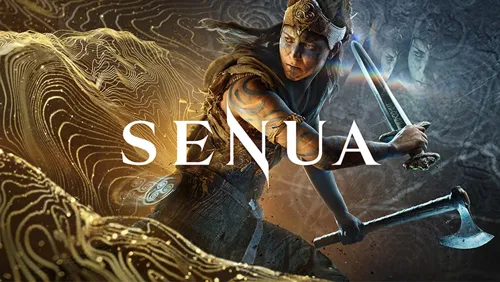
Microsoft announced a major restructuring of Xbox game studios, cutting 268 jobs across multiple studios. Halo franchise development was transferred to Activision (now under the Activision division), while Ninja Theory studio is being shut down. Obsidian was consolidated under Bethesda, Playground and Turn 10 merged into one team, and King absorbed Microsoft Casual Games. This represents significant strategic and organizational changes within Xbox's game development portfolio.

▾ Hover for summary ▾ Tap for summary
Thailand's government-backed TH-AI Passport project is driving telecom operator revenue growth through new unlimited mobile data packages. The program has exceeded 1 million registrations in its first week, with daily concurrent users surpassing 600,000. While early AI-adopter demand for data-intensive generative AI services (0.5–1 GB monthly) will initially boost telecom ARPU for mid-to-low segments, structural improvements and reduced costs are needed to sustain investor appetite and platform accessibility.

▾ Hover for summary ▾ Tap for summary
Tisco Economic Strategy Unit recommends investors prioritize equities, short-term/medium-term bonds, and commodities, citing strong balance sheets of major AI players and global infrastructure investment cycle support. Key risks include potential US bond yield rises triggering risk asset corrections and currency volatility. Thailand's economy is forecast to grow 2.1% this year (up from 1.8%) but slow to 2% in 2027 amid high living costs and limited fiscal stimulus.
 Together GoWeGo! Ferry tickets in Thailand.

▾ Hover for summary ▾ Tap for summary
PTTEP has greenlit the Bussabong gas field development in the G3/65 Project, targeting first production around 2028. The field is expected to produce approximately 30 million standard cubic feet per day, scaling to 40 MMSCFD by 2030, leveraging existing infrastructure from the nearby North Bokngok field to accelerate development. This supports Thailand's energy security amid growing domestic demand.

▾ Hover for summary ▾ Tap for summary
Thailand's automotive sector is pushing for the highest excise tax on imported electric vehicles to protect local manufacturers and incentivize global automakers to establish production facilities domestically. The government is considering a 30% excise tax on imported EVs, with a new three-tier tax structure approved by the National EV Policy Committee that applies lower rates to domestically-produced EVs meeting local content requirements and highest rates to fully imported vehicles. This protectionist measure aims to shift investment toward local production as the government's 3.5% EV incentive program expires next year.

▾ Hover for summary ▾ Tap for summary
Thailand's automotive industry, through the FTI, is pushing the government to apply the highest excise tax rate to imported EVs while offering lower rates to locally-assembled vehicles. The National Electric Vehicle Policy Committee has approved a three-tier excise tax structure, with Tier 3 (fully imported EVs) facing the highest rate. The government is considering a 30% excise tax on imported EVs to encourage foreign automakers to establish local production facilities. This policy directly impacts SMEs in Thailand's automotive supply chain and EV importers.

▾ Hover for summary ▾ Tap for summary
Thailand's fitness industry is undergoing a major shift from basic exercise to performance-focused training, with strength training growing 30% year-over-year and ranking as the third most popular activity. However, 53% of working professionals admit insufficient recovery practices despite 87% recognizing its importance, creating a "Recovery Gap" linked to burnout, fatigue, and overtraining injuries. Virgin Active is responding by evolving from pure gym operator to "Social Wellness Club" model, integrating recovery infrastructure (cold plunges, hyperbaric therapy, breathwork, yoga) with functional training—a critical adaptation as demand for comprehensive performance-recovery solutions intensifies.

 Stop running your company on Excel.