
Archive
September 23, 2026

▾ Hover for summary ▾ Tap for summary
Qualcomm has unveiled a new 2nm AI chip designed for premium Android smartphones. This advance in processor technology demonstrates the industry's push toward more powerful on-device AI capabilities. For Thai SMEs, this signals accelerating innovation in mobile computing that may affect smartphone procurement decisions and app development strategies targeting high-end Android devices.

▾ Hover for summary ▾ Tap for summary
Deputy PM Songsakdi dismissed social media warnings of major flooding as potentially fake news, asserting the government has meteorological data and mitigation plans in place for expected heavy rain (Sept 24–26) in northern, central, and northeastern regions. The government approved 15.5 billion baht for a new disaster insurance scheme (flood, cyclone, earthquake) effective October 1, 2026, targeting claims settlement within 45 days. Water capacity remains manageable, and digital monitoring tools will enhance early warning systems.
▾ Hover for summary ▾ Tap for summary
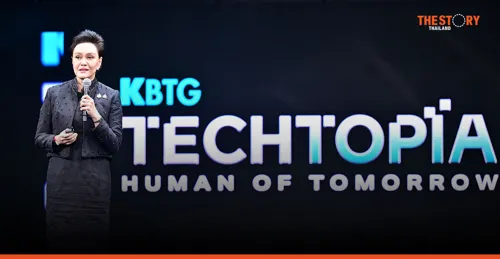
Deputy PM and Commerce Minister Supachai identifies five strategic challenges for Thailand's economy: geopolitical decoupling, unequal growth distribution, environmental regulation changes, demographic decline, and technology-driven market polarization. While exports grew 1.9% in Q2, only 15% of export value comes from 22,000 SMEs. Key priorities: diversify export markets beyond US and China (which account for one-third of exports), expand to EU/Middle East/Africa, adapt to environmental standards, and accelerate digital/AI adoption to prevent SMEs from losing competitiveness.
▾ Hover for summary ▾ Tap for summary
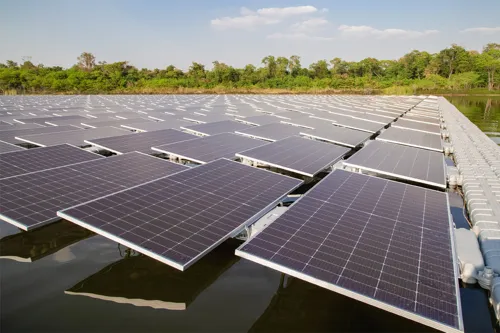
Thailand's Solar Rooftop programme attracts 2,000 entrepreneurs amid new mandatory product standards. Industrial Ministry enforces IEC-aligned quality controls for solar panels and components. State Bank (GHBS) offers financing up to 150,000 baht per household for 5kW systems with 7-year repayment terms and no collateral required. This signals growing institutional support for green energy SMEs, though local manufacturing capacity remains limited relative to the 1.5M-household deployment target.

 Empower businesses to thrive in the digital age.
▾ Hover for summary ▾ Tap for summary
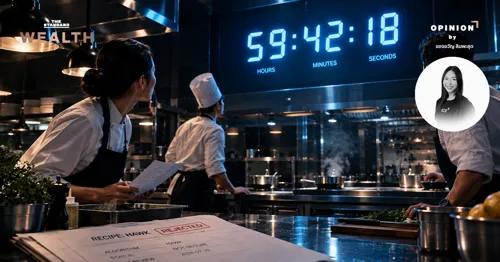
This article explains quantum computing's existential threat to current encryption standards (Q-Day) and introduces crypto-agility—the ability to rapidly switch encryption methods without disrupting operations. For Thai SMEs and financial institutions, the lesson is clear: competitive advantage will go to organizations that build systems designed for algorithmic flexibility now, before quantum computers render current protocols obsolete. SCBX frames this as a trust and resilience issue, not just a technical one.
▾ Hover for summary ▾ Tap for summary
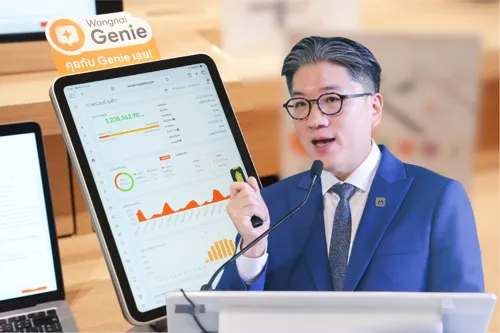
LINE MAN Wongnai launched "Wongnai Genie," an AI assistant for restaurant operations that provides 24/7 business intelligence covering sales, cost-profit analysis, and promotional guidance. Free during pilot phase across 72,000 POS users, the tool shows measurable impact: case study with Bearhouse chain improved operational efficiency 15%, reduced ingredient waste 20%, and freed ~1 hour daily per staff member. LINE MAN also expanded working-capital financing to 30,000+ restaurants in the past year and plans to tap government-backed nano-credit guarantees. The moves address Thailand's SME retention gap (84% survival with govt support, 93% with POS integration).

▾ Hover for summary ▾ Tap for summary
InnovestX forecasts the Thai SET index will trade sideways-up around 1,600 points today, supported by falling oil prices and recovering global tech stocks offsetting pressure from rising US bond yields and Middle East tensions. The brokerage recommends a "Selective Buy on Dip" strategy across three themes: interest-sensitive financial stocks (BBL, KTB, TLI), domestic-focused equities (CPALL, CRC, BCH, PR9), and high-dividend plays yielding 5%+ (FTREIT, LHSC). CENTEL and GPSC are highlighted as today's top picks, with CENTEL benefiting from holiday travel boosts and GPSC from lower fuel costs and data center growth, with target prices of 45.50 and 49.75 baht respectively.

▾ Hover for summary ▾ Tap for summary
Credit card spending data from KTC shows veterinary hospital expenses grew 15% January–August 2026, outpacing overall pet industry growth of 11%. The trend reflects a shift in pet owner behavior toward preventive care and personalized health management ("Pet Longevity & Wellness"), moving away from reactive treatment. Emerging innovations like stem cell banking and exosome therapy are gaining traction to manage age-related pet diseases. This signals a maturing consumer segment treating pets as family members willing to invest in premium medical solutions.
 Your real translator for LINE and Discord.

▾ Hover for summary ▾ Tap for summary
Mars has officially opened its first Pringles® factory in Thailand at EEC (Rayong) with 7+ billion baht investment, employing 170+ staff. The facility operates as an AMEA regional hub exporting to India, Hong Kong, Taiwan and beyond, with a second production line now running and a third planned for late 2026. The smart factory integrates digital monitoring, flavor customization, and sustainability practices, with ~50% procurement from local Thai suppliers, strengthening regional supply chains.

▾ Hover for summary ▾ Tap for summary
Big Bad Wolf Books, a book retail event brand founded in Malaysia, celebrated a decade of operation in Thailand by demonstrating significant cultural impact. Against skeptical predictions that Thai consumers lack reading culture, the event has grown fiction sales from 6% to 13% and expanded its reader base from primarily parents to include teenagers, university students, and young professionals. The article highlights how affordable access to books has cultivated a multigenerational reading habit and improved English language confidence among Thai consumers—relevant for understanding consumer behavior and education-focused SME opportunities.
▾ Hover for summary ▾ Tap for summary
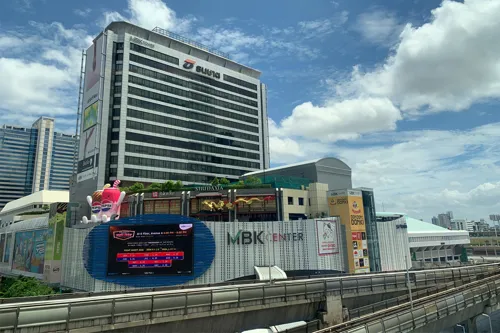
Chulalongkorn University's property office is reclaiming 291 acres of prime Pathumwan land to develop public spaces including an upgraded Suphachalasai Stadium and event venues. The Department of Physical Education is vacating 114 acres by 1 October 2026 to relocate operations to a new 11.1-billion-baht sports complex in Samut Prakan's Bang Phing area. Meanwhile, MBK Centre (occupying 23 acres) is negotiating a lease renewal with Chulalongkorn before its 2026 contract expires, with major modernization planned pending agreement clarity by 2027–2028.
▾ Hover for summary ▾ Tap for summary
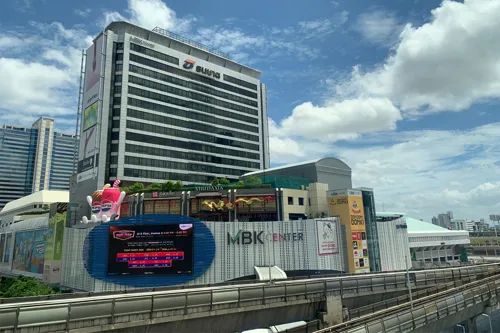
Chulalongkorn University's Property Office is reclaiming 291 rai of prime Pathumwan land to develop public spaces and upgrade sports facilities. The Department of Physical Education is closing the iconic Nimit Butr stadium (50 years old) on 30 September 2569 and relocating to a new 454-rai complex in Samut Prakan (11.1 billion baht investment). Meanwhile, MBK Shopping Center (whose lease expires 2576) is negotiating a contract renewal with Chulalongkorn, likely 20–30 years, with significant additional investment needed for building upgrades after 50 years of operations. RMIT Uetuang will also be relocated, requiring new space from state property funds.

 Want to buy or sell a business?
▾ Hover for summary ▾ Tap for summary
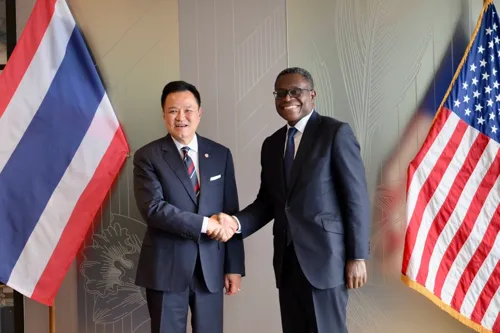
Thailand's PM held high-level discussions with Bank of America, Microsoft, and PIMCO in New York, signaling openness to foreign capital and strategic partnerships. Talks covered digital infrastructure, AI development, cybersecurity, and attracting global institutional investors. The government emphasizes Thailand's goal to become a regional digital economy and AI hub, with international financial institutions playing a key role in connecting local businesses to global supply chains and enabling long-term competitiveness.

▾ Hover for summary ▾ Tap for summary
OpenAI has released GPT-6 Sol and Luna, mid-tier and budget variants of its flagship Astra model. Sol delivers Astra-level performance on complex tasks at 9% of competitor costs, while Luna achieves comparable reasoning at 1/100th of Astra's price. Both use the same training approach as Astra, excelling in code generation, factual accuracy, and computer control. These cost reductions directly benefit SMEs and developers: Sol at $2/M input tokens ($10/M output) and Luna at $0.10/$0.50 represent permanent pricing that makes enterprise AI automation significantly more accessible and cost-effective for scaling workloads.

▾ Hover for summary ▾ Tap for summary
The Thai baht opened stronger at 33.13 baht per dollar on September 23 versus the previous close of 33.17. The strength reflects broader USD firmness driven by Federal Reserve policy signals supporting monetary tightening to combat inflation, with expectations of further rate hikes this year. Foreign investors sold net 796 million baht in Thai bonds and 3 billion baht in Thai equities. Geopolitical tensions in the Middle East and Trump's UNGA statements on Iran remain risk factors. Technical support at 33.00, resistance at 33.30 baht per dollar.

▾ Hover for summary ▾ Tap for summary
OpenAI launched GPT-6 Sol and GPT-6 Luna, two new models offering comparable performance to predecessor Astra with significantly faster execution and 50% price reduction versus GPT-5.6. Pricing drops to $2/$10 (Sol) and $0.1/$0.5 (Luna) per 1M input/output tokens. Both models are immediately available through ChatGPT Work and Codex for Plus, Pro, Business, Enterprise, and Edu customers. This aggressive pricing move targets competitive pressure in the AI market and aims to expand user adoption—particularly relevant for Thai SMEs exploring AI API integration for applications.
 Together GoWeGo! Ferry tickets in Thailand.
▾ Hover for summary ▾ Tap for summary
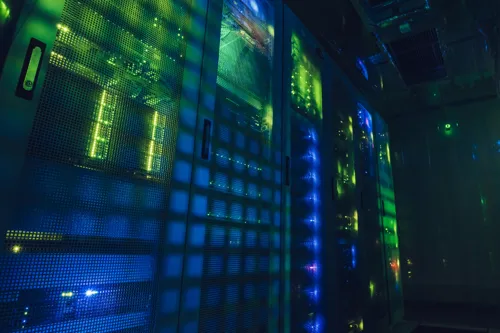
Thailand currently has 73 operational data centers, with 63% concentrated in Bangkok despite most being small-scale (avg. 1.2 MW) vs. hyperscale facilities needing 200+ MW. The Thai government is tightening regulations on zoning, power allocation, water management, and safety standards, while new electricity pricing will increase costs by ~10-14 million baht annually per Bangkok facility if rates rise 1 baht/unit. SMEs operating in the data center ecosystem should prepare for stricter compliance requirements and expect relocation pressure toward provincial areas with better infrastructure support.
▾ Hover for summary ▾ Tap for summary
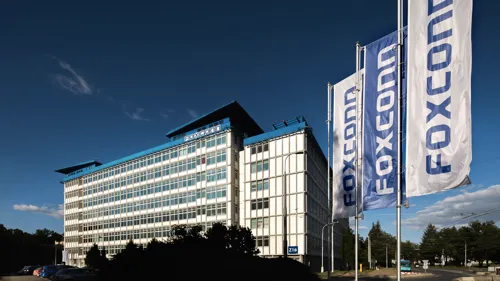
Foxconn and IAT have announced a joint venture focused on scaling robot production. While the article details are not fully accessible, this partnership signals investment in automation and robotics technology that could impact Thai manufacturing supply chains and create opportunities for local tech suppliers and integrators.

▾ Hover for summary ▾ Tap for summary
Trump and Xi Jinping are establishing a formal US-China AI dialogue framework to manage AI safety, national security risks, and advanced AI governance. The bilateral mechanism aims to prevent misuse of military AI systems, curb proliferation of foundation models to non-state actors and terrorists, and address shared cybersecurity threats. However, deep policy divides remain over semiconductor export restrictions, model IP disputes, and open vs. closed model philosophies—reflecting competing visions for global AI governance.

▾ Hover for summary ▾ Tap for summary
Anthropic released Claude Opus 5.5, the first model in the Claude 5.5 series, with performance comparable to Fable 5.1 but 40% cheaper than Opus 5. The model excels at code migration (680k lines in one day), web optimization, and coding assistance. It requires fewer compute resources while maintaining strong safety benchmarks, and is available today across all platforms including major cloud providers. Lower costs translate to higher usage quotas for Claude Pro/Max/Team/Enterprise customers.

 Stop running your company on Excel.