
Archive
August 12, 2026

▾ Hover for summary ▾ Tap for summary
Japan's small izakaya restaurants are collapsing at a historic rate—118 bankruptcies in H1 2026 alone, with over 90% involving venues with fewer than 10 staff. Rising food costs (bonito prices up 3–4x in 2 years), utilities, rents, and thin margins leave owners unable to raise prices without losing customers. Large chains with tech infrastructure and supply-chain optimization continue thriving, while SME owners lack capital for automation and data analytics. A planned consumption tax cut (8% to 1% on food from April 2026) may further drive customers to supermarkets instead of sit-down dining—a structural threat, not just pricing.
▾ Hover for summary ▾ Tap for summary
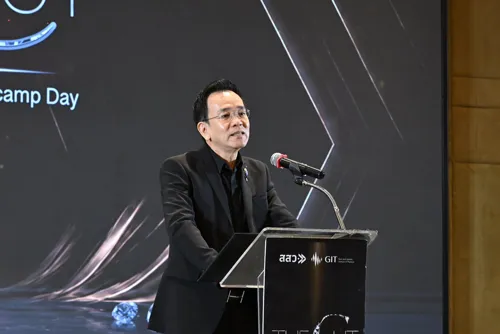
Thailand's gemstone and jewelry exports (excluding gold) surged 15.73% to $881.29M in June, marking a fourth consecutive month of growth; however, gold exports plummeted 67.55% due to global market weakness. The Gemstone Institute warns of rising headwinds: U.S. Section 301 tariffs at 12.5%, retaliatory production capacity measures, and geopolitical tensions threaten competitiveness. Bright spots include strong growth across major markets (Hong Kong +9.32%, Germany +44%, UAE +81%), though U.S. imports fell 7.87% post-advance-purchasing. Success in EU-FTA and U.S. tariff negotiations, plus a weaker baht, could support medium-term export recovery.
▾ Hover for summary ▾ Tap for summary
Commodity prices (oil and gold) are rising amid geopolitical tensions ahead of a CPI economic data release, likely affecting SME input costs and business planning.
▾ Hover for summary ▾ Tap for summary
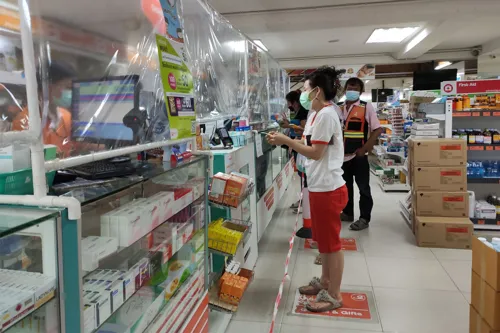
Thailand's FDA has approved seven major platforms (LINE MAN, Shopee, CP ALL, Bangkok Drugstore, and others) to offer telepharmacy services starting June 2026, enabling remote pharmaceutical consultation and medication sales. While expanding consumer access, the model threatens ~18,000 independent pharmacy SMEs—which already saw market share drop from 90% to 75% over five years—because chain pharmacies with economies of scale can leverage telemedicine more effectively. SMEs face crippling fixed costs (pharmacist salaries 50k–100k baht/month per store) and struggle to recruit staff, while the model has security gaps: video/chat consultations risk misidentification, delivery lacks temperature controls, and dangerous drugs could reach illegal channels.

 Empower businesses to thrive in the digital age.
▾ Hover for summary ▾ Tap for summary
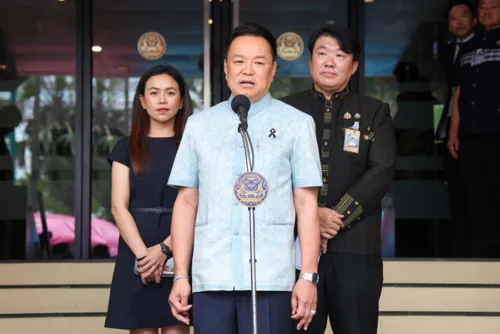
Dr Sarana Boonbaichaiyapruck, NBTC chairman, presented new documentary evidence claiming he legitimately resigned from university and hospital positions before his April 2022 appointment, challenging a selection committee's disqualification ruling. The dispute has paralyzed NBTC board operations for four consecutive failed meetings, with the PM simultaneously seeking royal approval for his removal. The conflict raises governance questions about regulatory independence and telecommunications policy continuity in Thailand.
▾ Hover for summary ▾ Tap for summary
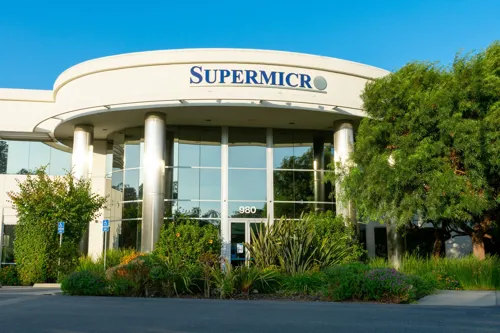
Super Micro Computer exceeded quarterly estimates driven by strong AI server demand. This signals robust market appetite for AI infrastructure and may indicate broader opportunities in the data center and edge computing sectors relevant to regional tech resellers and system integrators.
▾ Hover for summary ▾ Tap for summary
IBM has committed $240 million to Together AI, a cloud infrastructure startup. This partnership signals major investment in open-source AI infrastructure and could influence how enterprise AI adoption unfolds. While primarily a global enterprise play, it demonstrates trends in AI monetization and cloud partnerships that SMEs should monitor for infrastructure and vendor decisions.
▾ Hover for summary ▾ Tap for summary
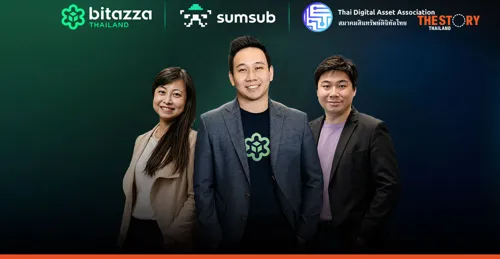
Bitazza Thailand has partnered with Sumsub to implement Travel Rule compliance ahead of SEC enforcement in Thailand. The collaboration leverages AI-powered KYC and risk management to enable secure data exchange between digital asset service providers (VASPs), supporting AML/CTF efforts. This regulatory step is critical for aligning Thailand's digital asset market with international standards and building institutional confidence, opening doors for future investment and innovation in Southeast Asia's regulated crypto ecosystem.
 Your real translator for LINE and Discord.

▾ Hover for summary ▾ Tap for summary
SpaceXAI has launched Grok Bot, an AI agent application that automates tasks across computers, websites, and apps by running on the cloud. Unlike competitors requiring pre-defined workflows, Grok Bot infers and manages tasks through natural chat commands, initially developed internally at SpaceXAI with successful results across sales, marketing, and engineering teams. The app is now in beta exclusively for SuperGrok Heavy and Cursor Ultra premium subscribers on desktop and iOS.
▾ Hover for summary ▾ Tap for summary
China is exercising unprecedented control over global crude oil markets through strategic use of national petroleum reserves and its scale as the world's largest importer. During February–June 2026, China reduced imports by half (to 5.5 million barrels/day), driving Brent crude down 30 USD/barrel and offsetting broader supply shocks from regional conflict. Analysts now describe China as "the new OPEC"—with advantages over the actual cartel since decisions flow from a single authority rather than requiring consensus across 21 members. This shift has major implications for energy pricing and geopolitical leverage.

▾ Hover for summary ▾ Tap for summary
Thailand's energy ministry is pushing for a unified EV charging app platform to consolidate fragmented services from multiple operators (PTT, three utilities, and private operators). As of mid-2026, registered EVs approach 500,000 units but charging infrastructure remains strained (~40 vehicles per charger). Two proposed solutions are under consideration: a central app layer or a joint holding company where operators share ownership of a common platform. This addresses real friction for consumers who currently must install multiple apps, though competing business incentives (PTT's marketing focus vs. utilities' revenue maximization) complicate coordination—government may need to enforce standards.
▾ Hover for summary ▾ Tap for summary
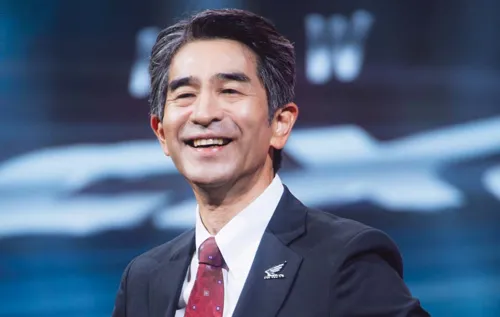
Honda Thailand's new chairman Masayuki Hamamatsu outlined the company's EV motorcycle strategy to establish the market locally. Key priorities include expanding charging infrastructure across 77 provinces by 2570, developing domestic battery and motor production, and targeting 10,000 EV unit sales in 2570. The company emphasizes market-driven expansion rather than rapid scaling, planning to launch new models like the WN7 while evaluating which technology (battery-swap vs. fixed charging) suits Thai consumer behavior. Thailand remains a core EV production base despite some production migration to Vietnam.

 Want to buy or sell a business?

▾ Hover for summary ▾ Tap for summary
The Thai government's "Thailand Travel Plus" subsidy programme will launch October 1, 2026, offering 500,000 co-payment benefits worth 1,000–1,500 baht each (total budget 1.75 billion baht). Coupons apply across all tourism services (hotels, restaurants, spas, tours, OTOP products), with uniform rates nationwide regardless of city tier. Hotels must have registered capital ≤200 million baht and be tax-compliant, widening access for SMEs. The scheme targets 26 billion baht in total economic circulation and is pending final Cabinet approval by end-August.
▾ Hover for summary ▾ Tap for summary
Nvidia has released a free AI model optimized for single-GPU computers, lowering the barrier to entry for Thai SMEs and startups wanting to adopt AI without expensive multi-GPU infrastructure. This democratization of AI tools could accelerate adoption among smaller tech teams and businesses with limited budgets.
▾ Hover for summary ▾ Tap for summary
Meta is unwinding its $2 billion acquisition of Manus AI following a Chinese government order. This signals intensifying geopolitical tensions and regulatory restrictions on US tech giants operating in or acquiring AI assets with potential cross-border implications. For Thai tech entrepreneurs and SMEs, this underscores the growing risk of dealing with high-value cross-border AI acquisitions and the importance of understanding regulatory environments beyond market dynamics.
August 11, 2026

▾ Hover for summary ▾ Tap for summary
Thailand faces a "Super El Niño" climate event requiring coordinated flood and drought mitigation across five regions. The government is allocating 40 billion baht through the Royal Irrigation Department for water management during the 2026 monsoon season, with geospatial risk mapping across agencies. Farmers in the northeast (particularly outside irrigation zones) report rice crop failures and are requesting 2,000 baht-per-rai compensation; the Farmers Association has submitted drought relief proposals to the government rice policy committee.
 Together GoWeGo! Ferry tickets in Thailand.
▾ Hover for summary ▾ Tap for summary
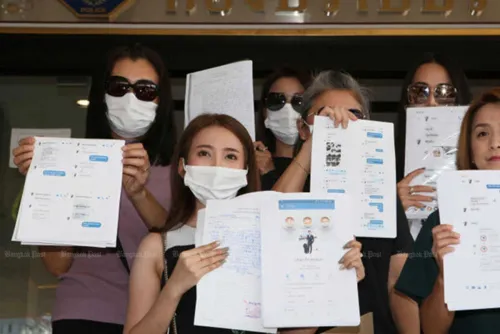
Thailand's Consumer Council is pursuing 10 landmark lawsuits against 17 companies for Facebook-based scams affecting 10 consumers. The Bangkok South Civil Court set Nov 23 for the next hearing in four of the cases. This marks the first legal action in Thailand directly targeting digital platforms for online scams, establishing important precedent for platform accountability and consumer protection in the digital economy.
▾ Hover for summary ▾ Tap for summary
Shein, a major Chinese fast-fashion e-commerce platform, is preparing to list on the Hong Kong Stock Exchange as early as mid-August 2026.

▾ Hover for summary ▾ Tap for summary
Gen-3 of the Jitraskul family invested over 1 billion baht to renovate a heritage riverside hotel in Chiang Rai and brought in international hotel chain Hilton (Curio Collection brand) to manage it—a strategic shift from self-management to global standards while preserving local identity. The move signals growing interest in international hospitality partnerships in secondary Thai cities and reflects the family's broader business portfolio spanning automotive dealerships and a 4-property hotel group, now positioning Chiang Rai as an underserved luxury hospitality market with untapped border-proximity opportunities.

▾ Hover for summary ▾ Tap for summary
YouTube is raising the bar for YouTube Partner Program eligibility, effective February 2027 for new applicants. Channels must now have 1,000+ subscribers AND either 4,000 watch hours in 12 months OR 20M+ Shorts views in 90 days. This stricter threshold is designed to increase per-creator payouts and reward successful short-form video creators. Existing members remain grandfathered in. For Thai SME creators, this means a higher barrier to monetization but potentially better ad-revenue splits once qualified; Super Chat and channel memberships are unaffected.

 Stop running your company on Excel.