
Archive
August 12, 2026

▾ Hover for summary ▾ Tap for summary
KS Securities forecasts PTT's Q2/2569 net profit at 40 billion baht (+86% YoY, +56% QoQ), driven primarily by E&P and improved gas margins. The company is expected to pay H1 dividend of 1.10 baht/share. KS upgrades price target to 42.70 baht with a "Buy" rating. Q3 profit expected to weaken QoQ due to planned maintenance shutdowns at GSP#6 and E&P production declines.

▾ Hover for summary ▾ Tap for summary
Insider threats and privilege abuse are replacing perimeter-focused attacks as the primary cybersecurity threat. SECUREiNFO (Samart Telecom) warns Thai organizations that attackers now impersonate legitimate users to steal data undetected by traditional security systems. The firm recommends five key strategies: Zero Trust Architecture with Multi-Factor Authentication, 24/7 SOC and Managed Detection & Response, third-party vendor risk management, employee security awareness training, and incident response planning aligned with PDPA and regulatory requirements.

▾ Hover for summary ▾ Tap for summary
Thailand is planning to use its decades-long military partnership with the US—including the Cobra Gold exercises—as leverage in trade negotiations to combat Trump's new tariff regime. With a $51.4 billion trade surplus facing 12.5% tariffs under Section 301, Bangkok is threatening to scale back defense cooperation unless tariff rates are capped at 19%. The Commerce Minister is leading cross-sector negotiations while the Defense Ministry prepares to table this quid pro quo in talks resuming late August. This marks an unusual escalation of Thailand's use of security ties in commercial disputes.

▾ Hover for summary ▾ Tap for summary
Thailand's State Railways Board approved a 122.7 billion baht ($3.5 billion USD equiv.) Phase 2 southern rail project spanning three routes (Chumphon–Surat Thani–Hat Yai–Padang Besar, totalling 534 km). The budget increased 18.3 billion baht from 2024 estimates due to environmental design adjustments, flood-resistant rerouting near Hat Yai (where November 2025 flooding damaged tracks), and higher material/fuel costs. Cabinet approval targeted for late August 2026, with construction contract bidding to begin early 2027 and piling work starting July 2027. Execution spans 4–6 years across 4 contracts. Relevance to Thai SMEs: major infrastructure spend likely to boost regional transport/logistics and construction supply chains.

 Empower businesses to thrive in the digital age.
▾ Hover for summary ▾ Tap for summary
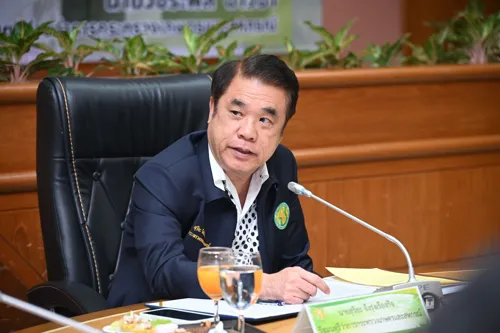
Thailand's Ministry of Agriculture launches a multi-faceted water management strategy for 2026, addressing flooding, drought, and riverbank erosion across different watersheds. Three major water development projects are prioritized in Loei Province: the Nam Lai reservoir (27.99 million cubic meters, 2571–2576 construction timeline), the Huay Nam Huai weir upgrade, and the RMC canal improvement. The approach integrates real-time monitoring, fleet machinery deployment at critical points, and coordination between central government, provincial authorities, and communities to ensure sustainable water security for agriculture and public consumption.
▾ Hover for summary ▾ Tap for summary
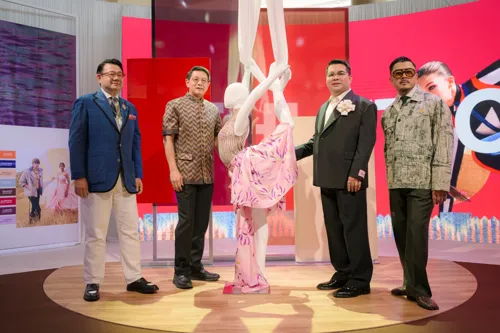
Thailand's Community Development Department (under the Ministry of Interior) launched its 7th annual trend book for Thai textiles and fashion, targeting international product development. The Spring/Summer 2027 edition, endorsed by Princess Sirivannavari, features four core concepts (The Exquisite Movement, The Masterpiece Muse, The Clarity of Immortality, The Sanctuary Within) aimed at repositioning traditional Thai crafts and fabrics through contemporary design and cultural diplomacy. The initiative seeks to elevate Thai textiles globally while preserving cultural heritage through reinterpretation and innovation, directly supporting SMEs in the fashion and textile sectors.
▾ Hover for summary ▾ Tap for summary
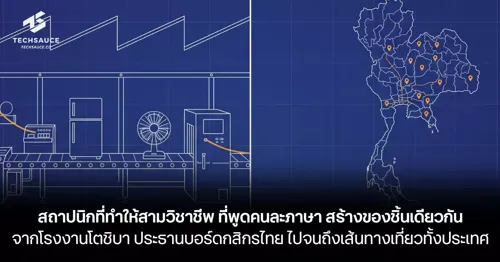
Profile of Kobkarn Wattanavrangkul, architecture-trained executive who led Toshiba Thailand, the Tourism Ministry, and Kasikornbank. Core insight: her design-thinking methodology—translating between professions with conflicting goals—appears across roles: managing stakeholder alignment at construction sites, investing in arts as "social software" at Toshiba, and solving unequal tourism revenue distribution via the "12 Must-Visit Cities" regional tourism model. Demonstrates how systems-thinking from design disciplines applies to business and policy, but leadership example rather than actionable SME strategy.

▾ Hover for summary ▾ Tap for summary
Uber has divested its stake in Serve Robotics, a delivery robot manufacturer. This signals a strategic shift in Uber's autonomous delivery ambitions and may reflect challenges in the delivery robotics market or Uber's reprioritization of business segments.
 Your real translator for LINE and Discord.
▾ Hover for summary ▾ Tap for summary
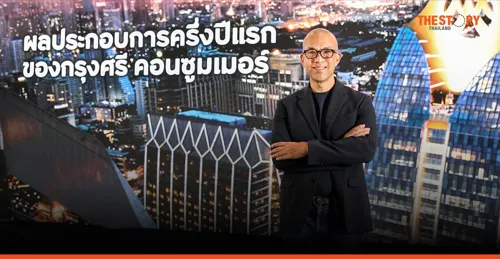
Krungsri Consumer reports steady H1 2026 growth: 284.1k new accounts (+4% YoY), 196.7bn baht in card spending (+3%), and 47.2bn baht in new loans (+4%). NPL ratios remain low at 1.1% for credit cards and 1.9% for personal loans. Key spending trends show growth in online platforms (+16%), mutual funds (+14%), and beauty services (+12%), while fashion and cosmetics slowed. The company targets 627k new accounts and 420bn baht in card spend for full-year 2026, signalling cautious optimism despite economic volatility and consumer confidence headwinds.
▾ Hover for summary ▾ Tap for summary
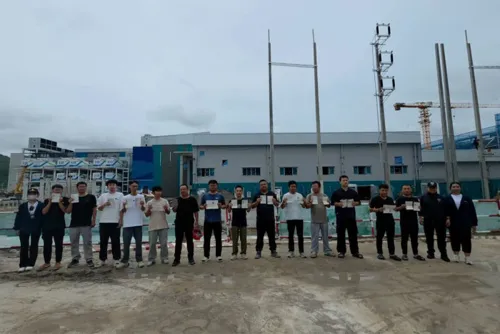
Thai authorities arrested 24 illegal migrant workers (20 Myanmar, 4 Chinese) at a Chinese-funded data centre construction site in Rayong's Ban Chang district. The site had over 400 workers, with contractors hiring without proper permits. This highlights labour compliance and project oversight issues for large foreign infrastructure investments in Thailand, raising questions about enforcement and the data centre's legitimacy as a tech investment.

▾ Hover for summary ▾ Tap for summary
Gen Z and Millennials in Thailand are shifting spending toward preventive healthcare, with credit card transactions by under-30-year-olds in the health category growing ~40% in 2568 (2025). This reflects growing awareness of proactive health investment to address Thailand's demographic shift—the country will enter super-aged society in 2569 with 14 million seniors (20% of population), facing 1.6 trillion baht annual economic losses from non-communicable diseases (NCDs). KTC is responding by building a health ecosystem with Bangkok International Hospital to offer preventive screening and specialist services, signaling a market opportunity in preventive healthcare fintech and wellness partnerships.
▾ Hover for summary ▾ Tap for summary
Indonesia is set to lift its investment moratorium on Thailand's PTT following settlement of compensation for an oil spill, signaling improved bilateral business relations and potential for resumed regional energy sector activities.

 Want to buy or sell a business?

▾ Hover for summary ▾ Tap for summary
Ant Group has upgraded its doctor app with AI-powered hospital tools, expanding its healthcare push in China's $69 billion health-tech market. This move demonstrates how fintech companies are diversifying into digital health services and leveraging AI to improve clinical workflows. For Thailand SMEs in health-tech, this signals accelerating competition from larger regional players and the growing market viability of AI-assisted medical platforms.
▾ Hover for summary ▾ Tap for summary
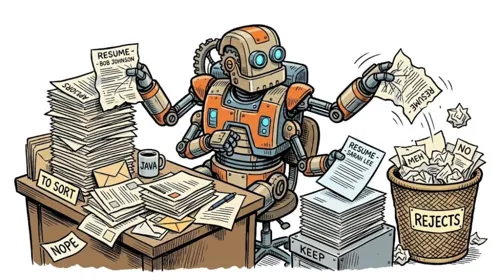
Google DeepMind's AGI Safety and Alignment team reportedly created a special application channel to bypass Google's own AI recruiting filter after legitimate applications were being incorrectly screened out. DeepMind denied system failure but acknowledged the workaround; the incident highlights growing adoption and reliability concerns with AI-powered hiring systems across tech companies.

▾ Hover for summary ▾ Tap for summary
Supalai (SUPA), a major Thai residential developer, reported H1 2025 net profit of 2,049 million baht (+36% YoY) with revenue of 11,081 million baht (+4% YoY). The company is expanding aggressively with 19 new projects worth 22.66 billion baht planned for H2, targeting 27 billion baht annual revenue. Strong backlog of 15.38 billion baht and healthy debt ratio (57%) support continued growth. A 0.55 baht/share interim dividend was declared, signaling management confidence in execution.

▾ Hover for summary ▾ Tap for summary
Thailand's cabinet approved expanding the school milk program to secondary grades 1–3 (age 12–15) starting November 2026, increasing beneficiary count from ~6 million to 6.6 million students. The expansion aims to boost child nutrition, create demand for 87.2 tonnes/day of domestically-produced raw milk, and reduce household education costs. This creates a new market channel for dairy farmers and supports the domestic milk industry.
 Together GoWeGo! Ferry tickets in Thailand.
▾ Hover for summary ▾ Tap for summary
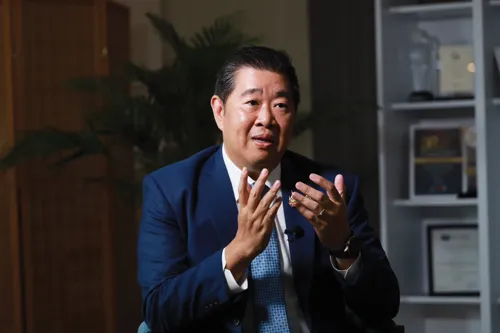
Krung Thai Bank's director announces expanded unsecured lending and supply-chain financing to reach SMEs and microenterprises underserved by commercial banks. The bank is deploying ฿120,000 million in SME credit this year and actively managing borrower debt through interest-rate reductions (e.g., teacher loans cut from 6.025% to 4%) rather than simple write-offs. This positions Krung Thai as a complementary social lender filling gaps commercial banks leave unaddressed, with 2 million grassroots customers and 18 million MyMo app users.

▾ Hover for summary ▾ Tap for summary
NUS is embedding AI literacy across its curriculum by requiring all undergraduates to complete at least two AI courses, providing university-wide access to ChatGPT Edu, and launching an AI chatbot (Sense Maker) trained on 150,000+ digitized library records. This signals a regional shift toward standardized AI training and demonstrates how educational institutions can operationalize LLMs—a model relevant to Thai universities and tech teams planning similar initiatives.

▾ Hover for summary ▾ Tap for summary
Bangkok hosted the TCCN Forum 2026 with 9 Thai creative cities across 4 categories (gastronomy, crafts, design, music) plus 4 international cities, under UNESCO's Creative Cities Network framework. The event featured knowledge-sharing sessions on sustainable urban development, cultural financing, and creative industry strategies. Recent additions Nan and Songkhla joined the global network in 2025, with Thailand's Special Area Development Authority driving expansion since 2018.

▾ Hover for summary ▾ Tap for summary
The article explores the neuroscience of "cheap dopamine" (instant gratification from apps, social media) versus "expensive dopamine" (sustained satisfaction from effort-based activities). It references research showing that challenging pursuits strengthen the brain's anterior midcingulate cortex and stabilize baseline dopamine levels. The piece hints at emerging business opportunities in wellness, productivity tools, and anti-addiction solutions as consumers seek alternatives to digital compulsion—relevant for Thai SMEs developing behavior-change products or digital wellbeing services.

 Stop running your company on Excel.