
Archive
August 14, 2026

▾ Hover for summary ▾ Tap for summary
Thailand's three major property developers—AP Thailand, Sansiri, and SC Asset—collectively plan 57 new projects worth 88.6 billion baht in H2 2026, signaling aggressive growth despite acknowledged market headwinds: slow economic recovery, high household debt, and weak consumer purchasing power. AP Thailand boosted its full-year project count to 46 (56 billion baht), reporting H1 net profit of 1.97 billion baht (+5.2% YoY). Sansiri posted Q2 net profit of 1.01 billion baht (+16% QoQ) with a 26 billion baht backlog to carry forward; SC Asset grew H1 net profit 48% to 788 billion baht. All three cite policy support (mortgage fee cuts for properties ≤7M baht, stable interest rates) as a partial offset.
▾ Hover for summary ▾ Tap for summary
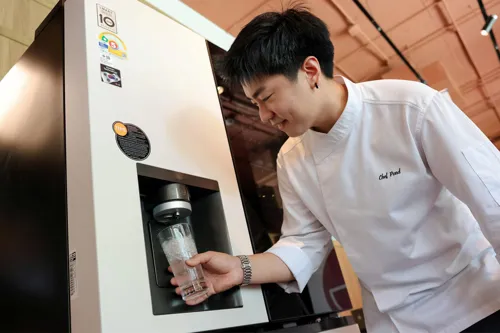
LG Electronics Thailand is deploying an "Easy Life" strategy in H2 2026, embedding AI across 50% of its product portfolio and scaling its LG Subscription monthly service model (which doubled in H1). The company aims to reach 140 billion baht in annual sales by positioning premium features (energy-efficient AI, smart diagnostics, extended after-sales support) and flexible ownership as antidotes to price pressure from Chinese competitors. Key drivers include extended service hours until 21:00 in Bangkok and D2C growth via LG.com (10% of sales) alongside 950+ dealer branches.

▾ Hover for summary ▾ Tap for summary
OpenAI rolled out a Computer History feature for ChatGPT on macOS that allows the AI to retain memory of user activities (clicks, typing, app/website usage) to answer questions about work history—useful for debugging and task recall. The feature is off by default, requires explicit per-app permission, doesn't record screens or audio, and is available only to Pro/Business/Enterprise subscribers (excluding EU). This enhances ChatGPT's productivity utility for knowledge workers but raises minor privacy considerations.
▾ Hover for summary ▾ Tap for summary
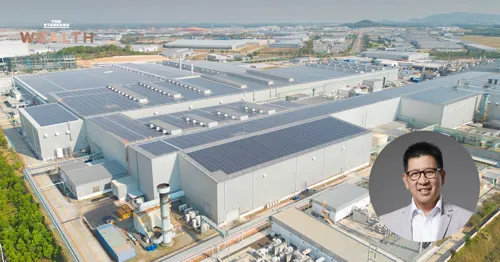
Thailand's Q2 2025 BOI investment approvals hit 255 billion baht, a 31% YoY jump, with H1 2025 reaching 530 billion baht. Deputy PM Ekanit highlighted this growth as crucial to sustaining economic expansion despite Middle East conflict headwinds. The Thailand FastPass program is expected to drive continued investment momentum into Q3, with the government targeting double-digit private investment growth for the full year as a key pillar for near-term stimulus and long-term GDP recovery toward 3%+ potential.

 Empower businesses to thrive in the digital age.
▾ Hover for summary ▾ Tap for summary
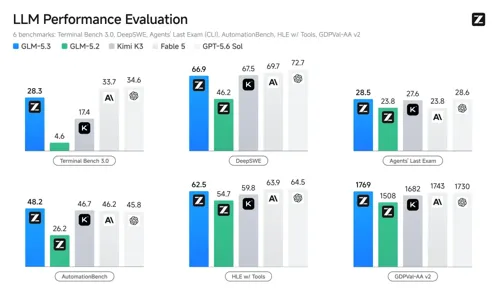
Z.ai has released GLM-5.3, an open-source AI model with significant improvements in code generation (50% better than GLM-5.2) and new cybersecurity capabilities (2x better at vulnerability detection via CyberGym benchmark). The model is now available via API with flexible pricing options, including reduced rates outside peak hours (14:00-18:00 UTC+8, Mon-Fri). This positions GLM-5.3 competitively against OpenAI and Anthropic models for tech-focused development teams and SMEs building AI-powered tools.
▾ Hover for summary ▾ Tap for summary
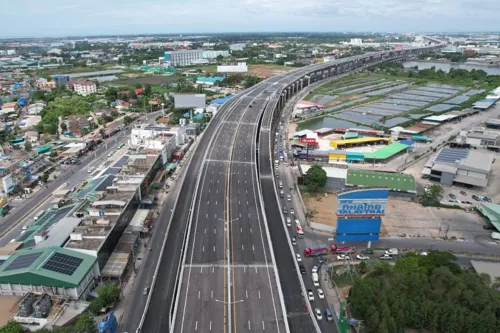
Thailand's Department of Highways will open the M82 elevated expressway (Bangkok–Ban Phaew, 25 km) for trial operation starting August 28 at 10 a.m., free for 2 years with speed limits of 80 km/h (cars) and 65 km/h (trucks). The 98%-complete project reduces congestion on Highway 2, cutting travel time to the south and boosting logistics, commerce, and tourism in Samut Sakhon, Samut Songkhram, Ranong, Phetchaburi, and Prachuap Khiri Khan. Full toll-collection service is expected in 2026.

▾ Hover for summary ▾ Tap for summary
Thailand's Ministry of Tourism has set a final rate of 450 baht per foreign tourist for the long-delayed domestic tourism fee (TTF). The levy will initially apply only to air arrivals, with land and sea arrivals to follow after one year. After passing public consultation (30 days) and Cabinet approval with a 180-day implementation grace period, collection is expected to begin by April 2027. The fund aims to support destination development, tourism promotion, and provide travel insurance for foreign visitors, addressing budget constraints in the tourism sector.

▾ Hover for summary ▾ Tap for summary
Article highlights key investors driving capital into Thailand's startup ecosystem. Understanding who the most active VCs and angel investors are is critical for Thai SMEs and founders seeking funding opportunities and market validation. This intelligence helps SMEs identify potential partners and benchmark investor activity.
 Your real translator for LINE and Discord.
▾ Hover for summary ▾ Tap for summary
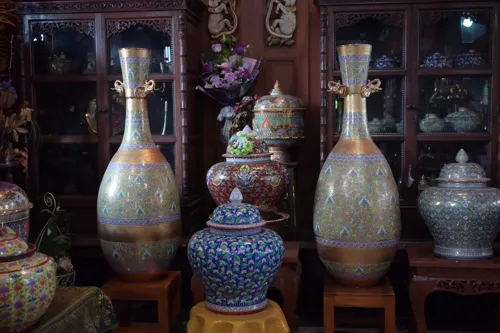
SACIT (Thai Craft Promotion Institute) highlights the Don Kai Dee benjarong community in Samut Sakhon, which has sustained ceramic craft traditions for 50+ years while innovating for modern markets. Exemplars like Master Urayai and Thawi demonstrate dual-track development: preserving ancestral knowledge and techniques while introducing contemporary design and international influences. The Institute's strategy focuses on generational knowledge transfer, market access, and positioning traditional crafts as drivers of Thailand's creative economy—enabling artisans to earn livelihoods while attracting younger practitioners.
▾ Hover for summary ▾ Tap for summary
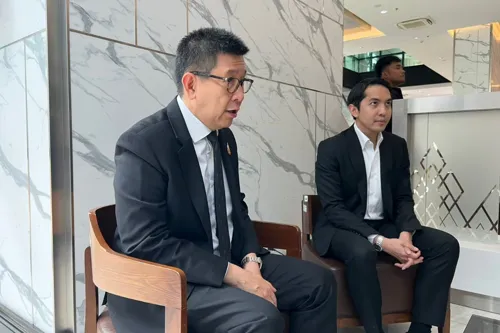
Thailand's BOI reports Q2 actual investment jumped 250 billion baht (+31% YoY), with H1 reaching 500+ billion baht under the "Investment Lets Growth" policy. Smart electronics and AI-related sectors (photonics, sensors, PCBs) are key growth drivers, supporting 500,000–600,000 new jobs. The investment influx aims to cushion Q2 GDP amid Middle East conflict impacts, while laying groundwork for long-term competitiveness above 3% growth target. Private investment is expected to reach double-digit growth this year.

▾ Hover for summary ▾ Tap for summary
Thailand is fast-tracking energy and electricity infrastructure development to compete for major AI and data center investments from global tech companies. The article highlights a critical bottleneck: AI-era data centers consume 10–20× more power per rack (300 kW vs. 15–30 kW previously), making electricity cost and stability key investment factors. Delta Electronics is positioning as an integrated solution provider (power systems, thermal management, 800V infrastructure, liquid cooling), with AI/data center work now representing 55–60% of revenue. Thailand's success depends on solving electricity pricing, ensuring grid stability, deploying clean energy, and building a skilled workforce—not just adding data center capacity. This represents a structural economic shift that SMEs in electronics, energy, and digital infrastructure should monitor closely.

▾ Hover for summary ▾ Tap for summary
AURA, Thailand's leading gold retailer, posted H1 2026 revenue of ฿29.7bn (+68% YoY) and net profit of ฿928.5m (+22% YoY), driven primarily by its gold pawn business "ทองมาเงินไป" (Modern Gold). The pawn portfolio hit a record ฿10.5bn (+60% YoY) with 667 branches (+120 YoY), generating interest income of ฿687.8m (+74% YoY). Despite Q2 gold price volatility (prices fell from ฿81,950 to ฿64,050), core operations remained solid. The company targets pawn portfolio growth to ฿12bn+ in 2026 with 200+ new branches, signaling strong expansion momentum in this high-margin lending segment.

 Want to buy or sell a business?
▾ Hover for summary ▾ Tap for summary
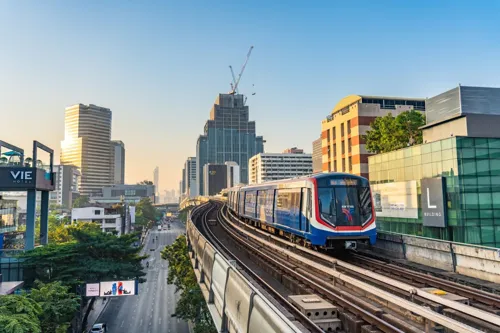
Thailand's Transport Ministry is implementing an integrated public transport ticketing system with capped fares: minimum 17 baht, maximum 45 baht per trip across BTS/MRT lines in Bangkok and surrounding areas. The reform aims to reduce commuting costs and encourage public transport adoption by eliminating duplicate entry charges for multi-line transfers. A Central Clearing House will manage revenue distribution among operators, with 10 supporting regulations approved and rollout targeted for 1 January 2025.

▾ Hover for summary ▾ Tap for summary
Nex Gen Commerce, a Thai e-commerce platform owned by INET, demonstrates viability after 3 years by maintaining a low 1% commission rate—undercutting foreign competitors charging much higher fees. The platform has grown to 300K downloads, 10K active merchant storefronts, and 16M baht monthly GMV, with plans to launch "Nex Gen Mall" featuring major brands. Its advantage stems from backing by INET's infrastructure and in-house payment gateway license, avoiding dependency on costly foreign services. This case exemplifies how Thai platforms can survive and attract merchants by leveraging domestic cost structures and public-private alignment.
▾ Hover for summary ▾ Tap for summary
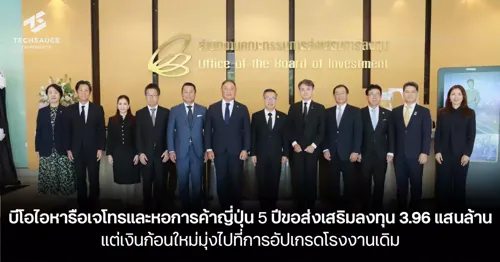
Japanese companies maintain strong investment confidence in Thailand with 1,380 BOI-promoted projects worth 396 billion baht over five years (2021–mid-2026). Survey of 504 Japanese firms reveals a strategic shift: 59% plan machinery replacement, 31% efficiency upgrades, and 22% digital transformation—focused on upgrading existing factories rather than greenfield expansion. The semiconductor, electronics, and digital sectors remain robust; over 400 Smart & Sustainable Industry projects (55+ billion baht) underscore Japan's pivot toward automation, energy efficiency, and Industry 4.0 capabilities. Japanese investors seek government support for tax incentives (29%), domestic market promotion (26%), and FTA expansion (24%).

▾ Hover for summary ▾ Tap for summary
The Bank for Agriculture and Agricultural Cooperatives (BAAC) Board has ordered an independent fact-checking committee—chaired by the Bank of Thailand representative—to investigate 8 labor union complaints against management within 30 days. Deputy PM Ekniti emphasized transparency and fairness in the process, deliberately excluding the BAAC manager from deliberations to ensure impartiality. This move comes amid labor disputes involving roughly 53% of surveyed employees (9,200 of ~17,300 union members) opposing manager contract renewal.
 Together GoWeGo! Ferry tickets in Thailand.
▾ Hover for summary ▾ Tap for summary
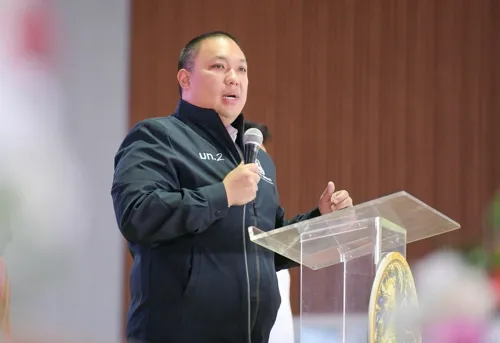
Thailand's Metropolitan Waterworks Authority is preparing two major energy transformation initiatives totaling 69 billion baht: a solar rooftop subsidy program targeting 1 million households (50,000 baht per household) to support renewable energy adoption and enable households to sell power back to the grid, plus a 19 billion baht smart grid infrastructure upgrade to manage distributed energy and improve grid control. Both plans are awaiting presentation to the cabinet screening committee within this week and represent significant government effort to address energy security and accelerate decentralized renewable energy deployment.

▾ Hover for summary ▾ Tap for summary
The US White House released a report identifying Thailand as a Tier 2 country in an illegal transshipment network moving Chinese goods through 40 countries to evade US tariffs, costing the US $19-26 billion annually and 450,000 jobs. Thailand is flagged for deep supply chain integration with China and regional transshipment vulnerabilities. The report aims to inform US enforcement agencies, including AI-powered border detection systems, though no new policies are announced. This directly impacts Thai exporters and logistics operators facing increased scrutiny.

▾ Hover for summary ▾ Tap for summary
The Department of International Trade Promotion (DITP), Commerce Ministry, honored 11 leading Thai companies with the T MARK HONOUR AWARD for maintaining Thailand Trust Mark (T Mark) certification for over 15 years and renewing it five times continuously. The award recognizes companies spanning cosmetics, lubricants, food processing, chemicals, and metal forging that exemplify international quality standards, ethical business practices, and environmental responsibility—serving as benchmarks for Thai product excellence in global markets.

▾ Hover for summary ▾ Tap for summary
Thailand's APPA (Specially Designated Area Development Organization for Sustainable Tourism) is advancing six Creative Cities through UNESCO's Creative Cities Network (UCCN)—Sukhothai, Nan, Songkhla, Chiang Rai, Suphan Buri, and Phetchaburi. The strategy goes beyond branding: it addresses succession of cultural assets, connects cities to global networks, and leverages examples like Songkhla (where culinary heritage and new-generation chefs are revitalizing local production) and upcoming Pattaya (film industry focus). The focus is practical—identifying local strengths and gaps, then mobilizing business, academia, and government to scale sustainable cultural economy. Latest initiative: TCCN Forum 2026 linking Thai cities with international peers (Berlin, Cebu, Jakarta, Ujigawa Japan) for knowledge exchange.

 Stop running your company on Excel.