
Archive
August 17, 2026

▾ Hover for summary ▾ Tap for summary
Deputy PM Píphat Ratchakitprakarn reported that PM Anuthín Shaveesilp approved establishing a new major development committee to enter the cabinet. The government is studying construction of a new deep-sea port in Songkhla due to capacity constraints at the existing port—vessels deeper than 9 meters cannot access it due to geological and archaeological limitations. Regional development projects across five southern provinces, primarily flood prevention and economic stimulus, will be presented to the development committee with cabinet review planned for August 31. Private sector investment will fund most initiatives.
▾ Hover for summary ▾ Tap for summary
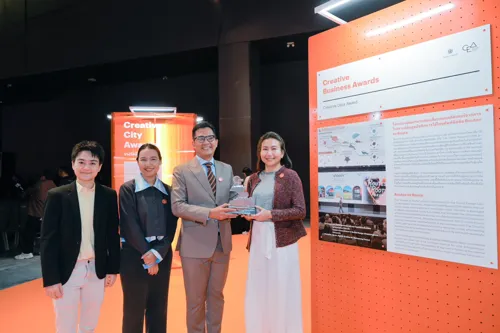
True Corporation's "Routes to Roots" project leverages anonymous mobile network mobility data (500+ million trip records) to identify 21 tourism clusters and pilot 6 culture-based tourism corridors across Thailand. The data-driven initiative, which won the Creative Data Award at Creative Excellence Awards 2026, aims to redistribute tourism benefits equitably to communities while informing evidence-based tourism policy. Collaboration between telecom, academia (Chulalongkorn), and creative agencies demonstrates how Mobility Data can shift from connectivity infrastructure to economic and social insight.
▾ Hover for summary ▾ Tap for summary
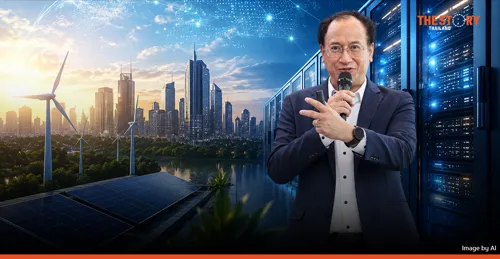
Thailand is experiencing a massive data center investment boom with BOI approval of 42 projects worth ~750 billion baht (2567–2569) plus another 36 projects worth ~728 billion baht in 2568 alone. However, the article critically examines whether Thailand truly benefits: data centers consume massive electricity and water resources, AI data centers use 5–10× more power than standard ones (100 kW per cabinet vs. 10 kW), and current capacity (300 MW) could balloon to 3 GW—nearly 10% of Thailand's total generation. The key question: is Thailand merely becoming a data processing hub for foreign clients with limited returns, or can it negotiate terms that ensure green energy contribution and long-term skill development? Without proper planning and investor accountability on renewable energy, SMEs and households may face electricity pressure.

▾ Hover for summary ▾ Tap for summary
Thailand's Digital Economy Minister Chaiyachon vows the country will not choose sides between US and Chinese AI technology competition, asserting neutrality on both geopolitical and technological grounds. He emphasizes Thai citizens should have access to all technologies and make their own choices, rather than facing forced trade restrictions. Any limitation imposed by foreign powers would be their decision, not Thailand's deliberate choice.

 Empower businesses to thrive in the digital age.
▾ Hover for summary ▾ Tap for summary
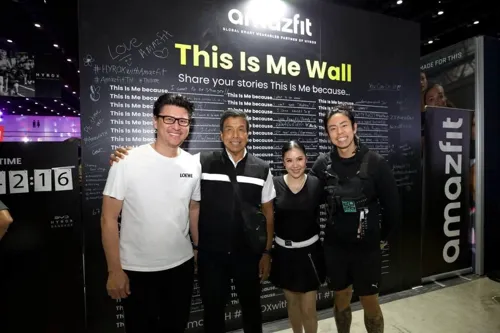
HYROX Bangkok 2026 drew 20,000+ participants at 5,000 baht entry, generating an estimated 200+ million baht in direct revenue from entries and spectator tickets (sold out daily at 400 baht). The TAT Governor frames this as a "sport tourism" opportunity, positioning fitness-wellness events as a lifestyle trend for younger travelers seeking experiences beyond photo ops. However, early concerns emerged around safety (one participant hospitalized) and equipment hygiene standards—questioning whether premium pricing justified execution quality. The article explores whether Thailand should systematize such events around existing strengths rather than treating them as one-off viral moments.
▾ Hover for summary ▾ Tap for summary
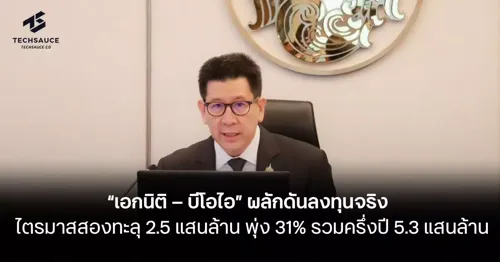
Thailand's BOI reported Q2 2026 real investment disbursements hit 255 billion baht (+31% YoY), reaching 535.8 billion in the first half (+27% YoY). AI-related tech led spending at ~127 billion baht, followed by clean energy and automotive sectors. Projects are expected to create 630,000 jobs and represent concrete follow-through on government policy. However, this is backward-looking measurement (post-approval implementation) rather than forward indicators, and large figures may reflect both SME activity and major projects.

▾ Hover for summary ▾ Tap for summary
A 40-year-old credit union in Chiang Mai with 700M baht in capital has become a community financial institution supporting 9,780 members, mostly longan farmers. Facing agricultural price volatility and rising input costs (NPL reached 150M baht), the cooperative is partnering with the agriculture ministry to help farmers shift to alternative high-value crops like peach palm through debt restructuring programs and livelihood diversification initiatives.

▾ Hover for summary ▾ Tap for summary
Thailand's Q2 GDP growth slowed to 1.9% from 2.8% in Q1, prompting Deputy PM and Finance Minister Ekniti to defend the government's economic stabilization strategy. Key concerns include energy import dependency (causing a 1.76 billion USD current account deficit) and rising inflation at 2.7%. However, private investment surged 13.4% (highest in 11 years), driven by BOI's Thailand Fast Pass program targeting S-Curve industries (electronics, AI, clean energy), and exports grew 12.5%, signaling structural economic transformation aligned with global industrial trends.
 Your real translator for LINE and Discord.

▾ Hover for summary ▾ Tap for summary
B.Grimm, Chulalongkorn University, and Sati App launched "Youth for Change: The Mindful Future Contest," a competition platform for vocational and undergraduate students (teams of 3–5 members, applications open through 13 September) to design innovations addressing social challenges using mindfulness principles. The initiative reflects B.Grimm's corporate philosophy of "Doing Business with Compassion" and aims to nurture a new generation of change-makers capable of bridging generational divides and building a more empathetic Thai society.

▾ Hover for summary ▾ Tap for summary
Siam Commercial Bank partnered with three major Thai gold merchants (Hua Seng Heng, MTS Gold, YLG) to launch SCB Gold Marketplace via its SCB EASY app. The service enables USD-denominated gold trading (96.5% and 99.99% purity) at global rates with zero fees, low entry point (0.05 oz), and options for physical delivery or withdrawal. This positions SCB's digital platform as an integrated wealth/investment hub addressing growing Thai investor demand for gold (top 1 in ASEAN, top 10 globally) and dollar-denominated assets amid economic volatility.

▾ Hover for summary ▾ Tap for summary
CLICX Bank, Thailand's first virtual bank, has launched "CLICX Save More 2%," a flexible deposit product offering 2% annual interest from the first baht up to 1 million baht for 12 months. The product allows deposits and withdrawals anytime and supports bill payments and transfers, targeting both new savers and those managing idle funds. Open for deposits from 17 August to 30 September 2026, limited to 50,000 pockets, positioning flexible savings as a key part of the bank's financial well-being strategy for Thai consumers.

▾ Hover for summary ▾ Tap for summary
Thailand's Q2 GDP grew 1.9%, slower than Q1's 2.8%, dragged by energy prices despite upward revision of 2025 full-year growth to 2.2%. Private investment accelerated to 13.4% (highest in 54 quarters), exports grew 12.5%, and imports surged 24.2% reflecting Middle East tensions and machinery imports for factory installations. The current account posted its first deficit in 8 quarters. Key SME risks include 9% NPL ratio and declining credit in manufacturing, construction, and retail sectors—areas requiring urgent banking support.

 Want to buy or sell a business?

▾ Hover for summary ▾ Tap for summary
Dow Thailand is now producing high-quality post-consumer recycled (PCR) plastic resin pellets from domestically collected waste plastic, launching two grades under the REVOLOOP™ brand for packaging film applications with 100% and 80% recycled content respectively. The initiative addresses growing demand from Thai manufacturers and exporters facing new regulations requiring recycled materials, while supporting circular economy development in Thailand and the Asia-Pacific region.
▾ Hover for summary ▾ Tap for summary
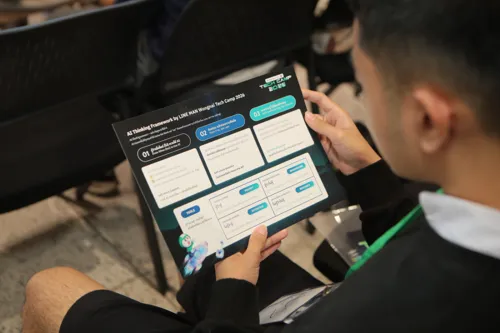
LINE MAN Wongnai partnered with Thailand's Ministry of Higher Education to launch the free "AI Thinking Framework"—a practical learning model distilled from the company's real AI implementation experience. The framework emphasizes three core principles: knowing when/when-not to use AI, thinking before prompting, and seeking understanding rather than just answers. Integrated into the LINE MAN Wongnai Tech Camp 2026 for 100+ secondary students, this initiative bridges the gap between classroom learning and modern labor market standards, positioning Thailand to develop AI-native talent.

▾ Hover for summary ▾ Tap for summary
Thailand's broadcast television sector faces an existential shift as linear TV viewership has declined 21% cumulatively (2017–2024), while OTT platforms have grown to 48.11 million users. With digital TV licenses expiring in 2025, the article argues that building a new government streaming platform would be costly and redundant; instead, integrating traditional broadcasters with existing telecom infrastructure and leveraging the upcoming 3500 MHz spectrum reallocation offers a smarter policy path. This matters to SMEs in media, content, and telecom, as it signals urgent regulatory changes and business model shifts ahead.

▾ Hover for summary ▾ Tap for summary
China's memory chip manufacturer CXMT has reached a market capitalization exceeding $500 billion, surpassing tech giant Tencent. This reflects China's strategic push into high-end semiconductor manufacturing and positions CXMT as a major competitor against Samsung and SK Hynix in the memory chip space. For Thailand SMEs in electronics and tech supply chains, this signals intensifying competition in chip sourcing and potential shifts in regional semiconductor dependencies.
 Together GoWeGo! Ferry tickets in Thailand.
▾ Hover for summary ▾ Tap for summary
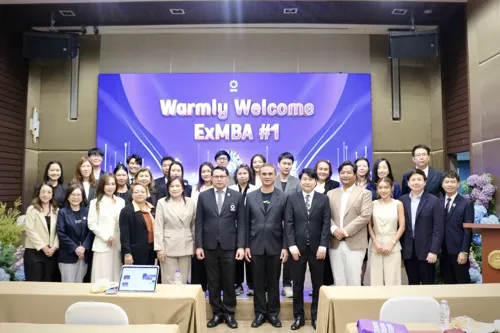
Dhurakij Pundit University (DPU) formally launched its first Executive MBA program with a "Your Next Strategic Move" framework designed to develop strategic thinking in business leaders. The program emphasizes holistic business problem-solving by connecting academic knowledge with real-world business challenges, using case studies and executive projects rather than traditional exams. Guest speakers from AIS, Tofusan, and Eminent Air shared field experience, targeting executives and business owners seeking to adapt strategy in an AI-driven environment. The pedagogical approach centers on Case-Discuss-Apply-Execute methodology aimed at immediate business impact.

▾ Hover for summary ▾ Tap for summary
Thailand's energy system faces unprecedented stress from EVs, data centers, and rooftop solar—and the infrastructure designed for an older world isn't ready. At Earth Jump 2026, startups and experts highlighted that energy security is no longer just a utility problem but a geopolitical and structural one. Key barriers include aging transformers undersized for new loads, misaligned incentive structures (those paying power bills aren't those making retrofit decisions), and data sovereignty risks. The consensus: progress requires policy alignment (like the new Net Billing framework), infrastructure overhaul, and speed—not just technology.

▾ Hover for summary ▾ Tap for summary
Thailand's automotive sector—historically built on Japanese combustion-engine manufacturing—faces a critical strategic inflection as Chinese EV makers establish production bases with government incentives. The article warns of a "dangerous transition" where traditional suppliers lose ICE contracts faster than they can pivot to EV supply chains (batteries, motors, power electronics), while new foreign EV entrants may bring their own suppliers. The core challenge: Thailand must shift from volume-based manufacturing to value-added industrial capability, ensuring Thai SMEs supply critical EV components and R&D anchors locally, not just final assembly.

▾ Hover for summary ▾ Tap for summary
Thailand's Q2 2026 GDP growth slowed to 1.9% year-on-year, the weakest in ASEAN, down from 2.8% in Q1 and contracting 0.2% quarter-on-quarter. Headwinds include declining private consumption (1.9%), weak government spending (0.2%), and a rare contraction in public investment (−1.6%). Key drags span agriculture, manufacturing, hospitality, and construction. However, private investment surged 13.4% (highest in 13.5 years) and exports grew 17.6%, driven by semiconductors and telecom equipment. Officials expect improvement in Q3 as commodity pressures ease, and revised full-year growth forecast up to 2.2%.

 Stop running your company on Excel.